🇺🇸 USA Banking Guide • Updated for 2026
Business Checking Account vs Personal Checking Account: Which One Should You Choose in 2026?
Finance Investment Editorial Team, Author: Shrenik Rukade.
August 8, 2026
10–12 Minutes
Business Checking Account vs Personal Checking Account: Why the Difference Matters
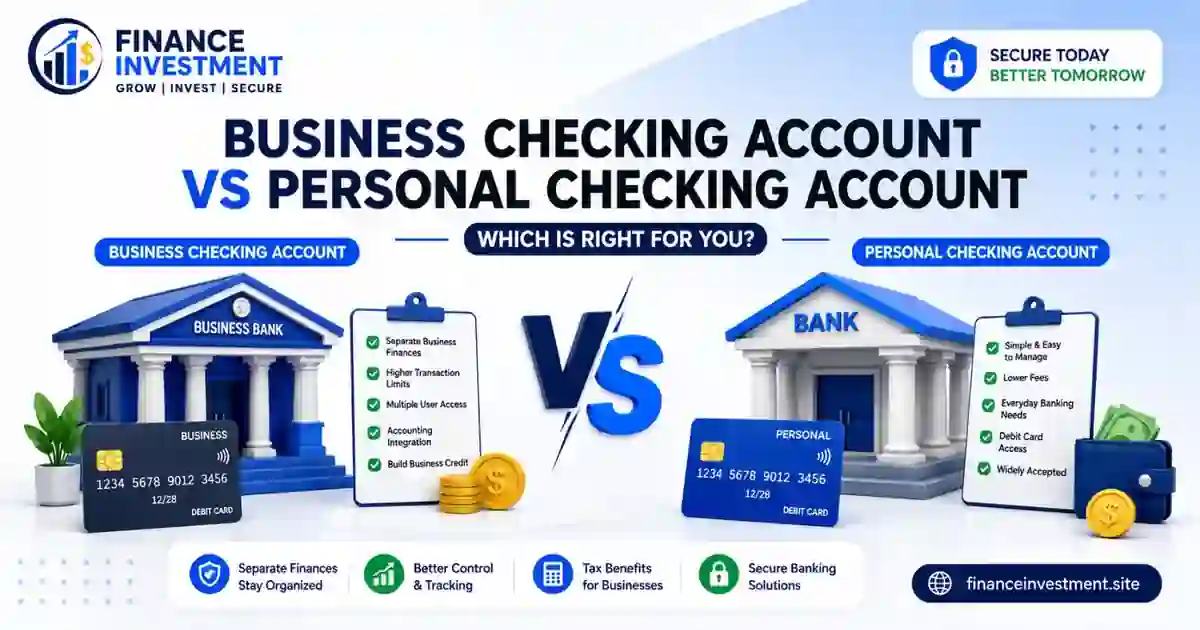 Starting a business often comes with an unexpected question: Do you really need a business bank account, or can you continue using your personal one? It’s a common point of confusion, especially for freelancers, side hustlers, and first-time entrepreneurs. Since both accounts let you deposit money, pay bills, and use a debit card, they can appear almost identical at first glance.
The reality is that a business checking account vs personal checking account comparison reveals several important differences. From bookkeeping and tax preparation to legal protection and banking features, choosing the right account can save time, reduce stress, and help you stay organized as your finances grow.
In this guide, you’ll learn exactly how these accounts differ, when each one makes sense, and which option is better for your situation. Whether you’re launching a small business, managing freelance income, or simply exploring your banking choices, this article will help you make a confident decision without unnecessary jargon.
If you’re building your banking knowledge from the ground up, our
Checking Accounts USA 2026 Complete Guide
is a great companion resource. It explains the fundamentals of checking accounts and links to detailed guides for different banking needs.
What You’ll Learn
- How business and personal checking accounts differ.
- The advantages and limitations of each account type.
- Which account is best for employees, freelancers, and business owners.
- Common banking mistakes to avoid.
- Practical tips for choosing the right account in 2026.
Let’s begin with a quick overview of the biggest differences so you can immediately see which type of checking account is likely to fit your financial goals.
Quick Answer & Key Takeaways
💡 Quick Answer
The biggest difference in a business checking account vs personal checking account is how the account is intended to be used. A personal checking account is designed for everyday expenses such as groceries, rent, and household bills. A business checking account is built for business income and expenses, helping owners keep financial records organized while offering features that support business growth.
📌 Key Takeaways
- Business and personal checking accounts serve different financial purposes.
- Keeping business and personal money separate makes bookkeeping much easier.
- Business accounts often include payment tools, cash management, and higher transaction limits.
- Personal checking accounts are usually better for everyday household spending.
- Using the appropriate account can simplify tax preparation and financial reporting.
- Comparing fees, banking features, and account requirements helps you choose more confidently.
Bottom Line: If you’re earning money through a company, side hustle, or freelance work, opening the right type of checking account can save time and reduce financial headaches. In the next section, you’ll get a quick overview of everything covered in this guide so you can jump directly to the topics that matter most.
Table of Contents
Use the guide below to jump directly to the section you want. Whether you’re comparing account features, exploring costs, or looking for practical tips, each link takes you straight to the right part of the article.
Now that you know what’s included, let’s start with a quick snapshot of the most important facts. The next section gives you an easy-to-scan overview before we explore each topic in greater detail.
At a Glance
If you’re comparing a business checking account vs personal checking account, the most important thing to remember is that each account is designed for a different purpose. A personal checking account supports everyday household spending, while a business checking account helps owners manage company income, expenses, and financial records separately. Keeping these finances organized makes budgeting, tax preparation, and account management much easier.
📌 Quick Facts
- Personal checking accounts are intended for individual spending.
- Business checking accounts are designed for business transactions.
- Many business accounts include payment processing and bookkeeping tools.
- Fees, transaction limits, and account features vary by financial institution.
| Feature | Business | Personal |
|---|---|---|
| Primary Use | Business finances | Everyday expenses |
| Typical User | Business owners | Individuals & families |
| Extra Features | Invoices, payroll, payment tools | Standard banking services |
With these basics in mind, let’s explore each account in more detail so you can understand how they work, when to use them, and which one is the better fit for your financial goals.
Complete Beginner Guide
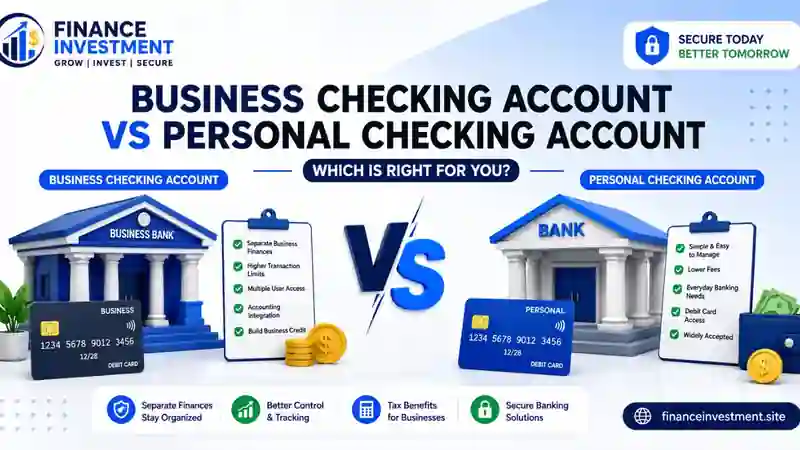 Understanding the difference between a business checking account vs personal checking account is easier than it might seem. Although both accounts allow you to deposit money, pay bills, transfer funds, and use a debit card, they are built for very different financial needs. Choosing the correct account helps keep your finances organized and makes everyday banking much more efficient.
What Is a Personal Checking Account?
A personal checking account is designed for individual use. People typically use it to receive paychecks, pay rent or mortgage payments, buy groceries, shop online, withdraw cash, and handle other daily expenses. These accounts are simple to open and work well for employees, students, retirees, and families managing household finances.
Most personal checking accounts include online banking, a debit card, direct deposit, bill payment tools, and access to an ATM network. Depending on the bank, you may also receive mobile check deposit, spending alerts, and budgeting features.
What Is a Business Checking Account?
A business checking account is intended for business income and expenses. Whether you own a small company, operate an LLC, run an online store, or work as a freelancer, this account keeps business transactions separate from your personal spending. That separation can simplify bookkeeping and provide a clearer picture of your company’s financial health.
Business accounts often include features that personal accounts don’t, such as multiple authorized users, merchant payment services, payroll support, invoicing tools, and higher monthly transaction limits. Some banks also integrate these accounts with accounting software, making recordkeeping more convenient.
💡 Did You Know?
Many banks require a dedicated business checking account when you register an LLC or corporation. Even when it’s not legally required for sole proprietors, keeping business and personal finances separate can make tax filing, budgeting, and financial reporting much easier.
Who Can Open Each Account?
Opening a personal checking account usually requires a valid government-issued ID, basic personal information, and an initial deposit if the bank has one. Business checking accounts generally require additional documents, such as an Employer Identification Number (EIN) or Social Security Number for eligible sole proprietors, business formation documents, and proof that the business is legally registered when applicable.
A Simple Example
Imagine Sarah works a full-time job while selling handmade candles online. Her salary is deposited into a personal checking account, which she uses for groceries, utilities, and household bills. Revenue from her candle business goes into a separate business checking account, where she pays suppliers, tracks sales, and manages business expenses. Keeping the accounts separate makes it much easier to understand where her money is coming from and where it’s going.
Now that you understand the purpose of each account, let’s look at how they work in everyday situations and what happens when you start using them for regular banking activities.
How It Works
At a basic level, both account types work in similar ways. You can deposit money, make purchases with a debit card, transfer funds, pay bills, and manage your account through online or mobile banking. The difference lies in how the account is used and the tools that come with it. Understanding the business checking account vs personal checking account workflow makes it easier to choose the right option.
Everyday Banking Process
- Open the account by completing the bank’s application and providing the required documents.
- Deposit money through direct deposit, cash, checks, or electronic transfers.
- Use the debit card or online banking to pay bills, make purchases, or transfer funds.
- Monitor transactions regularly using the bank’s website or mobile app.
- Review account statements to keep track of spending and identify any unusual activity.
- Maintain a sufficient balance to avoid unnecessary fees or declined transactions.
How Daily Use Differs
A personal checking account is generally used for salary deposits, grocery shopping, utility bills, subscriptions, and other household expenses. A business checking account, on the other hand, is designed for customer payments, vendor invoices, payroll, tax payments, and operating expenses. Many business accounts also provide payment processing tools and allow multiple authorized users to access the account.
For example, a teacher receiving a monthly paycheck can comfortably manage everyday expenses with a personal checking account. A local bakery owner, however, benefits from a business account because it keeps sales revenue separate from personal spending while making bookkeeping much easier throughout the year.
Once you understand how each account works in daily life, it’s easier to weigh the advantages and limitations of both options. The next section explores the biggest benefits and potential drawbacks before you make a decision.
Benefits & Drawbacks
When comparing a business checking account vs personal checking account, neither option is better in every situation. Each account serves a different purpose, so the right choice depends on how you earn, spend, and manage your money. Understanding the strengths and limitations of both can help you avoid costly banking mistakes.
✅ Pros
- Personal checking accounts are simple to open and ideal for everyday spending, direct deposits, bill payments, and personal budgeting.
- Business checking accounts keep company finances separate from personal money, making bookkeeping and tax preparation much easier.
- Many business accounts include useful features such as invoicing, payment processing, multiple account users, and higher transaction limits.
- Using the right account creates a clearer financial picture and helps reduce confusion when reviewing expenses.
❌ Cons
- Business checking accounts may have monthly fees, minimum balance requirements, or transaction limits depending on the bank.
- A personal checking account is not the best choice for handling regular business income because financial records can quickly become difficult to organize.
- Opening a business account often requires additional documents and verification.
- Choosing the wrong account may create extra work during tax season or when reviewing financial statements.
For example, a salaried employee usually needs only a personal checking account, while someone running a growing online store will often benefit from having a dedicated business account. Matching the account to your financial activities makes banking more organized and easier to manage.
Now that you’ve seen the main advantages and disadvantages, let’s compare both account types side by side so you can quickly identify which one fits your needs.
Business Checking Account vs Personal Checking Account Comparison Table
Looking at the business checking account vs personal checking account side by side makes the differences much easier to understand. While both accounts offer everyday banking services, they are designed for different financial goals. The table below highlights the features that matter most before opening an account.
📘 How to Read This Table
Compare each feature across the two account types, then check the final column to see which type of customer benefits the most. This quick overview can help narrow your decision before comparing specific banks.
| Feature | Business Checking Account | Personal Checking Account | Best For |
|---|---|---|---|
| Primary Purpose | Business income and expenses | Personal everyday spending | Business owners or individuals |
| Eligibility | Registered businesses or eligible sole proprietors | Most individuals age 18+ | Depends on account type |
| Monthly Fees | May be higher | Often lower or waived | Personal banking |
| Transaction Limits | Usually higher but may have limits | Standard everyday use | Businesses with frequent activity |
| Debit Card | Included by most banks | Included by most banks | Both account types |
| Tax Preparation | Simplifies expense tracking | Not intended for business records | Business owners |
| Bookkeeping | Supports organized financial records | Basic personal budgeting | Growing businesses |
| Payment Tools | May include invoicing and merchant services | Standard bill payments | Companies accepting customer payments |
| Direct Deposit | Supported | Supported | Both account types |
| Ideal User | Entrepreneurs, freelancers, LLCs | Employees, students, retirees, families | Depends on financial needs |
This comparison shows that neither account replaces the other. The better option depends on how you earn and manage your money. If your finances include regular business transactions, a dedicated business account usually provides better organization and specialized banking tools. For everyday household expenses, a personal checking account remains the practical choice.
Next, we’ll look at the costs, potential risks, and expert tips that can help you avoid unnecessary fees while choosing the account that best fits your situation.
Costs, Risks & Expert Tips
Understanding the costs behind a business checking account vs personal checking account can help you avoid unnecessary expenses. While many banks advertise low-cost or even free checking accounts, the actual cost depends on how you use the account and whether you meet the bank’s requirements.
Business checking accounts are more likely to charge monthly maintenance fees, especially if your balance falls below a required minimum or your business exceeds the monthly transaction limit. Some banks also charge for cash deposits, wire transfers, or additional account users. Personal checking accounts often have fewer fees, but they can still include overdraft charges, out-of-network ATM fees, or monthly service fees if account conditions aren’t met.
💡 Expert Tip
Choose an account based on how you actually bank—not just the advertised monthly fee. Look at transaction limits, ATM access, digital banking features, customer support, and any fee waiver requirements. A slightly higher monthly fee may be worthwhile if the account saves time and offers tools you’ll use regularly.
⚠️ Common Risk
Mixing personal and business transactions in one account can make budgeting and recordkeeping more difficult. It may also create extra work when preparing tax documents or reviewing your financial records later.
Before opening any checking account, read the fee schedule carefully and compare several banks. Paying attention to the small details today can help you avoid unexpected costs and choose an account that supports your financial goals.
Now that you know the common costs and risks, let’s look at the mistakes people make most often—and how one simple decision can make managing your money much easier.
Common Mistakes + Real-Life Example
Choosing between a business checking account vs personal checking account isn’t always difficult, but a few common mistakes can create unnecessary stress later. Fortunately, most of them are easy to avoid once you know what to watch for.
Mistakes That Often Cause Problems
- Using a personal account to handle regular business income and expenses.
- Opening the first account you find without comparing fees and features.
- Ignoring monthly transaction limits or minimum balance requirements.
- Overlooking online banking tools and customer support quality.
- Not reviewing the complete fee schedule before opening the account.
- Mixing household purchases with business expenses throughout the year.
- Choosing an account that doesn’t match your future financial needs.
☑️ Avoid These Mistakes
- ✔ Compare at least three financial institutions.
- ✔ Read the fee schedule carefully.
- ✔ Keep business and personal finances separate whenever possible.
- ✔ Select features that match your daily banking habits.
- ✔ Review your account regularly to catch unexpected charges early.
Real-Life Example
Imagine Michael starts a landscaping business while continuing to use his personal checking account for customer payments. Within a few months, business income, grocery purchases, utility bills, and equipment expenses are all mixed together. When tax season arrives, sorting through hundreds of transactions becomes time-consuming and frustrating. If he had opened a dedicated business checking account from the beginning, his financial records would have been much easier to manage.
Learning from mistakes like these can save both time and money. In the next section, we’ll look at which type of checking account makes the most sense for different people, careers, and financial situations.
Who Should Choose Which Account?
The right choice depends on how you earn and manage your money. When comparing a business checking account vs personal checking account, think about your daily financial activities rather than simply choosing the account with the lowest fees. Selecting an account that matches your needs today can make banking much easier as your finances grow.
A Business Checking Account May Be Right If You:
- Own a small business or registered company.
- Operate an LLC or corporation.
- Work as a freelancer or independent contractor.
- Run an online store or side hustle with regular income.
- Need separate records for taxes, bookkeeping, or payroll.
A Personal Checking Account May Be Right If You:
- Receive a paycheck from an employer.
- Manage household expenses and everyday purchases.
- Are a student, retiree, or family looking for simple banking.
- Don’t receive regular business income.
- Need an account primarily for personal budgeting and bill payments.
⭐ Best Choice
If your business regularly earns money or pays expenses, a dedicated business checking account is usually the better option. If your banking needs are limited to personal income and everyday spending, a personal checking account will typically provide everything you need without the extra business features.
Still have questions? The next section answers the most common questions people ask before choosing between these two types of checking accounts.
Frequently Asked Questions
Below are answers to the questions people ask most often when comparing a business checking account vs personal checking account. These quick explanations can help you make a more informed banking decision.
1. Can I use a personal checking account for business transactions?
Occasional business income may be acceptable for some sole proprietors, but regularly using a personal account for business transactions can make bookkeeping and tax preparation more difficult. Many banks also recommend keeping business and personal finances separate.
2. Do I legally need a business checking account?
It depends on your business structure. Sole proprietors may not always be legally required to have one, while LLCs and corporations often benefit from maintaining separate business finances. Requirements can vary by state and financial institution.
3. Are business checking accounts more expensive?
Some business accounts charge monthly maintenance fees or have transaction limits, but many banks waive those fees if you maintain a qualifying balance or meet certain account requirements. Always compare fee schedules before opening an account.
4. Can a sole proprietor open a business checking account?
Yes. Many banks allow sole proprietors to open a business checking account using their Social Security Number or an Employer Identification Number (EIN), depending on the account requirements and the nature of the business.
5. Why is separating business and personal finances important?
Keeping finances separate makes it easier to track income, monitor expenses, prepare tax documents, and review business performance. It also reduces confusion when managing both personal and business spending throughout the year.
6. Can I receive direct deposit into either account?
Yes. Both personal and business checking accounts generally support direct deposit. Employees often use personal accounts for payroll, while business owners may receive customer payments or business income through their business account.
7. Can I switch from a personal account to a business account later?
Absolutely. Many entrepreneurs begin with a personal account and later open a business checking account as their income grows. Once the new account is active, you can gradually move business transactions to the dedicated account.
8. What documents are usually required for a business checking account?
Requirements vary by bank, but common documents include a government-issued ID, business formation documents, an EIN when applicable, business license if required, and proof that the business is legally registered.
9. Which account is better for freelancers?
Freelancers with occasional projects may start with a personal account if permitted by their bank. However, those receiving regular client payments often find that a dedicated business checking account provides better organization and simplifies financial recordkeeping.
10. Which account should I choose?
If your banking activity is limited to personal expenses, a personal checking account is usually enough. If you’re operating a business, selling products, or providing services regularly, a business checking account is typically the better long-term choice.
These answers cover the questions most people ask before opening a checking account. Next, we’ll summarize the key points and help you decide which option best matches your financial goals.
Final Verdict
Choosing between a business checking account vs personal checking account ultimately comes down to how you manage your money. If your banking needs revolve around salary deposits, household bills, shopping, and everyday expenses, a personal checking account is usually the right fit. It offers simple banking features that work well for individuals, families, students, and retirees.
On the other hand, if you own a business, operate an LLC, freelance regularly, or receive ongoing customer payments, a dedicated business checking account can make financial management much more organized. Separating business and personal transactions helps simplify bookkeeping, prepares you for tax season, and gives you access to banking tools designed for business growth.
Before opening an account, compare several banks instead of choosing the first option you find. Look beyond monthly fees and consider transaction limits, digital banking features, ATM access, customer support, and any services that match your financial needs.
If you’d like to explore more banking topics, visit our
Checking Accounts USA 2026 Complete Guide.
You’ll find detailed resources that can help you compare account types, understand banking features, and make smarter financial decisions with confidence.
Ready to Choose the Right Checking Account?
Whether you’re opening your first personal account or setting up banking for a growing business, taking time to compare your options can make a real difference. Focus on features that match your financial needs today while giving you flexibility for the future.
📩 Enjoy practical banking tips, money management ideas, and personal finance updates by subscribing to our newsletter. We’ll send helpful content that’s easy to understand and useful in everyday life.
💬 Have a question about choosing between a business and personal checking account? Share your thoughts or experience in the comments—we’d love to hear from you.
📢 If this guide helped you make a more confident banking decision, consider sharing it with friends, family members, freelancers, or small business owners who may find it useful.
Leave a Reply