Finance Investment
Written by: Finance Investment Editorial Team, Subhash Rukade.
Reviewed by: Personal Finance Research Desk
Updated: August 01, 2026
Reading Time: 10 Minutes
Can You Lose Money in a High-Yield Savings Account? A Complete 2026 Guide
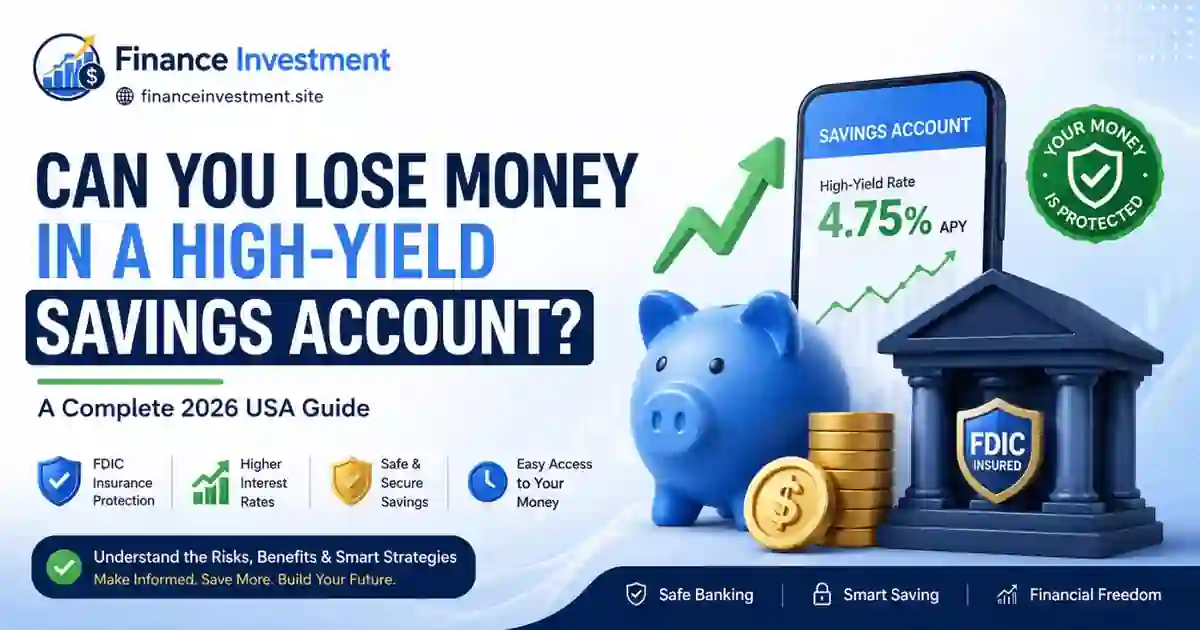 Seeing a bank advertise a 4% or 5% annual percentage yield can make a high-yield savings account look almost risk-free. But many people still wonder, Can You Lose Money in a High-Yield Savings Account? It’s a fair question, especially if you’re moving thousands of dollars from a traditional savings account or building your emergency fund for the first time.
The good news is that the answer is usually more reassuring than most people expect. While your account balance is generally protected at an FDIC-insured bank, there are still a few situations where your money can lose purchasing power or earn less than you anticipated. Understanding those risks can help you make smarter decisions and avoid costly surprises.
In this guide, you’ll learn what can actually happen to your savings, how federal insurance protects eligible deposits, and which risks are real versus common myths. If you’re comparing savings options, be sure to explore our complete High-Yield Savings Accounts USA Guide for account comparisons, expert tips, and beginner-friendly recommendations.
What You’ll Learn
- Whether Can You Lose Money in a High-Yield Savings Account is a real concern or a common misconception.
- How FDIC insurance protects eligible deposits.
- The difference between losing money and losing purchasing power because of inflation.
- Common risks to watch for before opening an account.
- Simple ways to keep your savings safe while earning competitive interest.
Quick Answer
For most people, Can You Lose Money in a High-Yield Savings Account? The answer is not in the way you might think. If your money is kept in an FDIC-insured bank and your deposits stay within the insurance limits, your balance is generally protected even if the bank fails. However, your savings can lose purchasing power when inflation rises faster than your interest earnings, and your bank may lower its interest rate over time. These are the real risks to understand before opening an account.
Key Takeaways
- FDIC insurance protects eligible deposits at participating banks.
- Interest rates can increase or decrease after you open an account.
- Inflation may reduce what your savings can buy over time.
- Reading account terms helps you avoid unexpected fees or limits.
- Can You Lose Money in a High-Yield Savings Account because of a bank failure? Eligible deposits are generally protected within FDIC coverage limits.
- Choosing a reputable bank and reviewing your account regularly can help you save with confidence.
Bottom Line: A high-yield savings account remains one of the safest places to keep short-term cash. Knowing how insurance, interest rates, and inflation work will help you set realistic expectations and make smarter financial decisions.
Table of Contents
At a Glance
If you’re wondering whether a high-yield savings account is truly a safe place for your cash, here’s the short version. For most Americans, the biggest concern isn’t losing the money you deposit—it’s understanding how interest rates, inflation, and account rules can affect your savings over time. That’s why learning Can You Lose Money in a High-Yield Savings Account is an important step before opening one.
| Category | Quick Summary |
|---|---|
| Best For | Emergency funds, short-term savings, and cash you want to keep secure. |
| Main Risk | Inflation can reduce purchasing power, and interest rates may change. |
| Safety | Eligible deposits are generally protected at FDIC-insured banks within coverage limits. |
| Ideal Users | Beginners, families, retirees, and anyone saving for goals within the next few years. |
| Overall Verdict | A smart option for protecting cash while earning more interest than many traditional savings accounts. |
Complete Beginner Guide
 Before moving your savings to a new bank, it’s natural to ask, Can You Lose Money in a High-Yield Savings Account? The answer depends on what you mean by “lose money.” In most cases, the dollars you deposit stay safe at an FDIC-insured bank, but there are other factors that can affect the value of your savings over time.
A high-yield savings account works much like a traditional savings account. You deposit money, the bank pays interest on your balance, and you can access your funds whenever you need them, subject to the account’s terms. The biggest difference is that these accounts often pay a much higher annual percentage yield (APY), helping your money grow faster.
If you’re new to saving, it also helps to understand how interest is calculated. Our guide on compound interest explains why earning interest on both your deposits and previous interest can make a noticeable difference over time.
When Can Your Money Actually Lose Value?
The most common reason isn’t a bank failure—it’s inflation. Imagine your savings earn 3% in a year while prices rise by 4%. Your account balance grows, but your purchasing power declines because everyday expenses become more expensive. That’s different from actually losing the money you deposited.
Another situation is when banks adjust interest rates. High-yield savings accounts usually have variable rates, so your APY can move up or down as market conditions change. A lower rate means your savings grow more slowly, but it doesn’t automatically reduce your account balance.
Some accounts may also have fees or minimum balance requirements. Choosing an account that matches your saving habits can help you avoid unnecessary charges. If you’re still comparing options, our guide to online banks vs. traditional banks can help you understand the differences.
💡 Expert Tip
Instead of focusing only on the highest advertised APY, look at the bank’s reputation, FDIC insurance, fees, mobile banking experience, and customer support. A slightly lower rate from a reliable institution can be a better long-term choice than chasing every short-term rate increase.
So, Can You Lose Money in a High-Yield Savings Account? For most savers, the real challenge isn’t losing deposits—it’s staying ahead of inflation, avoiding unnecessary fees, and choosing the right account for your financial goals. Understanding these differences will help you save with greater confidence.
How It Works
Understanding how a high-yield savings account works is easier than most people think. You open an account, deposit money, and the bank pays interest on your balance. That interest is usually calculated daily and added to your account every month. As your balance grows, future interest is earned on both your original deposits and the interest you’ve already received.
Many people ask, Can You Lose Money in a High-Yield Savings Account, because they assume higher interest means higher risk. In reality, these accounts are designed for saving rather than investing. Your money isn’t placed in the stock market, so daily market swings won’t change your account balance.
The interest rate, often shown as the Annual Percentage Yield (APY), can change over time. If market interest rates increase, your bank may raise your APY. If rates fall, your bank may lower it. This affects how quickly your savings grow, but it doesn’t mean the money you’ve already deposited disappears.
Most banks also let you transfer money, check your balance, and set up automatic savings through their mobile app or online banking. Automatic deposits are a simple way to build your savings without thinking about it every month.
If you’re planning to save regularly, our guide on how to build an emergency fund explains how consistent deposits can help you reach your financial goals faster.
ℹ️ Good to Know
A high APY is attractive, but it shouldn’t be the only factor in your decision. Compare FDIC insurance, fees, minimum balance requirements, customer service, and mobile banking features before choosing an account.
So, Can You Lose Money in a High-Yield Savings Account? For most savers, the account itself is built to protect your deposits. The bigger concern is choosing an account with fair terms and understanding that interest rates and inflation can change over time.
Benefits & Drawbacks
Every financial product has strengths and limitations, and high-yield savings accounts are no exception. Knowing both sides helps you decide whether one fits your savings goals instead of choosing an account based only on a high advertised interest rate.
| Benefits | Drawbacks |
|---|---|
| Earns more interest than many traditional savings accounts. | Interest rates are variable and may decrease over time. |
| Eligible deposits are generally protected at FDIC-insured banks within coverage limits. | Inflation can reduce your purchasing power even while your balance grows. |
| Money remains easy to access for emergencies or short-term goals. | Some accounts require minimum balances or charge avoidable fees. |
| Simple to open and manage through online or mobile banking. | Not designed for long-term growth like stocks or retirement investments. |
When people ask, Can You Lose Money in a High-Yield Savings Account, they’re often thinking about losing their deposit. For most savers, the larger concern is slower growth caused by falling interest rates or rising inflation rather than the account itself.
Expert Insight
A high-yield savings account works best as a place to protect cash and earn steady interest. For long-term wealth building, many investors combine savings with investments that have higher growth potential while keeping emergency money safely available.
High-Yield Savings Account vs. Other Savings Options
Choosing the right place for your money depends on your goals. Some accounts focus on easy access, while others reward you for keeping your money untouched for a longer period. The table below highlights the main differences so you can quickly compare your options.
| Account Type | Main Advantage | Potential Limitation | Best For |
|---|---|---|---|
| High-Yield Savings | Higher interest with easy access to cash. | Variable interest rate. | Emergency funds and short-term savings. |
| Traditional Savings | Simple and widely available. | Usually earns lower interest. | Everyday banking customers. |
| Money Market Account | Competitive rates with added banking features. | May require a higher minimum balance. | People keeping larger cash balances. |
| Certificate of Deposit (CD) | Fixed interest rate for the entire term. | Early withdrawals may trigger penalties. | Money you won’t need until the CD matures. |
Conclusion: If flexibility and steady interest matter most, a high-yield savings account is often the strongest choice. If you’re still asking Can You Lose Money in a High-Yield Savings Account, remember that the biggest risks usually come from inflation or changing interest rates—not from the account itself when it’s held at an FDIC-insured bank.
Costs, Risks & Expert Tips
High-yield savings accounts are built to help you earn more on your cash, but it’s still important to understand the small details before opening one. Most accounts don’t charge monthly maintenance fees, especially online banks, but some institutions may require a minimum balance or charge fees if certain conditions aren’t met. Reading the account terms before you apply can help you avoid unnecessary surprises.
Another factor to consider is inflation. Even if your savings balance grows every month, rising prices can reduce what that money can actually buy. Interest-rate changes also matter because most high-yield savings accounts have variable APYs. When market rates fall, your account may earn less interest than it did when you first opened it.
If you’re asking Can You Lose Money in a High-Yield Savings Account, these are the situations that deserve your attention. Your deposit is generally protected at an FDIC-insured bank within coverage limits, but inflation, changing rates, and avoidable fees can reduce the overall value you receive from your savings.
⚠️ Watch Out For
- Monthly maintenance fees.
- Minimum balance requirements.
- Variable interest rates that can decrease.
- Inflation reducing purchasing power.
- Ignoring the account’s terms and conditions.
Expert Tips
- Compare more than just the advertised APY before choosing a bank.
- Keep emergency savings separate from everyday spending money.
- Review your interest rate every few months to stay informed.
- Avoid accounts with fees that don’t match your saving habits.
- Revisit your savings strategy once or twice a year as your financial goals change.
Common Mistakes & Real-Life Example
Opening a high-yield savings account is simple, but small mistakes can reduce the benefits. Most of them are easy to avoid once you know what to look for. If you’re wondering Can You Lose Money in a High-Yield Savings Account, avoiding these common errors will help you get the most from your savings.
5 Common Mistakes Beginners Make
- Choosing an account based only on the highest APY. A great rate is helpful, but fees and account features matter too.
- Ignoring minimum balance requirements. Falling below the required balance can trigger avoidable charges.
- Not checking for rate changes. High-yield savings rates can change, so review your account from time to time.
- Keeping too much cash in savings. Money needed years from now may grow faster in investments that match your risk tolerance.
- Skipping the account terms. Reading the fine print takes only a few minutes and can prevent unexpected surprises later.
Real-Life Example
Sarah, a teacher in Texas, moved her $12,000 emergency fund from a traditional savings account to a high-yield savings account. She compared fees, confirmed the bank was FDIC-insured, and set up automatic monthly deposits. A year later, she had earned noticeably more interest than she would have in her old account while keeping her emergency money available whenever she needed it.
✅ Lesson Learned
A successful savings strategy isn’t about chasing the highest advertised rate. Compare the full account features, understand the terms, and choose an account that matches your financial goals. Small decisions made today can make saving easier and more rewarding over time.
Who Should Choose a High-Yield Savings Account?
A high-yield savings account isn’t the right solution for every financial goal, but it’s an excellent choice for many people who want a safe place to grow their cash. If you’re asking Can You Lose Money in a High-Yield Savings Account, understanding who benefits most can help you decide whether it fits your needs.
Ideal for These Savers
- People building an emergency fund who want quick access to their money.
- Families saving for short-term goals such as vacations, home repairs, or major purchases.
- First-time savers looking for a simple, low-risk place to start.
- Retirees who want to keep part of their cash secure while earning interest.
- Anyone moving money from a traditional savings account to earn a more competitive return.
✔️ Best Choice If…
You want to protect your savings, earn more interest than many standard savings accounts, and keep your money available for emergencies or goals you’ll reach within the next few years.
Frequently Asked Questions
1. Can You Lose Money in a High-Yield Savings Account?
In most cases, no. If your account is with an FDIC-insured bank and your deposits stay within the insurance limits, your money is generally protected. The biggest concerns are inflation, changing interest rates, or avoidable account fees—not losing your original deposit.
2. Are high-yield savings accounts protected by FDIC insurance?
Yes. Eligible deposits at FDIC-insured banks are protected up to the applicable coverage limits. Before opening an account, confirm that the bank participates in the FDIC program so your deposits receive that protection.
3. Do I have to pay taxes on the interest I earn?
Yes. Interest earned in a high-yield savings account is generally considered taxable income in the United States. Your bank may send you a tax form if your interest earnings meet the reporting requirements, and you should include that income when filing your taxes.
4. Can inflation reduce the value of my savings?
Yes. Even if your account balance increases, rising prices can reduce your purchasing power. If inflation grows faster than your interest rate, your money buys less over time, even though you continue earning interest.
5. Why do interest rates change?
Most high-yield savings accounts have variable interest rates. Banks adjust APYs based on market conditions and broader economic trends. Your balance remains the same, but the amount of future interest you earn can increase or decrease.
6. What happens if my bank fails?
If your bank is FDIC-insured and your deposits are within the coverage limits, eligible funds are generally protected. That’s one reason many savers feel comfortable keeping emergency funds in these accounts.
7. Can I withdraw my money whenever I need it?
Usually, yes. High-yield savings accounts are designed to provide access to your money when needed. Some banks may have transfer policies or account-specific limits, so it’s worth reviewing the terms before opening an account.
8. How do I choose the right high-yield savings account?
Look beyond the highest advertised APY. Compare fees, minimum balance requirements, mobile banking features, customer support, and FDIC insurance. If you’re still wondering Can You Lose Money in a High-Yield Savings Account, choosing a reputable bank and understanding the account terms are two of the best ways to save with confidence.
Final Verdict
For most Americans, a high-yield savings account is one of the safest and simplest ways to grow cash while keeping it available for emergencies and short-term goals. Although no financial product is perfect, the biggest challenges are usually inflation, changing interest rates, and choosing the wrong account—not losing your insured deposits.
If you’re still asking Can You Lose Money in a High-Yield Savings Account, the answer is reassuring. When you choose an FDIC-insured bank, stay within the insurance limits, and understand the account terms, your savings are generally well protected. Taking a little time to compare fees, features, and customer service can make a meaningful difference over the long run.
For a broader look at how to compare accounts, maximize interest, and build a stronger savings strategy, read our complete guide: High-Yield Savings Accounts USA – Complete Beginner Guide.
✔️ Final Takeaway
If you’re new to saving, a high-yield savings account is an excellent place to start. It offers a balance of safety, flexibility, and better earning potential than many traditional savings accounts, making it a smart foundation for healthy financial habits.
Ready to Build Smarter Savings?
Enjoyed this guide? Subscribe to our newsletter for practical money tips, savings strategies, and beginner-friendly financial guides delivered straight to your inbox. If you have a question or want to share your experience, leave a comment below—we’d love to hear from you. If this article helped you, please share it with friends and family who are looking for safer ways to grow their savings.
Leave a Reply