High-Yield Savings Account vs Certificate of Deposit (CD): Complete USA Guide (2026)
Author: Finance Investment Editorial Team, Subhash Rukade.
Published: July 20, 2026
 Trying to decide between a High-Yield Savings Account vs Certificate of Deposit (CD)? You’re not alone. Many Americans want a safe place to grow their money but aren’t sure which option offers the best value. Both accounts can help you earn interest while protecting your savings, yet they work in very different ways.
A high-yield savings account gives you the flexibility to deposit or withdraw money when needed while still earning a competitive annual percentage yield (APY). A certificate of deposit (CD), on the other hand, typically rewards you with a fixed interest rate in exchange for keeping your money untouched for a specific period. Choosing the wrong account could mean earning less interest or losing easy access to your cash when you need it most.
In this guide, you’ll learn the key differences between a High-Yield Savings Account vs Certificate of Deposit (CD), including interest rates, liquidity, safety, penalties, and the situations where each option makes the most sense. We’ll also compare costs, highlight common mistakes, answer frequently asked questions, and share practical tips that can help you make a smarter savings decision in 2026.
If you’re new to high-yield savings accounts, start with our
High-Yield Savings Accounts USA Guide.
It explains the basics and provides a strong foundation before comparing savings accounts with certificates of deposit.
Quick Answer
When comparing a High-Yield Savings Account vs Certificate of Deposit (CD), the right choice depends on how soon you’ll need your money. A high-yield savings account gives you the flexibility to access your funds while earning competitive interest. A certificate of deposit (CD) usually offers a fixed interest rate for a set term, but you’ll generally pay an early withdrawal penalty if you take money out before the maturity date. If flexibility is your priority, choose a high-yield savings account. If you can leave your money untouched for several months or years, a CD may provide predictable returns.
Quick Facts
| Best For | Flexible savings (HYSA) or guaranteed fixed returns (CD) |
| Average Cost | Most accounts have no monthly fee, but CDs may charge an early withdrawal penalty. |
| Coverage / Benefits | Eligible deposits are generally protected by FDIC or NCUA insurance at participating financial institutions. |
| Pros | Competitive interest rates, low risk, and dependable savings growth. |
| Cons | High-yield savings rates can change over time, while CDs limit access to your money until the term ends. |
Table of Contents
- What Is a High-Yield Savings Account?
- What Is a Certificate of Deposit (CD)?
- High-Yield Savings Account vs Certificate of Deposit (CD)
- Why This Comparison Matters
- Who Should Choose Each Option?
- What You’ll Learn Next
What Is a High-Yield Savings Account vs Certificate of Deposit (CD)?
A High-Yield Savings Account vs Certificate of Deposit (CD) comparison helps you understand two of the safest ways to grow your money. Both accounts are designed for saving rather than everyday spending, and both can earn interest while keeping eligible deposits protected at participating financial institutions. The biggest difference is how easily you can access your money.
A high-yield savings account allows you to deposit money, earn interest, and withdraw funds whenever you need them. Interest rates can change as market conditions change, but the flexibility makes this account a popular choice for emergency funds and short-term financial goals.
A certificate of deposit, commonly called a CD, works differently. You agree to leave your money with the bank for a fixed period, such as six months, one year, or even several years. In return, the bank generally offers a fixed interest rate for the entire term. If you withdraw your money before the maturity date, you may have to pay an early withdrawal penalty.
Why This Comparison Matters
Many Americans wonder whether they should prioritize flexibility or guaranteed returns. The answer depends on your financial goals. If you might need your savings at any time, a high-yield savings account is often the better fit. If you know you won’t need the money for a while, a CD may provide more predictable earnings throughout the term.
Before deciding between these two savings options, it’s helpful to understand how high-yield accounts work. Our
Retirement Planning Guide
also explains why keeping part of your savings liquid can play an important role in a long-term financial strategy.
Beginner-Friendly Explanation
Think of a high-yield savings account as money that’s always within reach while still earning interest. A certificate of deposit is more like locking your savings in a secure box for a specific period in exchange for a guaranteed return. Neither option is automatically better—the right choice depends on when you’ll need your money and how you plan to use your savings.
How Does a High-Yield Savings Account vs Certificate of Deposit (CD) Work?
Understanding a High-Yield Savings Account vs Certificate of Deposit (CD) is easier once you know how each account handles your money. Both are designed to help your savings grow while keeping eligible deposits protected, but they follow very different rules when it comes to earning interest and accessing your funds.
How a High-Yield Savings Account Works
A high-yield savings account allows you to deposit money whenever you want and earn interest on your balance. The interest rate, often shown as the annual percentage yield (APY), can increase or decrease depending on market conditions. Because your money remains accessible, this account is commonly used for emergency funds, home repairs, vacations, or any goal where you might need quick access to cash.
Most online banks make it easy to transfer money between your checking account and your savings account. You can continue adding money over time, making a high-yield savings account a practical option for building long-term savings while maintaining flexibility.
How a Certificate of Deposit (CD) Works
A certificate of deposit follows a different approach. You deposit a fixed amount of money for a specific term, such as six months, one year, three years, or five years. During that period, the bank generally guarantees a fixed interest rate, allowing you to know exactly how much interest you’ll earn if you keep the money in the account until maturity.
If you withdraw your funds before the CD reaches its maturity date, the bank will usually charge an early withdrawal penalty. That’s why CDs work best for money you know you won’t need for a while.
Who Should Consider These Accounts?
- People building an emergency fund.
- Families saving for a future home purchase.
- Retirees looking for lower-risk savings options.
- College graduates starting their first savings plan.
- Anyone who wants steady interest without investing in the stock market.
Why Choosing the Right Account Matters
The account you choose can affect both your earnings and your financial flexibility. If unexpected expenses arise, easy access to your savings may be more valuable than locking in a fixed interest rate. On the other hand, if you have money that won’t be needed for months or years, a CD can provide predictable growth without worrying about changing interest rates.
If you’re planning beyond basic savings, our
AI Investing Guide 2026
shows how savings accounts and long-term investments can work together as part of a balanced financial strategy.
Key Point
A high-yield savings account gives you flexibility and ongoing access to your money, while a certificate of deposit rewards patience with a fixed return. The better choice depends on when you’ll need your savings and how important guaranteed interest is to your financial plan.
Complete Guide: High-Yield Savings Account vs Certificate of Deposit (CD)
If you’re deciding between a High-Yield Savings Account vs Certificate of Deposit (CD), the best choice depends on how you plan to use your money. Both accounts are designed to help your savings grow without exposing your cash to stock market risk, but they offer very different levels of flexibility and earning potential.
Before opening either account, think about two simple questions. First, will you need access to your money in the near future? Second, are you comfortable leaving your savings untouched for a fixed period? Your answers will usually point you toward the right option.
 What a High-Yield Savings Account Covers
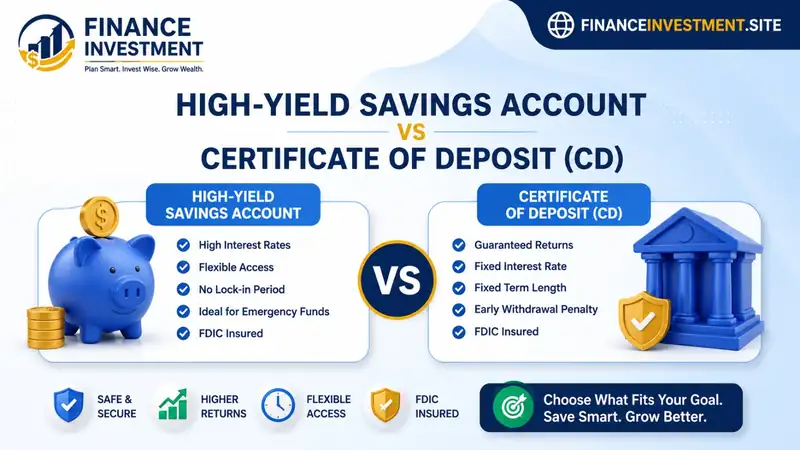 What a High-Yield Savings Account Covers
A high-yield savings account is built for flexibility. You can continue making deposits, transfer money when needed, and earn interest on your balance at the same time. This makes it an excellent home for an emergency fund or savings that may be needed within the next few months.
- Emergency savings.
- Home repair funds.
- Vacation savings.
- Medical emergency reserves.
- Short-term financial goals.
What a Certificate of Deposit Covers
A certificate of deposit is designed for money you won’t need until a future date. You choose a term, deposit your money, and receive a fixed interest rate for the entire period. Since the rate doesn’t usually change during the term, many savers appreciate the predictable return.
- Future home down payment.
- College savings with a known timeline.
- Large planned purchases.
- Retirement cash reserves.
- Money that won’t be needed immediately.
What Isn’t Covered
Neither account is intended to replace long-term investing. If your goal is building wealth over decades, investments such as diversified stock funds may offer higher growth potential, although they also involve market risk. Likewise, these accounts aren’t designed for everyday spending because they work best when your money stays in place long enough to earn interest.
Feature Comparison
| Feature | High-Yield Savings Account | Certificate of Deposit (CD) |
|---|---|---|
| Interest Rate | Variable APY | Fixed APY for the selected term |
| Access to Money | Easy access | Limited until maturity |
| Early Withdrawal | Generally available | Usually includes a penalty |
| Best For | Flexible savings | Guaranteed returns over a fixed period |
Many financial planners recommend using both accounts together. A high-yield savings account can hold your emergency fund, while a CD can be used for money that has a clear future purpose and won’t be needed before its maturity date.
Once you’ve built a solid cash reserve, our
Insurance for Beginners USA
guide explains another important part of protecting your overall financial future.
Key Insight
A high-yield savings account offers flexibility, while a certificate of deposit rewards patience with a fixed return. Many Americans achieve the best balance by using both accounts instead of relying on just one savings strategy.
Cost & Comparison: High-Yield Savings Account vs Certificate of Deposit (CD)
When comparing a High-Yield Savings Account vs Certificate of Deposit (CD), cost isn’t only about fees. It’s also about how much interest you can earn, whether you’ll face penalties, and how easily you can access your money. Most banks don’t charge monthly maintenance fees for competitive online savings accounts or CDs, but the overall value depends on your financial goals.
Average Cost
Most high-yield savings accounts have no monthly maintenance fee when opened through online banks or credit unions. Likewise, many certificates of deposit don’t charge ongoing account fees. The biggest potential expense with a CD is the early withdrawal penalty if you need your money before the maturity date.
| Potential Cost | High-Yield Savings Account | Certificate of Deposit |
|---|---|---|
| Monthly Fee | Usually $0 | Usually $0 |
| Minimum Deposit | Varies by bank | Often higher than savings accounts |
| Early Withdrawal Penalty | Typically none | Common before maturity |
Factors That Affect Your Earnings
- Current interest rate environment.
- Length of the CD term.
- Amount you deposit.
- Whether the bank offers promotional APYs.
- How long you leave your money invested.
High-Yield Savings Account vs Certificate of Deposit (CD)
| Feature | High-Yield Savings Account | Certificate of Deposit (CD) |
|---|---|---|
| Interest Rate | Variable | Fixed for the term |
| Access to Money | Anytime | At maturity |
| Best Use | Emergency savings | Planned future goals |
| Risk Level | Very Low | Very Low |
| Ideal Investor | Needs flexibility | Can lock money away |
Best Options for 2026
If you value convenience and quick access to your money, an online high-yield savings account is usually the stronger choice. If you’re saving for a goal that’s at least several months away and want a guaranteed return, a certificate of deposit may help you earn steady interest without worrying about changing rates.
Looking for more ways to protect your finances during uncertain economic periods? Read our
Recession-Proof Investing Guide
to learn how cash savings, investments, and emergency funds can work together.
Pro Tip
Many experienced savers split their money between both accounts. They keep emergency cash in a high-yield savings account while placing long-term savings into CDs with different maturity dates. This strategy provides flexibility today while locking in predictable returns for the future.
How to Choose Between a High-Yield Savings Account and a Certificate of Deposit (CD)
Choosing between a High-Yield Savings Account vs Certificate of Deposit (CD) doesn’t have to be complicated. Instead of chasing the highest advertised interest rate, focus on how you’ll use the money. The best account is the one that matches your financial goals, your timeline, and how often you may need access to your savings.
Step 1: Define Your Savings Goal
Start by asking yourself why you’re saving. If you’re building an emergency fund, saving for a vacation, or preparing for unexpected expenses, a high-yield savings account is usually the better fit because your money stays accessible. If you’re saving for something that’s several months or years away, a certificate of deposit may help you lock in a predictable return.
Step 2: Compare APYs Instead of Brand Names
Don’t assume every bank offers the same return. Compare Annual Percentage Yields (APYs), minimum balance requirements, fees, and account features before opening an account. Even a small difference in APY can add up over time.
Step 3: Check Withdrawal Rules
Before opening a CD, make sure you’re comfortable leaving your money untouched until the maturity date. If there’s any chance you’ll need the funds early, understand the bank’s penalty policy first.
Step 4: Verify Deposit Protection
Always choose a financial institution that offers federal deposit insurance. Banks insured by the
Federal Deposit Insurance Corporation (FDIC)
protect eligible deposits up to applicable legal limits, giving savers added confidence.
Money-Saving Tips
- Compare APYs from several online banks before opening an account.
- Avoid accounts with unnecessary monthly maintenance fees.
- Keep emergency savings separate from long-term savings.
- Consider CD laddering if you want regular access to part of your money.
- Review interest rates every few months because banks regularly update their offers.
Look for Promotional Offers
Many online banks introduce promotional APYs or welcome bonuses for new customers throughout the year. While these offers can increase your earnings, always read the account terms before making a decision. A slightly lower rate with fewer restrictions may provide better long-term value.
If you’re also working on improving your overall financial health, read our
Best Credit Cards 2026 Guide.
Building strong savings and maintaining healthy credit often go hand in hand.
Did You Know?
Many experienced savers don’t choose between a high-yield savings account and a CD—they use both. Keeping emergency cash in a high-yield savings account while placing long-term savings into CDs can provide flexibility today and stable returns for the future.
Common Mistakes to Avoid When Choosing Between a High-Yield Savings Account and a Certificate of Deposit (CD)
Many people compare a High-Yield Savings Account vs Certificate of Deposit (CD) by looking only at the advertised interest rate. While APY is important, it shouldn’t be the only factor. The right choice depends on your financial goals, your timeline, and how much flexibility you need. Avoiding a few common mistakes can help you earn more while keeping your savings available when you need them.
1. Chasing the Highest APY Without Reading the Terms
A promotional interest rate may look attractive, but some offers have balance requirements or limited-time promotions. Always read the account details before opening an account.
2. Locking Emergency Savings Into a CD
Emergency funds should stay easy to access. Putting all of your emergency cash into a certificate of deposit could result in an early withdrawal penalty if an unexpected expense comes up.
3. Ignoring Early Withdrawal Penalties
Many first-time savers open a CD without checking the penalty policy. If your plans change, withdrawing money before maturity could reduce the interest you’ve earned.
4. Forgetting to Compare Multiple Banks
Interest rates vary widely. Spending a few extra minutes comparing banks can significantly increase your earnings over time.
5. Keeping Too Much Cash in a Low-Interest Account
Leaving large balances in a traditional savings account often means missing out on higher returns offered by competitive high-yield savings accounts.
6. Choosing the Wrong Term Length
A five-year CD isn’t always the best option. Match the CD term to your financial goal instead of choosing the longest available term.
7. Forgetting About Inflation
Higher interest helps protect your purchasing power. Compare current APYs regularly to make sure your savings continue working for you.
8. Not Reviewing Federal Deposit Insurance
Before opening any account, verify that the financial institution is properly insured. The
Consumer Financial Protection Bureau (CFPB)
also provides educational resources that help consumers understand savings accounts and banking products.
Real-Life Example
Imagine Sarah from Texas has $20,000 in savings. She places $8,000 in a high-yield savings account for emergencies and invests the remaining $12,000 in a one-year CD because she won’t need that money until next summer. She earns competitive interest while still keeping emergency cash available. Instead of relying on one account, she matches each account to a specific financial goal.
Expert Tips
- Keep three to six months of living expenses in a high-yield savings account.
- Use CDs only for money you won’t need before maturity.
- Review APYs every few months.
- Diversify savings instead of putting every dollar into one account.
- Reevaluate your savings strategy whenever your financial goals change.
To strengthen your overall financial plan, read our
Top Dividend Stocks USA 2026 Guide,
which explains how savings and long-term investing can complement each other.
Looking for trusted personal finance resources? Consider reading
The Psychology of Money
to build stronger saving and investing habits over time.
Pros and Cons of a High-Yield Savings Account vs Certificate of Deposit (CD)
When comparing a High-Yield Savings Account vs Certificate of Deposit (CD), there isn’t a single winner for everyone. Each option offers unique advantages depending on your savings goals, timeline, and need for flexibility. The table below highlights the biggest strengths and trade-offs so you can make a confident decision.
| High-Yield Savings Account | Certificate of Deposit (CD) |
|---|---|
Pros
| Pros
|
Cons
| Cons
|
Bottom Line
A high-yield savings account is usually the better choice if flexibility matters most. A certificate of deposit works best when you can leave your money untouched and want a guaranteed return. Many Americans use both accounts together to balance liquidity with steady interest earnings.
Frequently Asked Questions About High-Yield Savings Account vs Certificate of Deposit (CD)
Choosing between a High-Yield Savings Account vs Certificate of Deposit (CD) often comes down to a few common questions. The answers below cover the topics most Americans search for before opening a new savings account.
1. Which is better: a High-Yield Savings Account or a Certificate of Deposit (CD)?
Neither option is better for everyone. A high-yield savings account is ideal if you want easy access to your money while earning competitive interest. A certificate of deposit is a better choice if you can leave your savings untouched for a fixed period and prefer a guaranteed interest rate.
2. Is my money safe in both accounts?
Yes. If your account is held at an FDIC-insured bank or an NCUA-insured credit union, eligible deposits are protected up to the applicable federal insurance limits. You can verify coverage through the
National Credit Union Administration (NCUA).
3. Can I lose money with a certificate of deposit?
Your original deposit is generally protected when held at an insured financial institution. However, withdrawing money before the CD reaches maturity may result in an early withdrawal penalty, reducing part of the interest you’ve earned.
4. How often do high-yield savings account interest rates change?
Interest rates on high-yield savings accounts are variable. Banks may increase or decrease APYs based on market conditions and changes in benchmark interest rates, so it’s a good idea to review your account periodically.
5. Can I have both a High-Yield Savings Account and a CD?
Absolutely. Many Americans use a high-yield savings account for emergency funds while keeping longer-term savings in one or more certificates of deposit. This approach provides both flexibility and predictable returns.
6. What should beginners choose in 2026?
For most beginners, a high-yield savings account is the easiest place to start because it keeps your money accessible while earning competitive interest. Once you’ve built a healthy emergency fund, adding a CD for future goals can help diversify your savings strategy.
Recommended Resource
If you’re ready to continue improving your personal finances, consider reading
The Total Money Makeover by Dave Ramsey.
Many readers use it as a practical guide for budgeting, saving, and building long-term financial habits.
Final Thoughts: High-Yield Savings Account vs Certificate of Deposit (CD)
After comparing a High-Yield Savings Account vs Certificate of Deposit (CD), it’s clear that both accounts have an important place in a smart financial plan. The right choice depends on how soon you’ll need your money and what you’re saving for. If flexibility matters most, a high-yield savings account is hard to beat. If you’re comfortable locking your money away for a fixed period, a certificate of deposit can provide stable and predictable returns.
Many Americans don’t choose one over the other—they use both. Keeping emergency savings in a high-yield savings account while placing long-term savings into CDs creates a balanced strategy that combines easy access with dependable growth.
Key Takeaways
- Choose a high-yield savings account if you need flexible access to your money.
- Choose a certificate of deposit when you want a guaranteed interest rate for a fixed period.
- Compare APYs, fees, minimum deposit requirements, and withdrawal rules before opening any account.
- Build your emergency fund before locking money into long-term savings.
- Review your savings strategy regularly as interest rates and financial goals change.
Our Recommendation
For most beginners in 2026, starting with a high-yield savings account is the simplest way to build financial security. Once your emergency fund is fully funded, adding one or more certificates of deposit can help you earn predictable returns without taking unnecessary investment risk.
Want to learn more about choosing the right savings account? Continue with our
High-Yield Savings Accounts USA Guide
for detailed comparisons, expert tips, and the latest banking insights.
Stay Connected with FinanceInvestment.site
📩 Have a question or feedback? We’d love to hear from you. Contact us anytime at
subhashr325@gmail.com.
📚 Keep exploring FinanceInvestment.site for trusted guides on saving, investing, retirement planning, insurance, and personal finance designed specifically for U.S. readers.
⭐ If you found this guide helpful, bookmark it, share it with family and friends, and subscribe for future updates. Our goal is to help you make smarter financial decisions with clear, practical, and easy-to-understand advice.
Leave a Reply