AI and Buy Now Pay Later Risk Analysis: Complete 2026 Guide
Author: Subhash Rukade
Published: June 14, 2026
Why AI and Buy Now Pay Later Risk Analysis Matters in 2026
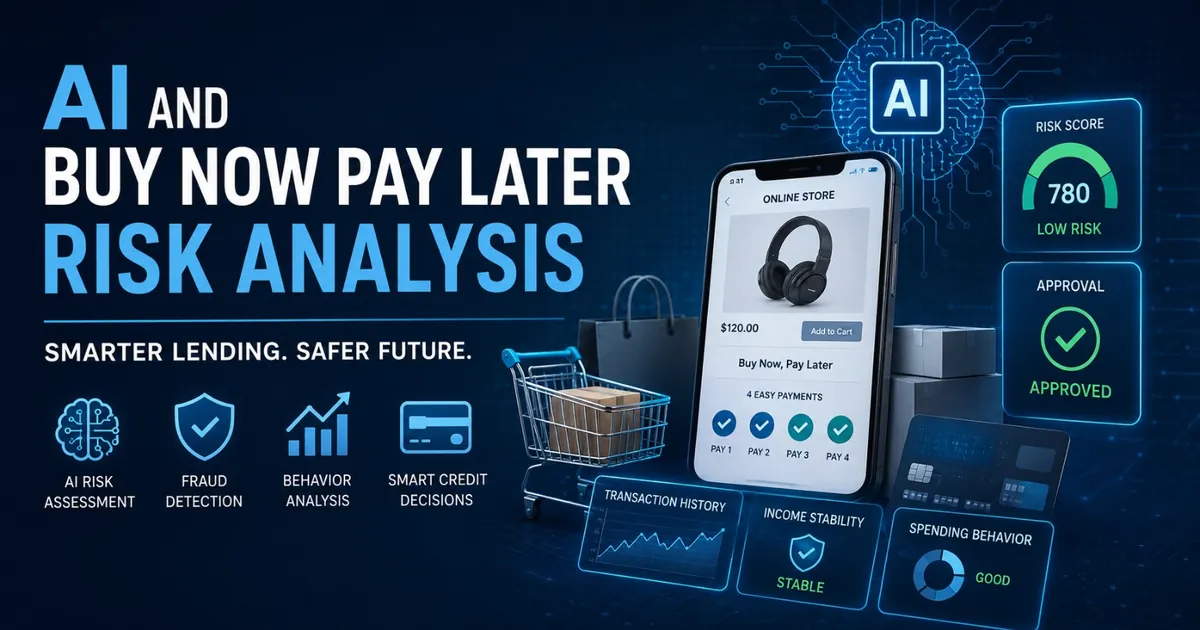
AI and Buy Now Pay Later Risk Analysis is becoming one of the most important developments in consumer finance. As millions of Americans use Buy Now Pay Later services for online shopping, travel, electronics, and everyday purchases, lenders need smarter ways to evaluate risk and protect both consumers and businesses.
Traditional lending models often rely heavily on credit scores and historical borrowing records. However, modern BNPL providers now use artificial intelligence to analyze spending behavior, income patterns, repayment history, banking activity, and fraud indicators within seconds.
This shift allows lenders to make faster and more accurate decisions while helping responsible consumers gain access to flexible payment options.
The same technology transforming BNPL lending is also reshaping investing, retirement planning, and personal finance. To explore these innovations further, read our
AI Investing Guide 2026.
In this guide, you’ll learn how AI evaluates Buy Now Pay Later applications, the technologies behind AI risk analysis, real-world examples, common mistakes consumers make, and what the future of BNPL lending may look like in America.
How AI Evaluates Buy Now Pay Later Applications
Modern AI and Buy Now Pay Later Risk Analysis systems help lenders make faster and smarter decisions than traditional lending models.
Instead of reviewing only a credit score, artificial intelligence evaluates multiple financial signals to determine whether an applicant can responsibly manage Buy Now Pay Later payments.
This allows BNPL providers to reduce lending risk while improving approval accuracy.
AI Risk Scoring
One of the most important parts of AI BNPL Risk analysis is automated risk scoring.
AI systems collect financial information and assign a risk level to each applicant. The lower the risk score, the higher the likelihood of approval.
Unlike traditional underwriting, AI can analyze hundreds of variables simultaneously and identify patterns that human reviewers may overlook.
Income and Cash Flow Analysis
Many BNPL providers now use artificial intelligence to evaluate income stability and cash flow behavior.
Instead of focusing only on reported income, AI examines whether consumers maintain consistent deposits, healthy account balances, and reliable spending habits.
This helps lenders understand whether future installment payments are likely to be made on time.
Spending Behavior Monitoring
AI also evaluates spending patterns to determine overall financial responsibility.
For example, a consumer who regularly pays bills on time and maintains reasonable spending habits may appear less risky than someone who frequently overspends.
Behavioral analysis has become one of the most valuable components of AI and Buy Now Pay Later Risk Analysis.
Fraud Detection Systems
Fraud prevention is another major advantage of AI lending technology.
Artificial intelligence can detect suspicious activity, unusual transactions, identity inconsistencies, and abnormal purchasing behavior within seconds.
These systems help protect both consumers and BNPL providers from financial losses.
Credit History Review
Although AI uses advanced analytics, credit history still matters.
Payment history, existing debt levels, credit utilization, and previous borrowing behavior remain important indicators during the approval process.
However, AI combines these traditional factors with many additional data points to create a more complete financial profile.
Traditional Lending vs AI BNPL Analysis
| Factor | Traditional Lending | AI BNPL Risk Analysis |
|---|---|---|
| Decision Speed | Hours or Days | Seconds or Minutes |
| Data Sources | Limited | Hundreds of Variables |
| Fraud Detection | Basic Checks | Advanced AI Monitoring |
| Personalization | Low | High |
| Risk Assessment | Mostly Credit Score | Behavior + Financial Data |
Consumers considering flexible payment options should also compare BNPL services with traditional rewards cards. Our
Best Credit Cards 2026
guide can help you choose the right option for your financial goals.
As AI continues evolving, lenders are becoming more effective at balancing convenience with responsible lending practices. This is one reason AI and Buy Now Pay Later Risk Analysis is expected to remain a major part of consumer finance throughout 2026 and beyond.
AI Technologies Behind Buy Now Pay Later Risk Analysis
The rapid growth of Buy Now Pay Later services would not be possible without advanced artificial intelligence systems working behind the scenes.
Modern AI and Buy Now Pay Later Risk Analysis platforms use multiple technologies to evaluate borrowers, predict repayment behavior, and reduce financial risk.
These systems help lenders approve qualified applicants quickly while maintaining responsible lending standards.
Machine Learning
Machine learning serves as the foundation of most AI BNPL Risk systems.
Banks and BNPL providers train machine learning models using millions of historical transactions and repayment records.
The system learns which financial behaviors are associated with successful repayment and which patterns may indicate elevated risk.
As more data becomes available, the model continuously improves its accuracy.
This allows lenders to adapt to changing consumer behavior and economic conditions much faster than traditional lending systems.
Predictive Analytics
Predictive analytics helps AI estimate the probability that a borrower will successfully complete future installment payments.
Rather than focusing only on past financial behavior, predictive models forecast future outcomes based on current financial patterns.
For example, AI may identify a borrower with stable income and low debt as more likely to make payments on time compared to someone showing signs of financial stress.
This capability improves lending decisions while reducing default rates.
Behavioral Analysis
Behavioral analysis has become one of the most valuable tools in AI and Buy Now Pay Later Risk Analysis.
AI evaluates spending habits, purchase frequency, repayment patterns, account activity, and overall financial discipline.
These insights help lenders understand how consumers manage money beyond traditional credit scores.
A borrower who consistently demonstrates responsible financial behavior may receive a more favorable risk assessment.
Open Banking Data
With customer permission, many BNPL providers now use open banking technology to access additional financial information.
This may include transaction history, account balances, income deposits, and spending trends.
The result is a more complete picture of financial health and repayment capacity.
Open banking is expected to play an increasingly important role in AI lending decisions over the coming years.
Debt-to-Income Calculator Example
One important metric used during AI BNPL Risk evaluations is the debt-to-income ratio.
Formula:
Debt-to-Income Ratio = Monthly Debt Payments ÷ Monthly Income × 100
Example:
- Monthly Income = $5,000
- Monthly Debt Payments = $1,500
Calculation:
($1,500 ÷ $5,000) × 100 = 30%
A lower debt-to-income ratio generally improves lending decisions because it indicates stronger repayment capacity.
To learn how artificial intelligence is transforming budgeting, saving, and investing, explore our
AI Personal Finance 2026
guide.
By combining machine learning, predictive analytics, behavioral analysis, and open banking data, AI lending platforms can make more informed decisions while creating a safer and more efficient BNPL ecosystem.
Real-World Case Study: How AI Evaluates BNPL Risk
To understand how AI and Buy Now Pay Later Risk Analysis works in practice, let’s look at a realistic example involving a typical American consumer.
Meet Sarah, a 31-year-old marketing manager from Florida. Like many consumers, she frequently shops online and occasionally uses Buy Now Pay Later services for larger purchases.
In early 2026, Sarah wanted to purchase a new laptop worth $1,200 and selected a BNPL payment option that would allow her to spread the cost across several months.

Step 1: AI Reviews the Application
As soon as Sarah submitted her application, the BNPL provider’s AI system began analyzing hundreds of financial variables.
Instead of reviewing only her credit score, the AI evaluated:
- Monthly income stability
- Bank account activity
- Existing debt obligations
- Previous repayment history
- Spending behavior
- Current BNPL commitments
- Fraud risk indicators
The entire review process took only a few seconds.
Step 2: Risk Assessment
The AI BNPL Risk model identified several positive indicators.
Sarah maintained a stable income, had a strong repayment history, and carried relatively low debt compared to her earnings.
The system also found no unusual transaction patterns or fraud concerns.
Because the overall financial profile appeared healthy, the AI assigned a low-risk score.
Step 3: Approval Decision
Based on the risk assessment, the application received approval almost instantly.
The lender offered a payment schedule that fit Sarah’s financial profile while maintaining responsible lending standards.
This demonstrates one of the biggest advantages of AI and Buy Now Pay Later Risk Analysis. Qualified consumers can receive fast approvals while lenders reduce the likelihood of future payment problems.
📊 BNPL Case Study Summary
- Applicant: Sarah (Florida)
- Purchase Amount: $1,200
- Income Stability: Strong
- Debt Level: Moderate
- Fraud Indicators: None
- AI Risk Score: Low Risk
- Decision: Approved
- Approval Time: Under 60 Seconds
Why This Matters
Traditional lending systems might focus primarily on credit history. AI lending models take a broader approach by analyzing real-time financial behavior and repayment capacity.
This allows responsible borrowers to access financing more easily while helping lenders maintain healthy risk management practices.
Consumers preparing for economic uncertainty should also explore our
Recession-Proof Investing 2026
guide for additional financial planning strategies.
As AI continues improving, BNPL providers are becoming better at identifying qualified borrowers, reducing defaults, and creating safer lending environments for both consumers and businesses.
Common Buy Now Pay Later Mistakes Consumers Make
While Buy Now Pay Later services offer convenience and flexibility, they can also create financial challenges when used irresponsibly.
Many consumers focus on the small installment payments and overlook the total amount they are committing to repay.
This is why AI and Buy Now Pay Later Risk Analysis has become so important for lenders in 2026.
Artificial intelligence helps identify potential repayment risks, but consumers still need to make smart financial decisions.
Let’s look at the most common mistakes that increase BNPL risk.
1. Taking Multiple BNPL Loans at the Same Time
One of the biggest mistakes consumers make is opening several Buy Now Pay Later agreements simultaneously.
Each individual payment may appear manageable, but the combined obligations can quickly become difficult to track.
Many borrowers underestimate how much they owe because payments are spread across multiple platforms.
AI BNPL Risk systems closely monitor this behavior because multiple active BNPL accounts often increase repayment risk.
2. Missing Installment Payments
Late payments remain one of the strongest warning signs in AI lending models.
Missing installments can lead to fees, account restrictions, and potential credit reporting consequences depending on the lender.
Consistent repayment behavior helps maintain a healthy financial profile and improves future approval opportunities.
3. Overspending Because Approval Is Easy
Fast approvals can sometimes encourage consumers to spend more than they normally would.
The psychological effect of splitting payments into smaller amounts may make expensive purchases feel more affordable than they actually are.
Responsible budgeting remains essential regardless of how easy financing becomes.
4. Ignoring the Impact on Overall Debt
Some borrowers treat BNPL purchases differently from traditional debt.
However, installment obligations still affect overall financial health and repayment capacity.
AI and Buy Now Pay Later Risk Analysis models evaluate total debt exposure when determining future lending decisions.
5. Failing to Monitor Financial Accounts
Consumers who do not regularly review bank accounts, repayment schedules, and spending patterns are more likely to encounter financial difficulties.
Monitoring accounts helps identify potential issues before they become serious problems.
📊 BNPL Risk Factors Chart
Common factors that increase BNPL repayment risk:
- Multiple Active BNPL Loans — 30%
- Missed Payments — 25%
- High Debt Levels — 20%
- Overspending Behavior — 15%
- Income Instability — 10%
Example Scenario
Consider a consumer who uses four different BNPL services for electronics, furniture, clothing, and travel expenses.
Although each payment appears affordable individually, the combined monthly obligation may exceed their budget.
AI lending systems identify this pattern as a potential risk indicator and may adjust future approval decisions accordingly.
Consumers interested in strengthening their overall financial discipline should also review our
SIP Investing Guide 2026,
which discusses long-term wealth-building habits and financial planning strategies.
Avoiding these common mistakes can help consumers use BNPL services responsibly while maintaining stronger financial health and better borrowing opportunities in the future.
How to Use Buy Now Pay Later Responsibly in 2026
Buy Now Pay Later services can be useful financial tools when used correctly. However, responsible usage is essential for maintaining financial stability and avoiding unnecessary debt.
As AI and Buy Now Pay Later Risk Analysis becomes more advanced, lenders are increasingly evaluating consumer behavior, repayment habits, and financial discipline before approving future applications.
Consumers who manage BNPL services responsibly are more likely to benefit from faster approvals and better lending opportunities.
1. Create a Budget Before Using BNPL
Before making any BNPL purchase, calculate whether the future installment payments fit comfortably within your monthly budget.
A purchase may seem affordable when divided into smaller payments, but multiple BNPL commitments can quickly add up.
The safest approach is to treat every BNPL purchase as real debt that must be repaid on schedule.
2. Limit the Number of Active BNPL Accounts
Many consumers make the mistake of using several BNPL providers simultaneously.
Managing too many installment plans increases the risk of missed payments and financial stress.
AI BNPL Risk systems often view excessive BNPL activity as a warning sign.
Keeping the number of active repayment plans low makes financial management much easier.
3. Make Payments on Time
Payment history remains one of the strongest indicators of financial responsibility.
Late payments can result in fees, account restrictions, and lower approval chances for future financing requests.
Setting automatic payments or calendar reminders can help ensure installment obligations are never missed.
4. Use AI Budgeting Tools
Modern AI-powered budgeting applications can help consumers monitor spending patterns, track upcoming payments, and identify areas where expenses can be reduced.
These tools provide valuable insights that support better financial decision-making.
Many consumers are already using artificial intelligence to improve budgeting, saving, and debt management.
5. Focus on Long-Term Financial Goals
While BNPL services can provide short-term convenience, long-term wealth building should remain a priority.
Consumers should balance spending with saving and investing.
Learning how to build income-generating assets can strengthen financial security and reduce reliance on short-term financing options.
For long-term wealth-building strategies, explore our
How to Build a Dividend Portfolio
guide.
Investors can also review our
Top Dividend Stocks USA 2026
article for additional income-focused investment ideas.
Recommended Financial Resources
📘
The Psychology of Money by Morgan Housel
📘
I Will Teach You To Be Rich by Ramit Sethi
📊
Experian Credit Monitoring Services
Consumers who combine responsible borrowing habits with smart financial planning are in the best position to benefit from Buy Now Pay Later services while avoiding unnecessary financial risk.
As AI and Buy Now Pay Later Risk Analysis continues evolving, disciplined financial behavior will remain one of the strongest factors influencing future lending decisions.
Future of AI and Buy Now Pay Later Risk Analysis
The future of AI and Buy Now Pay Later Risk Analysis looks increasingly sophisticated as artificial intelligence becomes a larger part of consumer finance.
Over the next several years, BNPL providers are expected to use more advanced risk models, real-time financial data, and predictive analytics to make lending decisions faster and more accurately.
The goal is simple: provide responsible consumers with flexible payment options while reducing financial risk for lenders.
Open Banking Will Improve Risk Assessment
One of the biggest trends shaping the future of AI BNPL Risk systems is open banking.
With customer permission, lenders can access broader financial information, including spending habits, income patterns, savings behavior, and account activity.
This creates a more complete financial profile and allows AI systems to make better-informed lending decisions.
More Personalized Lending Decisions
Future AI lending models will become increasingly personalized.
Rather than relying heavily on generic approval criteria, lenders will tailor decisions based on individual financial behavior and repayment history.
This may help qualified borrowers gain access to financing even when traditional credit histories are limited.
Stronger Consumer Protection
Regulators are paying closer attention to Buy Now Pay Later services as adoption continues growing.
Organizations such as the
Consumer Financial Protection Bureau (CFPB),
the
Federal Reserve,
and the
U.S. Securities and Exchange Commission (SEC)
are monitoring developments in digital lending and consumer protection.
Future regulations may require greater transparency, stronger disclosures, and improved risk management standards across the BNPL industry.
Frequently Asked Questions
1. What is AI and Buy Now Pay Later Risk Analysis?
It is the use of artificial intelligence to evaluate borrower risk, analyze financial behavior, detect fraud, and improve lending decisions for BNPL services.
2. Does AI approve BNPL applications instantly?
In many cases, yes. Modern AI systems can analyze financial information and generate lending decisions within seconds.
3. Can BNPL affect credit scores?
Depending on the provider and repayment behavior, BNPL activity may influence credit reports and future lending decisions.
4. What factors do AI BNPL Risk systems evaluate?
Common factors include income stability, spending patterns, repayment history, existing debt levels, account activity, and fraud indicators.
5. Is BNPL safer than credit cards?
Both options have advantages and risks. Responsible use remains the most important factor regardless of the financing method chosen.
6. How can consumers reduce BNPL risk?
Maintaining a budget, limiting active installment plans, making payments on time, and monitoring spending habits can significantly reduce risk.
Conclusion
Artificial intelligence is transforming the Buy Now Pay Later industry. Modern AI and Buy Now Pay Later Risk Analysis systems help lenders make smarter decisions, reduce fraud, improve approval accuracy, and create safer lending environments.
For consumers, understanding how these systems work can lead to better financial decisions and more responsible use of BNPL services.
The same technologies driving AI-powered lending are also changing investing, retirement planning, wealth management, and personal finance.
To learn more about these innovations, visit our
AI Investing Guide 2026.
📩 Join Our Free Finance Newsletter
Get AI finance insights, investing strategies, BNPL updates, credit tips, and wealth-building ideas delivered directly to your inbox.
Subscribe today and stay ahead of the future of finance.
About the Author
Subhash Rukade writes about AI, investing, personal finance, credit management, and wealth-building strategies to help readers make smarter money decisions in a rapidly changing financial world.
🚀 Thank you for reading. Use AI wisely, manage debt responsibly, and build a stronger financial future.
Leave a Reply