How AI Is Transforming Retirement Planning: A Smarter Path to Retirement in 2026
Published: June 12, 2026
Author: Subhash Rukade
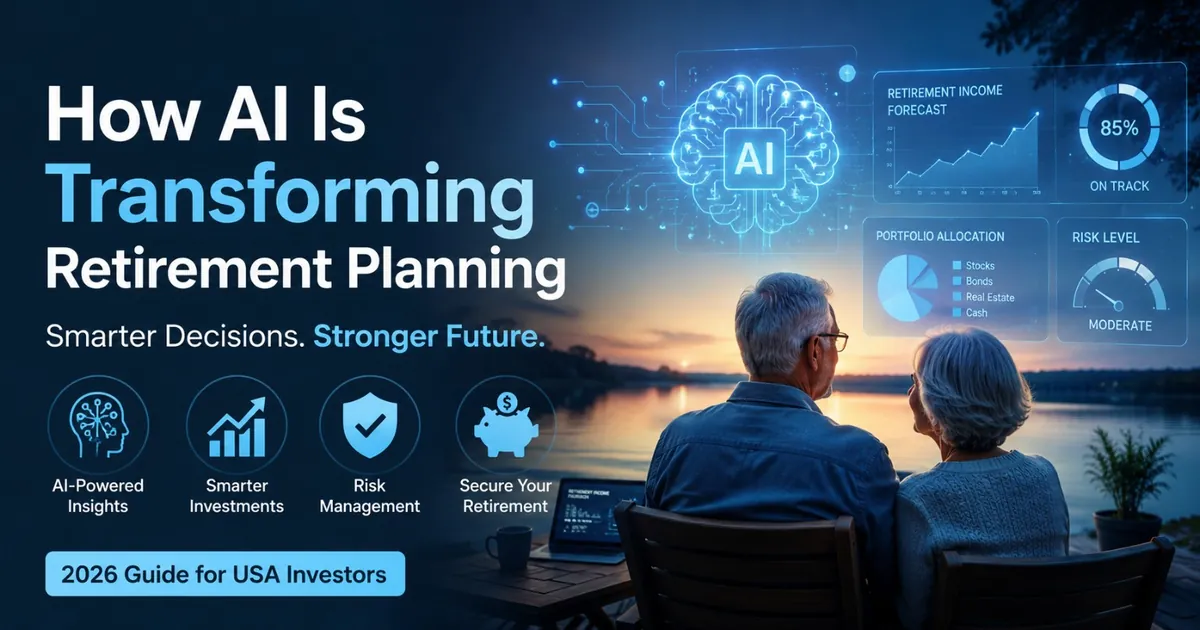
Introduction: How AI Is Transforming Retirement Planning
Retirement planning has never been more important for American families. Rising healthcare costs, inflation, longer life expectancy, and uncertain market conditions are forcing investors to rethink how they prepare for retirement. In 2026, many Americans are looking for smarter ways to build financial security without spending hours analyzing investments and retirement projections.
This is exactly where artificial intelligence is making a difference. The conversation around How AI Is Transforming Retirement Planning has gained significant attention because AI-powered tools can help investors make more informed decisions about saving, investing, and preparing for the future.
Traditionally, retirement planning involved spreadsheets, manual calculations, and meetings with financial advisors. While those methods still have value, artificial intelligence now allows investors to access advanced retirement planning tools directly from their phones or computers.
Modern AI systems can analyze income, expenses, savings rates, investment performance, retirement goals, inflation assumptions, and market conditions within seconds. This helps investors understand whether they are on track to achieve financial independence or if adjustments are needed.
One reason AI retirement planning is becoming so popular is personalization. Instead of providing generic recommendations, AI can create customized retirement strategies based on an individual’s age, income, risk tolerance, investment portfolio, and retirement timeline.
The broader impact of artificial intelligence extends far beyond retirement planning. Investors who want a complete understanding of how AI is changing investing, saving, budgeting, and wealth creation should explore our
AI Investing & Personal Finance Guide 2026.
While AI cannot predict the future perfectly, it can help investors make better decisions using data-driven insights. As retirement planning becomes more complex, artificial intelligence is emerging as one of the most powerful tools available to investors who want greater confidence about their financial future.
In this guide, we’ll explore how AI retirement planning works, the tools driving this transformation, practical examples, common mistakes, and strategies that can help Americans retire more comfortably in 2026 and beyond.
How AI Retirement Planning Works
To fully understand How AI Is Transforming Retirement Planning, it’s important to look at how modern AI retirement planning systems actually work. While traditional retirement planning often requires manual calculations and periodic reviews, artificial intelligence can analyze financial information continuously and provide real-time insights.
AI retirement planning combines machine learning, predictive analytics, and financial modeling to help investors make smarter decisions about their future. The goal is simple: create a personalized retirement strategy that improves the chances of achieving long-term financial security.
Data Collection and Financial Analysis
Everything begins with data. AI retirement planning tools collect information about income, savings, investments, debt, expenses, retirement accounts, and financial goals.
The system also considers external factors such as inflation, interest rates, market performance, and life expectancy estimates.
By analyzing these variables together, AI can create a comprehensive picture of an investor’s current financial situation.
Retirement Income Forecasting
One of the most valuable features of AI retirement planning is retirement income forecasting.
Artificial intelligence can estimate how much income an investor may generate during retirement based on current savings, contribution rates, expected investment returns, and retirement age.
These projections help investors identify potential shortfalls before they become serious problems.
If retirement goals appear unrealistic, AI systems can recommend adjustments such as increasing savings contributions or modifying investment strategies.
Savings Goal Analysis
AI retirement planning tools also evaluate whether investors are saving enough to reach their retirement objectives.
The software compares current savings behavior with long-term retirement targets and generates recommendations designed to improve outcomes.
This allows investors to make gradual changes rather than waiting until retirement is approaching.
Investment Recommendations and Risk Assessment
AI systems analyze investment portfolios to determine whether asset allocations align with retirement goals and risk tolerance.
The technology can identify potential risks, excessive concentration, or insufficient diversification and suggest portfolio adjustments when necessary.
Investors interested in understanding how artificial intelligence is improving financial decision-making beyond retirement planning should also explore our
AI Personal Finance Guide 2026.
Ultimately, AI retirement planning provides investors with a data-driven roadmap for the future. While no system can guarantee retirement success, artificial intelligence can help Americans make better-informed decisions and stay on track toward long-term financial independence.
AI Retirement Planning Tools and Strategies
The rapid growth of artificial intelligence has introduced powerful tools that are changing how Americans prepare for retirement. Understanding How AI Is Transforming Retirement Planning requires looking at the technologies and strategies that help investors make smarter financial decisions.
Modern AI retirement planning platforms can automate calculations, monitor investments, forecast retirement income, and recommend personalized strategies based on an investor’s unique situation.
These tools help simplify what has traditionally been one of the most complex areas of personal finance.
AI Retirement Calculators
Traditional retirement calculators often rely on a few basic assumptions. AI-powered retirement calculators go much further.
They analyze income growth, inflation, market conditions, contribution rates, retirement age, Social Security benefits, and life expectancy estimates.
This creates a more realistic retirement forecast and helps investors understand whether they are on track to meet their financial goals.
Robo-Advisors for Retirement Accounts
Many retirement investors now use robo-advisors to manage IRAs, Roth IRAs, and other retirement accounts.
These AI-driven platforms build diversified portfolios, monitor investments, and automatically rebalance holdings when market conditions change.
This allows investors to maintain discipline without constantly managing their portfolios manually.
Portfolio Optimization
Portfolio optimization is another major benefit of AI retirement planning.
Artificial intelligence evaluates risk tolerance, retirement timelines, and expected returns to create investment allocations that align with long-term objectives.
As retirement approaches, AI can recommend gradual adjustments to reduce portfolio risk while maintaining growth potential.
Automated Savings Strategies
AI systems can also help investors maintain consistent savings habits.
By analyzing spending patterns and cash flow, AI tools may recommend contribution increases that help accelerate retirement savings without creating financial strain.
Investors looking to strengthen long-term wealth-building habits should also review our
Complete SIP Investing Guide 2026.
AI Tool vs Retirement Planning Benefit
| AI Tool | Retirement Planning Benefit |
|---|---|
| AI Retirement Calculator | Income Forecasting |
| Robo-Advisor | Portfolio Management |
| Predictive Analytics | Future Retirement Projections |
| Risk Monitoring System | Retirement Risk Assessment |
| Automated Savings Tool | Contribution Optimization |
Together, these technologies help investors create more efficient retirement strategies. Instead of relying on guesswork, AI retirement planning uses data-driven insights to improve decision-making and increase confidence about the future.
Real-World Example of AI Retirement Planning
One of the easiest ways to understand How AI Is Transforming Retirement Planning is through a practical example. While AI technology may sound complex, its real-world application is surprisingly simple and highly valuable for retirement investors.
Let’s consider Sarah, a 42-year-old professional living in California. She earns a stable income, contributes to her 401(k), and wants to retire comfortably at age 65. Like many Americans, she worries about inflation, healthcare costs, and whether she is saving enough for retirement.
Instead of relying solely on spreadsheets and manual calculations, Sarah decides to use an AI-powered retirement planning platform.

Step 1: Analyzing Financial Information
The AI platform gathers information about Sarah’s income, current retirement savings, monthly expenses, investment accounts, and desired retirement age.
The system also factors in inflation projections, expected investment returns, Social Security estimates, and healthcare expenses.
Within seconds, the AI creates a personalized retirement forecast.
Step 2: Identifying Retirement Gaps
The analysis reveals that Sarah is slightly behind her retirement savings target.
Rather than presenting a vague warning, the AI provides specific recommendations. It suggests increasing her retirement contributions by 3%, reducing certain discretionary expenses, and maintaining a more diversified investment portfolio.
These small adjustments significantly improve her projected retirement income.
Step 3: Portfolio Optimization
The AI platform evaluates Sarah’s investment allocation and identifies opportunities to improve diversification.
It recommends maintaining growth-focused investments while gradually increasing exposure to income-producing assets as retirement approaches.
Investors interested in building future passive income streams should also explore our
How to Build a Dividend Portfolio
guide.
Step 4: Ongoing Monitoring
Perhaps the biggest advantage is continuous monitoring. As market conditions change and Sarah’s financial situation evolves, the AI updates projections automatically and recommends adjustments when necessary.
For a broader understanding of how artificial intelligence is transforming investing and personal finance, revisit our
AI Investing & Personal Finance Guide 2026.
A highly recommended resource for retirement investors is
The Psychology of Money by Morgan Housel.
The book provides valuable lessons about long-term planning, financial behavior, and wealth building.
This example shows why AI retirement planning is gaining popularity. It helps investors make informed decisions, identify potential problems early, and stay focused on long-term retirement goals.
Common AI Retirement Planning Mistakes Investors Should Avoid
While understanding How AI Is Transforming Retirement Planning can help investors build a stronger financial future, it’s equally important to recognize the mistakes that can reduce the effectiveness of AI-powered retirement strategies.
Artificial intelligence is a powerful planning tool, but it is not a magic solution. Investors who depend entirely on technology without understanding the basics of retirement planning may encounter avoidable problems.
By identifying common mistakes early, investors can make better decisions and improve their chances of achieving long-term financial security.
1. Relying Completely on AI
One of the biggest mistakes investors make is assuming AI can handle every aspect of retirement planning without human involvement.
AI can analyze data, create forecasts, and recommend strategies, but personal financial goals, lifestyle preferences, and family circumstances still require human judgment.
Investors should review AI recommendations regularly rather than following them blindly.
2. Using Unrealistic Retirement Assumptions
Some investors underestimate how much money they will need during retirement.
For example, healthcare expenses, inflation, travel plans, and unexpected life events can significantly increase retirement costs.
If inaccurate assumptions are entered into an AI planning tool, the resulting retirement projections may also be unrealistic.
Accurate data leads to more reliable retirement forecasts.
3. Ignoring Inflation
Inflation remains one of the biggest threats to retirement savings.
Many investors focus on their current income needs without considering how prices may increase over the next 20 or 30 years.
AI retirement planning tools can help estimate inflation-adjusted retirement income, but investors must ensure inflation assumptions are included in their planning process.
4. Failing to Review Retirement Plans
Retirement planning is not a one-time event. Financial situations, market conditions, and personal goals change over time.
Even with AI monitoring, investors should review retirement plans periodically and make adjustments when necessary.
Regular reviews help ensure retirement strategies remain aligned with long-term objectives.
5. Ignoring Economic Risks
Market downturns, recessions, and economic uncertainty can affect retirement portfolios.
Investors seeking strategies for navigating difficult market environments should also explore our
Recession-Proof Investing 2026
guide.
Trusted resources such as the
SEC
and
Investor.gov
can also provide valuable retirement planning education.
The most successful retirement investors combine artificial intelligence with realistic expectations, regular reviews, diversification, and long-term thinking. AI can improve planning, but informed decision-making remains the foundation of retirement success.
Practical Retirement Planning Tips Using AI
Understanding How AI Is Transforming Retirement Planning is only the first step. The real value comes from applying these tools effectively to build a stronger retirement strategy. While artificial intelligence can simplify many aspects of retirement planning, investors still need sound financial habits and a long-term mindset.
The most successful retirement investors use AI as a decision-support tool while remaining actively involved in their financial future.
Start Planning Early
One of the greatest advantages in retirement planning is time. The earlier investors begin saving and investing, the more opportunity they have to benefit from compound growth.
AI retirement planning tools can calculate how small contribution increases today may lead to significantly larger retirement balances in the future.
Even investors who start later can use AI projections to identify opportunities for catching up and improving retirement readiness.
Increase Retirement Contributions Regularly
AI systems often identify contribution levels that may be insufficient to reach retirement goals.
A practical strategy is to increase retirement contributions whenever income rises. Annual salary increases, bonuses, or tax refunds can be directed toward retirement accounts.
This approach allows investors to build wealth without making dramatic lifestyle changes.
Diversify Retirement Investments
Diversification remains one of the most important principles in retirement planning.
AI tools can help investors maintain balanced portfolios by allocating investments across stocks, bonds, dividend investments, ETFs, and other asset classes.
A diversified portfolio may reduce risk while providing opportunities for long-term growth.
Review Retirement Plans Annually
Life circumstances change over time. Income levels, family responsibilities, healthcare needs, and retirement goals may evolve.
Even though AI continuously monitors financial data, investors should review retirement plans at least once each year.
Regular reviews help ensure strategies remain aligned with personal objectives.
Use AI for Ongoing Portfolio Monitoring
Artificial intelligence excels at monitoring investment portfolios and identifying risks.
AI can track market conditions, portfolio performance, inflation trends, and retirement projections in real time.
This allows investors to address potential issues before they become major problems.
AI Retirement Planning vs Traditional Retirement Planning
| Feature | AI Retirement Planning | Traditional Retirement Planning |
|---|---|---|
| Forecasting Speed | Instant Analysis | Manual Calculations |
| Portfolio Monitoring | 24/7 Automated | Periodic Reviews |
| Personalization | Highly Customized | Advisor Dependent |
| Risk Monitoring | Real-Time Alerts | Manual Tracking |
| Retirement Adjustments | Continuous Updates | Occasional Reviews |
Investors looking for additional income-producing opportunities should also review our
Top Dividend Stocks USA 2026
guide.
Another highly recommended retirement planning resource is
The Simple Path to Wealth by JL Collins.
The book offers timeless guidance on financial independence, investing, and building long-term wealth.
Ultimately, combining AI-powered retirement planning with consistent saving, diversification, and disciplined investing can significantly improve the likelihood of achieving long-term financial security.
Frequently Asked Questions About AI Retirement Planning
1. How Is AI Transforming Retirement Planning?
AI helps investors analyze savings, investments, retirement income projections, and financial goals more efficiently. It provides personalized recommendations based on real-time data and long-term forecasting.
2. Can AI Predict Exactly How Much Money I’ll Need in Retirement?
No. AI cannot predict the future with complete accuracy. However, it can create realistic projections using inflation estimates, spending patterns, investment returns, and retirement goals.
3. Is AI Retirement Planning Suitable for Beginners?
Yes. Many AI-powered retirement tools are designed for beginners and provide easy-to-understand recommendations that help investors make smarter financial decisions.
4. Can AI Help Reduce Retirement Risk?
AI can monitor portfolios, identify concentration risks, and suggest diversification strategies. While it cannot eliminate risk, it can help investors manage risk more effectively.
5. Does AI Replace Financial Advisors?
Not completely. AI provides valuable data analysis and automation, while financial advisors offer personalized guidance and emotional support during major financial decisions.
6. What Is the Biggest Benefit of AI Retirement Planning?
The biggest benefit is personalized planning. AI can continuously evaluate financial situations and recommend adjustments that help investors stay on track toward retirement goals.
Conclusion: How AI Is Transforming Retirement Planning
As retirement planning becomes more complex, artificial intelligence is helping investors navigate financial decisions with greater confidence. Understanding How AI Is Transforming Retirement Planning allows investors to take advantage of powerful tools that can improve forecasting, investment management, risk analysis, and long-term financial planning.
AI cannot guarantee retirement success, but it can help investors make smarter decisions based on data rather than guesswork. By combining artificial intelligence with consistent saving, disciplined investing, and realistic goals, Americans can build stronger retirement plans for the future.
For a broader understanding of how artificial intelligence is changing investing, wealth building, and personal finance, revisit our
AI Investing & Personal Finance Guide 2026.
You can also strengthen your overall financial strategy by exploring our
Best Credit Cards 2026
guide.
📩 Join Our Free Investor Newsletter
Receive retirement planning tips, AI investing insights, dividend strategies, and wealth-building ideas directly in your inbox.
Subscribe today and stay prepared for a financially secure retirement.
Recommended Reading:
I Will Teach You To Be Rich by Ramit Sethi
About the Author
Subhash Rukade is the founder of FinanceInvestment.site and writes about AI investing, retirement planning, stock market investing, and personal finance. His goal is to help everyday investors make smarter financial decisions through practical and easy-to-understand guidance.
Thank you for reading! Here’s to smarter retirement planning and a stronger financial future. 🚀
Leave a Reply