Tag: Retirement Savings

  • Unexpected Retirement Expenses Most Americans Ignore: Best 2026 Guide to Protect Your Savings

    Unexpected Retirement Expenses Most Americans Ignore: Best 2026 Guide to Protect Your Savings


    Unexpected Retirement Expenses Most Americans Ignore: Best 2026 Guide to Protect Your Savings

    Published: June 30, 2026 |
    Author: Subhash Rukade

    Unexpected Retirement Expenses Most Americans Ignore


    Unexpected Retirement Expenses Most Americans Ignore can quietly drain retirement savings faster than many retirees expect. While most people carefully plan for housing, groceries, and everyday bills, they often overlook hidden costs such as rising healthcare expenses, home repairs, inflation, family emergencies, taxes, and long-term care. Preparing for these surprises is one of the smartest ways to protect your financial future in 2026.

    A successful retirement plan goes beyond estimating monthly income. It also includes building an emergency fund, reviewing insurance coverage, planning for medical expenses, and creating enough financial flexibility to handle unexpected events without disrupting long-term investments.

    Before preparing for hidden retirement costs, read our

    Complete Retirement Planning Guide
    .
    It explains retirement income planning, withdrawal strategies, investment management, tax planning, and long-term wealth preservation to help American retirees build lasting financial security.

    Throughout this guide, you’ll discover the retirement expenses many Americans overlook, practical strategies to prepare for them, budgeting techniques, and smart financial habits that can help protect your retirement lifestyle for many years to come.

    Why Unexpected Retirement Expenses Can Disrupt Your Financial Plan

    A well-designed retirement plan should prepare for more than just everyday living expenses. Unexpected Retirement Expenses Most Americans Ignore often appear without warning and can quickly reduce retirement savings if you are not financially prepared. Even retirees with steady Social Security benefits and investment income may face financial pressure when large unplanned costs arise.

    Many retirees focus on predictable monthly bills such as housing, groceries, utilities, and insurance. However, retirement also brings hidden expenses that are easy to overlook during the planning stage. Preparing for these costs helps protect both your retirement income and your long-term financial security.

    Healthcare Costs Continue to Rise

    Medical expenses are one of the largest unexpected costs in retirement. Medicare does not cover every healthcare need, leaving retirees responsible for deductibles, prescription medications, dental care, vision services, hearing aids, and long-term care. Budgeting for these expenses before retirement reduces the risk of financial surprises later.

    Home Repairs and Maintenance

    Owning a home during retirement often means paying for roof repairs, plumbing problems, HVAC replacement, appliance failures, and property maintenance. These expenses rarely occur on a predictable schedule, making an emergency home maintenance fund an important part of every retirement budget.

    Helping Family Members Financially

    Many retirees unexpectedly provide financial support to adult children, grandchildren, or aging parents. While helping loved ones is rewarding, these unplanned expenses can affect retirement savings if they are not included in your financial plan.

    Inflation Reduces Purchasing Power

    Even moderate inflation gradually increases the cost of groceries, healthcare, transportation, insurance, and everyday living expenses. Reviewing your retirement budget regularly allows you to adjust spending while maintaining financial stability.

    Understanding Unexpected Retirement Expenses Most Americans Ignore helps retirees build stronger emergency savings, improve budgeting decisions, and reduce financial stress. Preparing for these hidden costs today can protect your retirement lifestyle throughout 2026 and the years ahead.

    Unexpected Retirement Expenses Most Americans Ignore: The Biggest Hidden Costs

    Even the best retirement plan can be affected by costs that are easy to overlook. Understanding Unexpected Retirement Expenses Most Americans Ignore allows retirees to prepare financially before these expenses become major problems. Building these costs into your retirement budget helps protect your savings while maintaining financial confidence.

    Unexpected ExpensePotential ImpactPreparation Strategy
    Healthcare & PrescriptionsHighMaintain a medical emergency fund
    Home RepairsMedium to HighBudget annual maintenance expenses
    Long-Term CareVery HighConsider long-term care insurance
    InflationMediumReview retirement budget annually
    Family Financial SupportVariableSet clear financial boundaries

    Create Additional Income to Offset Unexpected Costs

    One effective way to prepare for hidden retirement expenses is by creating multiple income streams. Dividend-paying investments can provide recurring cash flow that helps cover unexpected healthcare bills, home maintenance, or emergency expenses without requiring larger withdrawals from retirement accounts.

    Learn how to build a reliable income portfolio in our

    How to Build a Dividend Portfolio
    .

    You can also explore our

    Top Dividend Stocks USA 2026

    guide to discover established companies that have a long history of paying consistent dividends.

    Preparing for Unexpected Retirement Expenses Most Americans Ignore isn’t about expecting the worst—it’s about building enough financial flexibility to handle life’s surprises with confidence. A diversified retirement income strategy, combined with careful budgeting and emergency savings, helps retirees stay financially secure throughout 2026 and beyond.

    How to Prepare for Unexpected Retirement Expenses Before They Happen

    Preparing for Unexpected Retirement Expenses Most Americans Ignore is one of the best ways to protect your retirement savings. While no one can predict every financial surprise, having a proactive plan allows retirees to handle unexpected costs without disrupting their long-term investment strategy or lifestyle.

    1. Build a Dedicated Emergency Fund

    Financial experts generally recommend maintaining an emergency fund that covers six to twelve months of essential living expenses. This reserve can help pay for major home repairs, medical bills, vehicle replacements, or unexpected family emergencies without forcing you to sell investments during unfavorable market conditions.

    2. Review Your Insurance Coverage

    Health insurance, Medicare supplements, homeowners insurance, auto insurance, and long-term care coverage should be reviewed regularly. Adequate insurance reduces the financial impact of unexpected events and helps preserve retirement savings for future needs.

    3. Update Your Retirement Budget

    Retirement budgets should evolve as your financial situation changes. Rising healthcare costs, inflation, taxes, and lifestyle adjustments all affect your spending. Reviewing your budget every year helps you identify new expenses before they become financial challenges.

    For a complete retirement strategy, read our

    Complete Retirement Planning Guide
    .
    It covers retirement investing, withdrawal strategies, Social Security planning, tax-efficient income, and long-term wealth preservation for American retirees.

    4. Use Technology to Strengthen Financial Planning

    Artificial intelligence is helping retirees forecast future expenses, estimate healthcare costs, monitor spending habits, and improve long-term budgeting decisions. These tools provide personalized financial insights that make retirement planning more accurate and easier to update as circumstances change.

    Learn more in our

    AI Investing Guide 2026
    .

    Preparing for Unexpected Retirement Expenses Most Americans Ignore isn’t about expecting constant financial problems. It’s about creating enough flexibility to respond confidently when unexpected costs arise. With proper budgeting, emergency savings, and smart planning, retirees can protect both their income and their peace of mind throughout 2026 and beyond.

    Real-Life Example: Preparing for Unexpected Retirement Expenses

    Planning for Unexpected Retirement Expenses Most Americans Ignore becomes much easier when you see how it works in a real retirement situation. While every retiree’s finances are different, building an emergency fund and maintaining multiple income sources can significantly reduce financial stress when unexpected expenses occur.


    Case Study

    David and Linda, a retired couple from Arizona, carefully planned for their monthly retirement expenses but underestimated future healthcare and home maintenance costs. During one year, they unexpectedly paid $7,800 for roof repairs, dental procedures, and vehicle maintenance. Because they had built an emergency fund and generated additional dividend income, they covered these expenses without selling investments during a market downturn.

    Their preparation protected their retirement portfolio, preserved long-term investment growth, and allowed them to continue enjoying retirement without taking on debt or making major lifestyle changes.

    Simple Emergency Expense Calculator

    Emergency Savings Goal = Total Monthly Essential Expenses × 6 to 12 Months

    For example, if your essential monthly retirement expenses total $4,000, your emergency reserve should generally range between $24,000 and $48,000, depending on your income stability and personal risk tolerance.

    This example demonstrates that preparing for Unexpected Retirement Expenses Most Americans Ignore is not about predicting every future cost. Instead, it is about building enough financial flexibility to respond confidently when unexpected healthcare bills, home repairs, inflation, or family emergencies arise.

    Combining emergency savings, diversified investment income, and a realistic retirement budget creates a stronger financial foundation that helps retirees protect their lifestyle throughout 2026 and beyond.

    Common Financial Mistakes and Future Retirement Cost Trends

    Preparing for Unexpected Retirement Expenses Most Americans Ignore requires more than simply saving money. Many retirees unknowingly make financial mistakes that increase the impact of hidden expenses. By recognizing these risks early, you can protect your retirement savings and maintain greater financial stability throughout retirement.

    1. Not Maintaining an Emergency Fund

    One of the biggest retirement mistakes is relying entirely on monthly income without maintaining emergency savings. Unexpected medical bills, major home repairs, or vehicle replacements can force retirees to withdraw investments during unfavorable market conditions. Keeping an emergency reserve provides valuable financial flexibility.

    2. Ignoring Inflation

    Inflation gradually increases the cost of healthcare, groceries, insurance, transportation, and utilities. Retirees who fail to update their budgets regularly may discover that their purchasing power declines faster than expected. Reviewing your retirement budget every year helps offset inflation’s long-term impact.

    3. Depending on a Single Income Source

    Relying only on Social Security or retirement account withdrawals can create financial pressure when unexpected expenses occur. Diversifying retirement income through investments, savings, and other reliable sources improves financial resilience and reduces dependence on any single income stream.

    Future Trends in Retirement Planning

    Artificial intelligence is transforming retirement planning by helping retirees forecast future expenses, monitor spending habits, estimate healthcare costs, and identify potential savings opportunities. These tools allow retirees to update financial plans more accurately as economic conditions change.

    Learn more in our

    AI Investing Guide 2026
    .

    Building long-term wealth remains equally important. Our

    SIP Investing Guide 2026

    shows how disciplined investing can strengthen retirement savings over time.

    To prepare your portfolio for uncertain markets, read our

    Recession-Proof Investing 2026
    .
    You can also explore our

    Best Credit Cards 2026

    guide for practical money-management strategies that may help reduce everyday expenses and improve monthly cash flow.

    Preparing for Unexpected Retirement Expenses Most Americans Ignore is an ongoing process. Regular budgeting, emergency savings, diversified income, and smart financial planning can help retirees confidently manage life’s surprises while protecting their retirement lifestyle throughout 2026 and beyond.

    Frequently Asked Questions (FAQ)

    1. What is the biggest unexpected retirement expense?

    Healthcare expenses are often the largest unexpected retirement cost. Prescription drugs, dental care, vision treatment, long-term care, and out-of-pocket medical bills can significantly impact retirement savings if they are not included in your financial plan.

    2. How much should retirees keep in an emergency fund?

    Many financial professionals recommend maintaining enough emergency savings to cover six to twelve months of essential living expenses. The exact amount depends on your retirement income, health, and personal financial situation.

    3. Can inflation affect retirement expenses?

    Yes. Inflation gradually increases the cost of groceries, healthcare, utilities, transportation, insurance, and everyday living expenses. Reviewing your retirement budget every year helps protect your purchasing power.

    4. Should retirees have multiple income sources?

    Absolutely. Combining Social Security, pensions, retirement accounts, dividend income, and personal savings provides greater financial flexibility and reduces the impact of unexpected expenses.

    5. How often should I review my retirement financial plan?

    Review your retirement plan at least once a year or whenever major life events occur, such as healthcare changes, relocation, investment performance, or unexpected family expenses.


    Conclusion

    Planning for Unexpected Retirement Expenses Most Americans Ignore is one of the smartest ways to protect your retirement savings and maintain financial confidence. Healthcare costs, inflation, home repairs, family emergencies, and long-term care can all affect your retirement budget, but careful preparation helps reduce their financial impact.

    Building an emergency fund, maintaining diversified income sources, reviewing your budget regularly, and preparing for future expenses can help you enjoy retirement with greater peace of mind while protecting your long-term financial security.

    For a complete retirement roadmap, explore our

    Complete Retirement Planning Guide
    .
    It covers retirement investing, withdrawal strategies, Social Security planning, tax-efficient income, portfolio management, and long-term wealth preservation for American retirees.

    For additional trusted retirement guidance, visit
    IRS Retirement Resources,
    Social Security Administration,
    and
    Consumer Financial Protection Bureau (CFPB).

    📩 Stay Ahead of Retirement Costs

    Subscribe to receive weekly retirement planning tips, budgeting strategies, investing insights, and practical financial guidance created specifically for American retirees.


    Subscribe Free

    Free Weekly Updates • No Spam • Unsubscribe Anytime


    👨‍💼 About the Author

    Subhash Rukade is the founder of FinanceInvestment.site. He publishes practical retirement planning, dividend investing, and personal finance guides that help American investors build long-term financial confidence and make smarter money decisions.

  • Retirement Cash Reserve Guide: Best 2026 Strategy for Smart Retirement Planning

    Retirement Cash Reserve Guide: Best 2026 Strategy for Smart Retirement Planning


    Retirement Cash Reserve Guide: Best 2026 Strategy for Smart Retirement Planning

    Published: June 28, 2026 |
    Author: Subhash Rukade

    Retirement Cash Reserve Guide

    Retirement Cash Reserve Guide helps retirees decide how much cash they should safely keep in 2026 without sacrificing long-term investment growth. Holding too little cash may force you to sell investments during a market downturn, while holding too much can reduce returns and allow inflation to slowly erode your purchasing power. Finding the right balance is essential for a secure retirement.

    Every retiree has different financial needs. Monthly living expenses, healthcare costs, pension income, Social Security benefits, investment portfolio size, and personal risk tolerance all influence the amount of cash you should maintain. Rather than following a one-size-fits-all rule, your cash reserve should match your retirement lifestyle and financial goals.

    Before deciding how much cash to keep, read our

    Complete Retirement Planning Guide
    .
    It explains retirement income planning, investment allocation, withdrawal strategies, tax planning, and long-term wealth preservation for American retirees.

    Throughout this guide, you’ll learn how much emergency cash retirees should keep, where to store retirement cash safely, how cash fits into a diversified retirement portfolio, and practical strategies to balance liquidity, investment growth, and financial security throughout 2026 and beyond.

    Why Maintaining a Cash Reserve Matters in Retirement

    A well-planned Retirement Cash Reserve Guide is about more than simply keeping money in a savings account. It provides financial flexibility when unexpected expenses arise and helps retirees avoid selling long-term investments during temporary market declines. Having the right amount of cash available can reduce financial stress while supporting a stable retirement income.

    During retirement, your portfolio may experience periods of market volatility. If you rely entirely on investments for monthly income, a sudden market downturn could force you to sell assets at lower prices. A dedicated cash reserve allows you to cover living expenses while giving your investments time to recover.

    Major Benefits of Keeping a Retirement Cash Reserve

    • Provides immediate access to money during emergencies.
    • Helps avoid selling stocks or mutual funds during market downturns.
    • Supports consistent monthly retirement income.
    • Reduces financial stress during periods of market volatility.
    • Creates flexibility for unexpected healthcare or home repair expenses.

    How Much Is Too Much Cash?

    While cash offers security, holding an excessive amount may slow long-term portfolio growth. Inflation gradually reduces purchasing power, meaning money kept in low-interest accounts loses value over time. Instead of storing several years of expenses in cash, many retirees maintain a balanced reserve while investing the remaining assets for future growth and income.

    The ideal amount depends on your retirement lifestyle, guaranteed income sources such as Social Security or pensions, healthcare needs, and personal comfort with investment risk. Every retiree’s situation is different, so your cash reserve should reflect your own financial goals rather than a universal rule.

    Following a disciplined Retirement Cash Reserve Guide allows retirees to balance safety with growth. Maintaining an appropriate emergency fund while keeping the rest of the portfolio invested can improve long-term financial security and help retirees navigate changing market conditions throughout 2026 and beyond.

    How Much Cash Should Retirees Keep in 2026?

    The ideal Retirement Cash Reserve Guide depends on your monthly expenses, guaranteed income sources, health, and comfort with market risk. Instead of keeping all your retirement savings in cash, financial planners generally recommend maintaining enough liquid funds to cover essential living expenses while allowing the rest of your portfolio to continue growing through diversified investments.

    Retirees with stable pension income or higher Social Security benefits may need a smaller cash reserve. However, retirees who rely mainly on investment withdrawals often benefit from holding a larger emergency fund to avoid selling stocks during market downturns.

    Suggested Retirement Cash Reserve

    Retirement SituationRecommended Cash Reserve
    Pension + Social Security6–12 months of living expenses
    Investment Income Only12–24 months of living expenses
    Early Retirement18–24 months of living expenses

    Use Dividend Income to Reduce Cash Needs

    Dividend-paying investments can generate regular cash flow without requiring you to sell portfolio assets. This income may help cover everyday expenses while allowing your long-term investments to continue growing.

    Learn how to build a dependable income portfolio by reading our

    How to Build a Dividend Portfolio
    .

    You can also explore our

    Top Dividend Stocks USA 2026

    guide to discover high-quality dividend companies that may strengthen your retirement income strategy.

    A balanced Retirement Cash Reserve Guide combines adequate emergency savings with long-term investments. Keeping too much money in cash may reduce portfolio growth, while keeping too little can force unnecessary investment sales during market declines. Reviewing your cash reserve every year helps ensure it continues supporting your retirement goals throughout 2026 and beyond.

    How to Build a Smart Retirement Cash Reserve in 2026

    A practical Retirement Cash Reserve Guide is about keeping enough money available for everyday expenses without allowing too much of your portfolio to sit idle. Cash provides flexibility, but long-term wealth is usually built through diversified investments. The goal is to create a balance that supports both financial security and portfolio growth throughout retirement.

    1. Separate Emergency Cash from Investment Assets

    Many retirees make the mistake of combining emergency savings with long-term investments. Instead, keep your emergency cash in a high-quality savings account or money market fund while allowing the rest of your retirement portfolio to remain invested. This approach provides quick access to money during unexpected expenses without disrupting your investment strategy.

    2. Match Cash Reserves to Your Income Sources

    If your retirement income comes from Social Security, pensions, or annuities, you may need a smaller cash reserve. Retirees who depend mainly on investment withdrawals often benefit from keeping additional cash available to avoid selling investments during periods of market volatility.

    3. Review Your Cash Reserve Every Year

    Healthcare costs, inflation, and lifestyle changes can affect the amount of cash you need. Reviewing your emergency reserve annually helps ensure it continues supporting your retirement plan while preventing unnecessary cash accumulation that could reduce long-term investment returns.

    For a complete retirement income strategy, explore our

    Complete Retirement Planning Guide
    .
    It explains retirement investing, withdrawal planning, tax strategies, Social Security, and wealth preservation for American retirees.

    4. Use Technology to Improve Retirement Planning

    Modern financial planning tools powered by artificial intelligence can estimate future cash needs, monitor portfolio performance, and evaluate different retirement income scenarios. These tools help retirees make informed decisions while adjusting their financial plans over time.

    Learn how technology is changing investing in our

    AI Investing Guide 2026
    .

    Following a disciplined Retirement Cash Reserve Guide allows retirees to maintain liquidity for unexpected expenses while keeping the majority of their assets invested for future growth. A balanced cash reserve can reduce financial stress and improve long-term retirement security throughout 2026 and beyond.

    Real-Life Example: How a Retirement Cash Reserve Protects Your Savings

    Following a Retirement Cash Reserve Guide becomes much easier when you see how it works in a real retirement situation. Keeping the right amount of cash available can help retirees pay daily expenses, handle emergencies, and avoid selling investments during temporary market.

    Case Study

    Linda, a 69-year-old retiree, receives Social Security benefits and earns dividend income from her investment portfolio. She originally kept nearly three years of living expenses in a checking account because she wanted complete financial security. While she always had cash available, inflation gradually reduced the purchasing power of those savings and limited the growth of her overall retirement portfolio.

    After reviewing her financial plan, Linda followed a smarter Retirement Cash Reserve Guide. She reduced her cash reserve to approximately 12 months of essential living expenses and invested the remaining funds in a diversified portfolio of dividend stocks, bond funds, and broad-market index funds. This strategy maintained financial flexibility while increasing her long-term growth potential and retirement income.

    When unexpected home repairs occurred, Linda paid the expenses directly from her cash reserve instead of selling investments during a temporary market decline. Her portfolio remained invested and recovered as market conditions improved.

    Simple Retirement Cash Calculator

    Use this formula to estimate your recommended retirement cash reserve:

    Recommended Cash Reserve = Monthly Essential Expenses × Number of Months You Want to Cover

    Review this calculation every year to adjust for inflation, healthcare costs, and changes in your retirement income.

    Generate Additional Retirement Income

    Dividend-paying investments can reduce your dependence on cash savings while creating consistent income throughout retirement. Learn how to build an income-focused portfolio in our

    How to Build a Dividend Portfolio
    .

    You can also explore our

    Top Dividend Stocks USA 2026

    guide to discover dividend-paying companies that may strengthen your long-term retirement income strategy.

    This example shows that a well-planned Retirement Cash Reserve Guide is not about keeping the maximum amount of cash. It is about maintaining enough liquidity for peace of mind while allowing the rest of your retirement portfolio to continue growing throughout 2026 and beyond.

    Common Cash Management Mistakes and Future Retirement Trends

    Following a Retirement Cash Reserve Guide requires regular reviews because your financial needs change throughout retirement. Many retirees either keep too much money in cash or too little, creating unnecessary financial challenges. Understanding these common mistakes can help protect your retirement savings while improving long-term financial stability.

    1. Keeping Too Much Money in Cash

    While cash provides security and peace of mind, holding several years of living expenses in low-interest accounts can significantly reduce long-term portfolio growth. Inflation slowly decreases purchasing power, making excessive cash holdings costly over a long retirement. A balanced cash reserve allows your remaining investments to continue generating income and capital appreciation.

    2. Ignoring Inflation

    Healthcare, housing, insurance, and everyday living costs generally rise over time. If your retirement plan never adjusts your emergency cash reserve, it may eventually become insufficient. Reviewing your cash allocation annually helps ensure your emergency fund continues supporting your lifestyle as expenses increase.

    3. Not Rebuilding Cash After Emergencies

    Unexpected medical bills, home repairs, or family emergencies may reduce your emergency reserve. After using part of your cash savings, make rebuilding the reserve a priority so you’re prepared for future unexpected expenses without disrupting your investment portfolio.

    Future Trends in Retirement Cash Planning

    Artificial intelligence and digital retirement planning platforms are helping retirees estimate future cash needs, monitor portfolio withdrawals, and prepare for inflation. These tools allow investors to make smarter financial decisions while maintaining an appropriate balance between cash reserves and long-term investments.

    Learn how technology is reshaping investing in our

    AI Investing Guide 2026
    .

    Consistent investing before retirement remains one of the best ways to build long-term financial security. Our

    SIP Investing Guide 2026

    explains how disciplined investing can strengthen your retirement savings over time.

    To prepare your portfolio for uncertain economic conditions, read our

    Recession-Proof Investing 2026
    .
    You can also explore our

    Best Credit Cards 2026

    guide for practical ways to improve everyday money management and preserve more retirement income.

    Reviewing your Retirement Cash Reserve Guide every year, adjusting your emergency fund for inflation, and maintaining a diversified investment portfolio can help reduce financial stress, improve retirement flexibility, and provide greater confidence throughout 2026 and beyond.

    Frequently Asked Questions (FAQ)

    1. How much cash should retirees keep in 2026?

    The ideal amount depends on your retirement income, monthly expenses, and risk tolerance. Many financial planners recommend keeping between 6 and 24 months of essential living expenses in cash, depending on whether you rely on guaranteed income or investment withdrawals.

    2. Where should retirees keep their emergency cash?

    Emergency cash is generally best kept in high-yield savings accounts, money market accounts, or short-term Treasury investments. These options provide liquidity while helping your money earn modest returns with relatively low risk.

    3. Is keeping too much cash a mistake?

    Yes. Excessive cash holdings can reduce long-term investment growth because inflation gradually decreases purchasing power. A balanced retirement plan combines adequate emergency cash with diversified investments for future growth.

    4. Should retirees invest all of their extra cash?

    Not necessarily. Before investing additional cash, make sure you maintain a sufficient emergency reserve for unexpected expenses. Once that reserve is established, excess cash may be invested according to your retirement goals and risk tolerance.

    5. How often should I review my retirement cash reserve?

    Review your cash reserve at least once each year or after major life events such as retirement, healthcare changes, or significant market movements. Annual reviews help ensure your emergency fund continues meeting your financial needs.


    Conclusion

    A well-planned Retirement Cash Reserve Guide is not about holding the largest possible amount of cash. It is about maintaining enough liquidity to cover emergencies and short-term expenses while allowing the rest of your retirement portfolio to remain invested for long-term growth. Finding this balance can reduce financial stress and improve retirement security.

    Review your emergency fund regularly, adjust it for inflation, and align your cash reserve with your retirement income sources and lifestyle. Combining a healthy cash reserve with diversified investments creates greater financial flexibility throughout retirement.

    For a complete retirement planning roadmap, explore our

    Complete Retirement Planning Guide
    .
    It covers retirement investing, withdrawal strategies, tax planning, Social Security, and long-term wealth preservation to help American retirees build lasting financial confidence.

    For additional trusted retirement guidance, visit
    Official IRS Retirement Planning Resources,
    SEC Investor Education Center, and
    Vanguard Retirement Investing Resources.
    These resources provide reliable information to help retirees make informed financial decisions.

    Following a disciplined Retirement Cash Reserve Guide today can help you manage market uncertainty, handle unexpected expenses with confidence, and enjoy greater financial peace of mind throughout 2026 and beyond.

    📩 Get Weekly Retirement Planning Tips

    Subscribe to receive free retirement planning guides, investing strategies, tax-saving ideas, portfolio management tips, and practical personal finance advice designed for American retirees.


    Subscribe Free

    Weekly Updates • No Spam • Unsubscribe Anytime


    About the Author

    Subhash Rukade is the founder of FinanceInvestment.site. He writes practical, research-based guides on retirement planning, investing, dividend income, tax strategies, and personal finance. His mission is to help American investors and retirees build long-term wealth through clear, reliable, and easy-to-understand financial advice.

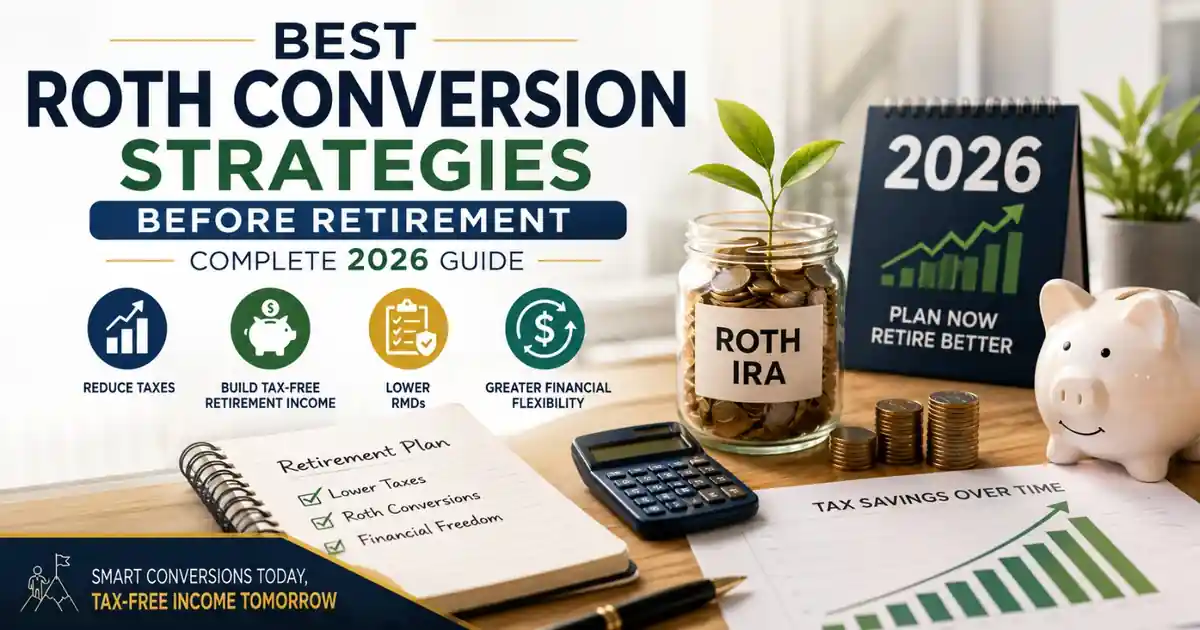
  • Best Roth Conversion Strategies Before Retirement: Complete 2026 Guide

    Best Roth Conversion Strategies Before Retirement: Complete 2026 Guide


    Best Roth Conversion Strategies Before Retirement: Complete 2026 Guide

    Published: June 26, 2026 | Author: Subhash Rukade

    Roth Conversion Strategies

    Choosing the Best Roth Conversion Strategies Before Retirement can make a significant difference in how much money you keep during retirement. While many Americans focus on growing retirement savings, fewer spend time planning how those savings will be taxed after they stop working.

    A well-timed Roth conversion can reduce future tax bills, create tax-free retirement income, and provide greater flexibility when managing withdrawals. Instead of paying higher taxes later, many investors choose to pay taxes strategically today while they are in a lower tax bracket.

    As retirement approaches, decisions involving Traditional IRAs, Roth IRAs, Social Security benefits, Required Minimum Distributions (RMDs), and investment income become increasingly important. Understanding how these pieces work together allows you to build a retirement plan that is both tax-efficient and sustainable.

    If you are building a complete retirement strategy, start with our

    Retirement Planning Guide
    .
    It explains retirement income planning, investment strategies, tax-efficient withdrawals, Social Security decisions, and long-term wealth preservation for American investors.

    In this guide, you will learn the best Roth conversion strategies, discover when conversions make the most sense, review practical examples, avoid common mistakes, and explore planning ideas that may help you reduce lifetime taxes while strengthening your retirement income.

    Whether you plan to retire in the next few years or are already approaching retirement, understanding these Roth conversion strategies can help you make more informed financial decisions throughout 2026 and beyond.

    Understanding How Roth Conversions Work Before Retirement

    Before choosing the Best Roth Conversion Strategies Before Retirement, it is important to understand how a Roth conversion actually works. A Roth conversion allows you to move money from a Traditional IRA into a Roth IRA. The converted amount is generally included in your taxable income for that year.

    Although paying taxes now may seem expensive, many investors prefer this approach because qualified Roth IRA withdrawals can be completely tax-free during retirement. This strategy may also reduce future Required Minimum Distributions (RMDs) and provide greater flexibility when planning retirement income.

    Traditional IRA vs. Roth IRA

    FeatureTraditional IRARoth IRA
    ContributionsMay Be Tax DeductibleMade With After-Tax Dollars
    Investment GrowthTax DeferredTax Free
    Qualified WithdrawalsGenerally TaxableGenerally Tax Free
    Required Minimum DistributionsYesNo During Owner’s Lifetime

    Simple Roth Conversion Calculator Example

    Suppose you convert $40,000 from a Traditional IRA into a Roth IRA while remaining in the 22% federal tax bracket.

    Your estimated federal tax on the conversion would be approximately $8,800. Although you pay taxes today, future qualified withdrawals from that converted amount may be completely tax-free.

    Many financial planners believe this is one of the Best Roth Conversion Strategies Before Retirement because it exchanges today’s known tax rate for the possibility of tax-free retirement income in the future.

    The goal is not simply to avoid taxes. Instead, the objective is to manage taxes strategically over your entire retirement while preserving more of your wealth.

    Understanding these fundamentals makes it much easier to evaluate whether Roth conversions fit your personal retirement plan and long-term financial goals.

    Best Roth Conversion Strategies Before Retirement

    Choosing the Best Roth Conversion Strategies Before Retirement is about much more than simply moving money between retirement accounts. The goal is to lower lifetime taxes while creating greater flexibility for future retirement income.

    Every investor has a unique financial situation, so the most effective strategy depends on your income, tax bracket, retirement timeline, and long-term goals.

    1. Convert During Lower-Income Years

    Many Americans experience a temporary drop in taxable income after retiring but before claiming Social Security benefits.

    This period often provides an excellent opportunity for Roth conversions because taxes may be lower than they were during full-time employment.

    2. Use Partial Roth Conversions

    Instead of converting your entire Traditional IRA at once, many investors convert smaller amounts over several years.

    This strategy helps reduce the chance of moving into a higher tax bracket while steadily building tax-free retirement assets.

    3. Monitor Your Tax Bracket

    One of the Best Roth Conversion Strategies Before Retirement is converting only enough money to remain within your current federal tax bracket.

    This disciplined approach allows investors to manage taxes efficiently while avoiding unnecessary tax increases.

    Example Strategy

    Imagine a retired couple expects taxable income of $68,000 this year.

    After reviewing their projected tax bracket, they decide to convert an additional $18,000 from a Traditional IRA into a Roth IRA without moving into a significantly higher tax bracket.

    Repeating this strategy over several years gradually shifts retirement savings into tax-free accounts while helping control future Required Minimum Distributions.

    Investors who enjoy using technology to improve financial decisions can also explore our

    AI Investing Guide 2026
    .
    Modern planning tools can estimate future taxes, evaluate conversion opportunities, and help identify the Best Roth Conversion Strategies Before Retirement based on changing financial conditions.

    A thoughtful, gradual conversion strategy often produces better long-term results than making one large conversion in a single tax year.

    Real-World Roth Conversion Example and Retirement Tax Savings Case Study

    Understanding the Best Roth Conversion Strategies Before Retirement becomes much easier when you see how they work in a real-life situation. Many retirees assume Roth conversions are only useful for wealthy investors, but that is not the case.

    Middle-income Americans can also benefit from a well-planned Roth conversion strategy, especially when they carefully manage tax brackets and retirement withdrawals.


    Case Study: David and Susan’s Retirement Plan

    David and Susan retired at age 63 with approximately $850,000 in retirement savings. Most of their money was invested in Traditional IRAs, along with a taxable brokerage account and a small Roth IRA.

    Rather than withdrawing large amounts from their Traditional IRA, they reviewed their projected taxable income each year.

    During years when their income was lower, they converted approximately $25,000 annually into a Roth IRA. This gradual approach helped them remain within their preferred federal tax bracket while reducing future Required Minimum Distributions (RMDs).

    By retirement age, they had built a larger source of tax-free retirement income and gained greater flexibility when deciding where future withdrawals would come from.

    Combining Dividend Income With Roth Planning

    Many investors strengthen their retirement strategy by combining Roth conversions with dividend-paying investments.

    Dividend income can provide steady cash flow while Roth assets continue growing tax-free, creating a more balanced retirement income plan.

    To learn how to build a reliable income portfolio, read our

    How to Build a Dividend Portfolio
    .

    You can also explore our

    Top Dividend Stocks USA 2026

    guide for dividend investment ideas that may complement a tax-efficient retirement strategy.

    The biggest lesson from this case study is simple: the Best Roth Conversion Strategies Before Retirement are usually gradual, carefully planned, and integrated into an overall retirement income strategy rather than being treated as a one-time financial decision.

    Common Roth Conversion Mistakes Investors Should Avoid

    Even the Best Roth Conversion Strategies Before Retirement can produce disappointing results if investors make avoidable mistakes. A Roth conversion is a powerful retirement planning tool, but timing and execution are just as important as the conversion itself.

    Many retirees focus only on reducing taxes today instead of looking at their total lifetime tax picture. A thoughtful, long-term strategy usually delivers better results.

    Best Roth Conversion Strategies Before Retirement common mistakes

    1. Converting Too Much in One Tax Year

    One of the biggest mistakes is converting an entire Traditional IRA at once. A large conversion can push you into a higher federal tax bracket and create a larger tax bill than expected.

    Many financial planners recommend partial annual conversions instead of one large transaction.

    2. Ignoring Medicare Premiums

    Higher taxable income from a Roth conversion may increase Medicare Part B and Part D premiums for some retirees.

    Always estimate the impact on healthcare costs before deciding how much to convert.

    3. Forgetting About State Income Taxes

    Federal taxes are only part of the equation. Some states tax retirement income differently, making location an important part of retirement tax planning.

    4. Missing Long-Term Investment Opportunities

    A Roth IRA allows investments to grow tax-free for qualified withdrawals. Investors should continue building diversified portfolios after completing Roth conversions.

    Our

    SIP Investing Guide 2026

    explains how consistent investing can strengthen long-term wealth.

    Investors preparing for uncertain markets should also review our

    Recession-Proof Investing 2026

    guide.

    Managing everyday cash flow also supports retirement planning. Explore our

    Best Credit Cards 2026

    resource for practical money-saving ideas.

    Avoiding these common mistakes helps investors apply the Best Roth Conversion Strategies Before Retirement more effectively, reduce lifetime taxes, and build a stronger, more flexible retirement income plan.

    Future Trends in Roth Conversion Planning for 2026 and Beyond

    The Best Roth Conversion Strategies Before Retirement are evolving as retirement planning becomes more data-driven and tax laws continue to change. Investors who stay informed are often better prepared to protect their retirement income and preserve more wealth over the long term.

    Rather than focusing only on today’s tax situation, successful retirees also prepare for future tax policy changes, healthcare costs, and evolving investment opportunities.

    Tax Diversification Will Become Even More Important

    Financial professionals increasingly recommend building retirement savings across multiple account types, including Traditional IRAs, Roth IRAs, taxable brokerage accounts, dividend portfolios, and cash reserves.

    This approach provides greater flexibility when deciding which accounts to withdraw from during retirement and may help lower lifetime taxes.

    Artificial Intelligence Is Improving Retirement Planning

    Modern planning software now uses artificial intelligence to estimate future tax brackets, project retirement income, identify Roth conversion opportunities, and analyze withdrawal strategies.

    These tools help investors make better-informed decisions while adapting to changing financial conditions.

    For a complete retirement roadmap, revisit our

    Retirement Planning Guide
    ,
    which explains how tax planning, investing, Social Security, and retirement withdrawals work together.

    Trusted Retirement Planning Resources

    For the latest retirement and tax information, review these trusted sources:

    Recommended Retirement Resources

    The investors who benefit most from the Best Roth Conversion Strategies Before Retirement are those who review their retirement plan every year, stay informed about tax law changes, and adjust their strategy as financial goals evolve. Consistent planning today can create greater financial freedom throughout retirement.

    Frequently Asked Questions About Roth Conversion Strategies

    1. What Is a Roth Conversion?

    A Roth conversion moves money from a Traditional IRA into a Roth IRA. Although taxes are generally paid on the converted amount today, future qualified withdrawals may be completely tax-free.

    2. Who Should Consider a Roth Conversion?

    Investors expecting to be in the same or a higher tax bracket during retirement often benefit the most. The Best Roth Conversion Strategies Before Retirement are especially valuable during lower-income years.

    3. Can Roth Conversions Reduce Required Minimum Distributions?

    Yes. Moving assets from a Traditional IRA to a Roth IRA may reduce future Required Minimum Distributions (RMDs), giving retirees greater flexibility over retirement income.

    4. Should I Convert My Entire IRA at Once?

    For many investors, gradual annual conversions are more tax-efficient than converting an entire account in one year because they help avoid higher tax brackets.

    5. Will Roth Conversions Affect Medicare Premiums?

    Possibly. A large conversion increases taxable income, which may temporarily increase Medicare Part B and Part D premiums. Planning the conversion amount carefully is important.

    6. Are Roth Conversion Strategies Worth It?

    For many Americans, the Best Roth Conversion Strategies Before Retirement can reduce lifetime taxes, improve retirement flexibility, and create more tax-free retirement income.

    Conclusion

    The Best Roth Conversion Strategies Before Retirement are not about avoiding taxes completely. They are about paying taxes strategically so you can potentially keep more of your retirement income in the future.

    Whether you retire in five years or twenty, planning ahead gives you more options. Partial Roth conversions, tax diversification, careful withdrawal planning, and annual tax reviews can significantly improve long-term retirement outcomes.

    If you are building a complete retirement strategy, don’t forget to explore our

    Retirement Planning Guide
    ,
    which covers retirement investing, Social Security, tax planning, withdrawal strategies, and wealth preservation.

    The earlier you start planning, the more opportunities you may have to lower lifetime taxes and build lasting financial security.

    📩 Get Weekly Retirement Insights

    Join thousands of American investors receiving retirement planning tips, Roth IRA strategies, tax-saving ideas, dividend investing insights, and wealth-building guides every week.


    Subscribe by Email

    Free Updates • No Spam • Unsubscribe Anytime


    ✨ About the Author

    Subhash Rukade is the founder of FinanceInvestment.site, where he helps American investors understand retirement planning, dividend investing, tax strategies, and personal finance through practical, easy-to-follow guides designed for long-term financial success.

  • Safe Withdrawal Rate in 2026: 3%, 4%, or 5%? The Complete Retirement Income Guide

    Safe Withdrawal Rate in 2026: 3%, 4%, or 5%? The Complete Retirement Income Guide


    Safe Withdrawal Rate in 2026: 3%, 4%, or 5%?

    Author: Subhash Rukade

    Published: June 20, 2026

    Safe Withdrawal Rate 2026

    Why the Safe Withdrawal Rate in 2026 Matters More Than Ever

    Safe Withdrawal Rate 2026 is one of the most important topics for retirees planning their retirement income. Choosing between a 3%, 4%, or 5% withdrawal rate can significantly affect how long your retirement savings last and how much income you can safely generate throughout retirement.

    For decades, many financial planners relied on the famous 4% rule. The idea was simple. Retirees could withdraw 4% of their portfolio during the first year of retirement and then adjust that amount for inflation each year. Historically, this approach worked reasonably well for many investors.

    However, retirement planning in 2026 looks very different. Inflation spikes, changing interest rates, and longer life expectancies have sparked a new debate. Should retirees use a conservative 3% withdrawal rate? Is the traditional 4% rule still reliable? Or can some investors safely withdraw 5%?

    The answer depends on several factors. Portfolio size, investment allocation, retirement age, health conditions, and income sources such as Social Security all play a role.

    Before deciding on a withdrawal strategy, it is important to build a strong retirement foundation. If you have not already done so, read our comprehensive
    Retirement Planning Guide for Americans in 2026.
    This pillar guide explains retirement investing, income planning, tax strategies, and long-term wealth preservation.

    Modern retirees also have access to new planning tools. Artificial intelligence is helping investors analyze risk and improve decision-making. You can learn more in our
    AI Investing Guide 2026.

    In this article, we will compare the 3%, 4%, and 5% withdrawal rules. We will look at real-world examples, retirement income strategies, portfolio risks, common mistakes, and future retirement trends. By the end, you will have a much clearer idea of which withdrawal rate may fit your retirement goals in 2026.

    The goal is not simply to maximize income today. The goal is to create a retirement paycheck that can support your lifestyle for decades while protecting the wealth you worked so hard to build.

    Understanding the 3%, 4%, and 5% Withdrawal Rules

    To understand the Safe Withdrawal Rate in 2026, it helps to know where the popular withdrawal rules came from.

    The most widely known strategy is the 4% rule. It originated from retirement research that analyzed historical market performance and portfolio survival rates. The goal was simple: determine how much retirees could withdraw each year without running out of money during a 30-year retirement.

    The Safe Withdrawal Rate 2026 debate continues to be one of the most important retirement planning discussions for American retirees.

    For many years, the 4% rule became a standard retirement planning guideline. However, changing market conditions and increasing life expectancy have caused many investors to reconsider whether 4% remains the ideal withdrawal rate.

    The 3% Withdrawal Rule

    The 3% withdrawal strategy is considered the most conservative option.

    Retirees who use this approach withdraw less money each year, which can increase the likelihood that their portfolio survives longer market downturns and extended retirement periods.

    The downside is lower annual income. Some retirees may find that a 3% withdrawal rate does not provide enough spending flexibility.

    The 4% Withdrawal Rule

    The traditional 4% rule attempts to balance income and portfolio preservation.

    For many retirees, it offers a reasonable compromise between maintaining lifestyle needs and protecting long-term retirement assets.

    This strategy remains popular because it has historically worked across many different market environments.

    The 5% Withdrawal Rule

    The 5% strategy generates higher retirement income immediately.

    Retirees with larger portfolios often find this approach attractive because it increases available cash flow. However, higher withdrawals also increase the risk of portfolio depletion during prolonged market declines.

    Investors considering a 5% withdrawal rate should carefully evaluate risk tolerance, retirement duration, and alternative income sources.

    Which Withdrawal Rate Is Best?

    There is no universal answer.

    A retiree with strong dividend income, Social Security benefits, and a diversified portfolio may be comfortable with a different withdrawal rate than someone relying entirely on investment withdrawals.

    That is why the Safe Withdrawal Rate in 2026 should be viewed as a personalized decision rather than a fixed rule.

    In the next section, we will compare exactly how much retirement income a portfolio can generate using the 3%, 4%, and 5% withdrawal strategies.

    Safe Withdrawal Rate 2026: Understanding the 3%, 4%, and 5% Rules

    Understanding percentages is helpful, but most retirees want to know how withdrawal rates translate into actual dollars. This section of our Safe Withdrawal Rate in 2026 guide shows how different portfolio sizes perform under the 3%, 4%, and 5% withdrawal strategies.

    The Safe Withdrawal Rate 2026 debate continues to be one of the most important retirement planning discussions for American retirees.

    The difference between these withdrawal rates may seem small. However, over a 20- to 30-year retirement, even a 1% change can significantly impact portfolio longevity and retirement income.

    Retirement Income Comparison Table

    Portfolio Size3% Withdrawal4% Withdrawal5% Withdrawal
    $250,000$7,500/year$10,000/year$12,500/year
    $500,000$15,000/year$20,000/year$25,000/year
    $1,000,000$30,000/year$40,000/year$50,000/year
    $2,000,000$60,000/year$80,000/year$100,000/year

    Retirement Income Calculator Example

    Suppose a retiree has a portfolio worth $1 million.

    • 3% Rule = $30,000 annual income
    • 4% Rule = $40,000 annual income
    • 5% Rule = $50,000 annual income

    At first glance, the 5% withdrawal strategy appears attractive because it provides an additional $20,000 per year compared to the 3% rule.

    However, the higher withdrawal amount may increase the risk of depleting retirement assets during periods of market weakness.

    Inflation Makes a Big Difference

    Inflation is one of the biggest threats to retirement income.

    A retiree withdrawing $40,000 today may need significantly more income ten or twenty years from now to maintain the same purchasing power.

    This is why many retirees combine withdrawal strategies with dividend investing and long-term growth investments.

    Investors interested in generating additional retirement income should read our

    How to Build a Dividend Portfolio

    guide.

    You can also explore our

    Top Dividend Stocks USA 2026

    resource for dividend income opportunities.

    The best Safe Withdrawal Rate in 2026 is often the one that balances current income needs with long-term portfolio survival. In the next section, we’ll examine a real-world retirement case study and see how different withdrawal rates affect actual retirees.

    Real-World Case Study: Which Withdrawal Rate Works Best in Retirement?

    Understanding retirement withdrawal strategies becomes much easier when we look at a real-world example. This case study shows how different withdrawal rates can affect retirement income and long-term portfolio sustainability.

    The purpose of this example is not to identify a perfect strategy. Instead, it demonstrates how the Safe Withdrawal Rate in 2026 depends on personal circumstances, market conditions, and retirement goals.

    Meet Robert and Linda

    Robert is 66 and Linda is 64. They recently retired after working for more than 35 years.

    Their financial situation looks like this:

    • Retirement Portfolio: $1,000,000
    • Social Security Income: $32,000 per year
    • Mortgage: Paid Off
    • Emergency Fund: $50,000
    • Desired Retirement Spending: $75,000 per year

    Because Social Security covers only part of their expenses, they need their investment portfolio to generate additional retirement income.

    Scenario 1: Using the 3% Withdrawal Rule

    A 3% withdrawal rate generates approximately $30,000 annually from their portfolio.

    Combined with Social Security, total retirement income equals about $62,000 per year.

    While this approach offers strong portfolio protection, it falls short of their desired spending target.

    Scenario 2: Using the 4% Withdrawal Rule

    The traditional 4% rule provides approximately $40,000 annually.

    Combined with Social Security, total income increases to roughly $72,000 per year.

    This amount comes much closer to their retirement income goal while maintaining a reasonable balance between spending and portfolio preservation.

    Scenario 3: Using the 5% Withdrawal Rule

    A 5% withdrawal rate produces approximately $50,000 annually.

    Combined retirement income rises to about $82,000 per year.

    Although this provides greater spending flexibility, it also increases the risk of portfolio depletion during prolonged market downturns.

    Portfolio Allocation Matters

    Robert and Linda maintain a diversified retirement portfolio:

    • 55% Stocks
    • 30% Bonds
    • 10% Dividend Investments
    • 5% Cash Reserves

    This allocation helps balance growth, income generation, and risk management.

    Investors concerned about market downturns should also read our

    Recession-Proof Investing 2026

    guide.

    Technology is also helping retirees evaluate withdrawal strategies more effectively. Our

    AI Investing Guide 2026

    explains how modern tools can support retirement decision-making.

    This case study highlights an important lesson: the best Safe Withdrawal Rate in 2026 is not necessarily the highest one. It is the rate that provides enough income while preserving financial security throughout retirement.

    In the next section, we’ll explore the most common withdrawal mistakes retirees make and how to avoid them.

    Common Withdrawal Mistakes That Can Damage Retirement Income

    Even the best retirement portfolio can struggle if withdrawals are not managed carefully. Many retirees focus on investment performance but overlook spending habits and withdrawal decisions.Safe Withdrawal Rate 2026

    Choosing the right Safe Withdrawal Rate 2026 depends on portfolio size, retirement age, and expected investment returns.

    That is why understanding common mistakes is an important part of choosing the right Safe Withdrawal Rate in 2026.

    Most retirement income problems do not happen overnight. They develop gradually through a series of small financial decisions that compound over time.

    Mistake #1: Ignoring Inflation

    One of the most common retirement mistakes is underestimating inflation.

    A retiree may feel comfortable withdrawing $40,000 annually today. However, rising prices can reduce purchasing power significantly over the next 10 to 20 years.

    Healthcare, housing, insurance, and food costs often increase faster than expected.

    A successful retirement plan should include investments that have the potential to grow alongside inflation.

    Mistake #2: Increasing Withdrawals During Bull Markets

    Strong markets can create a false sense of security.

    When portfolios grow rapidly, some retirees increase spending and withdrawals beyond sustainable levels.

    Unfortunately, market conditions can change quickly.

    Excessive withdrawals during good years may reduce financial flexibility during future downturns.

    Mistake #3: Poor Diversification

    Many retirees hold too much money in a single investment, sector, or asset class.

    Concentrated portfolios often experience larger losses during market corrections.

    Diversification across stocks, bonds, dividend investments, and cash reserves can improve long-term portfolio stability.

    Mistake #4: No Emergency Cash Reserve

    Unexpected expenses are inevitable.

    Medical bills, home repairs, family emergencies, and vehicle replacements can force retirees to sell investments at unfavorable times.

    Maintaining a dedicated emergency fund helps reduce this risk.

    Mistake #5: Using Credit to Support Retirement Spending

    Some retirees rely heavily on credit cards when investment income falls short.

    While credit can provide short-term flexibility, excessive debt may place unnecessary pressure on retirement finances.

    Investors evaluating financial products can review our

    Best Credit Cards 2026

    guide.

    Mistake #6: Stopping Investments Too Early

    Many retirees believe investing ends once retirement begins.

    In reality, retirement portfolios often need continued growth to combat inflation and support long-term income needs.

    Investors interested in disciplined long-term investing strategies can explore our

    SIP Investing Guide 2026
    .

    The key lesson is simple: the best Safe Withdrawal Rate in 2026 cannot compensate for poor financial habits. Successful retirees combine smart withdrawal strategies with diversification, inflation protection, disciplined spending, and long-term planning.

    In the next section, we’ll explore practical retirement income strategies that can help retirees increase cash flow while reducing portfolio risk.

    Practical Retirement Income Strategies for 2026

    Choosing the right Safe Withdrawal Rate in 2026 is important, but withdrawal rates alone do not determine retirement success. The most financially secure retirees often combine multiple income strategies to create stable cash flow while protecting their portfolios.

    Many investors use the Safe Withdrawal Rate 2026 framework to estimate how much income their portfolio can safely generate.

    A diversified retirement income plan can reduce dependence on any single asset class and improve long-term financial flexibility.

    Dividend Income Strategy

    Dividend investing remains one of the most popular retirement income approaches.Safe Withdrawal Rate 2026

    Instead of selling shares regularly, retirees can collect dividend payments from high-quality companies and income-focused funds.

    This approach may help preserve capital while generating consistent cash flow.

    Investors interested in this strategy should review our

    How to Build a Dividend Portfolio

    guide.

    You can also explore our

    Top Dividend Stocks USA 2026

    resource.

    Bond Ladder Strategy

    Many retirees use bond ladders to create predictable income.

    A bond ladder consists of bonds with different maturity dates. As bonds mature, the proceeds can be used for retirement expenses or reinvested.Safe Withdrawal Rate 2026

    This strategy may reduce interest-rate risk while providing dependable income streams.

    Bucket Strategy

    The bucket strategy separates retirement assets into different categories based on time horizons.

    • Short-Term Bucket: Cash and money market funds
    • Medium-Term Bucket: Bonds and income investments
    • Long-Term Bucket: Stocks and growth investments

    This approach can help retirees avoid selling growth assets during market downturns.

    Dynamic Withdrawal Strategy

    Rather than withdrawing the same percentage every year, some retirees adjust withdrawals based on portfolio performance.Safe Withdrawal Rate 2026

    When markets perform well, withdrawals may increase modestly. During weaker markets, spending adjustments can help preserve portfolio longevity.

    Retirement Strategy Comparison

    StrategyRisk LevelIncome Stability
    Dividend IncomeModerateHigh
    Bond LadderLowHigh
    Bucket StrategyModerateHigh
    Dynamic WithdrawalsModerateVariable

    Trusted Retirement Resources

    📘 Recommended Retirement Book


    The Bogleheads’ Guide to Retirement Planning

    This book covers retirement investing, withdrawal strategies, tax planning, and portfolio management in a practical and easy-to-understand format.

    The best Safe Withdrawal Rate in 2026 often works alongside a broader retirement income strategy. Combining dividend income, bond ladders, cash reserves, and disciplined withdrawals can help retirees maintain income while reducing long-term portfolio risk.

    Future Retirement Trends, FAQ, and Final Thoughts

    The retirement landscape is changing rapidly. Longer life expectancy, evolving investment markets, and new technology are reshaping how Americans prepare for retirement.

    Is the Safe Withdrawal Rate 2026 still based on the 4% rule?

    As we move further into 2026 and beyond, many retirees are shifting away from rigid retirement rules and adopting more flexible income strategies. Rather than relying solely on the traditional 4% rule, investors are increasingly using dynamic withdrawal methods, dividend income, and personalized retirement planning.

    Technology is also becoming a valuable retirement tool. Artificial intelligence can help investors monitor portfolios, analyze risk, and identify opportunities to improve retirement income.

    If you want a broader understanding of retirement investing and long-term financial security, be sure to read our

    Retirement Planning Guide for Americans in 2026
    .

    Frequently Asked Questions

    1. Is the 4% rule still safe in 2026?

    For many retirees, the 4% rule remains a useful guideline. However, portfolio size, market conditions, inflation, and retirement length should all be considered before choosing a withdrawal rate.

    2. Is a 3% withdrawal rate too conservative?

    Not necessarily. A 3% withdrawal rate may provide greater portfolio protection, especially for retirees expecting a long retirement.

    3. Can I use a 5% withdrawal rate?

    Some retirees can sustain a 5% withdrawal rate, particularly if they have additional income sources. However, the risk of running out of money increases.

    4. What investments work best for retirement income?

    Dividend stocks, bonds, income-focused ETFs, and diversified portfolios are commonly used retirement income investments.

    5. How often should retirees review withdrawal strategies?

    At least once per year. Portfolio performance, inflation, and spending needs can change over time.

    Conclusion

    The best Safe Withdrawal Rate in 2026 depends on your goals, risk tolerance, portfolio structure, and retirement income needs.

    The Safe Withdrawal Rate 2026 is not a one-size-fits-all solution. Every retiree should evaluate their goals, risk tolerance, and income needs before selecting a withdrawal strategy.

    A 3% withdrawal rate prioritizes safety. A 4% withdrawal rate balances income and portfolio preservation. A 5% withdrawal rate provides higher income but carries greater long-term risk.

    The most successful retirees focus on flexibility rather than following a single rule forever. By combining smart withdrawals, diversified investments, dividend income, and disciplined spending, investors can improve their chances of achieving lasting financial security.

    📩 Free Retirement Newsletter

    Get retirement income strategies, investing ideas, Social Security updates, and wealth-building tips delivered directly to your inbox.

    Join thousands of investors preparing for a smarter retirement.


    👨‍💼 Subhash Rukade

    Personal Finance & Retirement Writer | Helping Americans build retirement income, grow wealth, and make smarter investing decisions for a secure financial future.

  • How AI Is Transforming Retirement Planning: A Smarter Path to Retirement in 2026

    How AI Is Transforming Retirement Planning: A Smarter Path to Retirement in 2026


    How AI Is Transforming Retirement Planning: A Smarter Path to Retirement in 2026

    Published: June 12, 2026

    Author: Subhash Rukade

    alt="How AI Is Transforming Retirement Planning in 2026"

    Introduction: How AI Is Transforming Retirement Planning

    Retirement planning has never been more important for American families. Rising healthcare costs, inflation, longer life expectancy, and uncertain market conditions are forcing investors to rethink how they prepare for retirement. In 2026, many Americans are looking for smarter ways to build financial security without spending hours analyzing investments and retirement projections.

    This is exactly where artificial intelligence is making a difference. The conversation around How AI Is Transforming Retirement Planning has gained significant attention because AI-powered tools can help investors make more informed decisions about saving, investing, and preparing for the future.

    Traditionally, retirement planning involved spreadsheets, manual calculations, and meetings with financial advisors. While those methods still have value, artificial intelligence now allows investors to access advanced retirement planning tools directly from their phones or computers.

    Modern AI systems can analyze income, expenses, savings rates, investment performance, retirement goals, inflation assumptions, and market conditions within seconds. This helps investors understand whether they are on track to achieve financial independence or if adjustments are needed.

    One reason AI retirement planning is becoming so popular is personalization. Instead of providing generic recommendations, AI can create customized retirement strategies based on an individual’s age, income, risk tolerance, investment portfolio, and retirement timeline.

    The broader impact of artificial intelligence extends far beyond retirement planning. Investors who want a complete understanding of how AI is changing investing, saving, budgeting, and wealth creation should explore our
    AI Investing & Personal Finance Guide 2026.

    While AI cannot predict the future perfectly, it can help investors make better decisions using data-driven insights. As retirement planning becomes more complex, artificial intelligence is emerging as one of the most powerful tools available to investors who want greater confidence about their financial future.

    In this guide, we’ll explore how AI retirement planning works, the tools driving this transformation, practical examples, common mistakes, and strategies that can help Americans retire more comfortably in 2026 and beyond.

    How AI Retirement Planning Works

    To fully understand How AI Is Transforming Retirement Planning, it’s important to look at how modern AI retirement planning systems actually work. While traditional retirement planning often requires manual calculations and periodic reviews, artificial intelligence can analyze financial information continuously and provide real-time insights.

    AI retirement planning combines machine learning, predictive analytics, and financial modeling to help investors make smarter decisions about their future. The goal is simple: create a personalized retirement strategy that improves the chances of achieving long-term financial security.

    Data Collection and Financial Analysis

    Everything begins with data. AI retirement planning tools collect information about income, savings, investments, debt, expenses, retirement accounts, and financial goals.

    The system also considers external factors such as inflation, interest rates, market performance, and life expectancy estimates.

    By analyzing these variables together, AI can create a comprehensive picture of an investor’s current financial situation.

    Retirement Income Forecasting

    One of the most valuable features of AI retirement planning is retirement income forecasting.

    Artificial intelligence can estimate how much income an investor may generate during retirement based on current savings, contribution rates, expected investment returns, and retirement age.

    These projections help investors identify potential shortfalls before they become serious problems.

    If retirement goals appear unrealistic, AI systems can recommend adjustments such as increasing savings contributions or modifying investment strategies.

    Savings Goal Analysis

    AI retirement planning tools also evaluate whether investors are saving enough to reach their retirement objectives.

    The software compares current savings behavior with long-term retirement targets and generates recommendations designed to improve outcomes.

    This allows investors to make gradual changes rather than waiting until retirement is approaching.

    Investment Recommendations and Risk Assessment

    AI systems analyze investment portfolios to determine whether asset allocations align with retirement goals and risk tolerance.

    The technology can identify potential risks, excessive concentration, or insufficient diversification and suggest portfolio adjustments when necessary.

    Investors interested in understanding how artificial intelligence is improving financial decision-making beyond retirement planning should also explore our
    AI Personal Finance Guide 2026.

    Ultimately, AI retirement planning provides investors with a data-driven roadmap for the future. While no system can guarantee retirement success, artificial intelligence can help Americans make better-informed decisions and stay on track toward long-term financial independence.

    AI Retirement Planning Tools and Strategies

    The rapid growth of artificial intelligence has introduced powerful tools that are changing how Americans prepare for retirement. Understanding How AI Is Transforming Retirement Planning requires looking at the technologies and strategies that help investors make smarter financial decisions.

    Modern AI retirement planning platforms can automate calculations, monitor investments, forecast retirement income, and recommend personalized strategies based on an investor’s unique situation.

    These tools help simplify what has traditionally been one of the most complex areas of personal finance.

    AI Retirement Calculators

    Traditional retirement calculators often rely on a few basic assumptions. AI-powered retirement calculators go much further.

    They analyze income growth, inflation, market conditions, contribution rates, retirement age, Social Security benefits, and life expectancy estimates.

    This creates a more realistic retirement forecast and helps investors understand whether they are on track to meet their financial goals.

    Robo-Advisors for Retirement Accounts

    Many retirement investors now use robo-advisors to manage IRAs, Roth IRAs, and other retirement accounts.

    These AI-driven platforms build diversified portfolios, monitor investments, and automatically rebalance holdings when market conditions change.

    This allows investors to maintain discipline without constantly managing their portfolios manually.

    Portfolio Optimization

    Portfolio optimization is another major benefit of AI retirement planning.

    Artificial intelligence evaluates risk tolerance, retirement timelines, and expected returns to create investment allocations that align with long-term objectives.

    As retirement approaches, AI can recommend gradual adjustments to reduce portfolio risk while maintaining growth potential.

    Automated Savings Strategies

    AI systems can also help investors maintain consistent savings habits.

    By analyzing spending patterns and cash flow, AI tools may recommend contribution increases that help accelerate retirement savings without creating financial strain.

    Investors looking to strengthen long-term wealth-building habits should also review our
    Complete SIP Investing Guide 2026.

    AI Tool vs Retirement Planning Benefit

    AI ToolRetirement Planning Benefit
    AI Retirement CalculatorIncome Forecasting
    Robo-AdvisorPortfolio Management
    Predictive AnalyticsFuture Retirement Projections
    Risk Monitoring SystemRetirement Risk Assessment
    Automated Savings ToolContribution Optimization

    Together, these technologies help investors create more efficient retirement strategies. Instead of relying on guesswork, AI retirement planning uses data-driven insights to improve decision-making and increase confidence about the future.

    Real-World Example of AI Retirement Planning

    One of the easiest ways to understand How AI Is Transforming Retirement Planning is through a practical example. While AI technology may sound complex, its real-world application is surprisingly simple and highly valuable for retirement investors.

    Let’s consider Sarah, a 42-year-old professional living in California. She earns a stable income, contributes to her 401(k), and wants to retire comfortably at age 65. Like many Americans, she worries about inflation, healthcare costs, and whether she is saving enough for retirement.

    Instead of relying solely on spreadsheets and manual calculations, Sarah decides to use an AI-powered retirement planning platform.

    How AI Is Transforming Retirement Planning Real Example

    Step 1: Analyzing Financial Information

    The AI platform gathers information about Sarah’s income, current retirement savings, monthly expenses, investment accounts, and desired retirement age.

    The system also factors in inflation projections, expected investment returns, Social Security estimates, and healthcare expenses.

    Within seconds, the AI creates a personalized retirement forecast.

    Step 2: Identifying Retirement Gaps

    The analysis reveals that Sarah is slightly behind her retirement savings target.

    Rather than presenting a vague warning, the AI provides specific recommendations. It suggests increasing her retirement contributions by 3%, reducing certain discretionary expenses, and maintaining a more diversified investment portfolio.

    These small adjustments significantly improve her projected retirement income.

    Step 3: Portfolio Optimization

    The AI platform evaluates Sarah’s investment allocation and identifies opportunities to improve diversification.

    It recommends maintaining growth-focused investments while gradually increasing exposure to income-producing assets as retirement approaches.

    Investors interested in building future passive income streams should also explore our
    How to Build a Dividend Portfolio
    guide.

    Step 4: Ongoing Monitoring

    Perhaps the biggest advantage is continuous monitoring. As market conditions change and Sarah’s financial situation evolves, the AI updates projections automatically and recommends adjustments when necessary.

    For a broader understanding of how artificial intelligence is transforming investing and personal finance, revisit our
    AI Investing & Personal Finance Guide 2026.

    A highly recommended resource for retirement investors is
    The Psychology of Money by Morgan Housel.
    The book provides valuable lessons about long-term planning, financial behavior, and wealth building.

    This example shows why AI retirement planning is gaining popularity. It helps investors make informed decisions, identify potential problems early, and stay focused on long-term retirement goals.

    Common AI Retirement Planning Mistakes Investors Should Avoid

    While understanding How AI Is Transforming Retirement Planning can help investors build a stronger financial future, it’s equally important to recognize the mistakes that can reduce the effectiveness of AI-powered retirement strategies.

    Artificial intelligence is a powerful planning tool, but it is not a magic solution. Investors who depend entirely on technology without understanding the basics of retirement planning may encounter avoidable problems.

    By identifying common mistakes early, investors can make better decisions and improve their chances of achieving long-term financial security.

    1. Relying Completely on AI

    One of the biggest mistakes investors make is assuming AI can handle every aspect of retirement planning without human involvement.

    AI can analyze data, create forecasts, and recommend strategies, but personal financial goals, lifestyle preferences, and family circumstances still require human judgment.

    Investors should review AI recommendations regularly rather than following them blindly.

    2. Using Unrealistic Retirement Assumptions

    Some investors underestimate how much money they will need during retirement.

    For example, healthcare expenses, inflation, travel plans, and unexpected life events can significantly increase retirement costs.

    If inaccurate assumptions are entered into an AI planning tool, the resulting retirement projections may also be unrealistic.

    Accurate data leads to more reliable retirement forecasts.

    3. Ignoring Inflation

    Inflation remains one of the biggest threats to retirement savings.

    Many investors focus on their current income needs without considering how prices may increase over the next 20 or 30 years.

    AI retirement planning tools can help estimate inflation-adjusted retirement income, but investors must ensure inflation assumptions are included in their planning process.

    4. Failing to Review Retirement Plans

    Retirement planning is not a one-time event. Financial situations, market conditions, and personal goals change over time.

    Even with AI monitoring, investors should review retirement plans periodically and make adjustments when necessary.

    Regular reviews help ensure retirement strategies remain aligned with long-term objectives.

    5. Ignoring Economic Risks

    Market downturns, recessions, and economic uncertainty can affect retirement portfolios.

    Investors seeking strategies for navigating difficult market environments should also explore our
    Recession-Proof Investing 2026
    guide.

    Trusted resources such as the
    SEC
    and
    Investor.gov
    can also provide valuable retirement planning education.

    The most successful retirement investors combine artificial intelligence with realistic expectations, regular reviews, diversification, and long-term thinking. AI can improve planning, but informed decision-making remains the foundation of retirement success.

    Practical Retirement Planning Tips Using AI

    Understanding How AI Is Transforming Retirement Planning is only the first step. The real value comes from applying these tools effectively to build a stronger retirement strategy. While artificial intelligence can simplify many aspects of retirement planning, investors still need sound financial habits and a long-term mindset.

    The most successful retirement investors use AI as a decision-support tool while remaining actively involved in their financial future.

    Start Planning Early

    One of the greatest advantages in retirement planning is time. The earlier investors begin saving and investing, the more opportunity they have to benefit from compound growth.

    AI retirement planning tools can calculate how small contribution increases today may lead to significantly larger retirement balances in the future.

    Even investors who start later can use AI projections to identify opportunities for catching up and improving retirement readiness.

    Increase Retirement Contributions Regularly

    AI systems often identify contribution levels that may be insufficient to reach retirement goals.

    A practical strategy is to increase retirement contributions whenever income rises. Annual salary increases, bonuses, or tax refunds can be directed toward retirement accounts.

    This approach allows investors to build wealth without making dramatic lifestyle changes.

    Diversify Retirement Investments

    Diversification remains one of the most important principles in retirement planning.

    AI tools can help investors maintain balanced portfolios by allocating investments across stocks, bonds, dividend investments, ETFs, and other asset classes.

    A diversified portfolio may reduce risk while providing opportunities for long-term growth.

    Review Retirement Plans Annually

    Life circumstances change over time. Income levels, family responsibilities, healthcare needs, and retirement goals may evolve.

    Even though AI continuously monitors financial data, investors should review retirement plans at least once each year.

    Regular reviews help ensure strategies remain aligned with personal objectives.

    Use AI for Ongoing Portfolio Monitoring

    Artificial intelligence excels at monitoring investment portfolios and identifying risks.

    AI can track market conditions, portfolio performance, inflation trends, and retirement projections in real time.

    This allows investors to address potential issues before they become major problems.

    AI Retirement Planning vs Traditional Retirement Planning

    FeatureAI Retirement PlanningTraditional Retirement Planning
    Forecasting SpeedInstant AnalysisManual Calculations
    Portfolio Monitoring24/7 AutomatedPeriodic Reviews
    PersonalizationHighly CustomizedAdvisor Dependent
    Risk MonitoringReal-Time AlertsManual Tracking
    Retirement AdjustmentsContinuous UpdatesOccasional Reviews

    Investors looking for additional income-producing opportunities should also review our
    Top Dividend Stocks USA 2026
    guide.

    Another highly recommended retirement planning resource is
    The Simple Path to Wealth by JL Collins.
    The book offers timeless guidance on financial independence, investing, and building long-term wealth.

    Ultimately, combining AI-powered retirement planning with consistent saving, diversification, and disciplined investing can significantly improve the likelihood of achieving long-term financial security.

    Frequently Asked Questions About AI Retirement Planning

    1. How Is AI Transforming Retirement Planning?

    AI helps investors analyze savings, investments, retirement income projections, and financial goals more efficiently. It provides personalized recommendations based on real-time data and long-term forecasting.

    2. Can AI Predict Exactly How Much Money I’ll Need in Retirement?

    No. AI cannot predict the future with complete accuracy. However, it can create realistic projections using inflation estimates, spending patterns, investment returns, and retirement goals.

    3. Is AI Retirement Planning Suitable for Beginners?

    Yes. Many AI-powered retirement tools are designed for beginners and provide easy-to-understand recommendations that help investors make smarter financial decisions.

    4. Can AI Help Reduce Retirement Risk?

    AI can monitor portfolios, identify concentration risks, and suggest diversification strategies. While it cannot eliminate risk, it can help investors manage risk more effectively.

    5. Does AI Replace Financial Advisors?

    Not completely. AI provides valuable data analysis and automation, while financial advisors offer personalized guidance and emotional support during major financial decisions.

    6. What Is the Biggest Benefit of AI Retirement Planning?

    The biggest benefit is personalized planning. AI can continuously evaluate financial situations and recommend adjustments that help investors stay on track toward retirement goals.

    Conclusion: How AI Is Transforming Retirement Planning

    As retirement planning becomes more complex, artificial intelligence is helping investors navigate financial decisions with greater confidence. Understanding How AI Is Transforming Retirement Planning allows investors to take advantage of powerful tools that can improve forecasting, investment management, risk analysis, and long-term financial planning.

    AI cannot guarantee retirement success, but it can help investors make smarter decisions based on data rather than guesswork. By combining artificial intelligence with consistent saving, disciplined investing, and realistic goals, Americans can build stronger retirement plans for the future.

    For a broader understanding of how artificial intelligence is changing investing, wealth building, and personal finance, revisit our
    AI Investing & Personal Finance Guide 2026.

    You can also strengthen your overall financial strategy by exploring our
    Best Credit Cards 2026
    guide.

    📩 Join Our Free Investor Newsletter

    Receive retirement planning tips, AI investing insights, dividend strategies, and wealth-building ideas directly in your inbox.

    Subscribe today and stay prepared for a financially secure retirement.

    Recommended Reading:
    I Will Teach You To Be Rich by Ramit Sethi


    About the Author

    Subhash Rukade is the founder of FinanceInvestment.site and writes about AI investing, retirement planning, stock market investing, and personal finance. His goal is to help everyday investors make smarter financial decisions through practical and easy-to-understand guidance.

    Thank you for reading! Here’s to smarter retirement planning and a stronger financial future. 🚀

  • SIP vs 401(k): Which Builds More Wealth? Complete 2026 Guide for Americans

    SIP vs 401(k): Which Builds More Wealth? Complete 2026 Guide for Americans

    SIP vs 401(k): Which Builds More Wealth? Complete 2026 Guide


    sip vs 401k which builds more wealthBy Subhash Rukade | Updated June 5, 2026

    Why Investors Compare SIP vs 401(k) in 2026

    SIP vs 401k which builds more wealth is one of the most searched retirement investing questions in 2026. Many Americans want to know whether monthly SIP investing or a traditional 401k plan offers greater long-term wealth-building potential. The answer depends on contribution levels, employer matching, investment returns, and investing discipline.

    Both approaches encourage long-term investing, regular contributions, and disciplined wealth creation.

    However, they operate differently and offer unique advantages.

    A SIP (Systematic Investment Plan) focuses on investing a fixed amount regularly into mutual funds, ETFs, or other investment vehicles.

    A 401(k), on the other hand, is an employer-sponsored retirement plan that provides tax advantages and may include employer matching contributions.

    Understanding these differences can help investors make smarter decisions for their financial future.

    If you are new to monthly investing, begin with our complete pillar guide:


    SIP Investing Guide 2026: How Monthly Investing Builds Long-Term Wealth

    One reason many investors compare SIP vs 401(k) is because both can play a major role in building retirement wealth.sip vs 401k which builds more wealth

    Some investors focus exclusively on a 401(k), while others combine retirement accounts with monthly SIP investing to diversify their wealth-building strategy.

    Strong financial habits outside investing are equally important.

    Investors looking to optimize spending and cash flow should also review:


    Best Credit Cards 2026: Rewards, Cashback & Smart Usage Guide

    In this guide, we’ll compare SIP vs 401(k), analyze wealth-building potential, review real-world examples, and help determine which strategy may be best suited for your retirement goals in 2026.

    SIP vs 401(k): Key Differences Explained

    To answer the question “SIP vs 401(k): Which builds more wealth?”, investors must first understand how these two wealth-building strategies work.

    Although both encourage regular investing and long-term growth, they differ in structure, tax treatment, flexibility, and employer involvement.

    Understanding these differences can help investors choose the strategy that best aligns with their retirement goals.

    What Is a SIP?

    A Systematic Investment Plan (SIP) allows investors to invest a fixed amount at regular intervals into mutual funds, ETFs, or other investment products.

    The primary advantage of SIP investing is flexibility.

    Investors can start with relatively small amounts, increase contributions over time, and choose from a wide variety of investment options.sip vs 401k which builds more wealth

    SIP investing also benefits from dollar-cost averaging, which helps reduce the impact of market volatility.

    What Is a 401(k)?

    A 401(k) is an employer-sponsored retirement account designed to help employees save for retirement.

    Contributions are typically made through payroll deductions.

    Many employers offer matching contributions, which can significantly increase retirement savings.

    One of the biggest advantages of a 401(k) is its tax benefits.

    Traditional 401(k) contributions are often made before taxes, reducing taxable income while investments grow tax-deferred.

    Flexibility vs Employer Benefits

    SIP investors generally have more control over where their money is invested.

    They can choose mutual funds, ETFs, dividend-focused portfolios, index funds, and many other investment options.

    401(k) participants usually select investments from a list provided by their employer’s retirement plan.

    However, employer matching contributions can provide a powerful advantage that SIP investors do not receive automatically.

    FeatureSIP Investing401(k)
    Contribution MethodMonthly InvestmentPayroll Deduction
    Employer MatchNoOften Available
    Investment FlexibilityHighModerate
    Tax AdvantagesDepends on AccountStrong
    Portfolio ControlGreaterLimited to Plan Options
    AccessibilityAnyone Can StartEmployer Sponsored

    Which Strategy Has the Early Advantage?

    For many Americans, a 401(k) receives an immediate boost through employer matching contributions.

    However, SIP investing often provides greater investment flexibility and can continue even when changing jobs.sip vs 401k which builds more wealth

    The most successful investors frequently use both strategies together rather than choosing only one.

    The biggest lesson from this section is simple:
    SIP vs 401(k): Which builds more wealth? depends on factors such as employer matching, tax benefits, investment choices, and long-term consistency. Understanding these differences creates a stronger foundation for retirement planning.

    Wealth Building Potential: SIP vs 401(k)

    When investors ask “SIP vs 401(k): Which builds more wealth?”, the real answer often depends on contribution levels, investment returns, employer matching, and how long the money remains invested.

    Both SIP investing and 401(k) plans can create substantial retirement wealth when used consistently over many years.

    The true driver of wealth creation is not the account type itself.

    Instead, it is the combination of regular investing, compounding, and long-term discipline.

    The Power of Compounding

    Compounding is one of the most powerful wealth-building forces available to investors.

    When investment returns generate additional returns, wealth can grow exponentially over time.

    Whether money is invested through a SIP or a 401(k), compounding rewards patience and consistency.

    This is why investors who begin early often build significantly larger retirement portfolios than those who wait.

    A 25-year-old investor has decades for compounding to work.

    A 45-year-old investor still has opportunities, but less time for growth.

    Monthly Contributions Matter More Than Timing

    Many investors spend too much time trying to predict market movements.

    In reality, consistent monthly investing often produces better long-term results than attempting to time the market.

    SIP investing naturally encourages disciplined monthly contributions.

    Similarly, a 401(k) automatically deducts contributions from each paycheck.

    Both systems help investors stay committed to their retirement goals.sip vs 401k which builds more wealth

    Dividend Reinvestment Can Accelerate Growth

    Many successful investors reinvest dividends to increase compounding.

    Dividend-paying investments can generate additional shares, which may produce even more future income and growth.

    Investors interested in dividend-focused retirement strategies should also review:


    How to Build a Dividend Portfolio

    FactorSIP Investing401(k)
    Compounding PotentialHighHigh
    Monthly Investing DisciplineStrongStrong
    Employer ContributionNoOften Yes
    Portfolio FlexibilityGreaterModerate
    Long-Term Wealth PotentialVery HighVery High

    A Highly Recommended Investing Book

    One of the most respected books on long-term investing is:


    The Psychology of Money by Morgan Housel

    The book explains why behavior, patience, and consistency often have a greater impact on wealth creation than trying to find the perfect investment.

    The biggest lesson from this section is simple:
    SIP vs 401(k): Which builds more wealth? Both strategies can create substantial retirement wealth when investors contribute regularly, reinvest earnings, and allow compounding to work over decades. The investor’s discipline often matters more than the account itself.sip vs 401k which builds more wealth

    Best Investments Inside SIP and 401(k) for Long-Term Wealth Building

    When evaluating SIP vs 401(k): Which builds more wealth?, investors should also consider the quality of investments inside each account.

    A great investment strategy can significantly improve retirement outcomes, regardless of whether money is invested through a SIP or a 401(k).

    Successful investors typically focus on diversified assets that can grow steadily over long periods while managing risk.

    Instead of chasing short-term trends, they build portfolios designed for decades of growth.

    Index Funds Remain a Retirement Favorite

    Index funds continue to be among the most popular retirement investments in America.

    These funds track major market indexes and provide exposure to hundreds of companies through a single investment.

    Benefits include:

    • Low investment costs
    • Broad diversification
    • Long-term growth potential
    • Simple portfolio management

    Many retirement investors use index funds as the foundation of both SIP portfolios and 401(k) plans.

    ETFs Provide Flexibility and Diversification

    Exchange-Traded Funds (ETFs) offer another powerful option for long-term investors.

    Broad-market ETFs, S&P 500 ETFs, and dividend ETFs allow investors to participate in market growth while maintaining diversification.

    Many SIP investors use ETFs because they provide flexibility and low-cost exposure to large segments of the market.


    sip vs 401k which builds more wealth comparison

    Dividend Investments Support Retirement Income

    Dividend-paying investments can strengthen both SIP and 401(k) portfolios.

    Reinvested dividends help accelerate compounding during the wealth-building phase.

    Later in retirement, dividends may provide a valuable stream of passive income.

    Investors interested in dividend opportunities should also review:


    Top Dividend Stocks USA 2026

    Investment TypeMain BenefitSuitable for SIPSuitable for 401(k)
    Index FundsDiversificationYesYes
    Broad Market ETFsLong-Term GrowthYesOften
    Dividend ETFsIncome + GrowthYesYes
    Dividend StocksPassive IncomeYesLimited
    Target-Date FundsAutomatic AllocationNoCommon

    A Must-Read Wealth Building Book

    One of the most recommended retirement investing books is:


    The Simple Path to Wealth by JL Collins

    The book explains how diversified investing, low-cost index funds, and long-term discipline can help investors achieve financial independence.

    The biggest lesson from this section is simple:
    SIP vs 401(k): Which builds more wealth? The answer often depends on the quality of investments chosen. Index funds, ETFs, and dividend-focused assets can help both SIP investors and 401(k) participants build significant retirement wealth over time.

    Real Investor Example and Common Mistakes That Reduce Retirement Wealth

    To better understand SIP vs 401(k): Which builds more wealth?, let’s examine a practical retirement investing example.

    Many investors assume that choosing the right account automatically guarantees success.

    In reality, investing behavior often has a greater impact on long-term wealth than the account itself.

    The most successful retirement investors focus on consistency, discipline, and avoiding common mistakes.

    A Real Retirement Investing Example

    Consider two investors: Michael and Sarah.

    Both begin saving for retirement at age 30.

    Michael contributes regularly to his employer-sponsored 401(k) and receives the full employer match.

    Sarah invests the same amount through a diversified SIP strategy focused on index funds and ETFs.

    Both investors remain committed to monthly investing for the next 25 years.

    Michael benefits from employer matching and tax advantages.

    Sarah benefits from greater flexibility and a broader selection of investments.

    By retirement, both portfolios have grown substantially because both investors stayed consistent and allowed compounding to work.

    This example demonstrates that the answer to SIP vs 401(k): Which builds more wealth? often depends more on investor behavior than the account structure itself.

    Mistake #1: Delaying Retirement Investing

    One of the most expensive mistakes investors make is waiting too long to start.

    Many people believe they will invest more later when income increases.

    Unfortunately, delaying retirement contributions reduces the time available for compounding.

    Even a five-year delay can significantly impact retirement wealth.

    Mistake #2: Ignoring Employer Matching Contributions

    Many employees fail to contribute enough to receive the full employer match in their 401(k).

    This is essentially turning down free retirement money.

    Investors who have access to matching contributions should strongly consider taking full advantage of this benefit.

    Retirement HabitMichaelSarah
    Monthly ContributionsConsistentConsistent
    Employer MatchYesNo
    Investment FlexibilityModerateHigh
    Compounding BenefitsStrongStrong
    Retirement Wealth PotentialVery HighVery High

    Mistake #3: Emotional Investing During Market Volatility

    Market downturns often cause investors to panic.

    Some stop contributing or move investments into cash.

    Unfortunately, these decisions can interrupt compounding and reduce long-term wealth creation.

    Investors preparing for future market uncertainty should also review:


    Recession-Proof Investing 2026

    For a complete roadmap to monthly investing and long-term wealth creation, continue with:


    SIP Investing Guide 2026: How Monthly Investing Builds Long-Term Wealth

    The biggest lesson from this section is simple:
    SIP vs 401(k): Which builds more wealth? Investors who start early, remain consistent, avoid emotional decisions, and maximize available opportunities often build significantly more retirement wealth regardless of which account they use.

    Practical Tips, Diversification, and Future Trends for Retirement Investors

    After comparing the strengths of both approaches, many investors realize that the answer to SIP vs 401(k): Which builds more wealth? is not always one or the other.

    In fact, many successful Americans use both strategies together to maximize retirement wealth.

    A 401(k) can provide employer matching and tax advantages, while SIP investing offers flexibility and access to a broader range of investment opportunities.

    Combining these advantages can create a powerful long-term wealth-building strategy.

    Use Both SIP and 401(k) When Possible

    Many financial planners recommend contributing enough to a 401(k) to receive the full employer match.

    After securing that benefit, additional money can be invested through SIPs into diversified mutual funds, ETFs, or dividend-focused portfolios.

    This approach allows investors to benefit from:

    • Employer matching contributions
    • Tax advantages
    • Greater investment flexibility
    • Additional wealth-building opportunities

    For many investors, combining both systems may offer the strongest path toward financial independence.

    Diversification Helps Protect Retirement Wealth

    Diversification remains one of the most effective risk-management strategies.

    Instead of relying on a single asset class, successful investors spread investments across:

    • Index Funds
    • ETFs
    • Dividend Investments
    • Bonds
    • International Funds
    • Alternative Assets

    Diversification helps reduce volatility while maintaining long-term growth potential.

    Gold Can Support Portfolio Stability

    Many retirement investors allocate a small percentage of their portfolio to gold.

    Gold has historically provided protection during periods of inflation and economic uncertainty.

    Investors interested in diversification strategies should also review:


    Gold Investment Strategies USA

    StrategyMain Benefit
    401(k) ContributionsTax Benefits + Employer Match
    SIP InvestingFlexibility + Consistency
    DiversificationRisk Reduction
    Dividend ReinvestmentEnhanced Compounding
    Long-Term InvestingRetirement Wealth Growth

    Technology Is Transforming Retirement Planning

    Retirement investing continues to evolve in 2026.

    Investors now have access to:

    • AI-powered retirement calculators
    • Automated SIP investing platforms
    • Robo-advisors
    • Portfolio monitoring tools
    • Fractional investing platforms

    These technologies help investors stay consistent while reducing emotional investing decisions.

    Use Trusted Financial Resources

    These organizations provide educational resources, retirement planning guidance, and investor protection information.

    A Trusted Investment Platform

    Many retirement investors use:


    Fidelity Investments

    Fidelity offers retirement accounts, portfolio planning tools, educational resources, and investment research that can help investors stay on track toward long-term financial goals.

    The biggest lesson from this section is simple:
    SIP vs 401(k): Which builds more wealth? For many investors, the best answer may be a combination of both. By using employer-sponsored retirement plans alongside disciplined SIP investing, investors can maximize flexibility, tax advantages, diversification, and long-term wealth creation.

    Frequently Asked Questions About SIP vs 401(k)

    1. SIP vs 401(k): Which Builds More Wealth Over Time?

    Both SIP investing and 401(k) plans can build substantial wealth. A 401(k) often has an advantage when employer matching contributions are available, while SIP investing provides greater flexibility and investment choice.

    2. Should I Choose a SIP or a 401(k)?

    If your employer offers a 401(k) match, many financial experts recommend contributing enough to receive the full match first. After that, additional investments can be directed into SIPs for greater diversification.

    3. Can I Use Both SIP Investing and a 401(k)?

    Yes. Many successful investors use both strategies together. This approach combines tax advantages, employer contributions, and investment flexibility.

    4. Which Is Better for Early Retirement?

    SIP investing may offer more flexibility for early retirement because funds can often be accessed more easily than retirement accounts that have age-related withdrawal rules.

    5. What Is the Biggest Mistake Retirement Investors Make?

    The biggest mistake is delaying investing. Starting early allows compounding to work longer, which can dramatically increase retirement wealth over time.

    Final Verdict: SIP vs 401(k): Which Builds More Wealth?

    After comparing tax benefits, investment flexibility, compounding potential, diversification strategies, and real-world examples, one conclusion becomes clear:

    SIP vs 401(k): Which builds more wealth?

    The answer depends on how effectively each strategy is used.

    A 401(k) offers powerful tax advantages and employer matching contributions that can significantly accelerate retirement savings.

    Meanwhile, SIP investing provides flexibility, investment freedom, and the ability to continue building wealth regardless of employment status.

    For many Americans, the strongest strategy is not choosing one over the other.

    Instead, it is combining both approaches to maximize retirement wealth.

    • Take advantage of employer matching.
    • Invest consistently every month.
    • Stay diversified.
    • Reinvest earnings whenever possible.
    • Remain focused on long-term goals.

    These habits often matter more than the specific account being used.

    The most successful investors are not necessarily the ones who find the perfect investment.

    They are usually the ones who stay disciplined for decades.

    For a complete roadmap to monthly investing and long-term wealth creation, continue with our pillar guide:


    SIP Investing Guide 2026: How Monthly Investing Builds Long-Term Wealth

    Whether your goal is retirement security, financial freedom, passive income, or early retirement, disciplined investing can help create a stronger financial future.

    The earlier you begin and the longer you remain invested, the greater your opportunity to benefit from compounding and long-term market growth.

    📈 Join the Finance Investment Newsletter

    Get investing insights, retirement strategies, dividend income ideas, stock market updates, and wealth-building tips delivered directly to your inbox.

    Join thousands of readers building stronger financial futures through smarter investing decisions.


    Subscribe Free →

    👨‍💼 About the Author

    Subhash Rukade

    Founder of Finance Investment and a dedicated financial educator focused on helping investors build wealth through retirement planning, SIP investing, dividend strategies, and long-term financial education.

    • 📈 Long-Term Investing Strategies
    • 🏦 Retirement Planning
    • 💰 Dividend Income Investing
    • 📊 Wealth Building Education
    • 🪙 Gold & Alternative Investments
    • 💳 Personal Finance Management
    “Wealth Is Not Built By Timing The Market. It Is Built By Time In The Market.”

    Through Finance Investment, Subhash helps readers simplify investing, avoid costly mistakes, and create practical wealth-building strategies that support long-term financial success.

    ✅ Beginner-Friendly Investing Guides
    ✅ USA-Focused Financial Content
    ✅ Retirement Wealth Strategies
    ✅ Practical Personal Finance Education

    🌐 Finance Investment
    Helping Investors Build Wealth One Smart Decision at a Time.