AI Voice-Cloning Bank Scams: How to Recognize and Avoid Them
Banking Security Guide
✓
Practical Fraud Prevention
Last reviewed:
October 23, 2026
Website:
FinanceInvestment
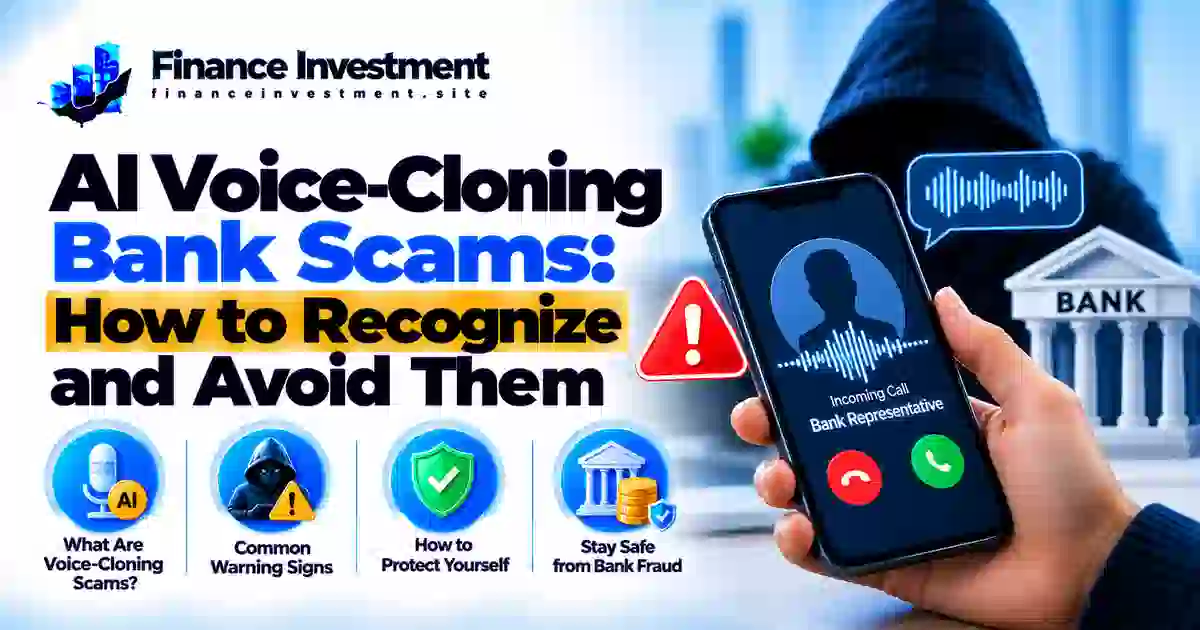
AI Voice-Cloning Bank Scams: Why a Familiar Voice Isn’t Proof
AI voice cloning scams can make a fraudulent phone call feel surprisingly real. You might hear what sounds like your child asking for emergency money or a caller claiming your bank account has been compromised. A familiar voice can trigger fear and trust—but it is not reliable proof of someone’s identity.
Scammers use urgency to pressure people into sending money or revealing sensitive information. Don’t rely on how a voice sounds. Hang up and verify the story through a separate, trusted channel. Call your family member using a saved number, or contact your bank through its official app or the number printed on your bank card. Never disclose your password or one-time security code to an unexpected caller.
This guide explains how voice-cloning scams work, what warning signs to watch for, and what steps can help protect your money. For wider protection, read our bank security and fraud prevention guide.
What You’ll Learn
- How scammers use cloned voices to impersonate relatives and bank representatives.
- How to verify suspicious calls before transferring money.
- Practical ways to protect your accounts and personal information.
- What to do if you think you have been targeted or already sent money.
How Can You Avoid AI Voice-Cloning Bank Scams?
To avoid AI voice-cloning bank scams, verify who is calling before sending money or sharing sensitive information. Scammers can imitate familiar voices or pose as bank representatives to make urgent requests seem legitimate. Even if a voice sounds convincing, do not treat it as proof of identity.
End the suspicious call and verify the request independently. Call your relative using a saved number, or contact your bank through its official app or the number printed on your bank card. Never use a callback number provided by the suspicious caller.
Key Takeaways
1
Verify through another channel. Call back using a trusted number before acting on an urgent request.
2
Slow the situation down. Treat demands for immediate payment, secrecy, or unusual transfers as warning signs.
3
Keep credentials private. Never share your password or one-time verification code with an unexpected caller.
4
Respond quickly if targeted. Contact your bank immediately if you sent money or disclosed account information, and ask what steps are available to secure your account.
AI Voice-Cloning Scams at a Glance
Know the tactics, understand the risks, and verify before responding.
AI voice-cloning scams use artificial intelligence to imitate someone’s voice and make a fraudulent call sound genuine. A scammer might impersonate a relative facing an emergency or a bank representative warning about suspicious account activity. The goal is to exploit trust and panic so the victim sends money, reveals sensitive information, or follows unsafe instructions.
Keep in mind: A familiar voice and a convincing caller ID are not proof of identity. Call back using a trusted number or contact your bank through its official app before moving money or sharing sensitive details.
A Beginner’s Guide to Voice-Cloning Scams
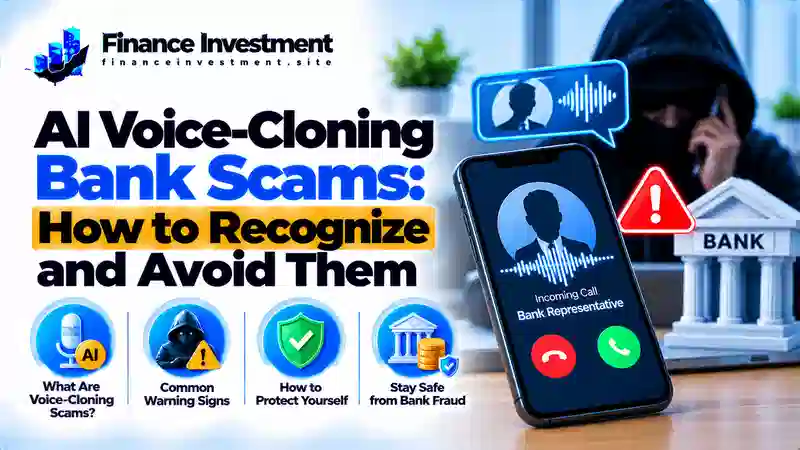
Voice cloning uses artificial intelligence to generate speech that resembles a real person’s voice. Depending on the technology and audio available, it may imitate characteristics such as tone, pronunciation, and speaking style. Scammers can misuse this technology to impersonate relatives, trusted contacts, or bank representatives over the phone.
Why Do Scammers Use It?
Familiar voices can create a false sense of trust. A caller might claim a family member is in danger or say your bank account needs immediate attention. The aim is to trigger fear or urgency so you send money, disclose sensitive information, or follow instructions without checking whether the story is genuine.
What Should Beginners Remember?
- A familiar-sounding voice does not prove who is calling.
- Audio shared publicly online may be misused to imitate someone, although the risk varies.
- Urgent payment demands, secrecy, and requests for security codes are warning signs.
- Verify the request independently before transferring money or sharing account details.
Remember: You do not need to identify whether a voice is AI-generated. End a suspicious call and contact the person or bank through a trusted, separate channel.
How AI Voice-Cloning Scams Work
AI voice-cloning scams often follow four stages: gathering information, impersonating someone, creating urgency, and requesting money or access. Not every scam follows the same sequence, but knowing these patterns can help you recognize suspicious calls before you act.
Information May Be Gathered
A scammer may misuse publicly available voice recordings or personal details to make an impersonation more convincing. However, not every scam requires a custom-cloned voice.
Protect yourself: Review social media privacy settings and avoid publicly sharing sensitive personal or financial information.
A Trusted Person Is Impersonated
The caller may sound like a relative needing emergency help or a bank representative reporting suspicious activity. Caller ID may also be falsified.
Protect yourself: Do not rely on the voice or displayed number alone. Verify the caller through a separate, trusted channel.
Pressure Is Applied
The caller may demand immediate payment, insist that you keep the request secret, or ask for passwords and verification codes.
Protect yourself: Pause and refuse unexpected requests for credentials or security codes. A genuine emergency still deserves independent verification.
Money or Account Access Is Requested
The final demand may involve a wire transfer, payment app, gift card, or instructions that expose your bank account.
Protect yourself: End the call and verify the request using a saved contact number or your bank’s official app before taking action.
Already sent money or shared details? Contact your bank or payment provider immediately, explain the suspected fraud, and ask whether the payment can be stopped or recalled. Change compromised passwords, secure affected accounts, and report the incident to the appropriate authorities.
Benefits and Drawbacks of Voice Authentication
Voice authentication is a security method that attempts to verify identity using characteristics of a person’s voice. When properly implemented, it can make some banking interactions more convenient. However, it is different from AI voice cloning, which can be misused to imitate someone else. Voice authentication is not foolproof, and its reliability depends on the system and how it is used.
- Can make some phone-based verification steps more convenient.
- May reduce reliance on repeated identity questions.
- Can support other security checks as part of a layered system.
- AI-generated or manipulated audio may be used in impersonation attempts.
- Performance can vary with audio quality, the user, and the technology.
- Voice matching alone may not provide enough assurance for sensitive transactions.
What customers should do: Use your bank’s official verification process and any additional security checks it provides. Independently confirm unusual payment requests, and never assume a familiar voice or a caller’s claim of successful verification proves that the request is legitimate.
Voice Cloning vs. Traditional Bank Phone Scams
Both scams can target your money, account access, or personal information. The main difference is the impersonation method: voice-cloning scams may use AI-generated speech that resembles a real person, while traditional bank phone scams often depend on false claims, pressure, or a caller pretending to represent a financial institution. A scammer can also combine both methods.
How it works: A caller may use an AI-generated voice to imitate a family member, trusted contact, or another person.
Main risk: The familiar-sounding voice may make a fake emergency or urgent money request seem believable.
How it works: The caller falsely claims to be from your bank and may invent suspicious transactions, account problems, or refunds.
Main risk: The caller uses fear or apparent authority to obtain money, account details, or security codes.
- Pressure to act immediately or keep the request secret.
- Unexpected requests for passwords, one-time codes, or payment.
- Instructions to transfer money to a supposedly “safe” account.
- Attempts to stop you from contacting your bank through its official channels.
Your safest move: End the suspicious call and contact your bank using its official app or the number on your card. If the caller claims to be a relative, call that person on a saved number. Verify before sending money or sharing sensitive information.
Costs, Risks & Expert Safety Tips
AI voice-cloning bank scams can cause serious financial and personal harm. Victims may lose savings through fraudulent transfers, expose sensitive account information, or become targets for further fraud. Recovering stolen money is not guaranteed; the outcome may depend on the payment method, timing, and applicable consumer protections.
Three Major Risks
- Financial loss: Wire transfers and some payment-app transactions can be difficult to reverse.
- Account takeover: Stolen login credentials or verification codes may help criminals gain access to your account.
- Identity misuse: Personal details can be reused in follow-up scams or attempts to impersonate you.
Practical Safety Tips
- Verify unexpected calls through your bank’s official app or the number printed on your bank card.
- Never disclose passwords or one-time security codes in response to an unsolicited call.
- Use multifactor authentication and enable transaction alerts when available.
- If money or account details are compromised, contact your bank immediately, secure affected accounts, and ask whether the transaction can be stopped, recalled, or disputed.
Bottom line: Do not let urgency replace verification. Pause, confirm the caller’s identity through a trusted channel, and only then consider the request.
Common Mistakes & a Realistic Example
AI voice-cloning scams exploit trust and urgency. Even careful people can make costly decisions when a call sounds familiar and the caller creates fear. Avoid these common mistakes:
- Assuming a familiar voice or caller ID proves the caller is genuine.
- Sending money before independently confirming an emergency.
- Sharing passwords or one-time security codes with an unexpected caller.
- Ignoring warning signs because the caller insists on secrecy or immediate action.
An Urgent Call From “Her Son”
A mother in Ohio receives a call from someone who sounds like her adult son. The caller claims he has lost access to his bank account and urgently needs $1,200 sent through a payment app. Worried, she considers sending the money immediately.
Instead, she ends the call and dials her son’s saved number. He answers and says he never made the request. By checking independently, she avoids sending money to an impersonator.
Key lesson: Never let panic decide where your money goes. Hang up, verify through a trusted contact method, and consider agreeing on a family code phrase for emergencies.
Note: The Ohio scenario is fictional and provided for educational purposes; it does not describe a verified real incident.
Who Needs Extra Protection?
Anyone who uses a bank account, payment app, or phone-based banking service can be targeted by AI voice-cloning scams. These practical precautions can help people and businesses verify requests before risking their money or personal information.
Older Adults
Verify urgent requests independently. If needed, ask a trusted person to help check the request before transferring money.
Families
Agree on a private family code phrase and call the person’s saved number to confirm emergencies or unusual payment requests.
Small-Business Owners
Independently verify new payment instructions and unusual transfers. Require a second authorized approval for high-risk transactions.
Everyday Banking Customers
Enable transaction alerts and multifactor authentication when available. Contact your bank through its official app or verified phone number if a call seems suspicious.
Key takeaway: Anyone can be fooled by a convincing voice. Pause, verify the request through a separate trusted channel, and never let pressure determine how you handle money.
Frequently Asked Questions About AI Voice-Cloning Bank Scams
1. What is an AI voice-cloning bank scam?
It is a scam in which criminals use or attempt to use AI-generated speech to imitate a trusted person or impersonate a bank representative to steal money or sensitive information.
2. Can AI really copy a family member’s voice?
Yes. Some AI tools can generate speech that resembles a person’s voice. A familiar-sounding voice alone does not verify the caller’s identity.
3. How can I tell if a banking call is fake?
Warning signs include pressure to act immediately, requests for sensitive information, secrecy, and instructions to transfer money to a “safe” account. End the call and contact your bank through its official app or verified phone number.
4. Can scammers clone a voice from social media?
Public audio may be misused to create voice imitations, although the risk varies. Review your privacy settings and avoid posting sensitive personal details.
5. Should I share a one-time security code with an unexpected caller?
Do not disclose a one-time code in response to an unexpected call or at a caller’s direction. If you are unsure whether a request is legitimate, end the call and contact your bank through an official channel.
6. What should I do if I have already sent money?
Contact your bank or payment provider immediately. Ask whether the payment can be stopped, recalled, or disputed. Secure affected accounts and keep messages, receipts, and transaction records.
7. Can I recover money lost to a voice-cloning scam?
Recovery is not guaranteed. Report the fraud promptly to your financial institution, follow its dispute process, and report the incident to the appropriate authorities.
8. How can my family protect itself from voice-cloning scams?
Agree on a private family code phrase, verify emergencies by calling a saved number, and never send money based only on a familiar voice or an urgent phone call.
Final Verdict: Verify Before You Trust
AI voice-cloning bank scams can make a false emergency sound real. Criminals may imitate a loved one or exploit the appearance of a legitimate bank call to pressure people into transferring money or revealing sensitive information.
Remember three rules: pause, verify, and protect. Do not rely on a familiar voice or caller ID alone. End suspicious calls, contact the bank through its official app or the number on your card, and confirm family emergencies using a saved number. Never disclose passwords or security codes to unexpected callers.
Your Next Step
Today, enable banking transaction alerts and agree on a private family verification phrase. If you suspect a scam or have already sent money, contact your bank or payment provider immediately and ask what protective steps are available.
Related Resources & Official Guidance
If you suspect an AI voice-cloning scam, use verified government resources for guidance and reporting. Avoid phone numbers, websites, or “recovery services” supplied by suspicious callers or strangers who promise to retrieve lost money.
Federal Trade Commission (FTC)
Learn how voice cloning can be misused and how to verify an emergency call.
FBI Internet Crime Complaint Center (IC3)
Read FBI guidance about AI-enabled financial fraud and submit a report about suspected internet crime.
FBI Fraud and Scam Resources
Find broader fraud-prevention advice and guidance on what to do if you become a victim.
More Banking Security Guides
Explore our related guide for additional steps to protect your accounts and reduce the risk of financial fraud.
Important: If money has been sent, contact your bank or payment provider immediately. Report the incident promptly and keep transaction records. Reporting does not guarantee reimbursement, but quick action may help limit further losses.
Email Contact & Newsletter Updates
Have feedback or a question about this banking security guide? Contact FinanceInvestment or look for future educational updates about financial safety, fraud prevention, and smarter money management.
Contact FinanceInvestment
Send your feedback by email. For your security, do not include passwords, full bank account details, card numbers, or one-time verification codes.
Newsletter Updates
Interested in future financial security tips? Subscribe when the newsletter signup form becomes available.
Newsletter signup form coming soon. Subscription collection is not active in this placeholder.
Please review FinanceInvestment’s Privacy Policy before subscribing, and only provide information requested by the actual signup form.