Treasury Bills vs Treasury Bonds: What’s the Difference?
Treasury Bills vs Treasury Bonds: The Difference Is More Than the Maturity Date
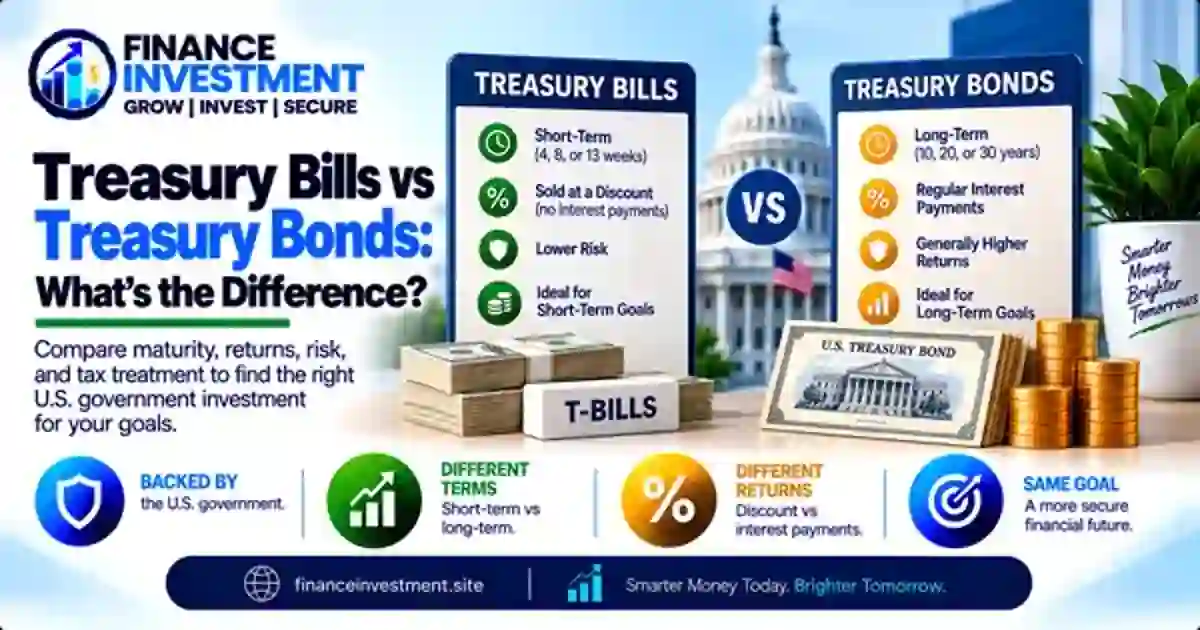 Treasury bills and Treasury bonds are both U.S. government debt securities, but they serve very different time horizons. Treasury bills are designed for shorter periods, while Treasury bonds are built for much longer commitments. That difference can affect how often you receive income, how sensitive your investment is to changing interest rates, and how easily the investment fits a near-term or long-term goal. 1
So, which one makes more sense? There is no universal winner. A person saving money for a goal next year may have a very different need from someone building a long-term income stream. This guide breaks down the differences in plain English so you can compare the two without getting lost in Treasury terminology.
What You’ll Learn
By the end of this guide, you’ll be able to see where Treasury bills and Treasury bonds fit—and where they don’t.
One useful starting point: if you want a broader beginner explanation of T-bills before comparing them with bonds, see our
Treasury Bills Explained guide
.
Treasury Bills vs Treasury Bonds: Which Is Better?
Treasury bills are generally better suited to investors looking for a shorter maturity and a near-term place for cash. Treasury bonds are built for much longer holding periods and provide scheduled interest payments every six months. Neither is automatically better. Your choice depends on when you expect to need the money, whether you want periodic interest income, and how comfortable you are with price changes if you sell before maturity.
Key Takeaways
Short vs. Long Term
Treasury bills have maturities of one year or less, while Treasury bonds currently have 20- or 30-year terms.
Different Cash Flow
T-bills generally provide the return through the difference between their purchase price and face value at maturity. Bonds pay interest every six months.
Rate Risk Matters
Longer-term Treasury bonds generally have greater price sensitivity to changing interest rates than short-term bills.
Similar Tax Treatment
Treasury interest is generally subject to federal income tax but exempt from state and local income taxes.
Bottom line: Start with your time horizon and cash-flow needs. A small difference in quoted yield may matter less than choosing a maturity that fits your financial goal.
Treasury Bills vs Treasury Bonds at a Glance
| Feature | Treasury Bills | Treasury Bonds |
|---|---|---|
| Maturity | One year or less | 20 or 30 years |
| Interest structure | Generally purchased at a discount and redeemed at face value at maturity; some auctions can price bills at par | Fixed interest payments are generally made every six months |
| Typical use | Short-term cash needs and near-term financial goals | Long-term income and fixed-income portfolio planning |
| Interest-rate sensitivity | Generally lower because of the shorter maturity | Generally higher because of the much longer maturity |
| Principal timing | Face value is paid at maturity | Face value is repaid at maturity |
T-bills focus on shorter maturities, while Treasury bonds commit your money for much longer. Bills generally deliver their return through the difference between purchase price and face value at maturity. Bonds provide scheduled interest payments every six months. If you may sell before maturity, the bond’s longer duration can also make its market price more sensitive to interest-rate changes.
What Are Treasury Bills and Treasury Bonds?
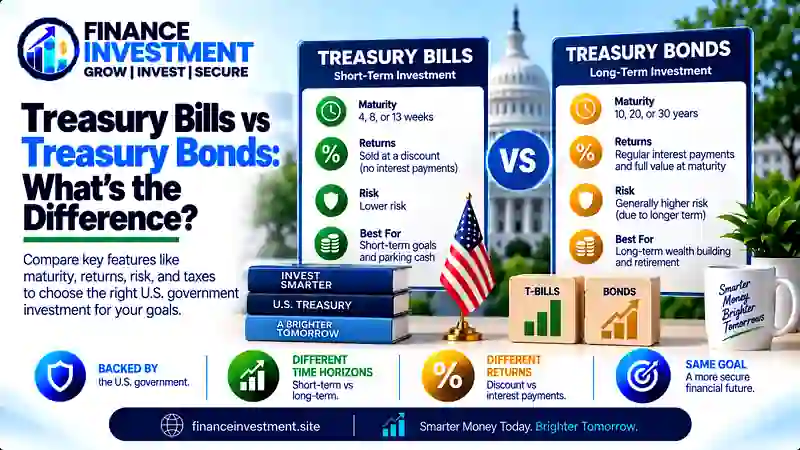 Treasury bills and Treasury bonds are both marketable debt securities issued by the U.S. Department of the Treasury. When you buy one, you hold a debt obligation of the U.S. government. The biggest difference is the length of time until maturity and the way each security provides its return.
Treasury Bills: Short-Term Treasury Debt
Treasury bills, commonly called T-bills, are short-term Treasury securities with maturities of one year or less. Current regular terms include 4, 8, 13, 17, 26 and 52 weeks.
T-bills do not make periodic coupon payments. They are generally sold at a discount to their face value, although an auction can also result in a price at par. At maturity, the Treasury pays the bill’s face value. The difference between the purchase price and the amount received at maturity represents the investor’s interest when the bill is bought at a discount.
Treasury Bonds: Long-Term Treasury Debt
Treasury bonds are long-term marketable Treasury securities. Current Treasury bonds have 20- or 30-year maturities. Unlike T-bills, they pay interest every six months during the life of the bond.
At maturity, the Treasury repays the bond’s face value. If you sell the bond before maturity, however, its market price may be higher or lower than what you paid. Changes in market interest rates are one reason longer-term Treasury bonds can experience meaningful price movements.
Where Treasury notes fit: Treasury notes fall between bills and bonds, with current maturities of 2, 3, 5, 7 and 10 years. Knowing this middle category helps put the short-term and long-term choices into perspective.
How Treasury Bills and Bonds Work
Treasury bills and Treasury bonds both represent U.S. government debt, but the cash flow works differently. You can buy newly issued securities through a Treasury auction or purchase existing marketable securities through a broker. The steps below focus on the basic ownership experience.
How a Treasury Bill Works
T-bills have maturities of one year or less.
At auction, a T-bill is generally issued at a discount to face value, although auction pricing can result in a price at par.
T-bills do not make periodic coupon payments during their term.
At maturity, the Treasury pays the bill’s face value. When purchased below face value, the difference represents the interest earned.
How a Treasury Bond Works
Current Treasury bonds have 20- or 30-year maturities.
Treasury bonds pay interest every six months. The coupon payment is based on the bond’s stated rate and face value.
A bond’s market price can rise or fall after purchase. Changes in market interest rates are a major factor.
If held to maturity, the Treasury repays the bond’s face value according to its terms.
The practical difference: T-bills generally deliver their return through the purchase-price-to-face-value difference at maturity. Treasury bonds provide recurring interest payments and a much longer maturity. If you sell either security before maturity, the market price—not simply the original amount invested—determines what you receive from the sale.
Benefits and Drawbacks of Treasury Bills vs Treasury Bonds
Treasury bills and Treasury bonds can both add government-backed debt securities to a portfolio, but their trade-offs are different. Bills keep the maturity short. Bonds provide recurring interest over a much longer period. Here is where each option can help—and where it can fall short.
Treasury Bills
Benefits
- Short maturities can fit near-term financial goals.
- As U.S. government obligations, they generally have relatively low credit risk.
- Interest is generally exempt from state and local income taxes.
Drawbacks
- They do not provide regular coupon payments.
- You may have to reinvest the proceeds when a bill matures.
Treasury Bonds
Benefits
- Provide scheduled interest payments every six months.
- Can provide predictable interest income for long-term planning.
- Interest is generally exempt from state and local income taxes.
Drawbacks
- The long maturity generally creates greater interest-rate sensitivity.
- Selling before maturity can produce a gain or loss based on the market price.
- Fixed interest payments can lose purchasing power when inflation rises.
The trade-off: T-bills reduce the length of the commitment but leave you with a reinvestment decision at maturity. Treasury bonds can provide regular income, but their long maturity brings more exposure to interest-rate changes and inflation’s effect on future purchasing power.
Treasury Bills vs Treasury Bonds: Side-by-Side Comparison
The biggest difference between Treasury bills and Treasury bonds is not simply the interest rate. It is the combination of maturity, cash-flow timing and price sensitivity. A short-term T-bill and a 30-year Treasury bond can both belong in a conservative portfolio, but they serve very different jobs.
| Factor | Treasury Bills | Treasury Bonds |
|---|---|---|
| Maturity | One year or less | 20 or 30 years |
| Cash flow | Generally no periodic coupon; return is realized through the purchase price and maturity value | Interest payments are made every six months, with face value repaid at maturity |
| Price sensitivity | Generally lower because the maturity is short | Generally higher because the maturity is much longer |
| Income pattern | Primarily realized at maturity | Recurring interest throughout the holding period |
| Typical fit | Near-term cash needs and shorter financial goals | Long-term income and fixed-income planning |
Choose Bills When…
Your goal is relatively close, you want a shorter maturity, or you prefer not to commit money for decades.
Consider Bonds When…
You want scheduled interest income and can tolerate the longer maturity and greater price sensitivity.
One caution: Do not compare a T-bill’s discount rate directly with a Treasury bond’s coupon rate. They describe different parts of the investment. For a fair comparison, look at the relevant yield and match the security’s maturity and cash-flow pattern to your goal.
Costs, Taxes, Risks and Expert Tips
A Treasury security can look straightforward on the surface, but your actual result depends on the purchase price, taxes, maturity and what happens if you sell early. These details matter more than simply looking at a quoted rate.
Purchase Costs
TreasuryDirect charges no purchase fee or commission for Treasury securities bought through its platform. Banks and brokers may have their own pricing, spreads or transaction costs, so check the terms before buying.
Taxes
Interest from Treasury bills, notes and bonds is generally subject to federal income tax but exempt from state and local income taxes. Your federal reporting can depend on how and when the security is held, sold or matures.
Main Risks
If you hold a Treasury to maturity, its scheduled maturity value is the key reference point. If you sell earlier, market prices can move because of interest-rate changes and other market conditions. Inflation can also reduce the purchasing power of your returns.
Expert Tips Before You Buy
- Match the maturity with the date you expect to need the money.
- Compare yields on a consistent basis rather than comparing a T-bill discount rate with a bond coupon.
- If buying a long-term bond, consider how you would react if its market price fell before you needed to sell.
- Include federal taxes when estimating your after-tax return, even though Treasury interest generally avoids state and local income tax.
Common Mistakes and a Real-Life Example
Treasury bills and Treasury bonds can look simple until you compare the details. A few common mistakes can lead investors to choose a security that does not match the job their money needs to do.
4 Mistakes to Avoid
- Comparing unlike rates:
A T-bill discount rate or investment yield should not be treated as the same measure as a Treasury bond’s coupon rate. - Choosing by yield alone:
A higher quoted return does not make a security better if its maturity does not fit your financial timeline. - Ignoring the sale price:
If you sell a marketable Treasury before maturity, its market price may be above or below your purchase price. - Assuming today’s rate will continue:
When a T-bill matures, a replacement bill may have a different yield.
Real-Life Example: Two Investors, $20,000
Sarah has $20,000 that she expects to need for a home-related expense in about eight months. She could consider an available T-bill maturity that ends before or around the date she expects to need the money, while keeping some timing flexibility.
Mark also has $20,000, but he does not expect to need it for many years. He values scheduled interest income and is comfortable with a much longer holding period. A Treasury bond may fit his objective better, provided he understands its longer maturity and greater sensitivity to market interest rates.
The lesson:
The amount invested is the same, but the timelines are different. Match the Treasury security to when you need the money and how you want the investment to pay you.
Who Should Choose Treasury Bills or Treasury Bonds?
There is no single winner in the Treasury bills vs Treasury bonds decision. The better fit depends on what the money is for and how long you can leave it invested.
Treasury Bills May Fit You If…
- You expect to need the money within a relatively short period.
- You prefer a shorter maturity rather than a decades-long commitment.
- You are comfortable receiving the bill’s return primarily at maturity.
- You want to build a short-term Treasury ladder with different maturity dates.
Treasury Bonds May Fit You If…
- You have a long investment horizon.
- You value scheduled interest payments every six months.
- You can tolerate larger price movements if interest rates change.
- You do not expect to need the invested principal soon.
A useful rule of thumb:
Start with your timeline, not the advertised rate. If the money has a near-term job, a shorter Treasury maturity may be easier to match. If the goal is long-term income and you can accept greater interest-rate sensitivity, Treasury bonds may deserve a closer look.
Frequently Asked Questions About Treasury Bills vs Treasury Bonds
1. What is the main difference between Treasury bills and Treasury bonds?
Treasury bills have maturities of one year or less, while current Treasury bonds have 20- or 30-year maturities. Bills generally provide their return at maturity, while bonds pay interest every six months.
2. Do Treasury bills pay interest every month?
No. T-bills do not make periodic coupon payments. They are generally issued below face value and redeemed at face value at maturity, with the difference representing the interest when purchased at a discount.
3. How often do Treasury bonds pay interest?
Treasury bonds generally pay interest every six months. The principal, or face value, is repaid at maturity according to the security’s terms.
4. Are Treasury bills or bonds better for short-term goals?
T-bills are generally more closely matched to short-term goals because their maturities are one year or less. The specific maturity should still match the date you expect to need the money.
5. Can I sell a Treasury bond before it matures?
Yes. Marketable Treasury bonds can generally be sold before maturity through the secondary market. The price may be higher or lower than your purchase price.
6. Are Treasury bills and bonds exempt from state taxes?
Generally, yes. Interest from Treasury securities is subject to federal income tax but is generally exempt from state and local income taxes.
7. Which has more interest-rate risk: T-bills or Treasury bonds?
Treasury bonds generally have greater interest-rate sensitivity because of their much longer maturities. That can produce larger price movements when market rates change.
8. Can I lose money on Treasury bills or Treasury bonds?
If you sell a marketable Treasury before maturity, its market price can be below what you paid, creating a loss. Holding an individual security to maturity follows its stated repayment terms, but inflation and opportunity cost can still affect the real value of the investment.
Remember: Treasury bills and Treasury bonds are both U.S. government debt securities, but their maturity, cash-flow structure and interest-rate sensitivity are very different.
Treasury Bills vs Treasury Bonds: Which One Makes Sense for You?
There is no universal winner. Treasury bills can make more sense when you have a shorter time horizon and want a maturity that is relatively close to a planned cash need. Treasury bonds can make more sense when you have a long-term horizon and value scheduled interest payments every six months.
The Decision Comes Down to Three Questions
- When will you need the money? Match the maturity to your timeline.
- Do you want periodic income? Treasury bonds provide interest payments every six months.
- Could you need to sell early? Longer-term bonds generally have greater price sensitivity when interest rates change.
Bottom line:
Don’t choose between T-bills and Treasury bonds simply because one quoted rate looks higher. Choose the security whose maturity and cash-flow pattern fit your goal. For a broader introduction to T-bills, read our
Treasury Bills Explained guide
.
Related Resources and Authority Sources
Treasury bills and bonds are only part of the broader fixed-income picture. These FinanceInvestment guides can help you compare nearby options, while the official sources below provide the rules and tax details.
More FinanceInvestment Guides
Official Sources
TreasuryDirect
— official information on marketable Treasury securities and purchasing.
Investor.gov
— SEC investor information on Treasury securities.
IRS Publication 550
— federal tax guidance for investment income.