Tag: Risk Management

  • Biggest AI Investing Mistakes to Avoid in 2026: Protect Your Portfolio and Grow Wealth Smarter

    Biggest AI Investing Mistakes to Avoid in 2026: Protect Your Portfolio and Grow Wealth Smarter


    Biggest AI Investing Mistakes to Avoid in 2026: Protect Your Portfolio and Invest Smarter

    Author: Subhash Rukade

    Published: June 17, 2026
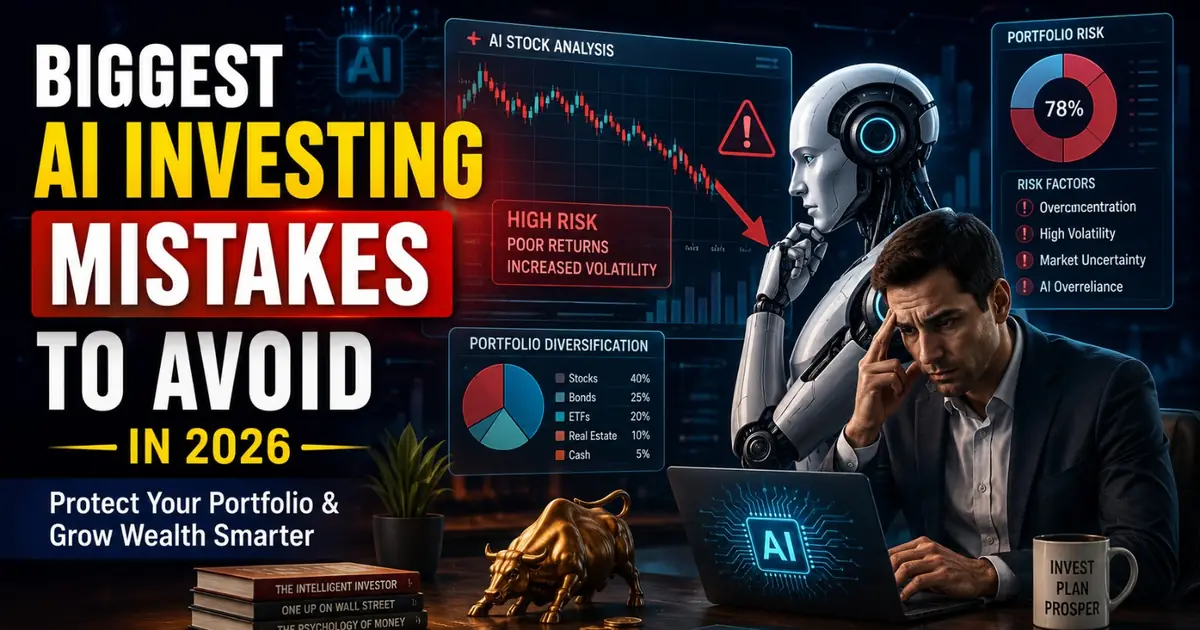
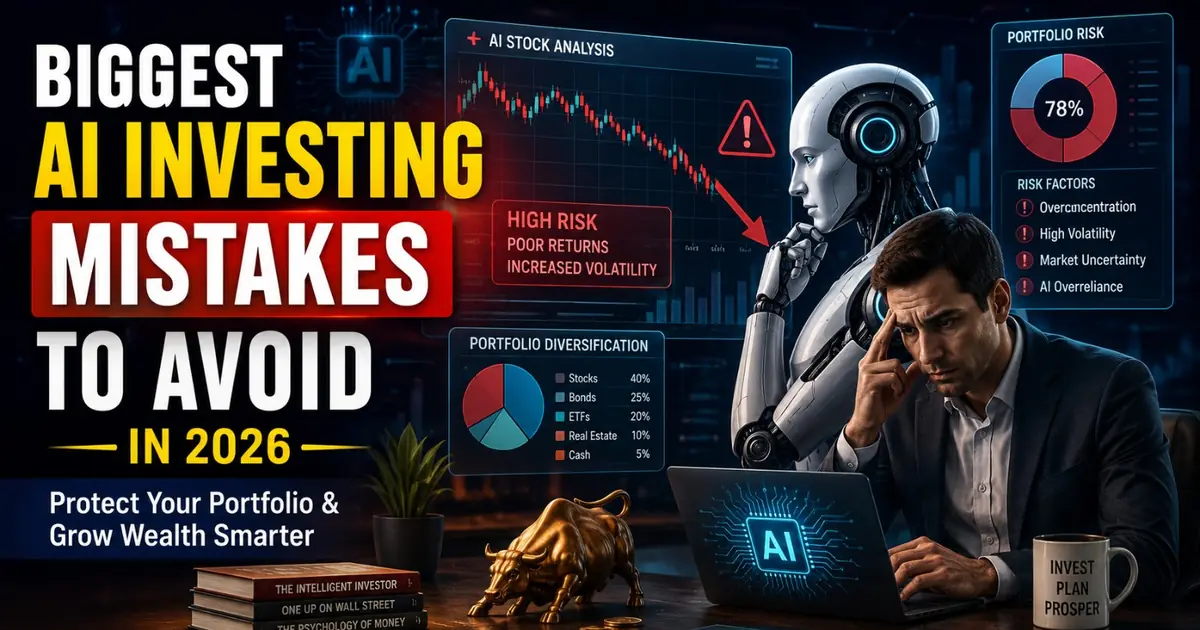
    Biggest AI Investing Mistakes to Avoid

    Why AI Investing Mistakes Matter More Than Ever in 2026

    Biggest AI Investing Mistakes to Avoid has become an important topic for investors as artificial intelligence continues transforming the way people manage money. AI-powered investing platforms can analyze huge amounts of data, automate portfolio management, identify trends, and provide personalized recommendations within seconds.

    Because of these capabilities, millions of Americans are now using AI tools to support retirement planning, wealth building, passive income strategies, and long-term investing goals.

    However, despite all the benefits, artificial intelligence is not perfect.

    Many investors assume that AI can predict markets accurately or eliminate investment risk completely. Unfortunately, that belief often leads to costly mistakes.

    Artificial intelligence can improve decision-making, but it cannot guarantee profits. Markets remain influenced by economic events, geopolitical developments, interest rates, investor behavior, and unexpected risks that even the most advanced algorithms cannot fully predict.

    As AI investing becomes more mainstream in 2026, investors must learn how to use these tools wisely.

    The goal should never be replacing common sense with automation.

    Instead, successful investors use AI as a powerful assistant that helps improve research, portfolio management, and risk analysis while maintaining human oversight.

    If you’re new to this rapidly growing trend, we strongly recommend reading our
    AI Investing Guide 2026,
    which provides a complete overview of how artificial intelligence is changing investing and wealth management.

    In this guide, we’ll explore the biggest AI investing mistakes to avoid, explain why these mistakes occur, and provide practical strategies that can help investors protect their portfolios while taking advantage of AI-powered financial tools.

    Avoiding a few common mistakes today could make a significant difference in your long-term financial success tomorrow.

    Mistake #1: Blindly Trusting AI Recommendations

    One of the Biggest AI Investing Mistakes to Avoid is assuming that artificial intelligence is always correct.

    Many investors are impressed by AI’s ability to analyze markets, process data, and generate investment recommendations within seconds. While these capabilities are powerful, they can create a false sense of confidence.

    AI is a tool—not a crystal ball.

    No algorithm can predict the future with complete accuracy.

    Financial markets are influenced by countless factors, including economic conditions, interest rates, political events, corporate earnings, consumer behavior, and unexpected global developments.

    Even the most advanced AI systems can only make decisions based on available data.

    When unusual market conditions occur, AI models may struggle because they rely heavily on historical patterns.

    Why Blind Trust Can Be Dangerous

    Some investors assume that if an AI platform recommends a stock, ETF, or investment strategy, it must be the best option available.

    This mindset can lead to poor diversification, excessive risk-taking, and emotional disappointment when investments fail to perform as expected.

    Successful investing still requires critical thinking.

    Investors should evaluate recommendations, understand risks, and ensure investment choices align with their financial goals.

    Human Oversight Still Matters

    The most successful investors use AI as a decision-support tool rather than a decision-maker.

    Artificial intelligence can identify opportunities, but human judgment remains important when evaluating financial goals, risk tolerance, and market uncertainty.

    Investors interested in improving overall money management should also review our
    AI Personal Finance 2026
    guide.

    Building a strong financial foundation often starts with choosing the right financial products. Readers may also benefit from our
    Best Credit Cards 2026
    resource.

    📊 Comparison Table: Smart AI Use vs Risky AI Use

    Smart AI UseRisky AI Use
    Researching investment ideasBuying assets without research
    Portfolio monitoringIgnoring portfolio risks
    Using AI alongside human judgmentTrusting AI blindly
    Diversifying investmentsConcentrating in a few assets
    Long-term planningChasing short-term predictions

    The key lesson is simple.

    AI can improve investing decisions, but investors should never surrender responsibility for their financial future. Combining AI insights with sound judgment remains one of the best ways to reduce risk and build long-term wealth.

    Mistake #2: Ignoring Diversification and Overloading on AI Stocks

    Another one of the Biggest AI Investing Mistakes to Avoid in 2026 is failing to diversify properly.

    As artificial intelligence continues dominating headlines, many investors are pouring large portions of their portfolios into AI-related stocks and technology companies.

    While some AI businesses have delivered impressive growth, concentrating too much money in a single sector can significantly increase risk.

    History has repeatedly shown that even the most promising industries experience corrections, volatility, and unexpected setbacks.

    Investors who place all their money into one trend often expose themselves to unnecessary financial risk.

    Why Diversification Still Matters

    Diversification remains one of the most effective risk-management strategies available to investors.

    Instead of relying on one industry, diversified portfolios spread investments across multiple asset classes, sectors, and income sources.

    This approach helps reduce the impact of poor performance in any single investment.

    AI can identify opportunities, but it should not replace the fundamental principle of diversification.

    The Danger of AI Stock Hype

    Many investors assume every company associated with artificial intelligence will become a long-term winner.

    However, strong marketing, media attention, and investor excitement do not always translate into sustainable profits.

    Some companies benefit from temporary hype cycles while others struggle to convert innovation into long-term earnings growth.

    Investors should evaluate business fundamentals, revenue growth, profitability, competitive advantages, and valuation before making investment decisions.

    Building a Balanced Portfolio

    A diversified portfolio may include growth stocks, dividend stocks, index funds, bonds, cash reserves, and alternative investments depending on individual goals.

    Investors interested in creating reliable income streams should review our
    How to Build a Dividend Portfolio
    guide.

    Readers seeking strong dividend opportunities may also benefit from our
    Top Dividend Stocks USA 2026
    resource.

    📘 Recommended Finance Book


    The Intelligent Investor by Benjamin Graham

    This classic investing book emphasizes diversification, risk management, and disciplined decision-making—principles that remain just as important in the AI investing era.

    The most successful investors understand that AI can improve research and portfolio management, but diversification remains essential for protecting wealth and reducing long-term risk.

    In the next section, we’ll examine another costly mistake: chasing AI hype instead of focusing on business fundamentals.

    Mistake #3: Chasing AI Hype Instead of Business Fundamentals

    One of the most expensive examples of the Biggest AI Investing Mistakes to Avoid is chasing hype instead of focusing on investment fundamentals.

    Artificial intelligence has become one of the hottest themes in financial markets. As a result, investors often rush into AI-related stocks simply because they are trending on social media, appearing in news headlines, or receiving attention from analysts.

    Unfortunately, hype and long-term value are not always the same thing.

    Many investors become excited about a company’s AI potential without fully understanding its financial health, revenue growth, profitability, debt levels, or competitive position.

    History shows that popular trends can create market bubbles.

    When expectations become unrealistic, stock prices may rise much faster than business performance. Eventually, reality catches up, and investors who bought at inflated valuations often suffer significant losses.

    Why Fundamentals Matter

    Successful investing focuses on businesses, not headlines.

    Before investing in any AI-related company, investors should examine:

    • Revenue growth
    • Profitability trends
    • Cash flow strength
    • Competitive advantages
    • Debt levels
    • Valuation metrics

    A company with strong fundamentals is often better positioned for long-term success than one receiving attention solely because of AI-related news.

    The Fear of Missing Out (FOMO)

    FOMO is one of the biggest drivers of poor investment decisions.

    When investors see stocks rising rapidly, they often fear being left behind.

    This emotional response can lead to buying investments at inflated prices without conducting proper research.

    AI investing should be driven by analysis and strategy—not excitement and speculation.

    Biggest AI Investing Mistakes to Avoid Example

    📊 Real-World Example

    Consider an investor who purchased several AI-related stocks during a period of intense market enthusiasm.

    Instead of reviewing financial statements and valuation metrics, the investor relied primarily on social media recommendations and AI-generated stock rankings.

    When market sentiment changed, several of those stocks experienced sharp declines.

    Meanwhile, diversified investors who focused on quality businesses and long-term fundamentals were better positioned to manage volatility.

    The lesson is clear.

    Artificial intelligence can improve research and investment analysis, but it should never replace fundamental investing principles.

    Investors who focus on business quality, reasonable valuations, and long-term wealth creation are far more likely to achieve sustainable success than those who chase every new trend.

    Mistake #4 and #5: Ignoring Fees and Investing Without a Plan

    Some of the Biggest AI Investing Mistakes to Avoid have nothing to do with technology itself.

    In many cases, investors lose money because they overlook basic investing principles. Two of the most common mistakes are ignoring investment costs and investing without a clear financial plan.

    Even the most advanced AI platform cannot overcome these weaknesses.

    Mistake #4: Ignoring Fees and Hidden Costs

    Many investors focus entirely on potential returns while paying little attention to fees.

    Although AI investing platforms are often less expensive than traditional financial advisors, costs still matter.

    Management fees, fund expense ratios, trading costs, subscription fees, and platform charges can reduce long-term returns.

    A seemingly small annual fee can compound into thousands of dollars over decades.

    Before selecting any AI investing platform, investors should understand exactly what they are paying and what services are included.

    Lower costs allow more capital to remain invested and benefit from long-term compounding.

    Mistake #5: Investing Without a Clear Plan

    Another major mistake is investing without specific goals.

    Many investors buy stocks, ETFs, or AI-generated recommendations without determining why they are investing in the first place.

    Successful investing begins with a plan.

    Whether the objective is retirement, passive income, financial independence, wealth building, or education savings, every investment decision should support a larger financial strategy.

    Investors who follow structured investment plans often make better long-term decisions than those reacting to short-term market movements.

    Readers looking to build consistent investing habits should review our
    SIP Investing Guide 2026.

    Protecting wealth during economic uncertainty is equally important. Our
    Recession-Proof Investing 2026
    guide offers additional strategies for risk management.

    📘 Recommended Finance Book


    The Psychology of Money by Morgan Housel

    This bestselling book explains why behavior, patience, and long-term planning often have a greater impact on investment success than market predictions.

    AI can help automate investing decisions, but it cannot define personal goals or create discipline. Investors who understand costs, establish clear objectives, and maintain consistent strategies are far more likely to build lasting wealth over time.

    Biggest AI Investing Mistakes to Avoid #1: Blindly Trusting AI Recommendations

    Practical AI Investing Strategies for 2026

    Avoiding the Biggest AI Investing Mistakes to Avoid is only part of the equation. Investors must also follow proven strategies that help balance risk, improve returns, and support long-term wealth creation.

    Artificial intelligence can be a powerful investing assistant when used correctly. The key is combining AI tools with sound investing principles.

    1. Use AI for Research, Not Blind Decisions

    AI platforms can quickly analyze market data, identify trends, and evaluate thousands of securities.

    However, investors should treat AI recommendations as starting points for research rather than automatic buy signals.

    Combining AI insights with personal analysis can lead to more informed decisions.

    2. Follow a Diversified Investment Strategy

    Diversification remains one of the most effective ways to manage risk.

    Instead of concentrating investments in a single AI stock or technology sector, investors should spread assets across multiple industries and investment types.

    A balanced portfolio can help reduce volatility during market downturns.

    3. Rebalance Portfolios Regularly

    Market movements can gradually shift portfolio allocations away from intended targets.

    Many AI platforms offer automated rebalancing features that help maintain appropriate asset allocations.

    Regular portfolio reviews can improve risk management and long-term consistency.

    4. Combine AI With Human Judgment

    One of the strongest investing approaches in 2026 is the hybrid model.

    AI handles data analysis, portfolio monitoring, and automation while investors apply experience, goals, and personal judgment.

    This combination helps reduce emotional decision-making while maintaining flexibility.

    💰 Investment Growth Calculator Example

    Suppose an investor contributes $500 per month to a diversified portfolio earning an average annual return of 8%.

    Years InvestedEstimated Portfolio Value
    10 Years~$91,000
    20 Years~$295,000
    30 Years~$745,000

    This example highlights the power of consistency and compounding rather than relying on short-term predictions.

    📊 Comparison Table: Smart AI Investor vs Risky AI Investor

    Smart AI InvestorRisky AI Investor
    Diversifies investmentsConcentrates in hype stocks
    Reviews recommendationsFollows AI blindly
    Focuses on long-term goalsChases short-term gains
    Controls riskIgnores portfolio balance
    Uses AI + human judgmentDepends entirely on automation

    📘 Recommended Finance Book


    The Simple Path to Wealth by JL Collins

    This popular investing book focuses on simplicity, diversification, and long-term wealth creation—principles that remain essential regardless of how advanced AI investing becomes.

    The most successful investors use AI to enhance their strategies, not replace them. Technology works best when paired with discipline, patience, and a clear investment plan.

    The Future of AI Investing (2026–2030)

    The future of Biggest AI Investing Mistakes to Avoid is closely connected to how artificial intelligence continues evolving over the next several years.

    AI investing platforms are becoming more advanced, more personalized, and more accessible to everyday investors. However, future success will depend not only on technology but also on how investors use these tools responsibly.

    The investors who understand both the opportunities and limitations of AI are likely to have a significant advantage.

    Smarter AI Investing Tools

    By 2030, AI platforms may be capable of providing highly personalized investment recommendations based on income, spending patterns, tax situations, retirement goals, and risk tolerance.

    These systems could help investors make faster and more informed financial decisions while reducing administrative work.

    Greater Transparency and Regulation

    As artificial intelligence becomes more involved in investment management, regulators are expected to increase oversight.

    Investors will likely demand greater transparency regarding how algorithms make recommendations and manage portfolios.

    Trust, security, and accountability will become increasingly important.

    The Rise of Hybrid Investing

    Many experts believe the future belongs to hybrid investing.

    Instead of choosing between technology and human expertise, investors may combine both approaches.

    AI can analyze data and automate portfolio management while humans provide judgment, emotional discipline, and long-term planning.

    Frequently Asked Questions

    1. Is AI investing safe?

    AI investing can be safe when used through reputable platforms and combined with proper diversification and risk management.

    2. Can AI predict stock market movements?

    No system can predict markets perfectly. AI analyzes data and probabilities but cannot eliminate uncertainty.

    3. What is the biggest AI investing mistake?

    Blindly trusting AI recommendations without conducting personal research is one of the most common mistakes.

    4. Should I invest only in AI stocks?

    Most financial experts recommend diversification rather than concentrating investments in a single sector.

    5. Can beginners use AI investing tools?

    Yes. Many platforms are designed specifically for beginner investors and offer automated portfolio management.

    6. What is the future of AI investing?

    The future will likely include more personalized investment strategies, stronger regulation, and greater integration between AI tools and human advisors.

    Final Thoughts on the Biggest AI Investing Mistakes to Avoid

    Understanding the Biggest AI Investing Mistakes to Avoid can help investors make better decisions and reduce unnecessary risks.

    Many investors enter the market without recognizing the Biggest AI Investing Mistakes to Avoid. As a result, they may follow AI recommendations blindly, ignore diversification, or chase market hype.

    The smartest investors learn from the Biggest AI Investing Mistakes to Avoid before those mistakes damage their portfolios.

    Whether you are a beginner or experienced investor, avoiding the Biggest AI Investing Mistakes to Avoid should be a priority in 2026.

    By focusing on diversification, risk management, long-term planning, and proper research, investors can avoid the Biggest AI Investing Mistakes to Avoid and build wealth more confidently.

    Remember that AI is a tool. It is not a guarantee of success. Investors who understand the Biggest AI Investing Mistakes to Avoid are often better prepared for market volatility and long-term investing challenges.

    The future of investing will include more artificial intelligence, but the ability to recognize the Biggest AI Investing Mistakes to Avoid will remain an important skill for every investor.

    Conclusion

    Understanding the Biggest AI Investing Mistakes to Avoid can help investors protect their portfolios, reduce risk, and make smarter financial decisions.

    Artificial intelligence offers powerful tools for portfolio management, market analysis, and wealth building. However, successful investing still depends on diversification, patience, discipline, and long-term planning.

    The most effective investors use AI as a valuable assistant rather than a replacement for critical thinking.

    If you want a complete understanding of how artificial intelligence is changing investing, be sure to explore our
    AI Investing Guide 2026.

    By combining smart technology with proven investing principles, investors can position themselves for long-term success in an increasingly AI-driven financial world.

    Trusted Financial Resources

    📩 Join Our Free AI Investing Newsletter

    Get AI investing insights, portfolio strategies, wealth-building ideas, retirement planning tips, and market updates delivered directly to your inbox.


    Subscribe today and stay ahead of the future of investing.


    👨‍💼 About the Author

    Subhash Rukade writes about AI investing, personal finance, passive income, dividend investing, and wealth-building strategies. His mission is to help readers make informed financial decisions through practical and easy-to-understand financial education.


    🚀 Great investing isn’t about avoiding every mistake. It’s about learning from mistakes early and staying committed to long-term financial success.
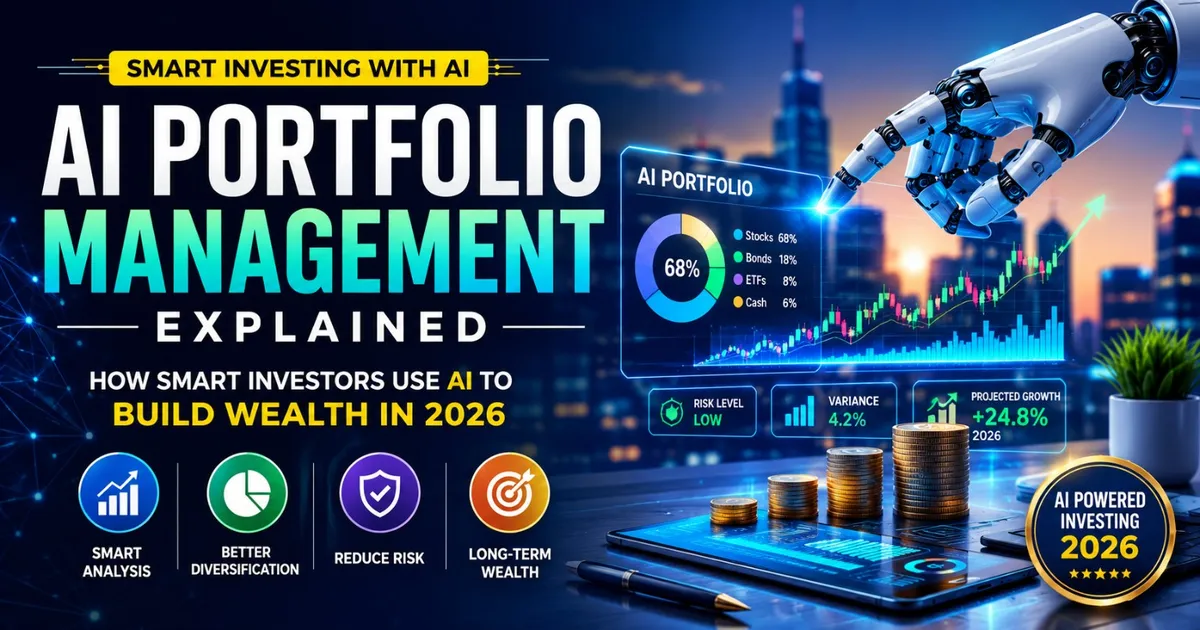
  • AI Portfolio Management Explained: How Smart Investors Use AI to Build Wealth in 2026

    AI Portfolio Management Explained: How Smart Investors Use AI to Build Wealth in 2026


    AI Portfolio Management Explained: How Smart Investors Use AI to Build Wealth in 2026

    Published: June 12, 2026

    Author: Subhash Rukade

    alt="AI Portfolio Management Explained in 2026"

    Introduction: AI Portfolio Management Explained

    Investing has become more accessible than ever before. Yet one challenge remains the same: managing a portfolio effectively. Investors must decide how much money to allocate to stocks, bonds, ETFs, dividend investments, and other assets while balancing risk and long-term growth.

    Traditionally, portfolio management required significant research, ongoing monitoring, and frequent adjustments. Many investors either hired financial advisors or spent countless hours reviewing their investments. In 2026, however, artificial intelligence is changing that process dramatically.

    This is why interest in AI Portfolio Management Explained continues to grow among American investors. AI-powered platforms can analyze financial markets, monitor portfolio performance, evaluate risks, and even recommend portfolio adjustments within seconds.

    Instead of manually tracking every market movement, investors can use artificial intelligence to automate many routine portfolio management tasks. This helps save time while improving consistency and discipline.

    AI portfolio management is no longer reserved for Wall Street institutions. Today, everyday investors can access powerful portfolio management tools through robo-advisors, investment apps, and AI-powered financial platforms.

    These systems use advanced algorithms to evaluate market data, monitor asset allocation, identify risks, and maintain diversification. As a result, investors can focus more on long-term goals and less on daily market noise.

    The growing popularity of AI portfolio management is part of a broader transformation occurring across the financial industry. Investors who want to understand this larger trend should explore our
    AI Investing & Personal Finance Guide 2026.
    This pillar guide explains how artificial intelligence is reshaping investing, retirement planning, budgeting, and wealth building throughout the United States.

    However, successful investing still requires understanding how AI works, where it adds value, and where human judgment remains important. Artificial intelligence can improve efficiency, but it does not eliminate investment risk.

    In this guide, we’ll break down AI portfolio management, explore the technologies behind it, review practical examples, discuss common mistakes, and explain how investors can use AI to build stronger portfolios in 2026 and beyond.

    How AI Portfolio Management Works

    To fully understand AI Portfolio Management Explained, it’s important to look at what happens behind the scenes. While traditional portfolio management often requires constant monitoring and manual adjustments, artificial intelligence can perform many of these tasks automatically.

    AI portfolio management uses machine learning, predictive analytics, and real-time market data to help investors build, monitor, and optimize investment portfolios. The goal is simple: improve investment decisions while reducing unnecessary risk.

    Data Collection and Analysis

    Everything begins with data. Modern AI portfolio management systems collect information from thousands of sources including stock prices, earnings reports, economic indicators, interest rates, market news, and historical performance data.

    Artificial intelligence processes this information far faster than humans can. Instead of reviewing hundreds of reports manually, AI systems can evaluate large datasets in seconds and identify important trends that may affect portfolio performance.

    This ability allows investors to make decisions based on comprehensive information rather than limited research.

    Asset Allocation Decisions

    One of the most important functions of AI portfolio management is asset allocation. Asset allocation determines how investments are distributed across stocks, bonds, ETFs, cash, and other asset classes.

    AI systems evaluate an investor’s age, financial goals, risk tolerance, and investment timeline. Based on this information, the platform recommends a diversified portfolio designed to match the investor’s objectives.

    This process helps remove emotional decision-making and creates a more structured investment strategy.

    Portfolio Monitoring and Alerts

    After a portfolio is created, AI continues monitoring performance around the clock. These systems track market movements, changes in company fundamentals, economic developments, and emerging risks.

    When significant changes occur, investors receive alerts and recommendations that may require attention.

    This continuous monitoring helps investors stay informed without spending hours following the market every day.

    Automatic Rebalancing and Risk Management

    Over time, market movements can cause a portfolio to drift away from its target allocation. AI portfolio management systems automatically identify these changes and recommend rebalancing when necessary.

    Risk management is another major advantage. Artificial intelligence evaluates portfolio exposure and helps investors avoid becoming overly concentrated in a single sector or investment.

    Investors interested in how artificial intelligence is influencing budgeting, investing, saving, and financial planning should also explore our
    AI Personal Finance Guide 2026.

    The result is a more disciplined, data-driven investment process that helps investors remain focused on long-term financial goals while managing risk more effectively.

    Core AI Portfolio Management Tools and Strategies

    Now that we’ve covered how artificial intelligence manages portfolios, let’s explore the tools and strategies that make AI Portfolio Management Explained such an important topic for investors in 2026.

    Modern AI portfolio management combines several technologies that help investors build diversified portfolios, monitor risk, automate investing decisions, and improve long-term performance.

    These tools are becoming increasingly popular because they make sophisticated portfolio management available to everyday investors.

    Robo-Advisors

    Robo-advisors are among the most widely used AI portfolio management tools. These platforms collect information about an investor’s goals, age, investment horizon, and risk tolerance.

    Using artificial intelligence, the system creates a diversified portfolio designed to match the investor’s objectives.

    Many robo-advisors also provide automatic rebalancing and tax-efficient portfolio management, reducing the need for constant manual oversight.

    Predictive Analytics

    Predictive analytics helps investors evaluate future possibilities based on historical data and market trends.

    Although no system can predict future market performance perfectly, predictive analytics can identify patterns that may signal opportunities or risks.

    This technology allows investors to make more informed decisions and improve overall portfolio management.

    Automated Investing Systems

    Another important component of AI portfolio management is automation.

    Automated investing systems allow investors to contribute money regularly while the platform handles investment allocation and portfolio adjustments.

    Investors interested in long-term wealth building through systematic investing can also explore our
    Complete SIP Investing Guide 2026.

    This approach promotes consistency and helps reduce emotional investing decisions.

    AI-Powered Risk Management

    Risk management is one of the most valuable applications of artificial intelligence.

    AI systems continuously monitor portfolios for concentration risk, market volatility, sector exposure, and other potential threats.

    When risk levels increase, the platform can generate alerts or recommend adjustments to maintain portfolio balance.

    AI Tool vs Portfolio Function

    AI ToolPortfolio Function
    Robo-AdvisorPortfolio Construction
    Predictive AnalyticsMarket Trend Analysis
    Automated InvestingRegular Investment Contributions
    Risk Monitoring SystemPortfolio Protection
    Rebalancing EngineAsset Allocation Management

    Together, these technologies make AI portfolio management more efficient, consistent, and accessible. Investors can benefit from sophisticated portfolio oversight while remaining focused on their long-term financial goals.

    Real-World Example of AI Portfolio Management

    One of the easiest ways to understand AI Portfolio Management Explained is to see how it works in a real-world investing scenario. While the technology behind artificial intelligence can seem complex, its practical application is often straightforward and highly useful for everyday investors.

    Let’s look at an example of how a typical American investor might use AI portfolio management in 2026.

    Imagine Michael, a 35-year-old professional from Florida. He wants to build long-term wealth, save for retirement, and generate future passive income. However, he doesn’t have the time to monitor financial markets every day.

    Instead of managing investments manually, Michael chooses an AI-powered portfolio management platform.

    AI Portfolio Management Explained Portfolio Example

    Step 1: Creating the Portfolio

    The platform begins by asking several questions about Michael’s financial goals, age, investment timeline, income, and risk tolerance.

    Based on this information, the AI recommends a diversified portfolio consisting of:

    • 60% U.S. stock ETFs
    • 20% international stock ETFs
    • 10% dividend-focused investments
    • 10% bonds and cash equivalents

    This allocation is designed to balance growth potential with risk management.

    Step 2: Continuous Monitoring

    Once the portfolio is active, the AI continuously tracks market conditions, economic developments, earnings reports, and portfolio performance.

    If a particular asset grows too large or market conditions change significantly, the system automatically identifies the issue and recommends adjustments.

    This helps maintain diversification and keeps the portfolio aligned with Michael’s goals.

    Step 3: Long-Term Wealth Building

    As Michael continues investing each month, the AI platform automatically allocates new contributions according to the target portfolio structure.

    Investors interested in building dividend income alongside long-term growth should also explore our
    How to Build a Dividend Portfolio
    guide.

    For a broader understanding of how artificial intelligence is transforming investing and wealth management, revisit our
    AI Investing & Personal Finance Guide 2026.

    A highly recommended investing resource is
    The Psychology of Money by Morgan Housel.
    The book offers valuable lessons about behavior, patience, and long-term wealth building.

    This example demonstrates why AI portfolio management is becoming increasingly popular. It simplifies investing, improves consistency, and helps investors stay focused on long-term financial success rather than short-term market fluctuations.

    Common AI Portfolio Management Mistakes Investors Should Avoid

    While artificial intelligence has made investing more efficient, understanding AI Portfolio Management Explained also requires recognizing its limitations. Many investors become excited about AI-powered tools and assume the technology will automatically generate strong returns without effort.

    In reality, successful investing still depends on discipline, diversification, risk management, and long-term planning. Investors who rely too heavily on AI often make avoidable mistakes that can hurt portfolio performance.

    1. Overreliance on Artificial Intelligence

    One of the most common mistakes is treating AI as a replacement for personal financial responsibility.

    Artificial intelligence can analyze data and identify patterns, but it cannot fully understand every economic event, political development, or market surprise.

    Investors should view AI as a powerful assistant rather than a guaranteed source of investment success.

    Reviewing recommendations and understanding portfolio decisions remain important responsibilities.

    2. Ignoring Diversification

    Some investors become overly confident in AI-generated recommendations and concentrate too much money in a small number of investments.

    Even sophisticated algorithms can be wrong. Diversification remains one of the most effective ways to manage risk and protect long-term wealth.

    A well-diversified portfolio helps reduce the impact of poor performance from any single investment or sector.

    3. Making Frequent Portfolio Changes

    AI systems continuously generate new insights and recommendations. Some investors react to every update by making frequent portfolio adjustments.

    This behavior often creates unnecessary trading costs, tax consequences, and emotional decision-making.

    Long-term investing generally produces stronger results than constantly changing strategies based on short-term signals.

    4. Ignoring Personal Financial Goals

    Every investor has unique objectives. Some prioritize retirement planning, while others focus on income generation or capital appreciation.

    AI recommendations should always be evaluated within the context of personal financial goals rather than followed blindly.

    A portfolio that works well for one investor may not be appropriate for another.

    5. Failing to Learn Basic Investing Principles

    Technology can simplify investing, but understanding core financial concepts remains important.

    Investors should continue learning about asset allocation, diversification, risk management, and market behavior.

    For additional guidance on protecting investments during uncertain economic conditions, explore our
    Recession-Proof Investing 2026
    guide.

    Trusted educational resources such as the
    SEC
    and
    Investor.gov
    can also help investors make informed decisions.

    The most effective investors combine artificial intelligence with education, patience, and sound financial judgment. AI can improve portfolio management, but long-term success still depends on making thoughtful and disciplined decisions.

    Practical Tips for Building an AI-Managed Portfolio

    After learning the fundamentals of AI Portfolio Management Explained, the next step is applying these concepts effectively. While artificial intelligence can simplify portfolio management, investors still need a clear strategy to maximize its benefits.

    The most successful investors use AI to enhance decision-making rather than completely outsourcing their financial future. By combining technology with proven investing principles, investors can create stronger and more resilient portfolios.

    Maintain Proper Diversification

    Diversification remains one of the most important principles in portfolio management. Even the most advanced AI systems cannot eliminate investment risk.

    A diversified portfolio spreads investments across multiple sectors, industries, asset classes, and geographic regions. This reduces the impact of poor performance from any single investment.

    AI portfolio management platforms can help maintain diversification automatically, but investors should still review their portfolios periodically.

    Focus on Long-Term Investing

    One of the biggest advantages of AI portfolio management is its ability to reduce emotional investing decisions.

    Many investors panic during market declines or become overly aggressive during bull markets. AI systems help maintain consistency by following data-driven strategies rather than reacting emotionally.

    Long-term investing has historically been one of the most reliable ways to build wealth, and AI can help investors stay committed to that approach.

    Use AI for Risk Management

    Risk management is where artificial intelligence provides significant value.

    AI systems continuously monitor portfolios for changes in market conditions, sector exposure, asset concentration, and volatility levels.

    When risks increase, investors receive alerts that allow them to review and adjust their portfolios if necessary.

    Review Portfolio Performance Regularly

    Although AI can automate many investment tasks, investors should still review portfolio performance periodically.

    Financial goals can change over time, and portfolio strategies should evolve accordingly.

    Regular reviews help ensure investments remain aligned with long-term objectives.

    AI Portfolio Management vs Traditional Portfolio Management

    FeatureAI Portfolio ManagementTraditional Portfolio Management
    Portfolio Monitoring24/7 AutomatedPeriodic Reviews
    Risk AnalysisReal-TimeManual Assessment
    RebalancingAutomaticManual
    Data ProcessingExtremely FastTime Intensive
    CustomizationHighDepends on Advisor

    Investors seeking additional passive income opportunities can explore our
    Top Dividend Stocks USA 2026
    guide.

    Another highly recommended investing resource is
    The Simple Path to Wealth by JL Collins.
    The book provides timeless lessons on diversification, financial independence, and long-term wealth building.

    Ultimately, the best results come from combining AI-powered portfolio management with patience, discipline, diversification, and a long-term investment mindset.

    Frequently Asked Questions About AI Portfolio Management

    1. What Is AI Portfolio Management?

    AI portfolio management uses artificial intelligence, machine learning, and data analysis to help investors build, monitor, and optimize investment portfolios. These systems can automate portfolio management tasks while helping investors make more informed decisions.

    2. Is AI Portfolio Management Safe?

    AI portfolio management can be a valuable tool when combined with proper diversification and long-term planning. However, investors should remember that no technology can eliminate investment risk completely.

    3. Can AI Manage My Entire Portfolio?

    Many AI-powered platforms can automate portfolio construction, monitoring, rebalancing, and risk analysis. However, investors should still review portfolio decisions periodically and ensure investments align with personal financial goals.

    4. Is AI Better Than Human Financial Advisors?

    AI excels at processing data and monitoring portfolios, while human advisors provide personalized guidance and emotional support. Many investors benefit from using both approaches together.

    5. Do I Need a Large Investment to Use AI Portfolio Management?

    No. Many AI-powered investing platforms allow investors to start with relatively small amounts while still benefiting from advanced portfolio management features.

    6. What Is the Biggest Advantage of AI Portfolio Management?

    The biggest advantage is efficiency. AI can monitor markets, analyze risks, rebalance portfolios, and process large amounts of data far faster than traditional methods.

    Conclusion: AI Portfolio Management Explained

    As we’ve explored throughout this guide, AI Portfolio Management Explained is more than just a technology trend. It represents a significant shift in how investors build, manage, and grow wealth.

    Artificial intelligence helps investors automate routine portfolio management tasks, monitor risk, maintain diversification, and stay focused on long-term financial goals. These capabilities make sophisticated investment management more accessible than ever before.

    However, successful investing still requires patience, discipline, and sound decision-making. AI can provide valuable insights, but it should be viewed as a powerful assistant rather than a replacement for financial responsibility.

    Investors who combine artificial intelligence with proven investing principles may gain a meaningful advantage in managing their portfolios while reducing emotional decision-making.

    To continue learning about the future of investing, wealth building, retirement planning, and financial technology, explore our
    AI Investing & Personal Finance Guide 2026.

    You can also improve your overall financial strategy by reviewing our
    Best Credit Cards 2026
    guide for additional money-management insights.

    📩 Join Our Free Investor Newsletter

    Get AI investing insights, portfolio management strategies, stock market updates, retirement planning tips, and wealth-building ideas delivered directly to your inbox.

    Stay informed. Invest smarter. Build wealth confidently.

    Subscribe today and stay ahead of the future of investing.

    For investors looking to strengthen their financial knowledge, consider reading
    I Will Teach You To Be Rich by Ramit Sethi.
    This bestselling personal finance book provides practical guidance on investing, saving, budgeting, and long-term wealth building.


    👨‍💼 About the Author

    Subhash Rukade is the founder of FinanceInvestment.site, where he publishes practical, research-backed content focused on AI investing, portfolio management, stock market investing, retirement planning, dividend income strategies, and long-term wealth creation.

    His mission is to simplify complex financial topics and help everyday investors make smarter financial decisions with confidence.

    • 🤖 AI Investing & Financial Technology
    • 📈 Stock Market Investing
    • 💰 Dividend Income Strategies
    • 🏦 Retirement Planning
    • 💳 Credit Cards & Banking
    • 🛡️ Recession-Proof Investing
    • 🚀 Wealth Building & Financial Independence

    🌐 Website:

    FinanceInvestment.site

    Thank you for reading AI Portfolio Management Explained.
    Here’s to smarter investing, stronger portfolios, and a brighter financial future. 🚀

  • Can AI Predict Stock Market Crashes? What Investors Need to Know in 2026

    Can AI Predict Stock Market Crashes? What Investors Need to Know in 2026


    Can AI Predict Stock Market Crashes? What Investors Need to Know in 2026

    Published: June 11, 2026

    Author: Subhash Rukade

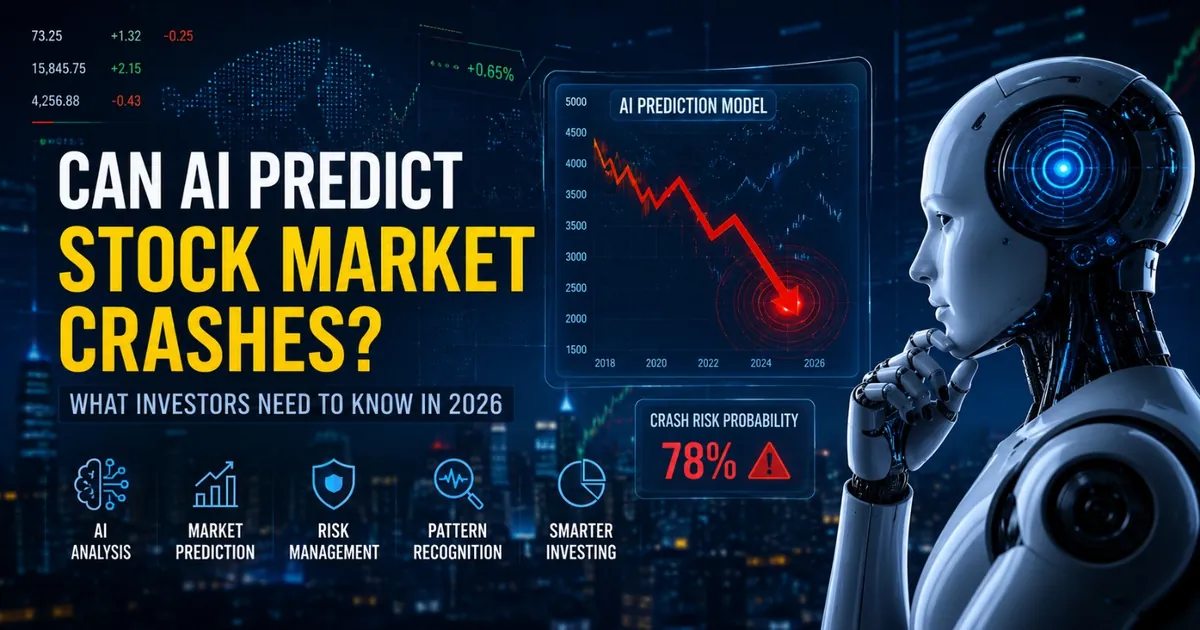
    Can AI Predict Stock Market Crashes

    Introduction: Can AI Predict Stock Market Crashes?

    Every investor fears one thing: a sudden stock market crash. Whether it’s the financial crisis of 2008, the COVID-19 market collapse of 2020, or future economic shocks, market downturns can erase years of gains in a matter of weeks.

    Because of this uncertainty, investors are constantly searching for tools that can help them identify warning signs before a major decline occurs. In 2026, artificial intelligence has become one of the most talked-about technologies in investing. This has led many investors to ask an important question: Can AI Predict Stock Market Crashes?

    The idea sounds appealing. Imagine a system capable of analyzing millions of data points, tracking economic indicators, monitoring investor sentiment, and identifying risks before markets begin to fall. Unlike human investors, AI systems can process information around the clock without being influenced by fear or emotion.

    Over the last few years, hedge funds, banks, and investment firms have invested heavily in artificial intelligence. These organizations use machine learning algorithms to analyze financial data, evaluate risks, and improve market forecasts.

    However, despite impressive technological advances, predicting stock market crashes remains one of the most difficult challenges in finance. Markets are influenced by economic conditions, investor psychology, government policies, geopolitical events, and unexpected crises. Many of these factors are difficult to model accurately.

    This doesn’t mean AI is useless. In fact, artificial intelligence is becoming one of the most powerful tools available for risk management and market analysis. Rather than predicting crashes with perfect accuracy, AI often helps investors identify warning signs and prepare for potential volatility.

    Investors interested in understanding the broader impact of artificial intelligence on wealth building should also explore our
    AI Investing & Personal Finance Guide 2026,
    which explains how AI is transforming investing, retirement planning, and financial decision-making.

    In this guide, we’ll explore how AI analyzes market risks, what it can predict, where its limitations exist, and how investors can use AI tools to make smarter decisions during uncertain market conditions.

    The goal isn’t to find a crystal ball. The goal is to understand how artificial intelligence can help investors become better prepared for whatever the market may bring next.

    How AI Analyzes Market Crash Risks in 2026

    To answer the question “Can AI Predict Stock Market Crashes?”, it’s important to understand how artificial intelligence evaluates market risks. Contrary to popular belief, AI does not simply guess when a crash will happen. Instead, it analyzes enormous amounts of information and searches for patterns that may signal increasing market stress.

    Modern AI systems process data at a scale that would be impossible for human investors. Every day, they examine stock prices, trading volume, corporate earnings, economic reports, interest rates, inflation data, and investor sentiment.

    The goal is not necessarily to predict the exact date of a market crash. Rather, AI seeks to identify warning signs before problems become obvious to the broader market.

    Machine Learning and Historical Market Data

    Machine learning models are trained using decades of historical market information. These systems study previous crashes, corrections, bear markets, and recoveries to identify common characteristics that appeared before major declines.

    For example, AI can recognize patterns involving excessive valuations, weakening earnings growth, rising debt levels, declining economic activity, and unusual market volatility.

    As new information becomes available, the algorithms continuously update their forecasts and risk assessments.

    Sentiment Analysis and News Monitoring

    One of the most powerful capabilities of AI Stock Market Prediction systems is sentiment analysis. Artificial intelligence can scan millions of news articles, financial reports, analyst comments, and social media discussions in real time.

    By measuring investor sentiment, AI can detect shifts in market psychology before they become visible through price movements alone.

    For example, a sudden increase in negative sentiment across financial media may indicate growing investor concern.

    Economic Indicators Matter

    AI systems also monitor key economic indicators such as unemployment rates, inflation trends, consumer spending, interest rates, and GDP growth.

    When multiple indicators begin signaling weakness simultaneously, AI models may raise risk alerts for investors and portfolio managers.

    A Real-World Example

    Many institutional investors now use AI-powered risk management systems to monitor portfolios and identify potential threats before they escalate. While these systems do not predict every crash, they often help investors recognize rising risks earlier than traditional research methods.

    Investors interested in learning how artificial intelligence is transforming everyday money management should also explore our
    AI Personal Finance Guide 2026.

    The key takeaway is that AI doesn’t possess a crystal ball. However, it can analyze vast amounts of information, identify patterns, and provide valuable risk insights that help investors make more informed decisions during uncertain market conditions.

    Next Section: Discover what AI can predict successfully, where its limitations begin, and why even the most advanced systems still struggle to forecast stock market crashes with complete accuracy.

    What AI Can Predict—And What It Cannot

    After learning how artificial intelligence analyzes financial markets, many investors naturally ask a follow-up question: Can AI Predict Stock Market Crashes with complete accuracy?

    The honest answer is no. While AI Stock Market Prediction systems have become remarkably sophisticated, they still cannot predict every market crash with perfect precision. Financial markets are influenced by countless variables, many of which are impossible to forecast accurately.

    However, that doesn’t mean AI lacks value. In fact, artificial intelligence is often extremely effective at identifying warning signs and detecting elevated risk levels before major market disruptions occur.

    What AI Can Predict Effectively

    AI systems excel at recognizing patterns in large datasets. When markets begin showing signs of stress, artificial intelligence can often detect those changes earlier than traditional research methods.

    Some examples include:

    • Increasing market volatility
    • Declining earnings trends
    • Weakening economic indicators
    • Unusual trading activity
    • Rising investor fear and negative sentiment
    • Growing credit and debt risks

    Because AI can analyze these signals continuously, it often provides valuable early warnings that help investors prepare for uncertain conditions.

    Why Stock Market Crashes Remain Difficult to Predict

    The biggest challenge is that market crashes are rarely caused by a single factor. Instead, they often result from a combination of economic, political, psychological, and financial events.

    Unexpected situations such as geopolitical conflicts, natural disasters, government policy changes, banking crises, or global pandemics can dramatically alter market behavior.

    These events are often referred to as “black swan” events because they are difficult to predict using historical data alone.

    Since AI models learn primarily from past information, they can struggle when facing situations that have few historical comparisons.

    Consistency Still Matters More Than Prediction

    Many successful investors focus less on predicting crashes and more on maintaining a disciplined investment strategy.

    For example, investors who consistently invest through market cycles often benefit from long-term compounding and dollar-cost averaging. If you’d like to learn more about this approach, explore our
    Complete SIP Investing Guide 2026.

    AI Prediction Strengths vs Limitations

    AI StrengthsAI Limitations
    Pattern RecognitionCannot Predict Every Crash
    Risk DetectionStruggles With Black Swan Events
    Real-Time MonitoringDepends On Historical Data
    Sentiment AnalysisCannot Fully Predict Human Behavior
    Fast Data ProcessingUnexpected Events Remain Difficult

    The reality is that AI works best as a risk-management and decision-support tool. It can improve awareness and help investors prepare for volatility, but it cannot eliminate uncertainty from financial markets.

    Historical Examples of AI and Market Crash Forecasting

    To better understand the question “Can AI Predict Stock Market Crashes?”, it’s useful to examine how market forecasting has evolved through some of history’s most significant financial events. While artificial intelligence was not as advanced during earlier crises, modern AI systems have been trained using lessons learned from these market disruptions.

    Today’s AI Stock Market Prediction tools analyze historical crashes to identify warning signs that often appear before major downturns. By studying past events, AI can improve its ability to recognize potential risks in current market conditions.

    Can AI Predict Stock Market Crashes Historical Analysis

    The 2008 Financial Crisis

    The global financial crisis of 2008 remains one of the most important case studies in modern investing. Excessive debt, risky lending practices, housing market speculation, and weaknesses in the financial system eventually triggered a severe market collapse.

    Many of the warning signs existed before the crisis, but investors and institutions often underestimated the risks.

    Modern AI systems are now capable of monitoring many of these indicators simultaneously, including credit conditions, debt levels, housing trends, and financial market stress.

    The COVID-19 Market Crash

    The stock market decline in early 2020 presented a different challenge. Unlike traditional financial crises, the downturn was triggered by a global health emergency.

    Because pandemics of this scale are rare, predicting the exact event would have been extremely difficult. However, AI-powered risk management systems were able to detect rising volatility, increasing uncertainty, and unusual market behavior as conditions deteriorated.

    This demonstrates an important reality: AI often identifies growing risks even when it cannot predict the exact cause of a crash.

    Modern Risk Monitoring Systems

    Today’s investment firms use artificial intelligence to monitor market conditions continuously. These systems track volatility, economic indicators, corporate earnings, investor sentiment, and liquidity conditions.

    Rather than predicting specific crash dates, AI helps investors evaluate probabilities and manage risk more effectively.

    Investors focused on building resilient portfolios can also explore our
    How to Build a Dividend Portfolio
    guide for strategies designed to support long-term financial stability.

    A Recommended Investing Resource

    Investors seeking a deeper understanding of market behavior should consider reading
    The Psychology of Money by Morgan Housel.

    The book provides valuable insights into investor behavior, risk management, and long-term wealth building during both bull and bear markets.

    Historical market crashes remind us that no forecasting system is perfect. However, artificial intelligence continues to improve investors’ ability to identify risks, monitor market conditions, and make more informed decisions during uncertain times.

    Common Mistakes Investors Make When Relying on Market Crash Predictions

    Many investors become fascinated by the idea behind Can AI Predict Stock Market Crashes? While artificial intelligence can provide valuable insights and risk analysis, relying too heavily on crash predictions can sometimes lead to costly mistakes.

    Successful investing is rarely about accurately predicting every market move. Instead, it often comes down to discipline, diversification, and maintaining a long-term perspective. Unfortunately, many investors abandon these principles when they become overly focused on market forecasts.

    1. Trusting Predictions Blindly

    One of the biggest mistakes investors make is assuming that AI Stock Market Prediction systems are always correct.

    Even the most advanced algorithms cannot predict every economic event, policy decision, geopolitical conflict, or market reaction. AI should be viewed as a decision-support tool rather than a guaranteed forecasting system.

    Investors who blindly follow predictions without conducting their own research may expose themselves to unnecessary risks.

    2. Panic Selling During Market Volatility

    When markets become volatile, fear often takes control. Investors who constantly monitor crash predictions may feel tempted to sell investments at the first sign of trouble.

    History shows that panic selling is one of the most damaging investing behaviors. Many investors lock in losses and miss future recoveries because they react emotionally to short-term market declines.

    AI can help identify risks, but investors must still maintain perspective and avoid emotional decision-making.

    3. Ignoring Diversification

    Some investors become so confident in a market forecast that they concentrate their portfolios in a small number of investments.

    Diversification remains one of the most effective ways to manage risk. A well-diversified portfolio can help reduce the impact of unexpected market events and forecasting errors.

    4. Chasing Headlines and Market Noise

    Financial media often amplifies dramatic predictions because they attract attention. Investors who react to every market headline frequently make impulsive decisions.

    Instead of chasing short-term predictions, successful investors focus on long-term financial goals and proven investment strategies.

    For investors looking to build portfolios that can withstand uncertainty, explore our
    Recession-Proof Investing 2026
    guide.

    Use Trusted Financial Resources

    When researching investment risks, it’s important to rely on credible sources such as the
    SEC
    and
    Investor.gov.
    These organizations provide educational resources that help investors make informed decisions.

    The most successful investors understand that no prediction system is perfect. Rather than attempting to forecast every market movement, they focus on risk management, diversification, and long-term wealth creation.

    Practical Strategies for Investors in 2026: Using AI Without Relying on Predictions

    After exploring the question “Can AI Predict Stock Market Crashes?”, investors often discover an important truth: the greatest value of artificial intelligence is not perfect prediction. Instead, AI helps investors make better decisions, identify risks earlier, and maintain discipline during uncertain market conditions.

    The most successful investors in 2026 are not trying to guess the exact date of the next market crash. They are building resilient portfolios designed to perform across different economic environments.

    Artificial intelligence can play a valuable role in that process.

    Use AI as a Decision-Support Tool

    AI should be viewed as an assistant rather than a replacement for sound judgment. Modern AI platforms can analyze market trends, monitor risk levels, evaluate economic data, and identify unusual market activity.

    These insights can help investors make more informed decisions without becoming overly dependent on forecasts.

    The goal is not to predict every market movement but to improve overall portfolio management.

    Maintain a Diversified Portfolio

    Diversification remains one of the most effective risk-management strategies available. Even the most advanced AI Stock Market Prediction systems can be wrong.

    By spreading investments across different sectors, asset classes, and investment styles, investors reduce their exposure to any single event or prediction error.

    Diversification helps create stability during periods of uncertainty and market volatility.

    Focus on Dividend and Quality Investments

    Many long-term investors combine AI tools with high-quality dividend-paying investments. Dividend stocks often provide income even during challenging market environments and can contribute to long-term portfolio growth.

    For investment ideas, explore our
    Top Dividend Stocks USA 2026
    guide.

    AI Tools vs Human Decision Making

    Investment TaskAI ToolsHuman Investors
    Risk MonitoringExcellentGood
    Data AnalysisExcellentModerate
    Strategic PlanningLimitedExcellent
    Business EvaluationModerateExcellent

    Investors interested in understanding how artificial intelligence is reshaping modern investing should also explore our
    AI Investing & Personal Finance Guide 2026.

    A highly recommended resource for long-term investors is
    The Simple Path to Wealth by JL Collins.
    The book emphasizes simplicity, diversification, and long-term investing principles that remain effective regardless of market conditions.

    Ultimately, the best strategy is not trying to predict every crash. It’s building a portfolio that can survive volatility, adapt to changing conditions, and continue growing over the long term.

    Frequently Asked Questions About AI Stock Market Crash Predictions

    1. Can AI Predict Stock Market Crashes Accurately?

    No. Artificial intelligence cannot predict every stock market crash with complete accuracy. However, AI can identify warning signs, monitor risk levels, analyze market sentiment, and detect patterns that may indicate increasing market stress.

    2. Do Professional Investors Use AI for Market Predictions?

    Yes. Many hedge funds, banks, and investment firms use AI-powered systems to analyze financial markets, monitor risk, and improve investment research. These tools help investors make more informed decisions rather than guarantee future outcomes.

    3. Is AI Better Than Human Investors?

    AI excels at processing large amounts of data quickly, while human investors are better at strategic thinking, evaluating business quality, and adapting to unexpected events. The best results often come from combining both approaches.

    4. What Is the Biggest Limitation of AI Market Forecasting?

    The biggest limitation is that AI relies heavily on historical data. Unexpected events such as geopolitical conflicts, financial crises, or global emergencies can be difficult to predict because similar situations may not exist in past datasets.

    5. Should Investors Change Their Portfolio Based on AI Predictions?

    Investors should use AI as a research and risk-management tool rather than blindly following predictions. Long-term investing, diversification, and disciplined portfolio management remain essential.

    6. What Is the Best Defense Against Market Crashes?

    A diversified portfolio, consistent investing habits, emergency savings, and a long-term perspective remain some of the most effective ways to manage market uncertainty.

    Conclusion: Can AI Predict Stock Market Crashes?

    After examining both the strengths and limitations of artificial intelligence, the answer to Can AI Predict Stock Market Crashes? is clear: AI cannot predict every market crash with perfect accuracy.

    However, artificial intelligence has become one of the most valuable tools available to investors. AI systems can analyze enormous amounts of data, identify potential risks, monitor market sentiment, and provide insights that would be difficult for humans to generate on their own.

    The most successful investors understand that AI is not a crystal ball. Instead, it is a powerful decision-support tool that can improve research, strengthen risk management, and help investors stay informed during changing market conditions.

    Rather than trying to predict every market downturn, investors should focus on building diversified portfolios, maintaining consistent investment habits, and managing risk effectively.

    If you’d like to learn more about how artificial intelligence is transforming investing, retirement planning, wealth building, and financial decision-making, explore our
    AI Investing & Personal Finance Guide 2026.

    You can also strengthen your financial strategy by reviewing our
    Best Credit Cards 2026
    guide for additional money-management insights.

    📩 Join Our Free Investor Newsletter

    Get AI investing insights, market analysis, dividend opportunities, retirement strategies, and personal finance tips delivered directly to your inbox.

    Stay informed. Invest smarter. Build wealth with confidence.

    Subscribe today and stay ahead of the future of investing.

    For investors looking to improve their financial knowledge, consider reading
    I Will Teach You To Be Rich by Ramit Sethi.
    This bestselling book offers practical guidance on investing, saving, and building long-term wealth.


    👨‍💼 About the Author

    Subhash Rukade is the founder of FinanceInvestment.site, a growing personal finance platform focused on helping investors make smarter financial decisions through practical, easy-to-understand, and research-backed content.

    His work covers AI investing, stock market investing, retirement planning, dividend income strategies, wealth building, and personal finance trends shaping the future of investing.

    His mission is simple:
    “Help everyday investors build wealth through smart decisions, financial education, and long-term thinking.”

    • 📈 Stock Market Investing
    • 🤖 AI Investing & Financial Technology
    • 💰 Dividend Income Strategies
    • 🏦 Retirement Planning
    • 💳 Credit Cards & Banking
    • 🛡️ Recession-Proof Investing
    • 🚀 Wealth Building & Financial Independence

    🌐 Website:

    FinanceInvestment.site

    Thank you for reading Can AI Predict Stock Market Crashes?
    Here’s to smarter investing, better risk management, and a stronger financial future. 🚀

  • How SIP Reduces Market Volatility Risk: Complete 2026 Guide for Americans

    How SIP Reduces Market Volatility Risk: Complete 2026 Guide for Americans

    How SIP Reduces Market Volatility Risk: Complete 2026 Guide for Americans

    <!-- FOCUS KEYWORD --> how sip reduces market volatility risk


    By Subhash Rukade | Updated June 6, 2026

    Understanding Market Volatility and Why Investors Fear It

    How SIP reduces market volatility risk is one of the most important concepts every investor should understand in 2026.

    Market volatility refers to the rapid rise and fall of investment prices over short periods of time. Stock markets can move sharply because of inflation reports, interest rate decisions, economic uncertainty, geopolitical events, or investor sentiment.

    For many investors, volatility creates stress.

    Watching portfolio values fluctuate daily can trigger emotional reactions. Some investors stop investing, while others panic and sell quality investments at the wrong time.

    Unfortunately, emotional decisions often damage long-term investment performance.

    This is where SIP investing becomes valuable.

    Instead of trying to predict market movements, SIP investors invest a fixed amount on a regular schedule. This disciplined approach helps investors stay focused on long-term goals rather than short-term market noise.

    Over time, this strategy can help reduce the impact of volatility while creating opportunities to accumulate investments at different price levels.

    This is exactly how SIP reduces market volatility risk for long-term investors.

    Investors who are new to systematic investing should begin with our complete pillar guide:


    SIP Investing Guide 2026: How Monthly Investing Builds Long-Term Wealth

    Strong personal financial management is also important during volatile market conditions. Investors looking to improve overall financial habits should also review:


    Best Credit Cards 2026: Rewards, Cashback & Smart Usage Guide

    In this guide, you’ll learn how SIP reduces market volatility risk, why dollar-cost averaging matters, common mistakes investors make during volatile periods, practical strategies to stay invested, and how Americans can use SIP investing to build long-term wealth despite market uncertainty.

    How SIP Reduces Market Volatility Risk

    Understanding how SIP reduces market volatility risk starts with understanding one simple fact:

    No investor can consistently predict market highs and lows.

    Markets move up and down for countless reasons, including economic data, interest rates, inflation, corporate earnings, and investor sentiment.

    Trying to perfectly time these movements is extremely difficult.

    This is why many long-term investors prefer SIP investing.

    Dollar-Cost Averaging Is the Key Advantage

    The biggest reason how SIP reduces market volatility risk is through a strategy called dollar-cost averaging.

    Instead of investing a large amount all at once, investors contribute a fixed amount regularly.

    When markets fall, the same investment amount buys more shares.

    When markets rise, fewer shares are purchased.

    Over time, this helps smooth out the average purchase price.

    Rather than worrying about finding the perfect entry point, SIP investors gradually build positions across different market conditions.

    Volatility Can Become an Opportunity

    Many investors view market volatility as a threat.

    However, disciplined investors often view volatility as an opportunity.

    Lower prices allow SIP investors to accumulate more units for the same monthly contribution.

    When markets eventually recover, those additional units may contribute significantly to long-term portfolio growth.

    This process is one of the clearest examples of how SIP reduces market volatility risk.

    Reducing Emotional Investing Decisions

    Volatile markets often trigger emotional reactions.

    Investors may panic during declines or become overly optimistic during rallies.

    These emotional decisions frequently lead to poor investment outcomes.

    SIP investing creates a structured system that removes much of this emotional pressure.

    Because investments occur automatically, investors are less likely to react to short-term market movements.

    Investment ApproachDuring Market VolatilityPotential Long-Term Outcome
    SIP InvestorContinues Regular InvestmentsBenefits From Dollar-Cost Averaging
    Lump-Sum InvestorDepends on Entry TimingHigher Timing Risk
    Emotional InvestorBuys and Sells FrequentlyPotentially Lower Returns
    Disciplined InvestorStays ConsistentBetter Long-Term Stability

    Consistency Often Beats Market Timing

    The reality is simple.

    Very few investors consistently predict market movements accurately.

    Instead of trying to outguess the market, SIP investors focus on consistency and long-term wealth building.

    The biggest lesson from this section is simple:
    how SIP reduces market volatility risk comes down to dollar-cost averaging, emotional discipline, and consistent investing. These advantages help investors navigate uncertainty while remaining focused on long-term financial goals.

    Compounding and Long-Term Stability During Market Volatility

    One of the most powerful benefits of understanding how SIP reduces market volatility risk is recognizing the role of compounding.

    Many investors focus on short-term market fluctuations and forget that wealth is usually built over years or decades, not days or months.

    Market volatility is temporary.

    Compounding can last a lifetime.

    When investors continue investing through both market highs and lows, they give their portfolios more opportunities to grow over time.

    Why Staying Invested Matters

    Volatile markets often tempt investors to stop investing or move to cash.

    While this may feel safe in the short term, it can reduce long-term wealth-building potential.

    Investors who stay invested continue purchasing shares during market declines and participate when markets recover.

    Historically, major stock market declines have been followed by recoveries.

    Investors who remain consistent are often positioned to benefit from those recoveries.

    This is another reason how SIP reduces market volatility risk.

    Instead of reacting to temporary market movements, SIP investors focus on long-term goals.

    Compounding Turns Time Into Wealth

    Compounding occurs when investment returns begin generating additional returns.

    Over long periods, this process can significantly increase portfolio value.

    The earlier investors begin and the longer they remain invested, the greater the potential impact of compounding.

    Even small monthly contributions can grow substantially when given enough time.

    This is why consistency often matters more than trying to predict market movements.

    Dividend Reinvestment Can Accelerate Growth

    Dividend-paying investments offer another opportunity for long-term investors.

    Many investors choose to reinvest dividends instead of taking them as cash.

    Reinvested dividends purchase additional shares that can generate future dividends and future growth.

    This creates another layer of compounding that can strengthen portfolio performance over time.

    Investors interested in creating long-term dividend income should also review:


    How to Build a Dividend Portfolio

    Investor ActionPotential Long-Term Benefit
    Continue SIP ContributionsMore Shares Accumulated
    Stay Invested During VolatilityParticipate in Market Recovery
    Reinvest DividendsFaster Compounding
    Maintain Long-Term FocusHigher Wealth Potential
    Avoid Emotional DecisionsMore Consistent Results

    A Recommended Book for Investors

    One of the most respected investing books available today is:


    The Psychology of Money by Morgan Housel

    The book explains why patience, consistency, and emotional control often play a larger role in financial success than trying to predict short-term market movements.

    The biggest lesson from this section is simple:
    how SIP reduces market volatility risk becomes even more powerful when combined with compounding and dividend reinvestment. Investors who stay invested through market fluctuations often position themselves for stronger long-term financial growth.

    Best Investments for Volatile Markets

    Choosing the right investments is an important part of understanding how SIP reduces market volatility risk.

    While volatility cannot be eliminated completely, investors can build portfolios that are better prepared to handle market fluctuations.

    The goal is not to avoid volatility.

    The goal is to use volatility intelligently while maintaining long-term growth potential.

    A diversified portfolio combined with consistent SIP investing can help investors stay focused during uncertain market conditions.

    Index Funds Remain a Strong Foundation

    Index funds are among the most popular investments for long-term wealth creation.

    These funds track major market indexes and provide exposure to hundreds of companies through a single investment.

    Because they are diversified, index funds help reduce the risk associated with individual stocks.

    When markets become volatile, SIP investors continue purchasing index fund units at different price levels.

    This process supports dollar-cost averaging and strengthens long-term investment discipline.

    This is another example of how SIP reduces market volatility risk.


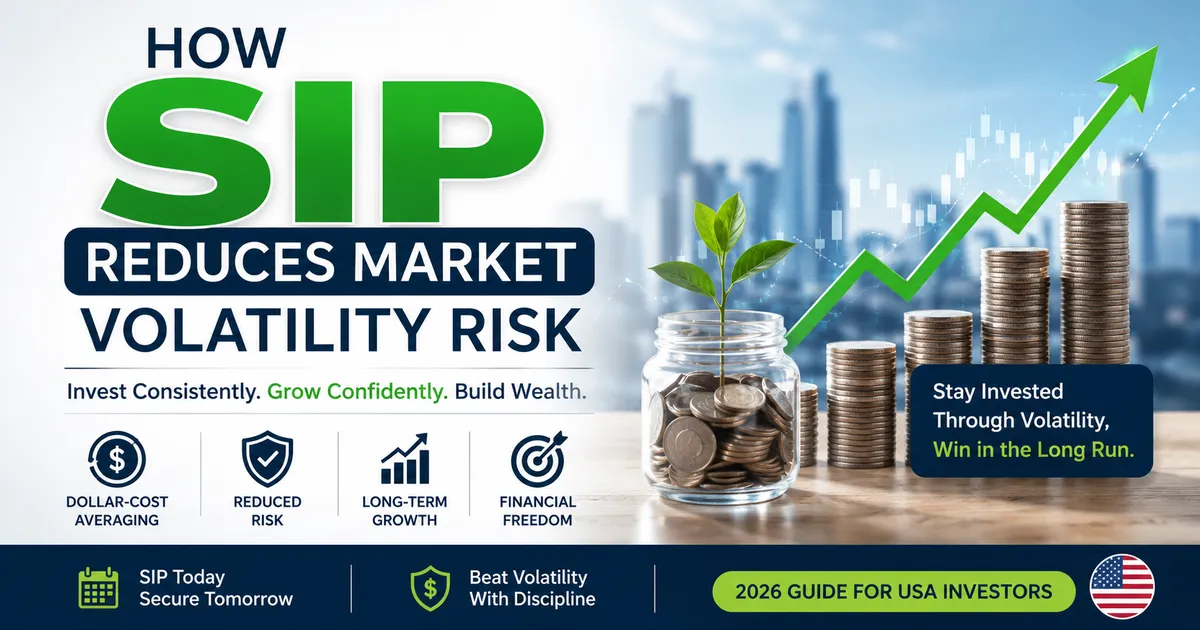
    how sip reduces market volatility risk strategy

    ETFs Offer Flexibility and Diversification

    Exchange-Traded Funds (ETFs) have become increasingly popular among investors looking for diversification and low costs.

    Broad-market ETFs, dividend ETFs, and sector ETFs provide exposure to multiple companies while reducing concentration risk.

    Many investors combine ETFs with SIP investing to maintain a disciplined investment approach regardless of market conditions.

    Dividend Stocks Can Add Stability

    Dividend-paying companies often provide additional stability during periods of market volatility.

    Many established businesses continue paying dividends even when markets experience short-term declines.

    Reinvesting dividends can also enhance compounding and support long-term portfolio growth.

    Investors seeking quality dividend opportunities should also review:


    Top Dividend Stocks USA 2026

    Investment TypeMain BenefitVolatility Advantage
    Index FundsBroad DiversificationReduces Single-Stock Risk
    Broad Market ETFsLow Cost InvestingSpreads Market Exposure
    Dividend ETFsIncome + GrowthPotential Stability
    Dividend StocksRegular IncomeSupports Long-Term Investing
    Diversified PortfolioRisk ManagementHandles Volatility Better

    A Recommended Wealth-Building Book

    One of the most respected investing books for long-term investors is:


    The Simple Path to Wealth by JL Collins

    The book explains how low-cost investing, patience, and disciplined portfolio management can help investors achieve financial independence despite market uncertainty.

    The biggest lesson from this section is simple:
    how SIP reduces market volatility risk becomes even more effective when investors combine systematic investing with diversified assets such as index funds, ETFs, and dividend investments. These tools help investors navigate volatility while remaining focused on long-term wealth creation.

    Real Investor Example and Common Volatility Investing Mistakes

    The easiest way to understand how SIP reduces market volatility risk is by examining how real investors behaved during periods of extreme market uncertainty.

    Market volatility often creates fear, confusion, and emotional decision-making.

    However, disciplined investors frequently respond differently.

    Instead of reacting to short-term price movements, they continue following their long-term investment plans.

    This difference in behavior can significantly impact long-term investment results.

    The 2020 Market Volatility Example

    During the COVID-19 market crash in early 2020, stock markets experienced sharp declines within weeks.

    Many investors feared that markets would continue falling and sold investments to avoid further losses.

    Others continued investing through their monthly SIP contributions.

    As markets recovered over the following months and years, investors who maintained their SIP plans benefited from purchasing investments at lower prices.

    This example clearly demonstrates how SIP reduces market volatility risk.

    Rather than trying to predict market bottoms, SIP investors focused on consistency.

    Common Mistake #1: Panic Selling

    One of the biggest investing mistakes during volatile markets is panic selling.

    When markets decline sharply, fear often causes investors to sell quality investments at lower prices.

    Unfortunately, selling during periods of panic often locks in losses and prevents participation in future recoveries.

    Successful investors understand that temporary volatility is a normal part of long-term investing.

    Common Mistake #2: Trying to Time the Market

    Many investors believe they can predict the perfect time to buy and sell.

    In reality, market timing is extremely difficult.

    Missing only a few strong recovery days can significantly reduce long-term investment returns.

    SIP investing helps eliminate this challenge by maintaining regular investments regardless of market conditions.

    Volatility Investing Comparison

    Investment BehaviorDisciplined SIP InvestorEmotional Investor
    Reaction During Market DropContinues InvestingStops Investing
    Buying OpportunityBuys More Units at Lower PricesMisses Opportunities
    Investment StrategyLong-Term FocusShort-Term Reactions
    Market TimingIgnores Market TimingAttempts to Predict Markets
    Emotional ControlDisciplined ApproachFear-Based Decisions
    Recovery ParticipationFully InvestedOften Misses Recovery
    Long-Term Wealth PotentialHigherLower

    Common Mistake #3: Ignoring Diversification

    Another common mistake is investing too heavily in a small number of stocks or sectors.

    Diversification helps reduce portfolio risk and improves stability during volatile periods.

    Investors preparing for uncertain markets should also review:


    Recession-Proof Investing 2026

    For a complete roadmap to systematic investing, continue with:


    SIP Investing Guide 2026: How Monthly Investing Builds Long-Term Wealth

    The biggest lesson from this section is simple:
    how SIP reduces market volatility risk becomes clear when investors compare disciplined investing with emotional investing. Investors who remain consistent, avoid panic selling, and stay focused on long-term goals often place themselves in a stronger position for future wealth creation.

    Practical Tips, Diversification, and Future Trends for Managing Market Volatility

    Successfully applying how SIP reduces market volatility risk requires more than simply investing every month.

    Investors should also focus on diversification, portfolio management, and long-term financial planning.

    Market volatility will always exist.

    However, investors who prepare for volatility often make better decisions and avoid costly mistakes.

    The goal is not to eliminate risk completely.

    The goal is to build a portfolio that can handle uncertainty while continuing to grow over time.

    Diversification Remains One of the Best Risk Management Tools

    Diversification means spreading investments across different asset classes rather than relying on a single investment.

    A diversified portfolio may include:

    • S&P 500 Index Funds
    • Broad Market ETFs
    • Dividend Stocks
    • Dividend ETFs
    • Bond Funds
    • Gold Investments

    Diversification helps reduce the impact of poor performance in any one area of the market.

    This is another important example of how SIP reduces market volatility risk.

    When combined with diversification, SIP investing helps investors spread risk across both time and asset classes.

    Consider Adding Gold for Stability

    Many investors allocate a small portion of their portfolio to gold.

    Gold has historically been used as a hedge against inflation, economic uncertainty, and market stress.

    Although gold should not replace growth investments, it may help improve overall portfolio stability.

    Investors interested in this strategy should also review:


    Gold Investment Strategies USA

    Volatility Risk Reduction Strategies

    StrategyMain BenefitVolatility Advantage
    Monthly SIP InvestingConsistent InvestingReduces Timing Risk
    DiversificationRisk ManagementReduces Concentration Risk
    Dividend ReinvestmentCompounding GrowthImproves Long-Term Returns
    Gold AllocationPortfolio StabilityMay Reduce Volatility
    Long-Term InvestingWealth CreationBenefits From Market Recoveries

    Technology Is Transforming Investing in 2026

    Modern investors have access to powerful financial tools that make investing easier and more efficient.

    • AI-powered portfolio analysis
    • Automated SIP investing platforms
    • Robo-advisors
    • Retirement planning calculators
    • Investment tracking applications

    These tools help investors remain disciplined and reduce emotional decision-making during periods of market volatility.

    Learn From Trusted Financial Organizations

    These organizations provide educational resources that help investors understand risk management, diversification, retirement planning, and market investing.

    A Trusted Platform for Long-Term Investors

    Many investors use:


    Fidelity Investments

    Fidelity offers investment research, retirement accounts, portfolio planning tools, and educational content that support long-term investing goals.

    The biggest lesson from this section is simple:
    how SIP reduces market volatility risk becomes even more effective when investors combine systematic investing with diversification, financial education, modern technology, and long-term thinking. These strategies help investors stay confident during market uncertainty while continuing to build wealth for the future.

    Frequently Asked Questions About How SIP Reduces Market Volatility Risk

    1. How Does SIP Reduce Market Volatility Risk?

    SIP reduces market volatility risk through dollar-cost averaging. Investors buy investments at different price levels over time, which helps lower the impact of short-term market fluctuations and reduces timing risk.

    2. Is SIP Better Than Lump-Sum Investing During Volatile Markets?

    For many investors, SIP investing can be less stressful during volatile markets because investments are spread over time. This reduces the risk of investing a large amount immediately before a market decline.

    3. Should I Continue SIP Investments During Market Corrections?

    Many long-term investors continue SIP contributions during market corrections because lower prices allow them to purchase more shares. This can improve long-term wealth-building potential when markets recover.

    4. Can SIP Eliminate Investment Risk Completely?

    No. SIP investing cannot eliminate investment risk. However, it can reduce market timing risk, encourage disciplined investing, and help investors manage market volatility more effectively.

    5. What Investments Work Best With SIP Strategies?

    Many investors use SIP investing with index funds, ETFs, dividend funds, and diversified portfolios. These investments can help balance growth potential and risk management over the long term.

    Final Thoughts on How SIP Reduces Market Volatility Risk

    After examining market volatility, dollar-cost averaging, compounding, diversification, investor behavior, and real-world examples, one conclusion becomes clear:

    How SIP reduces market volatility risk comes down to consistency, discipline, and long-term thinking.

    Market volatility is a normal part of investing.

    Stock prices will rise and fall.

    Economic conditions will change.

    Investor sentiment will fluctuate.

    However, investors who remain committed to a systematic investment strategy often place themselves in a stronger position than those who constantly react to market movements.

    • Continue investing regularly.
    • Use dollar-cost averaging to your advantage.
    • Maintain a diversified portfolio.
    • Reinvest dividends whenever possible.
    • Avoid emotional investing decisions.
    • Focus on long-term financial goals.

    These habits have helped investors build wealth through multiple bull markets, bear markets, recessions, and periods of uncertainty.

    Instead of fearing volatility, disciplined investors often learn how to use it as an opportunity.

    By purchasing investments consistently through changing market conditions, SIP investors can reduce timing risk and strengthen long-term wealth-building potential.

    For a complete roadmap to monthly investing and systematic wealth creation, continue with our pillar guide:


    SIP Investing Guide 2026: How Monthly Investing Builds Long-Term Wealth

    Whether your goal is retirement planning, passive income, financial independence, or building generational wealth, understanding how SIP reduces market volatility risk can help you stay confident during uncertain times.

    The investors who often achieve the strongest long-term results are not necessarily those who predict markets correctly.

    They are the investors who remain disciplined when markets become unpredictable.

    That is exactly why SIP investing continues to be one of the most effective wealth-building strategies for American investors in 2026 and beyond.

    📈 Join the Finance Investment Newsletter

    Get investing insights, market volatility strategies, retirement planning tips, dividend income ideas, and wealth-building guidance delivered directly to your inbox.

    Join thousands of readers building stronger financial futures through disciplined investing and smarter financial decisions.


    Subscribe Free →

    👨‍💼 About the Author

    Subhash Rukade

    Founder of Finance Investment and a dedicated financial educator focused on helping investors build wealth through SIP investing, retirement planning, dividend strategies, and long-term financial independence.

    • 📈 Long-Term Investing Strategies
    • 📉 Market Volatility Education
    • 🏦 Retirement Planning
    • 💰 Dividend Income Strategies
    • 🪙 Gold & Alternative Investments
    • 📊 Wealth-Building Education
    “Market Volatility Is Temporary. Disciplined Investing Can Create Wealth That Lasts a Lifetime.”

    Through Finance Investment, Subhash helps readers understand complex financial concepts, avoid costly mistakes, and build practical strategies that support long-term financial success.

    ✅ Beginner-Friendly Investing Guides
    ✅ USA-Focused Financial Content
    ✅ SIP & Volatility Investing Strategies
    ✅ Practical Wealth-Building Education

    🌐 Finance Investment
    Helping Investors Build Wealth One Smart Decision at a Time.