Tag: Retirement Portfolio

  • Low-Risk Retirement Investments: Best 2026 Guide for Conservative Retirees

    Low-Risk Retirement Investments: Best 2026 Guide for Conservative Retirees


    Low-Risk Retirement Investments: Best 2026 Guide for Conservative Retirees

    Published: June 29, 2026 |
    Author: Subhash Rukade

    Low-Risk Retirement Investments

    Low-Risk Retirement Investments help conservative retirees preserve their savings while generating reliable income throughout retirement. Although every investment carries some level of risk, choosing stable assets can reduce portfolio volatility and provide greater financial confidence during uncertain market conditions. The goal is not to achieve the highest possible returns but to protect wealth while earning steady income.

    Many retirees worry about stock market declines after leaving the workforce. Without a regular paycheck, recovering from major investment losses becomes more challenging. That is why conservative investors often prioritize capital preservation, predictable income, and diversification over aggressive growth strategies.

    Before selecting low-risk investments, explore our

    Complete Retirement Planning Guide
    .
    It explains retirement investing, withdrawal strategies, tax planning, Social Security, and long-term wealth preservation to help American retirees make informed financial decisions.

    In this guide, you’ll discover the best low-risk investment options for retirees, learn how to build a balanced retirement portfolio, compare different income-producing assets, and understand practical strategies that can protect your savings while supporting long-term financial security throughout 2026 and beyond.

    What Makes an Investment Low Risk for Retirees?

    A successful Low-Risk Retirement Investments strategy focuses on protecting your retirement savings while providing dependable income. Unlike aggressive growth investments, low-risk assets are designed to reduce market volatility and preserve capital. Although no investment is completely risk-free, choosing stable options can help conservative retirees enjoy greater financial confidence throughout retirement.

    Low-risk investments usually produce more predictable returns than stocks. They may not deliver rapid growth, but they can provide consistent income and help reduce the impact of sudden market downturns. For retirees who depend on their investments to cover everyday expenses, stability often becomes more important than maximizing returns.

    Characteristics of Low-Risk Investments

    • Lower exposure to stock market volatility.
    • Steady interest or dividend income.
    • Strong capital preservation over time.
    • Higher liquidity for unexpected expenses.
    • Suitable for long-term retirement income planning.

    Why Conservative Retirees Prefer Low-Risk Investments

    After retirement, protecting savings becomes a top priority because there is less time to recover from major investment losses. Conservative retirees often choose investments that provide predictable cash flow while reducing portfolio fluctuations. Government bonds, high-yield savings accounts, certificates of deposit (CDs), money market funds, and high-quality dividend stocks are common examples of investments that balance income with lower risk.

    However, keeping every dollar in low-return assets may also create challenges. Inflation gradually reduces purchasing power, making it important to combine stable investments with carefully selected growth assets. A diversified retirement portfolio helps retirees balance security, income, and long-term financial growth.

    Following a disciplined Low-Risk Retirement Investments strategy allows retirees to protect their wealth while generating reliable retirement income. The right investment mix depends on your financial goals, monthly income needs, healthcare expenses, and personal comfort with market risk. Building a balanced portfolio today can improve financial security throughout 2026 and beyond.

    Best Low-Risk Investments for Conservative Retirees in 2026

    Choosing the right Low-Risk Retirement Investments is essential for retirees who want dependable income without exposing their savings to excessive market risk. A diversified portfolio of conservative investments can provide financial stability while helping preserve purchasing power over the long term. Instead of relying on a single investment, many retirees combine several low-risk assets to balance income and security.

    The ideal investment mix depends on your retirement income, monthly expenses, healthcare costs, and overall financial goals. Conservative retirees usually focus on predictable returns rather than chasing the highest possible investment performance.

    Popular Low-Risk Investment Options

    Investment TypeMain BenefitRisk Level
    High-Yield Savings AccountEasy access to emergency cashVery Low
    Certificates of Deposit (CDs)Guaranteed fixed interestLow
    U.S. Treasury SecuritiesGovernment-backed safetyVery Low
    High-Quality Bond FundsSteady income and diversificationLow
    Dividend-Paying Blue-Chip StocksReliable income with moderate growthModerate

    Dividend Investing Can Add Stability

    Quality dividend stocks can complement a conservative retirement portfolio by generating regular income while offering long-term growth potential. Companies with a long history of increasing dividends may help retirees maintain purchasing power without taking excessive investment risk.

    Learn how to build a dependable retirement income portfolio by reading our

    How to Build a Dividend Portfolio
    .

    You can also explore our

    Top Dividend Stocks USA 2026

    guide to discover financially strong companies that may strengthen your retirement income strategy.

    A diversified Low-Risk Retirement Investments strategy combines safety, steady income, and moderate long-term growth. Reviewing your portfolio regularly and adjusting investments as your retirement needs change can help protect your savings while supporting financial security throughout 2026 and beyond.

    How to Build a Low-RRisk Retirement Portfolio That Lasts

    A successful Low-Risk Retirement Investments strategy is not about avoiding every investment risk. Instead, it focuses on creating a diversified portfolio that protects your savings while generating reliable retirement income. Conservative retirees should combine safe investments with carefully selected income-producing assets to maintain financial stability during changing market conditions.

    1. Diversify Across Multiple Asset Classes

    Avoid placing all of your retirement savings into a single investment. A balanced portfolio may include high-yield savings accounts, certificates of deposit (CDs), U.S. Treasury securities, investment-grade bonds, and quality dividend-paying stocks. Diversification reduces overall portfolio risk because different assets often perform differently during market fluctuations.

    2. Match Investments to Your Income Needs

    Your retirement portfolio should generate enough cash flow to cover essential living expenses without forcing you to sell investments during market downturns. Many retirees combine interest income from bonds with dividend income from established companies to create a dependable income stream throughout retirement.

    3. Review Your Portfolio Every Year

    Inflation, healthcare expenses, and changing financial goals can affect your investment needs over time. Reviewing your portfolio annually allows you to adjust your asset allocation, maintain diversification, and ensure your retirement plan continues supporting your long-term objectives.

    For a complete retirement investing roadmap, explore our

    Complete Retirement Planning Guide
    .
    It explains retirement investing, withdrawal strategies, tax planning, Social Security benefits, and wealth preservation to help American retirees make informed financial decisions.

    4. Use Technology to Improve Investment Decisions

    Modern portfolio management tools powered by artificial intelligence can evaluate asset allocation, estimate future retirement income, and identify opportunities to improve diversification. These tools help conservative retirees make better investment decisions while maintaining appropriate risk levels.

    Learn how technology is changing retirement investing in our

    AI Investing Guide 2026
    .

    Following a disciplined Low-Risk Retirement Investments strategy helps retirees preserve capital, generate consistent income, and reduce unnecessary market risk. A diversified portfolio, combined with regular reviews and thoughtful adjustments, can provide greater financial confidence throughout 2026 and beyond.

    Real-Life Example: Building a Low-Risk Retirement Portfolio

    A Low-Risk Retirement Investments strategy becomes much easier to understand when applied to a real retirement situation. Conservative investing is not about avoiding growth completely. Instead, it focuses on protecting retirement savings while creating reliable income that supports everyday living expenses.

    Case Study

    Susan, a 70-year-old retiree, depended on Social Security and her retirement savings for monthly income. She was uncomfortable with large stock market swings and wanted a portfolio that could provide steady income while preserving her capital.

    After reviewing her financial goals, Susan adopted a Low-Risk Retirement Investments strategy. Her portfolio included approximately 40% investment-grade bonds, 25% U.S. Treasury securities, 20% dividend-paying blue-chip stocks, and 15% high-yield savings and certificates of deposit (CDs). This diversified allocation reduced portfolio volatility while providing consistent income throughout retirement.

    When the stock market experienced temporary volatility, Susan did not need to sell investments at lower prices. Her bond income, Treasury securities, and cash reserves covered her living expenses while her dividend investments continued generating regular income.

    Simple Retirement Income Calculator

    Use this formula to estimate your annual retirement income from low-risk investments:

    Estimated Annual Income = Total Investment Amount × Average Annual Yield (%)

    Review this calculation each year to account for changes in interest rates, dividend payments, inflation, and your retirement spending needs.

    Strengthen Your Retirement Income

    Dividend-paying companies can complement conservative investments by providing dependable cash flow with moderate long-term growth. Learn how to build a balanced income portfolio in our

    How to Build a Dividend Portfolio
    .

    You can also explore our

    Top Dividend Stocks USA 2026

    guide to discover financially strong dividend companies that may enhance retirement income while maintaining reasonable investment risk.

    This example shows that a diversified Low-Risk Retirement Investments strategy can provide stability, reliable income, and peace of mind. Combining conservative assets with carefully selected dividend investments helps retirees preserve wealth while maintaining financial confidence throughout 2026 and beyond.

    Common Mistakes to Avoid and Future Trends in Low-Risk Retirement Investing

    A successful Low-Risk Retirement Investments strategy requires more than simply choosing safe assets. Conservative retirees should review their portfolios regularly, manage inflation risk, and maintain diversification. Avoiding common investing mistakes can help preserve retirement savings while improving long-term financial stability.

    1. Keeping Too Much Money in Cash

    Many retirees believe that holding most of their savings in cash is the safest option. While cash provides liquidity, excessive cash holdings may lose purchasing power because inflation gradually increases the cost of living. Maintaining an emergency reserve is important, but the remaining assets should continue working to generate income and moderate long-term growth.

    2. Ignoring Inflation

    Conservative investing should not ignore inflation. Healthcare, housing, insurance, and daily living expenses typically increase over time. A retirement portfolio that includes only fixed-income investments may struggle to keep pace with rising costs. Adding carefully selected dividend-paying stocks can help improve long-term purchasing power while keeping overall portfolio risk relatively low.

    3. Failing to Review the Portfolio Regularly

    Interest rates, bond yields, and personal financial needs change throughout retirement. Reviewing your investment allocation at least once a year allows you to make small adjustments before minor issues become major financial problems.

    Future Trends in Conservative Retirement Investing

    Artificial intelligence and digital financial planning tools are helping retirees analyze investment risk, estimate future retirement income, and improve portfolio diversification. These technologies allow conservative investors to make more informed decisions while maintaining disciplined investment strategies.

    Learn more in our

    AI Investing Guide 2026
    .

    Long-term investing habits remain essential even for conservative retirees. Our

    SIP Investing Guide 2026

    shows how consistent investing can strengthen retirement wealth over time.

    To prepare for economic uncertainty, explore our

    Recession-Proof Investing 2026
    .
    You can also review our

    Best Credit Cards 2026

    guide for practical financial management strategies that help retirees preserve more of their retirement income.

    Following a disciplined Low-Risk Retirement Investments strategy, reviewing your portfolio regularly, and maintaining a balanced mix of conservative assets can help protect your savings, generate dependable income, and provide greater financial confidence throughout 2026 and beyond.

    Frequently Asked Questions (FAQ)

    1. What are the safest investments for retirees in 2026?

    High-yield savings accounts, CDs, U.S. Treasury securities, investment-grade bonds, and quality dividend stocks are among the safest options for conservative retirees.

    2. Can low-risk investments beat inflation?

    Some can. Combining fixed-income investments with dividend-paying stocks may help your portfolio keep pace with inflation over time.

    3. Should retirees own stocks?

    Yes. Conservative retirees often include a modest allocation to high-quality dividend stocks for income and long-term growth.

    4. How often should a retirement portfolio be reviewed?

    At least once a year or after major financial or life changes.

    5. Is diversification important for conservative retirees?

    Absolutely. Diversification helps reduce overall portfolio risk while improving long-term financial stability.


    Conclusion

    A well-designed Low-Risk Retirement Investments strategy helps retirees protect their savings without giving up the opportunity to earn dependable income. Diversifying across safe investments while maintaining a small allocation to quality dividend assets can create a balanced retirement portfolio.

    Review your investments regularly, adjust your allocation as your needs change, and focus on long-term financial security instead of short-term market movements.

    For a complete retirement investing roadmap, read our

    Complete Retirement Planning Guide
    .
    It explains retirement investing, tax-efficient withdrawals, Social Security planning, and wealth preservation for American retirees.

    For trusted financial guidance, visit
    IRS,
    SEC Investor.gov,
    and
    Vanguard.

    📩 Join Our Free Retirement Newsletter

    Get weekly retirement planning tips, investing ideas, tax-saving strategies, and practical financial guides.


    Subscribe Free


    👨‍💼 About the Author

    Subhash Rukade is the founder of FinanceInvestment.site. He creates easy-to-understand retirement planning, investing, dividend income, and personal finance guides that help U.S. investors build long-term wealth with confidence.
  • Retirement Portfolio Rebalancing Guide: Ultimate 2026 Strategy During Market Volatility

    Retirement Portfolio Rebalancing Guide: Ultimate 2026 Strategy During Market Volatility


    Retirement Portfolio Rebalancing Guide: Ultimate 2026 Strategy During Market Volatility

    Published: June 28, 2026 |
    Author: Subhash Rukade

    Retirement Portfolio Rebalancing Guide

    Retirement Portfolio Rebalancing Guide helps retirees protect their investments during market volatility in 2026 by maintaining the right balance between stocks, bonds, and cash. When markets rise or fall sharply, your original asset allocation changes automatically. Rebalancing restores your portfolio to its intended risk level and helps keep your retirement plan on track.

    Market volatility is a normal part of investing, but emotional decisions during downturns can permanently reduce retirement wealth. Instead of reacting to daily headlines, successful retirees follow a disciplined rebalancing strategy based on long-term financial goals, risk tolerance, and income needs.

    Before making any changes to your portfolio, read our

    Complete Retirement Planning Guide
    .
    It covers retirement investing, withdrawal planning, tax-efficient income strategies, portfolio allocation, and wealth preservation to help American retirees build lasting financial security.

    Throughout this guide, you’ll learn when to rebalance your retirement portfolio, how often you should review investments, common mistakes to avoid, and practical strategies for managing market volatility while continuing to grow your retirement savings throughout 2026 and beyond.

    What Is Retirement Portfolio Rebalancing and Why Does It Matter?

    A Retirement Portfolio Rebalancing Guide helps retirees maintain the right mix of investments as market conditions change. Over time, strong performance in one asset class can shift your portfolio away from its original allocation. Rebalancing brings your investments back to your target percentages, helping you control risk without changing your long-term retirement goals.

    For example, suppose your retirement portfolio was originally invested with 60% stocks and 40% bonds. After a strong stock market rally, your portfolio may become 70% stocks and only 30% bonds. While this increases growth potential, it also exposes you to greater market risk. Rebalancing restores the portfolio to your desired allocation.

    Why Market Volatility Makes Rebalancing Important

    Market volatility is unavoidable. Stock prices can rise or fall quickly because of inflation, interest rate changes, economic uncertainty, or global events. During these periods, many retirees make emotional decisions by selling investments after markets decline. A disciplined rebalancing strategy helps remove emotions from investing and keeps your retirement plan focused on long-term objectives.

    Rather than trying to predict market movements, successful retirees periodically review their portfolios and make small adjustments only when asset allocations move significantly away from their target percentages. This disciplined approach reduces unnecessary risk while allowing investments to continue growing over time.

    Benefits of Regular Portfolio Rebalancing

    • Maintains your preferred investment risk level.
    • Prevents one asset class from dominating your portfolio.
    • Encourages buying lower-priced assets and trimming assets that have grown significantly.
    • Supports more consistent retirement income planning.
    • Improves long-term portfolio discipline during volatile markets.

    A well-designed Retirement Portfolio Rebalancing Guide does not guarantee higher returns every year. Instead, it helps retirees stay consistent, reduce unnecessary risk, and avoid emotional investment decisions that may negatively affect long-term retirement success. Maintaining your target asset allocation is one of the simplest ways to build a more stable retirement portfolio throughout 2026 and beyond.

    When Should You Rebalance Your Retirement Portfolio?

    A Retirement Portfolio Rebalancing Guide works best when you follow a disciplined schedule instead of reacting to daily market news. Rebalancing should be based on your investment allocation, retirement goals, and risk tolerance—not emotions. Regular portfolio reviews help retirees stay aligned with their long-term financial plan while reducing unnecessary market risk.

    Financial experts generally recommend reviewing your retirement portfolio at least once or twice a year. However, you should also consider rebalancing whenever your asset allocation changes by 5% to 10% from your original target because of market performance.

    Recommended Rebalancing Schedule

    Market SituationRecommended Action
    Normal Market ConditionsReview every 6–12 months
    Major Market RallyReduce overweight stock allocation if needed
    Market CorrectionRebalance gradually toward your target allocation

    Dividend Investments Can Support Rebalancing

    Dividend-paying investments can provide reliable retirement income while reducing the need to sell growth assets during market declines. Reinvesting or using dividend income strategically may also make portfolio rebalancing more efficient over time.

    Learn how to create reliable retirement income in our

    How to Build a Dividend Portfolio
    .

    You can also explore our

    Top Dividend Stocks USA 2026

    guide to discover high-quality dividend companies that may strengthen both your retirement income and long-term portfolio stability.

    A disciplined Retirement Portfolio Rebalancing Guide focuses on maintaining your desired asset allocation instead of chasing short-term market performance. Consistent reviews, thoughtful adjustments, and a diversified portfolio can help retirees manage volatility while keeping their retirement investments aligned with long-term financial goals throughout 2026 and beyond.

    Step-by-Step Retirement Portfolio Rebalancing Strategy

    A successful Retirement Portfolio Rebalancing Guide follows a structured process instead of emotional decision-making. Market volatility can temporarily change your investment allocation, but disciplined rebalancing helps restore the balance between growth, income, and stability without abandoning your long-term retirement plan.

    1. Review Your Current Asset Allocation

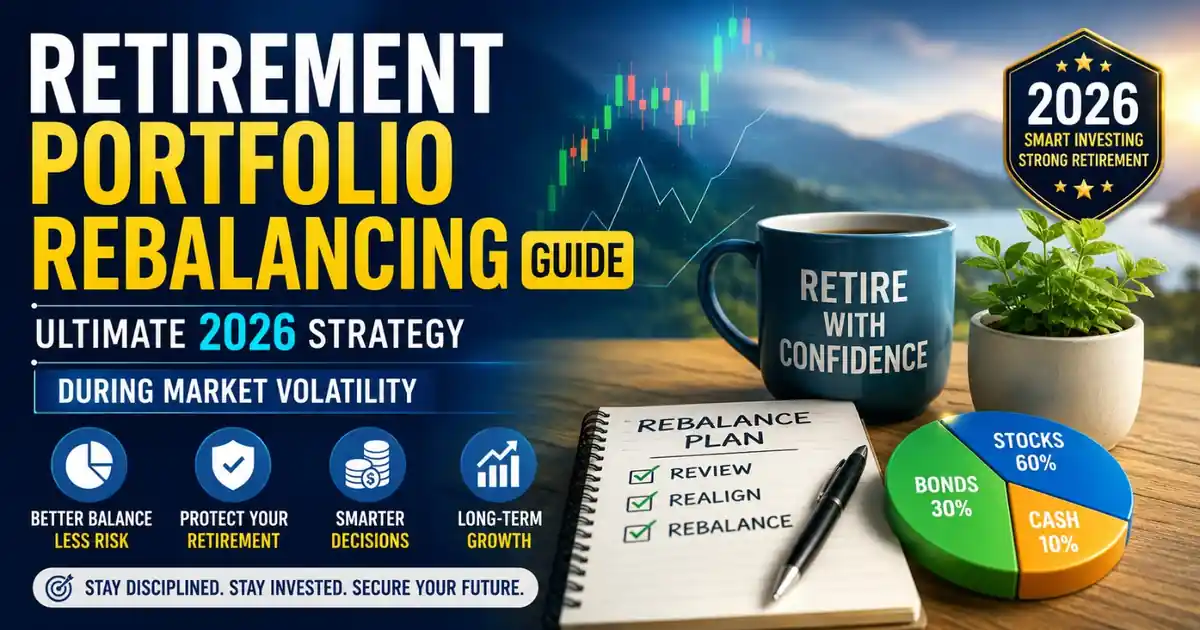
    Start by comparing your current portfolio with your target allocation. For example, if your original plan was 60% stocks, 30% bonds, and 10% cash, check whether recent market movements have changed those percentages. This simple review shows whether rebalancing is necessary.

    2. Sell Only the Overweight Investments

    When one asset class grows significantly larger than planned, consider trimming only the excess amount instead of making major portfolio changes. This approach helps maintain diversification while reducing unnecessary investment risk.

    3. Reinvest in Underweighted Assets

    Move the proceeds into asset classes that have fallen below your target allocation. Buying quality investments after market declines can strengthen long-term returns while restoring your original portfolio balance.

    4. Consider Taxes Before Rebalancing

    If possible, rebalance within tax-advantaged retirement accounts such as IRAs or 401(k)s to reduce potential capital gains taxes. In taxable accounts, review the tax impact before selling appreciated investments and consider spreading adjustments over time when appropriate.

    For a complete retirement investing roadmap, read our

    Complete Retirement Planning Guide
    .
    It explains retirement investing, withdrawal planning, tax strategies, Social Security planning, and long-term wealth preservation for American retirees.

    5. Use Technology to Monitor Your Portfolio

    Modern investment platforms and artificial intelligence tools can automatically monitor portfolio allocations, identify rebalancing opportunities, and estimate future retirement outcomes. These tools make it easier to stay disciplined during periods of market volatility.

    Learn how technology is improving investing in our

    AI Investing Guide 2026
    .

    Following a disciplined Retirement Portfolio Rebalancing Guide helps retirees manage investment risk, improve portfolio diversification, and maintain long-term financial confidence. Small adjustments made consistently are often more effective than large changes driven by short-term market movements throughout 2026 and beyond.

    Real-Life Example: Rebalancing a Retirement Portfolio During Market Volatility

    A Retirement Portfolio Rebalancing Guide becomes easier to understand when you see how it works in a real retirement scenario. Rebalancing is not about predicting the market. Instead, it helps retirees maintain their preferred investment mix while reducing unnecessary risk during periods of market volatility.

    Case Study

    Robert, a 68-year-old retiree, entered 2026 with a portfolio allocated to 60% stocks, 30% bonds, and 10% cash. After several months of strong stock market gains, his portfolio shifted to nearly 72% stocks and 20% bonds. Although his account value increased, his investment risk became much higher than originally planned.

    Instead of waiting for a market correction, Robert followed a disciplined Retirement Portfolio Rebalancing Guide. He sold only enough stock investments to return to his original allocation and reinvested those proceeds into high-quality bond funds. This reduced portfolio volatility while maintaining long-term growth potential.

    Months later, when markets experienced a temporary decline, Robert’s diversified portfolio remained more stable than before. His bond investments helped cushion losses, allowing him to continue following his retirement income plan without making emotional investment decisions.

    Simple Portfolio Rebalancing Calculator

    Use this formula to determine whether your portfolio needs rebalancing:

    Current Allocation (%) = (Current Asset Value ÷ Total Portfolio Value) × 100

    If any major asset class differs from your target allocation by approximately 5% to 10%, it may be time to review your portfolio and consider rebalancing.

    Strengthen Retirement Income While Rebalancing

    Dividend-paying investments can provide dependable retirement income while supporting portfolio stability. Learn how to build an income-focused portfolio by reading our

    How to Build a Dividend Portfolio
    .

    You can also explore our

    Top Dividend Stocks USA 2026

    guide to discover dividend-paying companies that may strengthen your long-term retirement investment strategy.

    This example shows that a disciplined Retirement Portfolio Rebalancing Guide helps retirees reduce unnecessary investment risk, stay focused on long-term financial goals, and navigate market volatility with greater confidence throughout 2026 and beyond.

    Common Rebalancing Mistakes and Future Retirement Investing Trends

    Following a Retirement Portfolio Rebalancing Guide requires discipline and patience. Many retirees understand the importance of rebalancing but still make mistakes that increase portfolio risk or reduce long-term returns. Avoiding these common errors can help protect your retirement savings while improving overall portfolio performance.

    1. Waiting Too Long to Rebalance

    Some retirees ignore their portfolio for years and only react after major market declines. By that time, their investment allocation may be far from the original target. Reviewing your portfolio every six to twelve months helps maintain a healthy balance between growth and stability without making emotional decisions.

    2. Making Emotional Investment Decisions

    Market volatility often creates fear during downturns and overconfidence during bull markets. Selling quality investments after prices fall or buying aggressively after prices rise can weaken long-term retirement performance. A disciplined rebalancing strategy helps remove emotions from investment decisions.

    3. Ignoring Taxes and Transaction Costs

    Frequent buying and selling may create unnecessary taxes or trading expenses in taxable accounts. Whenever possible, review the tax impact before making large portfolio adjustments and consider rebalancing inside tax-advantaged retirement accounts when appropriate.

    Future Trends in Retirement Portfolio Management

    Artificial intelligence and advanced portfolio management platforms are making retirement investing more efficient. These tools can monitor asset allocation, identify rebalancing opportunities, estimate retirement income, and analyze investment risk automatically. Technology helps retirees make informed decisions while maintaining long-term investment discipline.

    Learn more in our

    AI Investing Guide 2026
    .

    Long-term investing habits remain equally important. Our

    SIP Investing Guide 2026

    shows how disciplined investing can strengthen retirement wealth over time.

    To prepare your portfolio for uncertain economic conditions, explore our

    Recession-Proof Investing 2026
    .
    You can also review our

    Best Credit Cards 2026

    guide for practical money-management strategies that support long-term financial stability.

    Reviewing your Retirement Portfolio Rebalancing Guide regularly, maintaining diversification, and making gradual adjustments instead of emotional decisions can help reduce investment risk and keep your retirement plan aligned with your financial goals throughout 2026 and beyond.

    Frequently Asked Questions (FAQ)

    1. How often should retirees rebalance their portfolios?

    Most financial professionals recommend reviewing your retirement portfolio every 6 to 12 months. You should also consider rebalancing whenever your asset allocation changes by about 5% to 10% from your original target.

    2. Should I rebalance during a market crash?

    Yes, but avoid emotional decisions. If your portfolio has drifted significantly from your target allocation, disciplined rebalancing may help restore the proper balance while taking advantage of lower asset prices.

    3. Does rebalancing improve investment returns?

    Rebalancing does not guarantee higher returns. Instead, it helps manage portfolio risk, maintain diversification, and keep your investments aligned with your retirement goals.

    4. Can dividend investments reduce portfolio volatility?

    Dividend-paying companies often provide consistent income and may reduce the need to sell investments during market downturns. Many retirees combine dividend stocks with high-quality bonds to improve portfolio stability.

    5. Should retirees use AI tools for portfolio management?

    AI-powered investing platforms can monitor asset allocation, estimate retirement income, and identify rebalancing opportunities. However, these tools should complement—not replace—your long-term investment strategy and personal financial judgment.


    Conclusion

    A disciplined Retirement Portfolio Rebalancing Guide helps retirees stay focused on long-term financial success instead of reacting to short-term market movements. Regular portfolio reviews, thoughtful adjustments, and proper diversification can reduce investment risk while supporting consistent retirement income.

    Rather than trying to predict the next market correction, maintain your target asset allocation and review your investments at scheduled intervals. This simple habit can improve portfolio stability and help preserve retirement wealth for years to come.

    For a complete retirement investing roadmap, explore our

    Complete Retirement Planning Guide
    .
    It covers retirement investing, tax-efficient withdrawals, Social Security planning, portfolio allocation, and long-term wealth preservation for American retirees.

    For additional trusted retirement guidance, visit
    Official IRS Retirement Planning Resources,
    SEC Investor Education Center, and
    Vanguard Retirement Investing Resources.
    These trusted resources provide reliable information to help retirees make informed financial decisions.

    By following a consistent Retirement Portfolio Rebalancing Guide, you can better manage market volatility, protect your retirement savings, and maintain confidence throughout 2026 and beyond.

    📩 Stay Ahead with Weekly Retirement Insights

    Subscribe for free retirement planning tips, portfolio management strategies, tax-saving ideas, dividend investing guides, and practical financial insights created for American retirees.


    Subscribe Free

    Weekly Updates • No Spam • Unsubscribe Anytime


    About the Author

    Subhash Rukade is the founder of FinanceInvestment.site. He writes practical, research-backed articles on retirement planning, investing, dividend income, portfolio management, and personal finance. His mission is to help American investors make confident financial decisions through easy-to-understand, actionable guidance.

  • Retirement Stock vs Bond Strategy: Best 2026 Guide for Smarter Retirement Investing

    Retirement Stock vs Bond Strategy: Best 2026 Guide for Smarter Retirement Investing


    Retirement Stock vs Bond Strategy: Best 2026 Guide for Smarter Retirement Investing

    Published: June 28, 2026 |
    Author: Subhash Rukade

    Retirement Stock vs Bond Strategy


    Retirement Stock vs Bond Strategy is one of the most important decisions every retiree will make. Choosing the right balance between stocks and bonds can determine how long your retirement savings last, how much income your portfolio generates, and how well you handle market volatility. While stocks offer long-term growth potential, bonds provide stability and predictable income. Finding the right combination is the key to building lasting financial confidence.

    There is no single portfolio that works for everyone. Your ideal investment mix depends on your retirement age, income needs, risk tolerance, healthcare expenses, and long-term financial goals. Some retirees prefer higher stock exposure to keep pace with inflation, while others value the stability that bonds provide during uncertain markets.

    Before deciding on your investment allocation, read our
    Complete Retirement Planning Guide.
    It explains retirement investing, withdrawal strategies, tax planning, Social Security, and long-term wealth preservation to help American retirees make smarter financial decisions.

    In this guide, you’ll discover how a Retirement Stock vs Bond Strategy works, compare the advantages of stocks and bonds, learn how portfolio allocation changes with age, and build a retirement investment plan designed to provide growth, income, and financial security throughout 2026 and beyond.

    Understanding Stocks and Bonds in Retirement

    A successful Retirement Stock vs Bond Strategy starts with understanding the role each investment plays in your retirement portfolio. Stocks and bonds serve different purposes, and combining them wisely can help retirees balance long-term growth with reliable income. The right mix depends on your financial goals, risk tolerance, and the number of years you expect your retirement savings to support you.

    Stocks represent ownership in publicly traded companies. Over long periods, they have historically provided higher returns than most other asset classes. However, stock prices can fluctuate significantly during market downturns. Because of this volatility, retirees should carefully decide how much stock exposure fits their retirement plan.

    Why Bonds Matter During Retirement

    Bonds are generally considered more stable than stocks. When you purchase a bond, you are lending money to a government or corporation in exchange for regular interest payments and the return of your principal at maturity. Bonds help reduce overall portfolio volatility and can provide predictable income for retirees.

    Stocks vs Bonds Comparison

    InvestmentMain BenefitPrimary Risk
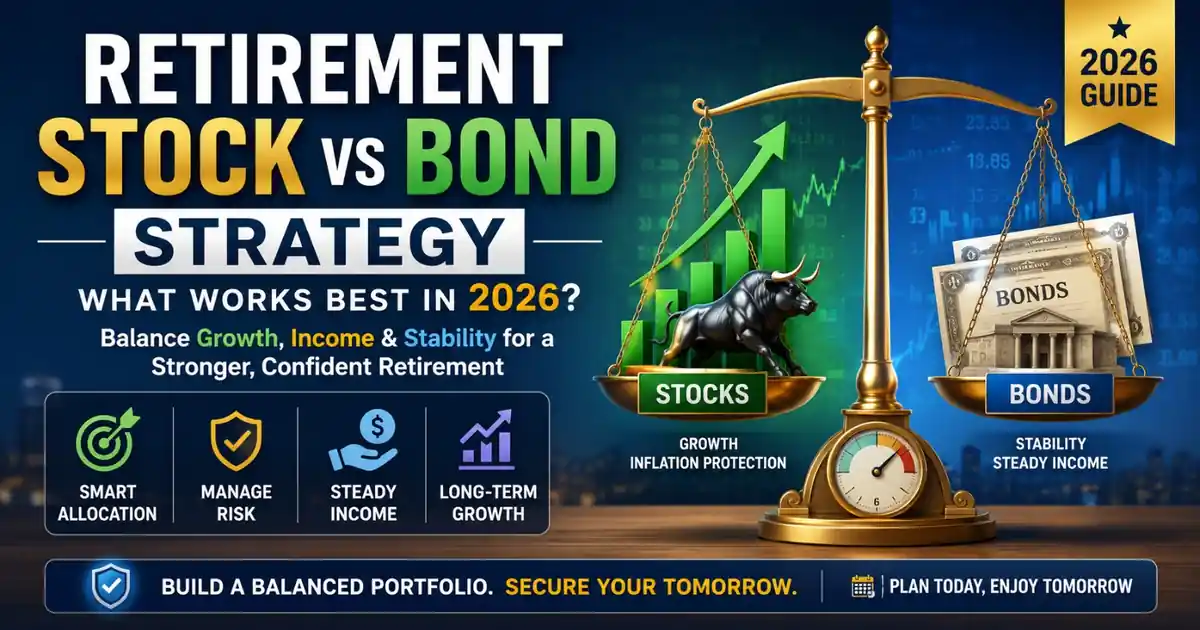
    StocksLong-term growth and inflation protectionHigher market volatility
    BondsStable income and lower portfolio riskLower long-term growth potential

    Finding the Right Balance

    Most retirees benefit from owning both stocks and bonds instead of choosing only one. Stocks help your portfolio continue growing throughout retirement, while bonds provide stability during market downturns. The ideal allocation depends on your retirement age, expected expenses, and overall financial situation.

    Building a thoughtful Retirement Stock vs Bond Strategy allows you to generate income, manage investment risk, and protect your retirement savings. Reviewing your allocation every year ensures your portfolio continues to match your retirement goals throughout 2026 and beyond.

    Choosing the Best Retirement Stock vs Bond Strategy for 2026

    Building the right Retirement Stock vs Bond Strategy is about balancing growth with financial security. While stocks can increase the value of your retirement portfolio over time, bonds help reduce market volatility and generate more predictable income. Most successful retirement portfolios include both asset classes because they complement each other during different market conditions.

    Your ideal investment mix depends on several factors, including your retirement age, expected living expenses, health, other income sources, and personal comfort with market fluctuations. Instead of trying to predict the market, focus on maintaining an allocation that supports your long-term retirement goals.

    Suggested Portfolio Allocation

    Retirement StageStocksBonds
    Early Retirement (60–69)55–65%35–45%
    Mid Retirement (70–79)45–55%45–55%
    Later Retirement (80+)30–45%55–70%

    Use Dividend Stocks for Reliable Income

    Dividend-paying companies can provide regular income while still offering long-term growth potential. For many retirees, dividend investments reduce the need to sell shares during market downturns and create a steady cash flow throughout retirement.

    Learn how to create a reliable dividend income portfolio by reading our

    How to Build a Dividend Portfolio
    .

    You can also explore our

    Top Dividend Stocks USA 2026

    guide to discover quality dividend-paying companies that may strengthen your retirement income strategy.

    A well-balanced Retirement Stock vs Bond Strategy does not eliminate investment risk, but it can help reduce large portfolio swings while providing opportunities for long-term growth. Reviewing your portfolio annually and adjusting allocations as your retirement needs change will help keep your investment plan on track throughout 2026 and beyond.

    Building a Balanced Retirement Portfolio with Stocks and Bonds

    A successful Retirement Stock vs Bond Strategy is built around diversification instead of relying entirely on one investment type. Stocks help your portfolio grow and protect purchasing power against inflation, while bonds provide stability and a more predictable source of income. Combining both allows retirees to stay invested during changing market conditions without taking unnecessary risks.

    1. Match Your Portfolio to Your Retirement Goals

    Your investment allocation should reflect your retirement lifestyle and income needs. Retirees who expect to rely heavily on portfolio withdrawals may prefer a higher bond allocation, while those with pensions or other guaranteed income may comfortably maintain a larger percentage in stocks for long-term growth.

    2. Diversify Within Each Asset Class

    Owning only a few individual stocks or bonds increases investment risk. Instead, consider broad-market index funds, exchange-traded funds (ETFs), high-quality bonds, and dividend-paying companies. A diversified portfolio can reduce volatility while providing exposure to different sectors of the economy.

    3. Rebalance Your Portfolio Regularly

    Market movements can gradually change your original investment allocation. If stocks perform exceptionally well, they may become a much larger percentage of your portfolio than intended. Reviewing and rebalancing your investments once each year helps maintain your target risk level and keeps your retirement strategy aligned with your financial goals.

    For a complete retirement investing roadmap, read our

    Complete Retirement Planning Guide
    .
    It covers retirement investing, tax planning, withdrawal strategies, Social Security planning, and long-term wealth preservation for American retirees.

    4. Use Technology to Improve Investment Decisions

    Modern portfolio management tools can analyze diversification, estimate future retirement income, and evaluate different investment scenarios. These insights help retirees make more informed decisions while adjusting their portfolios as market conditions change.

    Discover how technology is transforming investing in our

    AI Investing Guide 2026
    .

    A disciplined Retirement Stock vs Bond Strategy combines growth, stability, and flexibility. Reviewing your portfolio every year and making gradual adjustments can help preserve retirement savings, reduce unnecessary risk, and improve long-term financial confidence throughout 2026 and beyond.

    Real-Life Example: Finding the Right Retirement Stock vs Bond Strategy

    Choosing the right Retirement Stock vs Bond Strategy becomes much easier when you apply it to a real retirement situation. Every retiree has different income needs and risk tolerance, but balancing stocks and bonds can help reduce market stress while supporting long-term financial security.


    Case Study

    John, a 67-year-old retiree, has a retirement portfolio worth $1 million. Initially, nearly 90% of his investments were in stocks because he wanted maximum growth. During a major market correction, his portfolio value dropped sharply, forcing him to delay several financial goals and increasing concerns about future withdrawals.

    After reviewing his retirement plan, John adopted a balanced Retirement Stock vs Bond Strategy. He reallocated his investments to approximately 60% stocks and 40% bonds. The bond allocation generated steady interest income while reducing overall portfolio volatility. His stock investments continued providing long-term growth, and dividend income covered part of his annual living expenses without requiring large asset sales.

    Simple Portfolio Allocation Calculator

    Use this formula to estimate your current investment allocation:

    Stock Allocation (%) = (Total Value of Stocks ÷ Total Portfolio Value) × 100

    Bond Allocation (%) = (Total Value of Bonds ÷ Total Portfolio Value) × 100

    Review these percentages annually to ensure your portfolio continues matching your retirement goals, income needs, and risk tolerance.

    Strengthen Retirement Income

    Reliable dividend income can reduce the need to sell investments during market downturns. Learn how to build a dependable income portfolio by reading our

    How to Build a Dividend Portfolio
    .

    You can also explore our

    Top Dividend Stocks USA 2026

    guide to discover quality dividend-paying companies that may complement your retirement investment strategy.

    This example shows that a carefully planned Retirement Stock vs Bond Strategy can reduce investment risk, improve retirement income stability, and help preserve long-term wealth throughout 2026 and beyond.

    Common Portfolio Mistakes and Future Retirement Investing Trends

    A well-designed Retirement Stock vs Bond Strategy should continue evolving throughout retirement. Many retirees unknowingly reduce their long-term returns or increase investment risk by making avoidable portfolio mistakes. Reviewing your investment strategy regularly and understanding new retirement investing trends can help protect your savings and improve financial confidence.

    1. Becoming Too Conservative Too Early

    Many retirees move almost all of their money into bonds or cash immediately after retirement. While this reduces market volatility, it may also limit long-term growth and make it harder for your portfolio to keep pace with inflation. Maintaining some stock exposure often helps preserve purchasing power over a retirement that could last 20 to 30 years.

    2. Ignoring Portfolio Rebalancing

    As markets change, your original stock and bond allocation can drift away from your target. For example, a strong stock market may leave your portfolio carrying much more risk than intended. Reviewing and rebalancing your investments annually helps maintain the right balance between growth and stability.

    3. Forgetting About Inflation

    Inflation steadily reduces purchasing power over time. A retirement portfolio invested only in fixed-income assets may struggle to support rising healthcare, housing, and daily living expenses. Including growth-oriented investments can help offset this long-term risk.

    Future Trends in Retirement Investing

    Artificial intelligence and digital portfolio management tools are changing how retirees monitor investments. Modern technology can analyze asset allocation, estimate retirement income, and identify opportunities to improve diversification while managing investment risk.

    Learn how technology is reshaping investing in our

    AI Investing Guide 2026
    .

    Long-term investing habits remain equally important. Our

    SIP Investing Guide 2026

    explains how disciplined investing can build retirement wealth over time.

    To prepare your portfolio for uncertain economic conditions, explore our

    Recession-Proof Investing 2026
    .
    You can also review our

    Best Credit Cards 2026

    guide for practical ways to improve everyday financial management and strengthen your overall retirement plan.

    Reviewing your Retirement Stock vs Bond Strategy every year, maintaining proper diversification, and making gradual portfolio adjustments can help reduce investment risk, improve long-term returns, and provide greater financial security throughout retirement in 2026 and beyond.

    Frequently Asked Questions (FAQ)

    1. Should retirees invest only in bonds?

    No. While bonds provide stability and regular income, relying only on bonds may reduce long-term portfolio growth. A balanced Retirement Stock vs Bond Strategy usually includes both stocks and bonds to support growth while managing investment risk.

    2. What is a good stock-to-bond ratio after retirement?

    The ideal ratio depends on your age, retirement income needs, health, and risk tolerance. Many retirees choose a balanced allocation that provides growth through stocks while using bonds to reduce portfolio volatility and generate stable income.

    3. How often should I rebalance my retirement portfolio?

    Review your retirement portfolio at least once each year or after major market movements. Regular rebalancing helps maintain your target asset allocation and keeps your investments aligned with your retirement goals.

    4. Are dividend stocks better than bonds?

    Dividend stocks and bonds serve different purposes. Dividend stocks offer income with growth potential, while bonds provide stability and predictable interest payments. Many retirees benefit from owning both as part of a diversified portfolio.

    5. Can AI help improve retirement investing?

    AI-powered investment tools can analyze portfolio diversification, monitor risk, and estimate future retirement income. They are useful planning tools but should complement your own financial decisions and professional advice.


    Conclusion

    Building the right Retirement Stock vs Bond Strategy is about creating a portfolio that balances growth, income, and stability. Instead of choosing stocks or bonds alone, most retirees benefit from combining both investments in a diversified portfolio that reflects their retirement goals, income needs, and personal risk tolerance.

    Reviewing your portfolio every year, maintaining proper diversification, and adjusting your investment allocation as your financial situation changes can help preserve retirement savings while improving long-term financial confidence.

    For a complete retirement investing roadmap, explore our

    Complete Retirement Planning Guide
    .
    It covers retirement investing, withdrawal planning, tax strategies, Social Security, and wealth preservation to help American retirees build lasting financial security.

    You can also learn more from trusted resources such as
    Official IRS Retirement Planning Resources,
    SEC Investor Education Center, and
    Vanguard Retirement Investing Resources.
    These resources provide reliable guidance to support informed retirement decisions.

    A disciplined Retirement Stock vs Bond Strategy can help you navigate changing markets, generate dependable retirement income, and enjoy greater financial peace of mind throughout 2026 and beyond.

    📩 Get Weekly Retirement Investing Tips

    Subscribe to receive free retirement planning guides, investing strategies, portfolio allocation tips, tax-saving ideas, and practical personal finance insights for American retirees.


    Subscribe Free

    Weekly Updates • No Spam • Unsubscribe Anytime


    About the Author

    Subhash Rukade is the founder of FinanceInvestment.site. He specializes in retirement planning, dividend investing, portfolio management, tax strategies, and personal finance. His goal is to help American investors make smarter financial decisions through practical, research-based, and easy-to-understand investment guides.

  • Safe Withdrawal Rate in 2026: 3%, 4%, or 5%? The Complete Retirement Income Guide

    Safe Withdrawal Rate in 2026: 3%, 4%, or 5%? The Complete Retirement Income Guide


    Safe Withdrawal Rate in 2026: 3%, 4%, or 5%?

    Author: Subhash Rukade

    Published: June 20, 2026

    Safe Withdrawal Rate 2026

    Why the Safe Withdrawal Rate in 2026 Matters More Than Ever

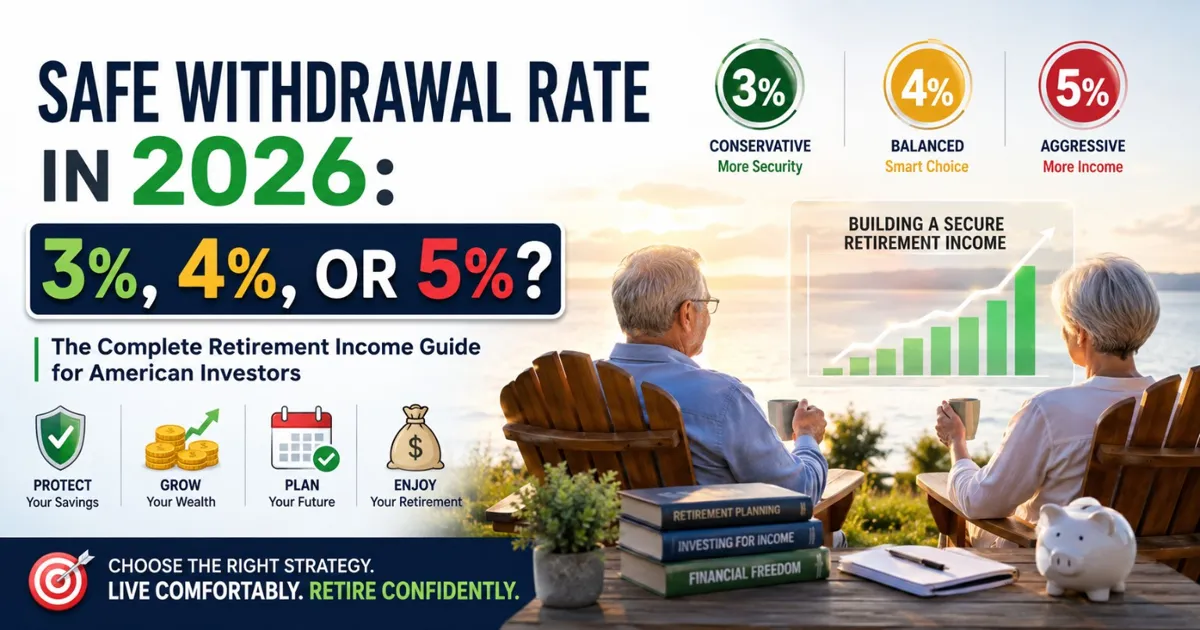
    Safe Withdrawal Rate 2026 is one of the most important topics for retirees planning their retirement income. Choosing between a 3%, 4%, or 5% withdrawal rate can significantly affect how long your retirement savings last and how much income you can safely generate throughout retirement.

    For decades, many financial planners relied on the famous 4% rule. The idea was simple. Retirees could withdraw 4% of their portfolio during the first year of retirement and then adjust that amount for inflation each year. Historically, this approach worked reasonably well for many investors.

    However, retirement planning in 2026 looks very different. Inflation spikes, changing interest rates, and longer life expectancies have sparked a new debate. Should retirees use a conservative 3% withdrawal rate? Is the traditional 4% rule still reliable? Or can some investors safely withdraw 5%?

    The answer depends on several factors. Portfolio size, investment allocation, retirement age, health conditions, and income sources such as Social Security all play a role.

    Before deciding on a withdrawal strategy, it is important to build a strong retirement foundation. If you have not already done so, read our comprehensive
    Retirement Planning Guide for Americans in 2026.
    This pillar guide explains retirement investing, income planning, tax strategies, and long-term wealth preservation.

    Modern retirees also have access to new planning tools. Artificial intelligence is helping investors analyze risk and improve decision-making. You can learn more in our
    AI Investing Guide 2026.

    In this article, we will compare the 3%, 4%, and 5% withdrawal rules. We will look at real-world examples, retirement income strategies, portfolio risks, common mistakes, and future retirement trends. By the end, you will have a much clearer idea of which withdrawal rate may fit your retirement goals in 2026.

    The goal is not simply to maximize income today. The goal is to create a retirement paycheck that can support your lifestyle for decades while protecting the wealth you worked so hard to build.

    Understanding the 3%, 4%, and 5% Withdrawal Rules

    To understand the Safe Withdrawal Rate in 2026, it helps to know where the popular withdrawal rules came from.

    The most widely known strategy is the 4% rule. It originated from retirement research that analyzed historical market performance and portfolio survival rates. The goal was simple: determine how much retirees could withdraw each year without running out of money during a 30-year retirement.

    The Safe Withdrawal Rate 2026 debate continues to be one of the most important retirement planning discussions for American retirees.

    For many years, the 4% rule became a standard retirement planning guideline. However, changing market conditions and increasing life expectancy have caused many investors to reconsider whether 4% remains the ideal withdrawal rate.

    The 3% Withdrawal Rule

    The 3% withdrawal strategy is considered the most conservative option.

    Retirees who use this approach withdraw less money each year, which can increase the likelihood that their portfolio survives longer market downturns and extended retirement periods.

    The downside is lower annual income. Some retirees may find that a 3% withdrawal rate does not provide enough spending flexibility.

    The 4% Withdrawal Rule

    The traditional 4% rule attempts to balance income and portfolio preservation.

    For many retirees, it offers a reasonable compromise between maintaining lifestyle needs and protecting long-term retirement assets.

    This strategy remains popular because it has historically worked across many different market environments.

    The 5% Withdrawal Rule

    The 5% strategy generates higher retirement income immediately.

    Retirees with larger portfolios often find this approach attractive because it increases available cash flow. However, higher withdrawals also increase the risk of portfolio depletion during prolonged market declines.

    Investors considering a 5% withdrawal rate should carefully evaluate risk tolerance, retirement duration, and alternative income sources.

    Which Withdrawal Rate Is Best?

    There is no universal answer.

    A retiree with strong dividend income, Social Security benefits, and a diversified portfolio may be comfortable with a different withdrawal rate than someone relying entirely on investment withdrawals.

    That is why the Safe Withdrawal Rate in 2026 should be viewed as a personalized decision rather than a fixed rule.

    In the next section, we will compare exactly how much retirement income a portfolio can generate using the 3%, 4%, and 5% withdrawal strategies.

    Safe Withdrawal Rate 2026: Understanding the 3%, 4%, and 5% Rules

    Understanding percentages is helpful, but most retirees want to know how withdrawal rates translate into actual dollars. This section of our Safe Withdrawal Rate in 2026 guide shows how different portfolio sizes perform under the 3%, 4%, and 5% withdrawal strategies.

    The Safe Withdrawal Rate 2026 debate continues to be one of the most important retirement planning discussions for American retirees.

    The difference between these withdrawal rates may seem small. However, over a 20- to 30-year retirement, even a 1% change can significantly impact portfolio longevity and retirement income.

    Retirement Income Comparison Table

    Portfolio Size3% Withdrawal4% Withdrawal5% Withdrawal
    $250,000$7,500/year$10,000/year$12,500/year
    $500,000$15,000/year$20,000/year$25,000/year
    $1,000,000$30,000/year$40,000/year$50,000/year
    $2,000,000$60,000/year$80,000/year$100,000/year

    Retirement Income Calculator Example

    Suppose a retiree has a portfolio worth $1 million.

    • 3% Rule = $30,000 annual income
    • 4% Rule = $40,000 annual income
    • 5% Rule = $50,000 annual income

    At first glance, the 5% withdrawal strategy appears attractive because it provides an additional $20,000 per year compared to the 3% rule.

    However, the higher withdrawal amount may increase the risk of depleting retirement assets during periods of market weakness.

    Inflation Makes a Big Difference

    Inflation is one of the biggest threats to retirement income.

    A retiree withdrawing $40,000 today may need significantly more income ten or twenty years from now to maintain the same purchasing power.

    This is why many retirees combine withdrawal strategies with dividend investing and long-term growth investments.

    Investors interested in generating additional retirement income should read our

    How to Build a Dividend Portfolio

    guide.

    You can also explore our

    Top Dividend Stocks USA 2026

    resource for dividend income opportunities.

    The best Safe Withdrawal Rate in 2026 is often the one that balances current income needs with long-term portfolio survival. In the next section, we’ll examine a real-world retirement case study and see how different withdrawal rates affect actual retirees.

    Real-World Case Study: Which Withdrawal Rate Works Best in Retirement?

    Understanding retirement withdrawal strategies becomes much easier when we look at a real-world example. This case study shows how different withdrawal rates can affect retirement income and long-term portfolio sustainability.

    The purpose of this example is not to identify a perfect strategy. Instead, it demonstrates how the Safe Withdrawal Rate in 2026 depends on personal circumstances, market conditions, and retirement goals.

    Meet Robert and Linda

    Robert is 66 and Linda is 64. They recently retired after working for more than 35 years.

    Their financial situation looks like this:

    • Retirement Portfolio: $1,000,000
    • Social Security Income: $32,000 per year
    • Mortgage: Paid Off
    • Emergency Fund: $50,000
    • Desired Retirement Spending: $75,000 per year

    Because Social Security covers only part of their expenses, they need their investment portfolio to generate additional retirement income.

    Scenario 1: Using the 3% Withdrawal Rule

    A 3% withdrawal rate generates approximately $30,000 annually from their portfolio.

    Combined with Social Security, total retirement income equals about $62,000 per year.

    While this approach offers strong portfolio protection, it falls short of their desired spending target.

    Scenario 2: Using the 4% Withdrawal Rule

    The traditional 4% rule provides approximately $40,000 annually.

    Combined with Social Security, total income increases to roughly $72,000 per year.

    This amount comes much closer to their retirement income goal while maintaining a reasonable balance between spending and portfolio preservation.

    Scenario 3: Using the 5% Withdrawal Rule

    A 5% withdrawal rate produces approximately $50,000 annually.

    Combined retirement income rises to about $82,000 per year.

    Although this provides greater spending flexibility, it also increases the risk of portfolio depletion during prolonged market downturns.

    Portfolio Allocation Matters

    Robert and Linda maintain a diversified retirement portfolio:

    • 55% Stocks
    • 30% Bonds
    • 10% Dividend Investments
    • 5% Cash Reserves

    This allocation helps balance growth, income generation, and risk management.

    Investors concerned about market downturns should also read our

    Recession-Proof Investing 2026

    guide.

    Technology is also helping retirees evaluate withdrawal strategies more effectively. Our

    AI Investing Guide 2026

    explains how modern tools can support retirement decision-making.

    This case study highlights an important lesson: the best Safe Withdrawal Rate in 2026 is not necessarily the highest one. It is the rate that provides enough income while preserving financial security throughout retirement.

    In the next section, we’ll explore the most common withdrawal mistakes retirees make and how to avoid them.

    Common Withdrawal Mistakes That Can Damage Retirement Income

    Even the best retirement portfolio can struggle if withdrawals are not managed carefully. Many retirees focus on investment performance but overlook spending habits and withdrawal decisions.Safe Withdrawal Rate 2026

    Choosing the right Safe Withdrawal Rate 2026 depends on portfolio size, retirement age, and expected investment returns.

    That is why understanding common mistakes is an important part of choosing the right Safe Withdrawal Rate in 2026.

    Most retirement income problems do not happen overnight. They develop gradually through a series of small financial decisions that compound over time.

    Mistake #1: Ignoring Inflation

    One of the most common retirement mistakes is underestimating inflation.

    A retiree may feel comfortable withdrawing $40,000 annually today. However, rising prices can reduce purchasing power significantly over the next 10 to 20 years.

    Healthcare, housing, insurance, and food costs often increase faster than expected.

    A successful retirement plan should include investments that have the potential to grow alongside inflation.

    Mistake #2: Increasing Withdrawals During Bull Markets

    Strong markets can create a false sense of security.

    When portfolios grow rapidly, some retirees increase spending and withdrawals beyond sustainable levels.

    Unfortunately, market conditions can change quickly.

    Excessive withdrawals during good years may reduce financial flexibility during future downturns.

    Mistake #3: Poor Diversification

    Many retirees hold too much money in a single investment, sector, or asset class.

    Concentrated portfolios often experience larger losses during market corrections.

    Diversification across stocks, bonds, dividend investments, and cash reserves can improve long-term portfolio stability.

    Mistake #4: No Emergency Cash Reserve

    Unexpected expenses are inevitable.

    Medical bills, home repairs, family emergencies, and vehicle replacements can force retirees to sell investments at unfavorable times.

    Maintaining a dedicated emergency fund helps reduce this risk.

    Mistake #5: Using Credit to Support Retirement Spending

    Some retirees rely heavily on credit cards when investment income falls short.

    While credit can provide short-term flexibility, excessive debt may place unnecessary pressure on retirement finances.

    Investors evaluating financial products can review our

    Best Credit Cards 2026

    guide.

    Mistake #6: Stopping Investments Too Early

    Many retirees believe investing ends once retirement begins.

    In reality, retirement portfolios often need continued growth to combat inflation and support long-term income needs.

    Investors interested in disciplined long-term investing strategies can explore our

    SIP Investing Guide 2026
    .

    The key lesson is simple: the best Safe Withdrawal Rate in 2026 cannot compensate for poor financial habits. Successful retirees combine smart withdrawal strategies with diversification, inflation protection, disciplined spending, and long-term planning.

    In the next section, we’ll explore practical retirement income strategies that can help retirees increase cash flow while reducing portfolio risk.

    Practical Retirement Income Strategies for 2026

    Choosing the right Safe Withdrawal Rate in 2026 is important, but withdrawal rates alone do not determine retirement success. The most financially secure retirees often combine multiple income strategies to create stable cash flow while protecting their portfolios.

    Many investors use the Safe Withdrawal Rate 2026 framework to estimate how much income their portfolio can safely generate.

    A diversified retirement income plan can reduce dependence on any single asset class and improve long-term financial flexibility.

    Dividend Income Strategy

    Dividend investing remains one of the most popular retirement income approaches.Safe Withdrawal Rate 2026

    Instead of selling shares regularly, retirees can collect dividend payments from high-quality companies and income-focused funds.

    This approach may help preserve capital while generating consistent cash flow.

    Investors interested in this strategy should review our

    How to Build a Dividend Portfolio

    guide.

    You can also explore our

    Top Dividend Stocks USA 2026

    resource.

    Bond Ladder Strategy

    Many retirees use bond ladders to create predictable income.

    A bond ladder consists of bonds with different maturity dates. As bonds mature, the proceeds can be used for retirement expenses or reinvested.Safe Withdrawal Rate 2026

    This strategy may reduce interest-rate risk while providing dependable income streams.

    Bucket Strategy

    The bucket strategy separates retirement assets into different categories based on time horizons.

    • Short-Term Bucket: Cash and money market funds
    • Medium-Term Bucket: Bonds and income investments
    • Long-Term Bucket: Stocks and growth investments

    This approach can help retirees avoid selling growth assets during market downturns.

    Dynamic Withdrawal Strategy

    Rather than withdrawing the same percentage every year, some retirees adjust withdrawals based on portfolio performance.Safe Withdrawal Rate 2026

    When markets perform well, withdrawals may increase modestly. During weaker markets, spending adjustments can help preserve portfolio longevity.

    Retirement Strategy Comparison

    StrategyRisk LevelIncome Stability
    Dividend IncomeModerateHigh
    Bond LadderLowHigh
    Bucket StrategyModerateHigh
    Dynamic WithdrawalsModerateVariable

    Trusted Retirement Resources

    📘 Recommended Retirement Book


    The Bogleheads’ Guide to Retirement Planning

    This book covers retirement investing, withdrawal strategies, tax planning, and portfolio management in a practical and easy-to-understand format.

    The best Safe Withdrawal Rate in 2026 often works alongside a broader retirement income strategy. Combining dividend income, bond ladders, cash reserves, and disciplined withdrawals can help retirees maintain income while reducing long-term portfolio risk.

    Future Retirement Trends, FAQ, and Final Thoughts

    The retirement landscape is changing rapidly. Longer life expectancy, evolving investment markets, and new technology are reshaping how Americans prepare for retirement.

    Is the Safe Withdrawal Rate 2026 still based on the 4% rule?

    As we move further into 2026 and beyond, many retirees are shifting away from rigid retirement rules and adopting more flexible income strategies. Rather than relying solely on the traditional 4% rule, investors are increasingly using dynamic withdrawal methods, dividend income, and personalized retirement planning.

    Technology is also becoming a valuable retirement tool. Artificial intelligence can help investors monitor portfolios, analyze risk, and identify opportunities to improve retirement income.

    If you want a broader understanding of retirement investing and long-term financial security, be sure to read our

    Retirement Planning Guide for Americans in 2026
    .

    Frequently Asked Questions

    1. Is the 4% rule still safe in 2026?

    For many retirees, the 4% rule remains a useful guideline. However, portfolio size, market conditions, inflation, and retirement length should all be considered before choosing a withdrawal rate.

    2. Is a 3% withdrawal rate too conservative?

    Not necessarily. A 3% withdrawal rate may provide greater portfolio protection, especially for retirees expecting a long retirement.

    3. Can I use a 5% withdrawal rate?

    Some retirees can sustain a 5% withdrawal rate, particularly if they have additional income sources. However, the risk of running out of money increases.

    4. What investments work best for retirement income?

    Dividend stocks, bonds, income-focused ETFs, and diversified portfolios are commonly used retirement income investments.

    5. How often should retirees review withdrawal strategies?

    At least once per year. Portfolio performance, inflation, and spending needs can change over time.

    Conclusion

    The best Safe Withdrawal Rate in 2026 depends on your goals, risk tolerance, portfolio structure, and retirement income needs.

    The Safe Withdrawal Rate 2026 is not a one-size-fits-all solution. Every retiree should evaluate their goals, risk tolerance, and income needs before selecting a withdrawal strategy.

    A 3% withdrawal rate prioritizes safety. A 4% withdrawal rate balances income and portfolio preservation. A 5% withdrawal rate provides higher income but carries greater long-term risk.

    The most successful retirees focus on flexibility rather than following a single rule forever. By combining smart withdrawals, diversified investments, dividend income, and disciplined spending, investors can improve their chances of achieving lasting financial security.

    📩 Free Retirement Newsletter

    Get retirement income strategies, investing ideas, Social Security updates, and wealth-building tips delivered directly to your inbox.

    Join thousands of investors preparing for a smarter retirement.


    👨‍💼 Subhash Rukade

    Personal Finance & Retirement Writer | Helping Americans build retirement income, grow wealth, and make smarter investing decisions for a secure financial future.