Tag: Personal Finance

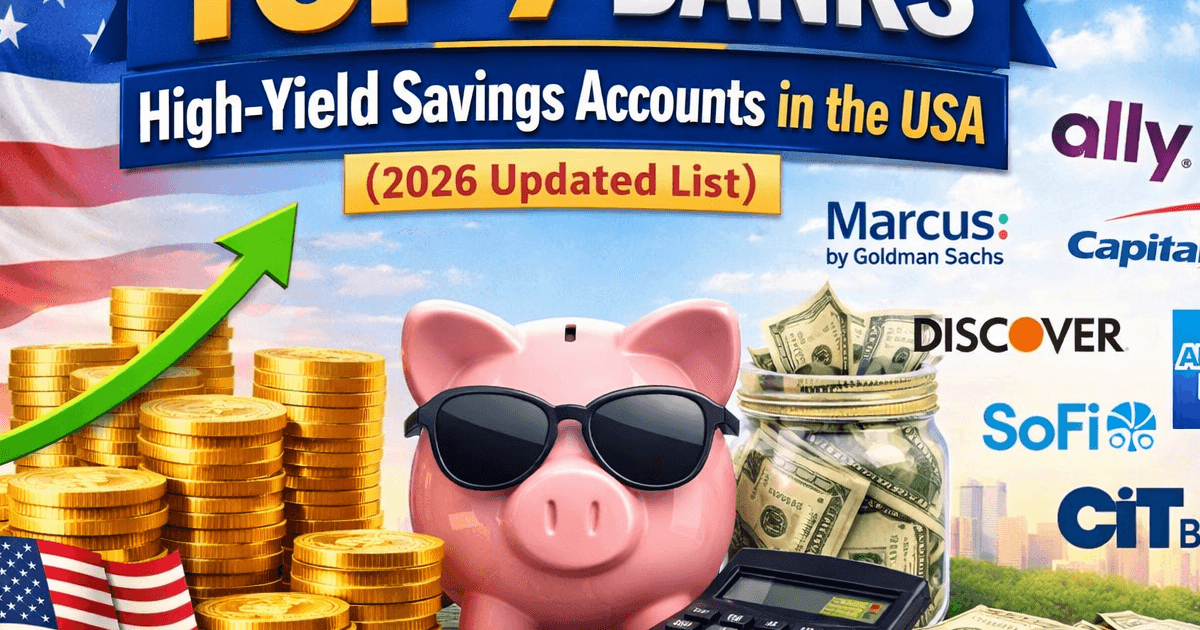
  • Top 7 Banks Offering High-Yield Savings Accounts in the USA (2026 Updated List)

    Top 7 Banks Offering High-Yield Savings Accounts in the USA (2026 Updated List)


    Top 7 Banks Offering High-Yield Savings Accounts in the USA (2026 Updated List)

    high-yield savings account USA 2026 best banks

    High-yield savings account USA 2026 is becoming one of the smartest ways for Americans to grow their savings without taking unnecessary risks. With inflation rising and traditional savings accounts offering extremely low interest rates, many investors are now looking for better alternatives to protect and grow their money.

    In 2026, one of the biggest financial problems is that most traditional bank accounts offer less than 0.50% interest. This means your money is not really growing. In fact, due to inflation, it is slowly losing its value over time. This is why more people in the USA are switching to smarter saving strategies.

    High-yield savings accounts (HYSA) solve this problem by offering significantly higher interest rates, better online accessibility, and strong security through FDIC insurance. However, not every bank offers the same benefits. Some banks provide higher APY, while others focus on zero fees, better mobile apps, or flexibility.

    If you want to make the most of your savings, choosing the right bank is extremely important. Even a small difference in interest rate can make a big impact over time, especially when you are saving consistently.

    Before we explore the top banks, it is important to understand how these accounts work. You can check this detailed guide on

    best high-yield savings accounts in the USA
    to get a complete understanding.

    In this guide, you will discover the top 7 banks offering high-yield savings accounts in the USA in 2026, along with their features, benefits, and how to choose the best one based on your financial goals. This will help you make a smarter and more profitable decision.


    What is a High-Yield Savings Account and Why Choosing the Right Bank Matters

    A high-yield savings account USA 2026 is a type of savings account that offers significantly higher interest rates compared to traditional bank accounts. These accounts are usually provided by online banks or modern financial institutions that operate with lower costs, allowing them to offer better returns to customers.

    In a traditional savings account, interest rates are extremely low—often below 0.50%. This means your money grows very slowly. In contrast, a high-yield savings account can offer multiple times higher interest, helping your savings grow faster without taking market risks.

    For example, if you keep $10,000 in a regular savings account, your yearly return might be very small. But with a high-yield savings account, the same amount can generate significantly higher earnings. This is why HYSA has become one of the most popular saving tools in the USA in 2026.

    Why Choosing the Right Bank is Important

    Not all high-yield savings accounts are the same. The bank you choose plays a major role in how much you earn and how easily you can manage your money. Some banks offer higher APY, while others focus on zero fees, better mobile apps, or flexible withdrawal options.

    Another important factor is trust and safety. In the United States, most high-yield savings accounts are protected by FDIC insurance, which covers up to $250,000 per depositor. This makes HYSA one of the safest financial options available.

    However, smart investors do not rely only on savings accounts. Diversification is key to long-term financial success. Along with HYSA, comparing other asset classes can help you build a balanced portfolio. You can explore this detailed comparison in this guide on

    gold vs bitcoin: which is better for USA investors
    .

    In simple terms, a high-yield savings account is not just about earning interest—it is about choosing the right bank that offers a balance of high returns, safety, and convenience. Making the right choice can significantly improve your financial growth in 2026.


    Top 7 Banks Offering High-Yield Savings Accounts in the USA (2026)

    Choosing the right bank for a high-yield savings account USA 2026 can make a significant difference in your returns. Below are the top 7 banks in the USA that offer competitive interest rates, strong security, and excellent user experience.

    If you want a broader comparison before selecting, you can explore this

    complete guide to high-yield savings accounts in the USA
    to understand all available options.

    1. Ally Bank

    Ally Bank is one of the most popular online banks in the USA. It offers competitive APY, zero monthly fees, and no minimum balance requirements. It is ideal for beginners who want a simple and reliable savings solution.

    • APY: Competitive (around 4%+)
    • Best for: No fees and easy online access
    • Pros: User-friendly app, strong reputation
    • Cons: No physical branches

    2. Marcus by Goldman Sachs

    Marcus is backed by Goldman Sachs, making it one of the most trusted options. It offers high interest rates with no hidden fees and a clean user experience.

    • APY: High and stable
    • Best for: Safety and trust
    • Pros: No fees, strong brand
    • Cons: Limited features compared to fintech apps

    3. Discover Bank

    Discover Bank provides a strong balance between savings and customer service. It offers competitive APY and excellent customer support.

    • APY: Competitive
    • Best for: Customer service
    • Pros: Trusted brand, easy transfers
    • Cons: Slightly lower rates at times

    4. Capital One 360

    Capital One 360 combines the benefits of an online bank with physical branch access. It is ideal for users who want flexibility.

    • APY: Moderate to high
    • Best for: Hybrid banking experience
    • Pros: No fees, physical + digital access
    • Cons: APY not always highest

    5. American Express National Bank

    American Express offers a high-yield savings account with strong brand trust and consistent returns. It is a good option for conservative investors.

    • APY: Competitive
    • Best for: Stability and trust
    • Pros: Reliable, no monthly fees
    • Cons: Limited banking features

    6. SoFi Bank

    SoFi Bank is a modern fintech-driven bank offering high APY along with additional features like automated savings and financial tools.

    • APY: High (with conditions)
    • Best for: Tech-savvy users
    • Pros: All-in-one financial platform
    • Cons: Conditions for highest APY

    7. CIT Bank

    CIT Bank is known for offering some of the highest interest rates in the market. It is ideal for investors who want maximum returns.

    • APY: High
    • Best for: Maximum interest earnings
    • Pros: High APY options
    • Cons: Minimum balance requirements

    Helpful Resource for Smarter Saving

    If you want to improve your saving and investing mindset, this highly recommended personal finance book can help you build long-term wealth habits:


    The Richest Man in Babylon by George S. Clason

    Each of these banks offers unique benefits. The best choice depends on your financial goals, balance amount, and preference for digital or traditional banking. Choosing wisely can help you maximize your returns while keeping your money safe in 2026.


    Comparison of Top HYSA Banks and How to Choose the Best One

    After exploring the top 7 banks offering high-yield savings accounts in the USA, the next step is to compare them and choose the best option based on your financial needs. Each bank offers different benefits, so selecting the right one depends on your savings goals, balance, and preferences.

    Quick Comparison Table

    BankAPYMinimum BalanceFeesBest For
    Ally BankHigh (~4%+)$0No monthly feesBeginners
    Marcus (Goldman Sachs)High$0No feesSafe investing
    Discover BankModerate$0No feesCustomer service
    Capital One 360Moderate$0No feesHybrid users
    American ExpressCompetitive$0No feesTrusted brand
    SoFi BankHigh$0No feesTech users
    CIT BankVery HighRequiredLow feesHigh balance investors

    How to Choose the Best HYSA for Your Needs

    Choosing the best high-yield savings account USA 2026 is not just about picking the highest APY. Instead, you should match the bank with your financial goals.

    • For beginners: Ally Bank or Discover Bank is ideal because of simplicity and zero fees.
    • For maximum returns: CIT Bank offers higher APY, but may require a higher balance.
    • For digital experience: SoFi Bank is perfect due to its advanced app and automation features.
    • For trust and stability: Marcus and American Express are strong choices.

    Smart investors also diversify their money instead of relying only on savings accounts. For example, you can explore small-scale investing strategies in this guide on

    how to invest in gold with $100 in the USA
    .

    Additionally, understanding risk-free investments can help you build a stronger portfolio. You can learn more in this article on

    is gold a safe investment in 2026
    .

    Helpful Resource to Improve Financial Decisions

    If you want to improve your financial decision-making and saving habits, this book is highly recommended:


    Atomic Habits by James Clear

    By comparing these banks and understanding your financial goals, you can choose the best high-yield savings account that maximizes your returns while keeping your money safe and accessible.

    Real Example and Common Mistakes to Avoid with High-Yield Savings Accounts

    Understanding how a high-yield savings account works in real life can help you make better financial decisions. Many investors in the USA underestimate the power of interest rates, but even a small difference can lead to significant gains over time.

    Real Example: How Much Difference Does HYSA Make?

    Let’s take a simple example. Suppose John, a US investor, saves $10,000 in a traditional savings account that offers 0.50% interest. After one year, he earns only about $50.

    Now, if John puts the same $10,000 into a high-yield savings account with a 4.50% APY, he can earn around $450 in a year. That’s a difference of $400 without taking any additional risk.

    This clearly shows why choosing the right high-yield savings account USA 2026 is so important. Over multiple years, this difference can grow significantly and help you build a stronger financial foundation.

    If you want to explore more options and compare top-performing accounts, check this detailed guide on

    best high-yield savings accounts in the USA
    to make a smarter decision.

    Common Mistakes to Avoid

    1. Choosing Only Based on Highest APY

    Many investors select a bank only because it offers the highest interest rate. However, some banks provide temporary promotional rates that drop after a few months.

    Always check if the rate is consistent over time before making a decision.

    2. Ignoring Fees and Conditions

    Hidden fees like maintenance charges or minimum balance penalties can reduce your earnings. Even a small monthly fee can cancel out your interest gains.

    Always read the terms and conditions carefully.

    3. Not Checking FDIC Insurance

    Safety should always come first. Make sure your bank is FDIC-insured so your money is protected up to $250,000.

    4. Keeping Too Much Money Idle

    While high-yield savings accounts are safe, they are not designed for long-term wealth growth. Keeping all your money in savings may limit your financial potential.

    5. Not Updating Your Strategy

    Interest rates change frequently. If you do not review your account regularly, you may miss better opportunities offered by other banks.

    By avoiding these common mistakes and understanding real-world examples, you can maximize the benefits of your savings account and grow your money more efficiently in 2026.

    Smart Tips for Investors and Future Trends in High-Yield Savings Accounts

    As financial markets evolve, using a high-yield savings account USA 2026 effectively requires both smart strategies and awareness of future trends. Investors who combine the right approach with the right tools can maximize their returns while maintaining safety.

    Smart Tips for USA Investors

    1. Automate Your Savings

    One of the easiest ways to grow your savings is by setting up automatic transfers. This ensures consistency and removes the need for manual effort.

    2. Use Multiple Accounts

    Smart investors often use more than one savings account. For example, one account for emergency funds and another for short-term goals. This helps in better financial organization.

    3. Balance Safety with Growth

    While high-yield savings accounts are excellent for safety, combining them with other assets can improve overall returns. Diversification is key to long-term financial success.

    You can learn how to balance your portfolio in this guide on

    gold allocation strategy for USA investors
    .

    4. Keep Monitoring Interest Rates

    Interest rates change based on economic conditions. Regularly reviewing your account helps you switch to better options when needed.

    5. Use Digital Tools for Better Control

    Modern banking apps provide features like budgeting, spending analysis, and automated savings. Using these tools can improve your financial discipline.

    Future Trends in High-Yield Savings Accounts (2026 and Beyond)

    1. Rise of Digital and Neobanks

    Online banks and fintech platforms are becoming more popular due to higher interest rates and lower fees. In the future, more investors will shift toward digital-first banking.

    2. AI-Based Financial Management

    Artificial intelligence is transforming personal finance. Many banks are introducing AI tools that help users optimize savings and manage money more efficiently.

    3. Integration with Alternative Investments

    Investors are increasingly combining savings accounts with alternative assets like digital gold. This creates a balanced approach between safety and growth.

    You can explore this strategy in this guide on

    digital gold investment in the USA
    .

    4. More Flexible Banking Features

    Future savings accounts will offer faster transfers, better mobile experiences, and fewer restrictions. Flexibility will become a major factor in choosing the right bank.

    Recommended Financial Resource

    If you want to improve your financial habits and decision-making, this popular book can help you build a strong foundation:


    The Psychology of Money by Morgan Housel

    By applying these smart tips and staying updated with future trends, you can make better financial decisions and maximize the benefits of your high-yield savings account in 2026.

    Frequently Asked Questions (FAQ)

    1. Which bank offers the best high-yield savings account in the USA in 2026?

    The best bank depends on your needs. Ally Bank and Marcus are great for beginners, while CIT Bank is ideal for higher returns.

    2. Are high-yield savings accounts safe?

    Yes, most high-yield savings accounts in the USA are FDIC-insured, which protects your funds up to $250,000.

    3. Can I withdraw money anytime?

    Yes, but some banks may limit the number of withdrawals per month. Always check the bank’s policy before opening an account.

    4. How much interest can I earn?

    Your earnings depend on the APY and your balance. Higher APY means better returns over time.

    5. Is HYSA better than investing?

    HYSA is best for safety and short-term goals. For long-term growth, combining it with other investments is recommended.


    Conclusion

    Choosing the right high-yield savings account USA 2026 is one of the smartest financial decisions you can make. By selecting the right bank, comparing features, and avoiding common mistakes, you can grow your savings faster while keeping your money safe.

    Remember, the goal is not just to save money but to make it work efficiently. Even small improvements in interest rates can lead to significant gains over time.

    If you want to explore more options and compare top-performing accounts, check this detailed guide on

    best high-yield savings accounts in the USA
    and start making smarter financial decisions today.

    Start Growing Your Savings Today 🚀

    👉 Want more smart finance tips?

    Subscribe to our newsletter and get the latest updates on savings, investing, and money growth strategies directly in your inbox.

    About the Author

    Subhash Rukade is a passionate finance content creator who helps readers understand smart investing, saving strategies, and wealth-building techniques in simple language. His mission is to guide USA investors toward better financial decisions and long-term success.

  • Top 7 Passive Income Ideas in the USA for 2026 (Start with $100)

    Top 7 Passive Income Ideas in the USA for 2026 (Start with $100)

    Passive Income Ideas USA 2026: Start with $100 & Build Real Wealth

    SR
    Subhash Rukade
    Founder, FinanceInvestment
    Published: January 10, 2026
    Updated: October 2, 2026
    Reading Time: 12–15 min

    A practical guide to Passive Income Ideas USA 2026, covering investment income, savings, real estate, digital income, starting with $100, risks, taxes, and realistic ways to build additional income over time.


    Passive Income Ideas USA 2026: Where Should Beginners Start?Passive Income Ideas USA 2026

    Passive Income Ideas USA 2026 can include interest from savings, dividends, real estate investments, digital products, content businesses, and other income-producing assets. But passive does not mean effortless or guaranteed. Most strategies require some combination of money, research, setup time, maintenance, or ongoing management.

    For beginners, the real challenge is not finding dozens of ideas. It is understanding which options fit your starting capital, risk tolerance, available time, liquidity needs, and financial goals. An investment-based strategy may require less day-to-day work but can fluctuate in value. A digital income stream may require more work upfront and ongoing maintenance before it becomes less active.

    You also do not need thousands of dollars to begin exploring passive income. A $100 starting point can help you build a saving or investing habit, or test a small digital project. However, expectations should remain realistic. A small investment generally produces a small amount of investment income unless you continue adding money or build a scalable business around it.

    For short-term savings and emergency cash, a high-yield savings account may be one option to research. Our High-Yield Savings Accounts in the USA guide explains APY, fees, accessibility, and FDIC insurance considerations. The linked page is the current destination for the site’s high-yield savings guide.

    This updated guide focuses on practical options rather than promises of easy money. We will compare investment income, savings, real estate exposure, digital income, starting with $100, risk, taxes, liquidity, and the amount of effort different strategies can require.

    What You’ll Learn

    • What passive income means and how it differs from active income.
    • Which passive income categories beginners can explore in the USA in 2026.
    • How to think about starting with $100 without expecting unrealistic returns.
    • The differences between investment-based and digital income strategies.
    • How risk, liquidity, taxes, starting capital, and time commitment can affect each option.
    • Common mistakes that can make a passive income strategy more expensive or risky than expected.
    • How to build a simple plan that can grow as your savings, skills, and experience increase.

    The goal is not to find one perfect passive income idea. It is to understand the trade-offs and build a combination of income sources that fits your own financial situation.

    Quick Answer: What Passive Income Options Can Beginners Explore in 2026?

    Passive Income Ideas USA 2026 can include interest from savings accounts and CDs, dividends from investments, REITs, Treasury securities, royalties, digital products, and content-based income. These options are not interchangeable. They differ in risk, liquidity, starting capital, taxes, and the amount of work required.

    If you are starting with $100, the most useful first step is usually to focus on building a repeatable financial habit rather than expecting a large monthly income. Small contributions can become more meaningful when they are repeated over time and combined with reinvestment or additional savings.

    Savings products can provide easier access to cash, while market-based investments can rise or fall in value. Digital products and content businesses involve a different trade-off: they may require relatively little financial capital but can demand substantial time, skill, marketing, and maintenance.

    Income CategoryWhat Usually MattersKey Risk or Trade-Off
    Savings & CDsAPY, term, fees, access to cash, and deposit insuranceRates can change, and CDs may have early-withdrawal restrictions
    Dividend InvestmentsDiversification, company or fund quality, and distribution historyMarket values and dividend payments can change
    REITsProperty exposure, diversification, distributions, and valuationMarket, property, interest-rate, and distribution risks
    Treasury SecuritiesMaturity, yield, price, and how long the money can remain investedSelling before maturity can expose an investor to price changes
    Digital ProductsUseful content, audience demand, pricing, and distributionUpfront work, competition, marketing, and ongoing updates
    Content IncomeAudience, useful content, traffic, and monetizationIncome can fluctuate and requires ongoing effort

    QUICK TAKE: Passive income is better viewed as a system than a shortcut. The right starting point depends on your available capital, risk tolerance, need for liquidity, tax situation, skills, and willingness to do ongoing work.

    For bank savings accounts and other eligible deposit products, FDIC insurance generally covers up to $250,000 per depositor, per FDIC-insured bank, for each ownership category. Stocks, bonds, mutual funds, and other investment products are not FDIC-insured. Always check the specific product and account structure before assuming that funds are insured.

    Passive Income Ideas USA 2026 at a Glance

    Passive income can come from several different sources, and each one has a different mix of capital requirements, risk, liquidity, taxes, and ongoing work. Some strategies rely mainly on money you invest, while others rely more heavily on skills, content, or a business system.

    Income CategoryCapital ConsiderationTypical Work LevelImportant Trade-Off
    High-Yield SavingsOften accessible with a relatively small balanceLowRates can change, and inflation can reduce purchasing power
    Certificates of Deposit (CDs)Depends on the institution and CD termsLowEarly-withdrawal penalties or limited access may apply
    Dividend InvestmentsVaries by security, fund, and brokerageLow to moderateInvestment values and dividend payments can change
    REIT InvestmentsVaries by investmentLow to moderateMarket, property, interest-rate, and distribution risks
    Treasury SecuritiesMinimums and purchase methods vary by security and platformLowMarket prices can change if a security is sold before maturity
    Digital ProductsCan require relatively little financial capitalModerate to highCreation, marketing, competition, and maintenance
    Content-Based IncomeFinancial needs vary by content modelModerate to highTraffic, audience demand, competition, and ongoing work

    QUICK TAKE: Lower financial capital does not necessarily mean lower effort, and a strategy that requires less daily work can still involve investment risk. Look at capital, time, liquidity, risk, and taxes together instead of focusing only on the potential income.

    For many beginners, the practical starting point is to understand their cash needs first and then consider whether an investment-based or skill-based income strategy fits their situation. The next sections break down how passive income works and what each category actually involves.

    What Is Passive Income? A Beginner GuidePassive Income Ideas USA 2026

    Passive income generally describes money generated from an asset, investment, intellectual property, or business system without requiring the same level of direct labor as a traditional job. However, passive does not necessarily mean effortless. Many income sources require upfront work, invested capital, monitoring, maintenance, or occasional management.

    For example, an interest-bearing savings account can generate interest without requiring daily work. An investment portfolio may produce dividends or other distributions, but the investments can lose value. A digital product may continue producing sales after it is created, yet it can still require updates, customer support, marketing, and platform fees.

    Passive Income vs. Active Income

    The key difference is how closely your earnings are tied to your direct work. Active income commonly comes from wages, salaries, freelance services, or consulting. With passive or semi-passive income, an asset or established system can continue generating revenue with less direct involvement, although some ongoing work may still be necessary.

    FeatureActive IncomePassive / Semi-Passive Income
    Main DriverTime, labor, or servicesCapital, assets, intellectual property, or established systems
    Upfront RequirementUsually time, skills, or employmentMay require money, time, skills, or a combination
    Ongoing WorkOften directly connected to earningsMay be lower, but monitoring, updates, or management can remain necessary
    Income VariabilityCan depend on employment, clients, hours, or demandCan depend on markets, interest rates, customers, distributions, or business performance

    How Passive Income Is Commonly Built

    1. Put Capital to Work

    Some passive income strategies use savings or investment capital to purchase assets that may generate interest, dividends, or other distributions. Examples can include savings products, CDs, Treasury securities, dividend-paying investments, and REITs. The level of risk varies, and market-based investments can lose value.

    2. Create an Income-Producing Asset

    Digital products, books, educational resources, websites, photographs, music, and other intellectual-property-based assets may continue generating revenue after their initial creation. These are often better described as semi-passive because updates, promotion, customer service, or platform management may still be required.

    3. Build a Repeatable Business System

    Some businesses can use automation, documented processes, software, contractors, or recurring sales to reduce the owner’s direct involvement. That can make the business more system-driven, but it does not eliminate business risk. Revenue, expenses, customer demand, taxes, competition, and operating requirements can all change.

    KEY POINT: Passive income is not the same as guaranteed income. When comparing an opportunity, look beyond the advertised income potential and consider the capital required, time involved, liquidity, taxes, risks, and ongoing maintenance.

    That distinction matters when researching passive income ideas 2026. An option that appears passive may require substantial work behind the scenes, while an investment may require little daily effort but still expose you to financial risk. The next section examines specific income categories beginners can explore.

    Top 7 Passive Income Ideas for Beginners in the USA

    The right passive income approach depends on your available capital, risk tolerance, liquidity needs, skills, and financial goals. The seven options below are not ranked from best to worst. They represent different ways to potentially generate income with varying levels of money, time, risk, and ongoing involvement.

    1. High-Yield Savings Accounts

    A high-yield savings account can pay interest on cash while keeping the money relatively accessible. This can make savings accounts useful for short-term savings or cash that you may need without taking market risk. The interest rate can change, however, so the amount of income you receive may change over time.

    When comparing accounts, look at the APY, fees, minimum balance requirements, access rules, and whether the bank is FDIC-insured. FDIC insurance applies to eligible deposit products at FDIC-insured banks, not to investment products.

    2. Certificates of Deposit (CDs)

    A certificate of deposit allows you to place money with a bank for a specified term under the CD’s terms and earn interest. CDs can be useful when you can leave the money untouched for a defined period. Early withdrawals may involve penalties, and the rate available when the CD matures may be different from the original rate.

    A CD ladder can spread maturity dates across different periods, which may provide more regular access to portions of your money than using a single long-term CD.

    3. Dividend-Paying Investments

    Some stocks and investment funds distribute money to shareholders. Investors may use those distributions as income or reinvest them to purchase additional shares. However, distributions are not guaranteed, and the value of the underlying investment can rise or fall.

    When researching dividend investments, look beyond the headline yield. Consider diversification, the financial condition of the underlying companies or funds, valuation, distribution history, fees, taxes, and the possibility of losing principal.

    4. REIT Investments

    Real estate investment trusts, or REITs, allow individuals to invest in companies that own or operate income-producing real estate or related assets. Publicly traded REITs can provide real estate exposure without requiring you to directly purchase and manage a rental property.

    REITs are still investments and can lose value. Property conditions, financing costs, interest rates, economic conditions, and the type of real estate owned can affect results. Non-traded REITs can also have additional liquidity and valuation concerns.

    5. U.S. Treasury Securities

    Treasury bills, notes, and bonds are debt obligations issued by the U.S. Department of the Treasury. They can provide interest or other scheduled payments depending on the security and its structure.

    Treasury securities are not FDIC-insured deposits. If a marketable Treasury security is sold before maturity, its market price can be higher or lower than the amount originally paid. Investors should understand the maturity, price, yield, and selling conditions before buying.

    6. Digital Products

    Digital products can include ebooks, templates, spreadsheets, educational resources, design assets, and other downloadable materials. They may require less financial capital than some investment-based approaches, but the main investment can be your time and skills.

    Once a product is created, it may be sold repeatedly without recreating the product for every customer. However, marketing, customer support, updates, platform fees, refunds, and changing customer demand can require ongoing attention. This makes digital products better described as potentially semi-passive rather than completely passive.

    7. Content-Based Income

    Websites, newsletters, videos, podcasts, and other content can potentially generate revenue through advertising, sponsorships, subscriptions, products, or other monetization methods. The financial cost can sometimes be modest, but building useful content and an audience usually requires significant time.

    Content income is therefore better viewed as a potentially semi-passive model. Traffic, audience behavior, platform policies, competition, advertiser demand, and content quality can all affect revenue. There is no guarantee that published content will generate income.

    KEY POINT: These seven categories involve different combinations of money, time, risk, liquidity, and maintenance. Lower financial capital can mean a larger time commitment, while investment-based income can require less daily work but still involve financial risk.

    If you are researching best passive income for beginners USA, do not focus only on the advertised yield or income potential. Compare the capital required, risks, liquidity, taxes, fees, and ongoing effort. The next section looks at what you can realistically do when starting with $100.

    How to Start Passive Income With $100

    Starting with $100 can be useful, but expectations need to stay realistic. A $100 investment is unlikely to produce a substantial monthly income on its own. The more practical goal is to use the money to build a financial habit, gain experience, or test a small income-producing project while keeping the amount at risk manageable.

    Important: Do not judge an income strategy only by its advertised yield or earning potential. With a small starting balance, fees, taxes, market movements, and losses can have a noticeable effect on your results.

    Option 1: Use $100 to Begin Investing

    If you have appropriate cash reserves and the money is not needed for near-term expenses, you could consider using a small amount to begin learning about investing through a suitable brokerage account. Some brokerages offer fractional-share investing for eligible securities, which can allow investors to purchase less than one full share.

    At this stage, the objective is education and consistency rather than immediate income. Learn how diversification, fees, market fluctuations, dividends, taxes, and investment risk can affect your results.

    Option 2: Add $100 to Your Cash Savings

    If you do not have enough readily available savings for unexpected expenses, adding the $100 to an appropriate savings account may be worth considering before taking investment risk. Depending on the account, your money may earn interest while remaining relatively accessible.

    The interest earned on $100 will normally be modest. The more important benefit can be building a habit of adding money regularly when your budget allows. Check the account’s APY, fees, access rules, and applicable deposit-insurance coverage before opening an account.

    Option 3: Test a Small Digital Income Project

    You could also use part or all of a $100 budget to test a small digital project, such as a template, spreadsheet, ebook, educational resource, or simple website. In this model, your time and skills may be more important than the amount of money invested.

    A digital product does not automatically generate sales after publication. Customer demand, product quality, competition, marketing, platform fees, refunds, and ongoing updates can all affect the result. Treat the first project as an experiment rather than a guaranteed income source.

    A Simple $100 Starting Framework

    StepWhat to DoWhy It Matters
    1Check whether you may need the money for near-term expensesMoney needed soon may not be appropriate for a volatile investment
    2Choose one starting approachA simple plan makes it easier to understand what is working
    3Check fees, taxes, liquidity, and risksSmall costs can matter when the starting balance is small
    4Add money only when your budget allowsAdditional contributions can increase the amount working toward your goal
    5Review the strategy periodicallyYour goals, expenses, income, and risk capacity can change

    QUICK TAKE: The realistic value of starting with $100 is not the amount of income it produces immediately. It is the opportunity to start small, learn how the strategy works, and continue building capital or skills over time.

    If you are searching for passive income with $100, be cautious about offers promising unusually high or guaranteed monthly returns. A small starting balance can be a useful first step, but meaningful income generally requires time, additional capital, valuable skills, or a combination of these factors.

    Investment-Based vs Digital Passive Income: What’s the Difference?

    Investment-based and digital income use different resources. Investment strategies generally put financial capital to work, while digital strategies often rely more on time, skills, knowledge, content, or intellectual property. Neither approach guarantees income, and each comes with different costs, risks, and responsibilities.

    Simple way to think about it: Investment-based income may require more financial capital and less day-to-day work after setup. Digital income may require less starting capital but can demand substantial upfront effort and ongoing maintenance.

    Investment-Based Income

    Investment-based income can include interest, dividends, or other distributions generated by financial assets. Examples in this guide include savings products, CDs, Treasury securities, dividend-paying investments, and REITs.

    Once an investment is established, it may require less daily involvement than a traditional job. However, that does not remove investment risk. Depending on the asset, investors may face market, interest-rate, credit, liquidity, inflation, or other risks. Income distributions can also change.

    Digital and Skill-Based Income

    Digital income can come from ebooks, templates, websites, newsletters, educational resources, content, licensing, subscriptions, or other intellectual-property-based activities. Instead of relying mainly on financial capital, these models can rely heavily on knowledge, creativity, technical skills, and audience development.

    Some digital assets can continue generating revenue after the initial work is completed, but they are often better described as semi-passive rather than completely passive. Marketing, customer support, updates, platform changes, taxes, and competition can require ongoing attention.

    FactorInvestment-BasedDigital / Skill-Based
    Primary ResourceFinancial capitalTime, skills, knowledge, content, or intellectual property
    Upfront WorkResearch, account setup, and investment selectionCreation, testing, marketing, and audience development
    Ongoing WorkMonitoring, portfolio decisions, and tax or account management as neededUpdates, promotion, customer support, and content management may be required
    Potential Income SourcesInterest, dividends, or other distributionsSales, advertising, subscriptions, licensing, or sponsorships
    Main RisksMarket, interest-rate, credit, liquidity, inflation, and investment-specific risksDemand, competition, platform dependence, traffic, costs, and time requirements
    Income PredictabilityDepends on the asset; rates, distributions, and market conditions can changeDepends on customers, traffic, demand, pricing, platforms, and monetization
    ScalabilityOften influenced by the amount of capital invested and the selected assetsCan depend on audience reach, product demand, systems, and distribution

    Can You Combine Both?

    Yes. A person can use investment accounts to put available capital to work while developing a separate digital or skill-based income stream. These approaches can serve different purposes. One relies primarily on financial assets, while the other can rely more heavily on skills, content, products, and customer demand.

    For example, someone might save part of their income, invest an amount that fits their financial circumstances and risk tolerance, and spend several hours each week developing a digital resource. This does not guarantee additional income, but it shows how money and time can be used as separate resources.

    QUICK TAKE: Investment-based and digital income involve different trade-offs. Consider whether your current resources are mainly financial capital, available time, useful skills, or a combination of these before choosing an approach.

    The next step is to look at the costs, taxes, liquidity considerations, and risks that can affect the amount of income you ultimately keep.

    Costs, Taxes, Risks & Realistic Expectations

    A passive income strategy should be evaluated by more than its advertised yield or revenue. Fees, taxes, investment losses, inflation, liquidity restrictions, and ongoing expenses can all affect the amount you ultimately keep.

    Think about net results: Gross income is only one part of the picture. A useful comparison considers applicable fees, taxes, operating costs, potential losses, liquidity, and the amount of work required to maintain the income source.

    1. Understand the Costs

    Different passive income sources have different costs. Savings accounts may have account-specific fees or balance requirements. Investment products can have expense ratios, commissions, spreads, or other charges depending on the product and provider. Digital businesses may involve website hosting, software, payment processing, advertising, marketplace, or platform costs.

    When your starting balance is small, even modest fees can have a noticeable effect. Before committing money, review the provider’s fee schedule and determine whether costs are fixed, percentage-based, transaction-based, or conditional.

    2. Understand How Taxes May Apply

    Income from passive or semi-passive activities can have different tax consequences depending on the source of the income, the account or business structure, the type of transaction, and your individual circumstances. Interest, dividends, capital gains, rental-related income, royalties, and business income may not receive identical tax treatment.

    The amount shown as income is therefore not necessarily the amount you keep after taxes. For current federal tax rules, review IRS guidance and consider professional tax advice when your situation involves multiple income sources, business activity, investments, or other complexities.

    3. Match Risk to the Purpose of the Money

    The appropriate level of risk depends partly on when you may need the money. Cash intended for near-term expenses has a different purpose from money invested for a long-term goal. Market-based investments can lose value, sometimes significantly, and selling while an investment is below its purchase price can turn an unrealized decline into a realized loss.

    A higher advertised yield can also come with greater risk. Yield by itself does not tell you whether an income source is suitable, sustainable, or low risk.

    4. Check Liquidity Before You Commit

    Liquidity refers to how easily you can access money without a significant restriction or unfavorable financial consequence. Savings accounts may offer relatively easy access, while CDs can have early-withdrawal penalties. Marketable securities can generally be sold, but their market value may be higher or lower when you sell. Digital businesses and private investments can have different and sometimes more limited ways to access the underlying value.

    FactorQuestions to AskWhy It Matters
    FeesWhat account, fund, transaction, platform, or operating fees apply?Fees reduce the amount of income or return you keep
    TaxesHow might this income or transaction be taxed in my situation?Tax treatment can affect your after-tax result
    RiskWhat could cause the income, asset value, or principal to decline?Potential income should be considered alongside potential loss
    LiquidityHow quickly can I access the money if my circumstances change?Restrictions or market prices can affect access to funds
    InflationHow might inflation affect the purchasing power of the income?Positive nominal income does not necessarily mean greater purchasing power
    MaintenanceHow much time or money is needed after the initial setup?A supposedly passive strategy may still require regular work

    What Are Realistic Expectations?

    Realistic expectations depend on the amount of capital, the income source, the return or revenue generated, the time involved, and the risks accepted. A small amount of invested capital will generally produce a relatively small amount of investment income when measured at ordinary rates of return.

    Building a larger income stream may therefore require some combination of additional contributions, reinvested income, a longer time horizon, a scalable digital asset, repeatable business processes, or valuable skills. None of these approaches guarantees a particular income level.

    QUICK TAKE: Focus on sustainable net income rather than headline yield. Before choosing a passive income strategy, consider the potential return, risk, taxes, fees, liquidity, inflation, and work required to maintain it.

    The next section looks at common mistakes beginners make and uses a simple $100 example to show why a small starting balance is better viewed as a starting point than a shortcut to large monthly income.

    Common Mistakes and a Realistic $100 Example

    Starting small can be a practical way to learn, but passive income strategies still require realistic expectations. A common mistake is focusing on an advertised income figure without examining the capital required, risks, fees, taxes, liquidity, and work involved.

    Key lesson: A $100 starting balance can help you begin a saving, investing, or business-building habit. It should not be treated as a shortcut to large monthly passive income.

    1. Expecting Large Income From a Small Balance

    Investment income is generally influenced by the amount of capital invested and the return generated. When the starting balance is small, the dollar amount of potential investment income will generally be small as well. Building a larger income stream may require additional contributions, time, reinvestment, or another source of revenue.

    2. Chasing Extremely High Yields

    A high advertised yield can attract attention, but the yield alone does not explain how the income is generated or what risks are involved. Depending on the opportunity, a higher potential return may involve greater volatility, loss of principal, limited liquidity, or business-specific risks. Research the underlying asset or business before committing money.

    3. Ignoring Fees and Taxes

    An advertised return or revenue figure is not necessarily the amount you keep. Investment expenses, account fees, platform charges, operating costs, and applicable taxes can reduce the final result. With a small balance, even modest recurring costs can have a noticeable effect.

    4. Using Money You May Need Soon

    Money needed for bills, emergencies, or other near-term obligations may not be appropriate for a volatile investment or an illiquid project. Before committing money, consider when you may need access to it and what could happen if its value declines or access becomes restricted.

    5. Treating Digital Income as Completely Passive

    A digital product or content asset can potentially generate revenue after the initial work is completed, but that does not mean it will operate without attention. Marketing, customer support, technical issues, updates, platform changes, and competition can require ongoing work. For many creators, digital income is better described as semi-passive.

    6. Putting Too Much Into One Income Source

    Concentrating too much money or effort in one investment, business, platform, or income source can increase exposure to problems affecting that single source. Diversification can help reduce certain concentration risks, but it cannot eliminate losses or guarantee income.

    7. Confusing Revenue With Profit

    For a digital product or business, sales revenue is not the same as profit. Revenue may need to cover software, hosting, advertising, payment processing, refunds, taxes, contractors, and other expenses. Looking at the amount remaining after relevant costs gives you a more useful picture of the business.

    A Realistic $100 Mathematical Example

    Consider a purely hypothetical example. Suppose someone invests $100 and, for illustration only, the investment produces a 5% annual return for one year. If the entire $100 earned exactly 5%, the simple return would be approximately $5 for that year.

    Hypothetical AmountIllustrative Annual ReturnIllustrative Return
    $1005%$5

    This is not a forecast. The 5% figure is used only to demonstrate the relationship between starting capital and a hypothetical return. Actual investment results can be higher or lower, and an investment can lose money. The example also excludes taxes, fees, compounding, and changes in the investment’s market value.

    The illustration shows why passive income with $100 should be viewed as a starting point rather than a promise of immediate cash flow. To build a larger income stream, someone may need to contribute more capital, reinvest income, develop useful skills, or create an income-producing asset over time.

    QUICK TAKE: Starting with $100 can be useful when it fits your financial situation, but progress should be measured realistically. Learning the process, controlling costs, understanding risk, and consistently adding value can matter more than chasing a large income figure from a small starting balance.

    Once these mistakes are clear, the next step is to choose a passive income strategy based on your available capital, time, risk tolerance, liquidity needs, skills, and long-term goals.

    How to Choose a Passive Income Strategy

    There is no single passive income strategy that fits every beginner. The right starting point depends on how much money you can commit, when you may need the money, how much risk you can accept, how much time you have available, and whether you prefer investing capital or building an asset with your skills.

    Start with your circumstances, not the advertised return. A strategy that looks attractive on paper may not fit your cash needs, risk tolerance, time availability, tax situation, or experience.

    1. Start With Your Available Capital

    First, determine how much money you can commit without interfering with essential expenses or money you may need soon. Savings-based options may require less exposure to market fluctuations, while investments can involve the possibility of losing principal. Digital projects may require less financial capital but more time and effort.

    2. Consider When You May Need the Money

    Your time horizon matters. Money that may be needed in the near future generally has different requirements from money intended for a long-term goal. Before choosing an investment or income-producing project, consider whether you can tolerate limited access, a market decline, an early-withdrawal penalty, or a period when the project produces little or no revenue.

    3. Match the Risk to Your Situation

    Think about how much loss you could financially and emotionally tolerate without abandoning your plan. Market-based investments can fluctuate, while business and digital income can depend on customers, platforms, competition, and demand. Lower apparent volatility does not automatically mean an opportunity has no risk.

    4. Compare Time Commitment

    Ask how much work you are willing to do after the initial setup. A savings account or diversified investment portfolio may require relatively little routine work, although monitoring is still useful. A digital product, website, newsletter, or content business may require creation, promotion, customer support, and updates.

    5. Check Fees, Taxes, and Access Rules

    Look beyond the potential income. Check account fees, investment expenses, platform charges, payment-processing costs, taxes, withdrawal restrictions, and other expenses that may apply. The same headline income can produce very different results after costs and taxes.

    6. Consider What You Already Know

    Your existing knowledge and skills can influence which options are practical. Someone comfortable researching investments may prefer learning about financial assets, while someone with writing, design, teaching, technical, or marketing skills may have opportunities to create digital products or content. Experience does not remove risk, but it can affect the amount of learning and work required.

    Your SituationQuestions to ConsiderRelevant Trade-Off
    Limited Starting CapitalCan I contribute regularly or use my skills instead of relying mainly on capital?Less financial capital may mean a greater time or skill commitment
    Need Easy Access to CashCould I need this money unexpectedly?Illiquid or volatile options may not fit short-term cash needs
    Longer Time HorizonCan I leave the money invested through periods of market fluctuation?Longer horizons can provide more time, but investment losses remain possible
    Strong Digital SkillsCan I create something useful that people may pay for?Lower financial capital may still require substantial creation and marketing work
    Limited Available TimeHow much ongoing maintenance can I realistically handle?Business and content models may require more ongoing attention

    A Simple Decision Checklist

    • Do I have money available after accounting for near-term needs?
    • When might I need access to this money?
    • What level of loss or income fluctuation can I reasonably tolerate?
    • How much time can I commit each week or month?
    • What fees, taxes, and other costs could reduce my results?
    • Is the income source dependent on a market, customer demand, or a third-party platform?
    • Do I understand how the strategy actually generates income?

    QUICK TAKE: Choose the strategy you can understand, afford, and maintain—not simply the one with the highest advertised income. A good fit depends on your capital, liquidity needs, risk, time, skills, and financial goals.

    Once you have compared these factors, you can narrow your options without assuming that one income source will meet every goal. The next section answers common questions beginners have about passive income in the USA.

    Passive Income FAQs

    Beginners often have questions about how passive income works, how much money is needed, and whether a small starting balance can generate meaningful income. These answers focus on realistic expectations and the main trade-offs to consider.

    1. What Is Passive Income?

    Passive income generally refers to money generated from an asset, investment, intellectual property, or business system without requiring the same level of direct labor as a traditional job. However, many passive or semi-passive income sources still require upfront capital or work, ongoing maintenance, monitoring, or management.

    2. Can I Start Passive Income With $100?

    Yes. Depending on your financial situation, $100 can be used to begin saving, learn about investing, or test a small digital project. However, $100 alone is unlikely to generate substantial monthly investment income. A more realistic goal is to use the money to begin a repeatable saving, investing, or asset-building habit.

    3. How Much Money Do I Need to Generate Passive Income?

    There is no single minimum amount. Some savings and investment products can be started with relatively small balances, while other opportunities require more capital. Digital products and content businesses may require less financial capital but more time, skills, and marketing. The amount of income you want to generate also affects the capital or effort that may be required.

    4. Is Passive Income Guaranteed?

    No. Investment income, business revenue, digital sales, dividends, and other income sources can change or decline. Some financial products may provide interest according to their terms, but that does not make every income strategy guaranteed or risk-free. Be cautious about opportunities promising unusually high or guaranteed returns.

    5. What Are Some Passive Income Ideas for Beginners in the USA?

    Beginners can research options such as high-yield savings accounts, CDs, Treasury securities, dividend-paying investments, REITs, digital products, and content-based income. Each option has different requirements, risks, costs, and levels of ongoing involvement. The appropriate choice depends on factors such as available capital, liquidity needs, time horizon, risk tolerance, taxes, fees, and personal skills.

    6. Is Passive Income Taxable in the USA?

    Income from passive or semi-passive activities may have federal and state tax consequences depending on the source, account type, transaction, and individual circumstances. Interest, dividends, capital gains, rental-related income, royalties, and business income can receive different tax treatment. Review current IRS guidance or consult a qualified tax professional for advice specific to your situation.

    7. Is Dividend Income Passive Income?

    Dividends are often described as passive investment income because shareholders can receive distributions without performing a service for each payment. However, dividend-paying investments are not risk-free. Companies or funds can change distributions, and the market value of the investment can rise or fall.

    8. Are Digital Products Truly Passive?

    Digital products are usually better described as semi-passive. A product may be sold repeatedly after it is created, but marketing, customer support, updates, refunds, platform changes, and competition can require ongoing work. Revenue is also not guaranteed.

    9. Can Passive Income Replace a Regular Job?

    Passive income can contribute to someone’s overall income, but there is no guaranteed income level. Replacing employment income generally requires a sufficiently large and sustainable income stream while also considering taxes, healthcare, benefits, inflation, expenses, and income variability. Recurring payments alone do not necessarily make an income source sufficient to replace employment.

    10. What Should I Check Before Starting a Passive Income Strategy?

    Understand how the income is generated and what could cause it to decline. Then review the capital required, potential loss, fees, taxes, liquidity, time commitment, and dependence on customers or third-party platforms. If you cannot clearly explain where the expected income comes from, consider doing more research before committing money.

    QUICK TAKE: There is no guaranteed shortcut to passive income. A small amount of money can help you start learning and building habits, while larger income streams generally require some combination of capital, time, skills, reinvestment, or business activity.

    For readers comparing Passive Income Ideas USA 2026, the key is to evaluate each option based on how it actually generates income rather than focusing only on its marketing headline. The final sections bring the main lessons together and provide additional resources for further research.


    Final Thoughts on Passive Income Ideas USA 2026

    Building passive income is usually a gradual process rather than a quick way to create substantial cash flow. A practical starting point is to understand how an income source works, what it requires from you, and what could cause the income or underlying asset to decline.

    The Passive Income Ideas USA 2026 covered in this guide include savings accounts, CDs, Treasury securities, dividend-paying investments, REITs, digital products, and content-based income. These options have different levels of financial risk, liquidity, capital requirements, tax considerations, and ongoing effort. They should therefore be evaluated according to your own circumstances rather than by potential income alone.

    The $100 lesson: Starting with $100 can be useful because it lets you begin a financial habit or test an idea with a limited amount of money. However, a small starting balance should not be expected to produce substantial monthly investment income on its own.

    Focus on the Process, Not Just the Income Number

    A practical approach starts with the basics: understand your cash needs, maintain appropriate savings, and then consider how additional capital, skills, or assets could generate income. For investments, understand the possibility of losses. For digital or business income, consider the time, operating costs, customer demand, and maintenance involved.

    Build Gradually as Your Resources Grow

    As your savings, knowledge, and skills increase, you may have more options available. Additional contributions can increase the amount of capital available for your goals. Reinvested income can also increase future capital, while a useful digital product or content library may become another potential source of revenue. None of these approaches guarantees a particular result.

    Review Your Strategy Over Time

    Your financial situation can change. Income, expenses, emergency savings, tax circumstances, investment goals, available time, and risk tolerance may all look different over time. A passive income strategy should therefore be reviewed periodically rather than treated as a permanent set-and-forget decision.

    Before You StartWhat to Review
    Your MoneyAvailable capital, emergency savings, near-term expenses, and liquidity needs
    Your RiskPotential losses, income variability, market exposure, and concentration risk
    Your TimeUpfront work, ongoing maintenance, monitoring, and customer or platform management
    Your CostsAccount fees, investment expenses, business costs, taxes, and other applicable charges
    Your GoalWhether you want easier access to cash, long-term growth, recurring income, or a skill-based income stream

    QUICK TAKE: Passive income can be one part of a broader financial plan. Start with an amount and strategy you understand, keep expectations realistic, manage risk and costs, and adjust your approach as your financial resources, knowledge, and goals change.

    If you are just getting started, you do not need to build several income streams at once. Choose an area you understand, learn how it works, track the results, and make changes when your circumstances or goals change. This can make the process easier to manage and evaluate.

    The next section provides related FinanceInvestment resources for further research into savings, investing, and other income-building strategies.

    Have a Money Question? Keep Exploring.

    Building passive income is a gradual process. Keep learning about savings, investing, risk, taxes, and the different ways capital, skills, and assets can generate potential income over time. If you have a money question for FinanceInvestment, you can reach out directly.

    Have a question for FinanceInvestment?

    Ask Your Money Question

    Continue Your Research

    FinanceInvestment provides educational information for general research. Financial products and strategies involve different risks, costs, taxes, and requirements. Review current terms and consider qualified professional advice when appropriate for your situation.

  • Emergency Fund 2026: How Much Americans Should Save (Step-by-Step Plan)

    Emergency Fund 2026: How Much Americans Should Save (Step-by-Step Plan)

    Emergency Fund 2026: How Much Americans Should Save?

    SR
    Subhash Rukade
    Founder, FinanceInvestment
    Published: April 2, 2026
    Updated: October 2, 2026
    Reading Time: 10–12 min

    Emergency Fund 2026: Why Your Savings Cushion MattersEmergency Fund 2026

    An emergency fund gives you breathing room when an unexpected bill arrives. A car repair, medical expense, home problem, or sudden loss of income can put pressure on your budget fast. Having cash set aside can help you handle these surprises without immediately relying on a credit card or personal loan.

    So, how much emergency fund should you save in 2026? There is no universal dollar amount. Your target should reflect your monthly essential expenses, income stability, household size, debt payments, and how easily you could replace lost income. The Consumer Financial Protection Bureau (CFPB) also recommends starting with an amount that fits your situation and building from there.

    What You’ll Learn

    • How to estimate a realistic emergency savings target.
    • How much emergency fund USA households may need based on their expenses.
    • How to build an emergency savings plan 2026 step by step.
    • Where to keep emergency savings so the money stays accessible.
    • How to avoid common mistakes when building your cash reserve.

    If you are also building a broader financial safety net, our recession-proof investing guide can help you think about emergency savings alongside your longer-term financial plan.

    Quick Answer: How Much Emergency Fund Should You Save?

    A useful starting point is to save enough to cover several months of essential living expenses. Three to six months is a commonly used planning range, but it is not a requirement for every household. Your target should reflect your income stability, essential expenses, family responsibilities, debt obligations, and access to other resources.

    Key Takeaways

    • Start with a realistic amount and increase it over time.
    • Base your target on essential monthly expenses rather than lifestyle spending.
    • Consider a larger cash cushion if your income is irregular or difficult to replace.
    • Keep emergency savings separate from money used for everyday purchases.
    • Automatic transfers can make regular saving easier to maintain.
    • Recalculate your target after major changes in income, housing, family, or debt.

    Bottom line: The right emergency fund is personal. Instead of chasing a fixed dollar amount, focus on building a cash reserve that can cover your essential needs during an unexpected financial setback.

    At a Glance: Emergency Fund 2026 Quick Facts

    Quick FactSummary
    Common benchmarkAbout 3–6 months of essential living expenses
    Best forUnexpected expenses and temporary income disruptions
    Starting pointA manageable amount saved consistently
    Basic formulaEssential monthly expenses × target months
    Where to keep itA safe, accessible savings account or similar cash reserve

    Best For

    An emergency fund is designed for necessary expenses that are unexpected and difficult to postpone. The right target varies by household, so your savings goal should reflect your monthly essentials, income reliability, family situation, and financial obligations.

    QUICK TAKE: You do not need to reach a large target immediately. Start with an amount you can maintain, then increase your reserve as your financial situation allows.

    Complete Beginner Guide to Building an Emergency FundEmergency Fund 2026

    Building an emergency fund starts with one simple goal: keeping enough cash available for necessary expenses when an unexpected financial problem occurs. You do not have to save the entire target at once. A steady plan can get you there over time.

    1. Add Up Your Essential Monthly Expenses

    List the costs you would still need to pay if your income temporarily dropped. Include housing, utilities, groceries, insurance, transportation, minimum debt payments, and essential medical expenses. Leave out subscriptions, entertainment, and other spending you could pause.

    2. Set a Realistic Savings Target

    Multiply your essential monthly expenses by the number of months you want your savings to cover. For example, $3,000 in essential monthly expenses multiplied by six months equals an $18,000 target. An emergency fund calculator can use the same basic approach. Your actual target may be higher or lower.

    3. Break the Goal Into Smaller Milestones

    A large number can feel intimidating. Start with a smaller milestone, then work toward one month of essential expenses before building a larger reserve. Automatic transfers after payday can make saving more consistent.

    4. Keep Emergency Savings Separate

    Choose an account that keeps the money accessible and separate from everyday spending. The purpose is not to maximize investment returns. It is to have dependable cash available when a genuine emergency happens.

    Beginner tip: Do not delay saving because you cannot reach a three- or six-month target immediately. Consistent contributions can gradually turn a small starting balance into a meaningful financial cushion.

    How an Emergency Fund Works

    An emergency fund is a dedicated cash reserve for unexpected expenses or a temporary loss of income. The basic idea is simple: you build the reserve during normal months, use it when a genuine financial emergency occurs, and then replenish it afterward.

    Build the Reserve

    Set aside a specific amount from each paycheck or each month until you reach your chosen target. An automatic transfer can make the habit easier to maintain without requiring a new decision every payday.

    Use It When the Expense Is Unexpected

    Appropriate uses may include an urgent car repair, necessary medical expense, essential home repair, or a period without income. Planned purchases, vacations, and routine bills generally belong in separate savings categories.

    Rebuild What You Use

    After an emergency withdrawal, return to regular contributions and rebuild the balance. If your income, household expenses, or financial responsibilities have changed, review the target before rebuilding.

    EXPERT TIP: Using your emergency fund for a genuine need is exactly what the money is there for. The important step is to replenish the reserve once the situation is under control.

    Emergency Fund Benefits & Drawbacks

    An emergency fund can make an unexpected expense easier to handle, but building and maintaining one also involves trade-offs. The right balance depends on how much cash you need for protection and how much you want to direct toward other financial goals.

    Pros

    • Helps cover unexpected essential expenses.
    • Can reduce the need to rely on credit cards or loans.
    • Provides a cash cushion during a temporary income interruption.
    • May help you avoid selling long-term investments during an emergency.
    • Creates a dedicated reserve for genuine financial surprises.

    Cons

    • A larger target can take considerable time to build.
    • Cash may have lower long-term growth potential than investments.
    • Easy access can make the money tempting to spend on non-emergencies.
    • Inflation can gradually reduce the purchasing power of cash.
    • Your target may need to change when income or expenses change.

    QUICK TAKE: An emergency fund is designed for access and financial stability, not maximum investment growth. Keep enough cash to handle realistic emergencies while continuing to work toward your other financial goals.

    Emergency Fund Options: Where Should You Keep Your Savings?

    An emergency fund should be easy to access when you need it, while remaining separate from money used for everyday purchases. For many savers, deposit accounts can offer a practical combination of accessibility and cash preservation. Before opening an account, check its current rate, fees, withdrawal terms, and applicable deposit insurance.

    Account TypeAccessInterest PotentialPossible Role
    High-yield savings accountGenerally easyOften competitive, but variablePrimary emergency reserve
    Traditional savings accountGenerally easyUsually lower, varies by bankAccessible emergency cash
    Money market deposit accountGenerally easyVariableEmergency savings or larger cash reserve
    Checking accountVery easyOften low or noneImmediate-access portion of a reserve

    QUICK TAKE: A savings or money market deposit account may fit an emergency fund when accessibility and cash preservation are priorities. For U.S. bank deposits, verify whether the institution and account are covered by FDIC deposit insurance and review the applicable coverage limits.

    Emergency Fund Costs, Risks & Expert Tips

    The main cost of an emergency fund is often the trade-off between keeping money readily available and using those dollars for other goals. Your account may also have fees or conditions that affect the amount you actually earn.

    Costs and Risks to Watch

    • Account fees: Monthly fees or avoidable charges can reduce your savings balance.
    • Low interest: Some savings accounts may offer limited interest compared with other available deposit accounts.
    • Inflation: Rising prices can reduce the purchasing power of cash over time.
    • Too little savings: A small reserve may not cover a major repair, medical expense, or extended income interruption.
    • Too much cash: Holding substantially more than your reasonable emergency target can reduce the money available for other financial priorities.

    Expert Tips

    • Check the account’s current APY, fees, minimum-balance rules, and access conditions.
    • Review your emergency target after a major change in income, housing, family responsibilities, or debt.
    • Keep emergency savings separate from everyday spending to reduce accidental withdrawals.
    • Prioritize accessibility and safety over chasing the highest possible return.

    Important: Emergency savings are meant to be available when needed. Avoid placing money you may need soon in investments whose value can fluctuate significantly.

    Common Emergency Fund Mistakes + Real-Life Example

    A good emergency fund plan is not only about saving money. It is also about setting a realistic target and knowing when the reserve should be used. Avoiding a few common mistakes can make your emergency savings plan 2026 more practical and easier to maintain.

    Common Mistakes to Avoid

    • Waiting to save a large amount: Small, consistent contributions can help you make progress even when your budget is tight.
    • Using lifestyle spending: Base the target mainly on essential expenses rather than every category in your normal budget.
    • Mixing emergency and everyday money: A separate account can make it easier to see how much is actually reserved for emergencies.
    • Ignoring major life changes: Review the target when your income, housing costs, family responsibilities, or debt payments change.
    • Taking unnecessary market risk: Money that may be needed during an emergency should generally remain in an accessible cash or deposit account rather than being exposed to significant market fluctuations.

    Real-Life Example

    Consider a household with $3,500 in essential monthly expenses. For illustration, they decide that six months of essential expenses would be a useful savings goal, which equals $21,000. They do not try to save that amount immediately. Instead, they start with $500 and automate a $300 monthly transfer. Later, an unexpected car repair requires a withdrawal. After the expense is paid, they resume regular contributions and temporarily increase them to rebuild the balance.

    QUICK TAKE: Your emergency-fund target should fit your circumstances. The example above is only an illustration of how a household might set, use, and rebuild a cash reserve.

    Who Should Build an Emergency Fund?

    An emergency fund can provide useful financial flexibility when an unexpected expense or temporary income loss occurs. However, the amount a household needs depends on its essential expenses, income stability, available resources, and financial responsibilities.

    You May Want a Larger Cash Reserve If You:

    • Depend heavily on one household income.
    • Have variable, seasonal, commission-based, or self-employed income.
    • Support children, aging parents, or other dependents.
    • Have substantial monthly housing, transportation, or debt obligations.
    • Own a home or vehicle with potentially costly essential repairs.
    • Would need considerable time to find replacement income after a job loss.

    Keep it personal: There is no single emergency-fund amount that fits every household. Use your essential expenses and financial circumstances to set a target, then review it when those circumstances change.

    Frequently Asked Questions About Emergency Fund 2026

    1. How much emergency fund should I have in 2026?

    A common planning range is three to six months of essential living expenses. However, the right amount depends on your income stability, household responsibilities, monthly costs, debt obligations, and available financial resources.

    2. How much emergency fund do I need in the USA?

    Start by adding your essential monthly expenses, such as housing, utilities, groceries, insurance, transportation, and minimum debt payments. Then multiply that total by the number of months you want your reserve to cover.

    3. What is an emergency savings plan?

    An emergency savings plan is a simple strategy for building cash for unexpected expenses or temporary income disruptions. It can include a savings target, regular contributions, and a plan for rebuilding the balance after a withdrawal.

    4. How does an emergency fund calculator work?

    A basic emergency fund calculator multiplies essential monthly expenses by your selected number of coverage months. For example, $3,000 in essential monthly expenses multiplied by six months gives a $18,000 savings target.

    5. Where should I keep my emergency savings?

    Many households use an accessible savings account or money market deposit account. Before choosing one, review its current APY, fees, access rules, minimum-balance requirements, and applicable FDIC or NCUA insurance coverage.

    6. Should I invest my emergency fund?

    Money that may be needed for an emergency is generally better kept in an accessible cash or deposit account rather than an investment that can lose value when you need to make a withdrawal.

    7. What if I cannot save three to six months of expenses?

    Start with an amount that fits your current budget and build gradually. Even small automatic contributions can help create a financial cushion. You can increase the target as your income or savings capacity changes.

    8. When should I update my emergency fund target?

    Review your target after major changes in income, housing costs, debt payments, household size, employment, or essential monthly expenses. A yearly review can also help keep the target current.

    Final Verdict: Building Your Emergency Fund in 2026

    The right Emergency Fund 2026 target is based on your own financial situation, not a universal dollar amount. Start by identifying your essential monthly expenses, then consider income stability, household responsibilities, debt payments, and how quickly you could replace lost income.

    Three to six months of essential expenses is a commonly used planning range, but it is only a starting point. You can build toward your target gradually through regular contributions and adjust the amount when your circumstances change.

    Bottom line: Build a cash reserve that matches your needs, keep it accessible, and review it after major financial changes. The goal is to have enough available to handle a genuine financial setback without putting unnecessary pressure on your regular budget.

    Have a Money Question? Keep Exploring.

    Your emergency fund is one part of a larger financial plan. Keep exploring practical guides on saving, investing, retirement, and everyday money decisions with FinanceInvestment.

    Have a personal finance question?

    Email FinanceInvestment

    Continue Your Research