Tag: Investment Strategy

  • Top SIP Myths Investors Still Believe: Complete 2026 Guide for Smart Investors
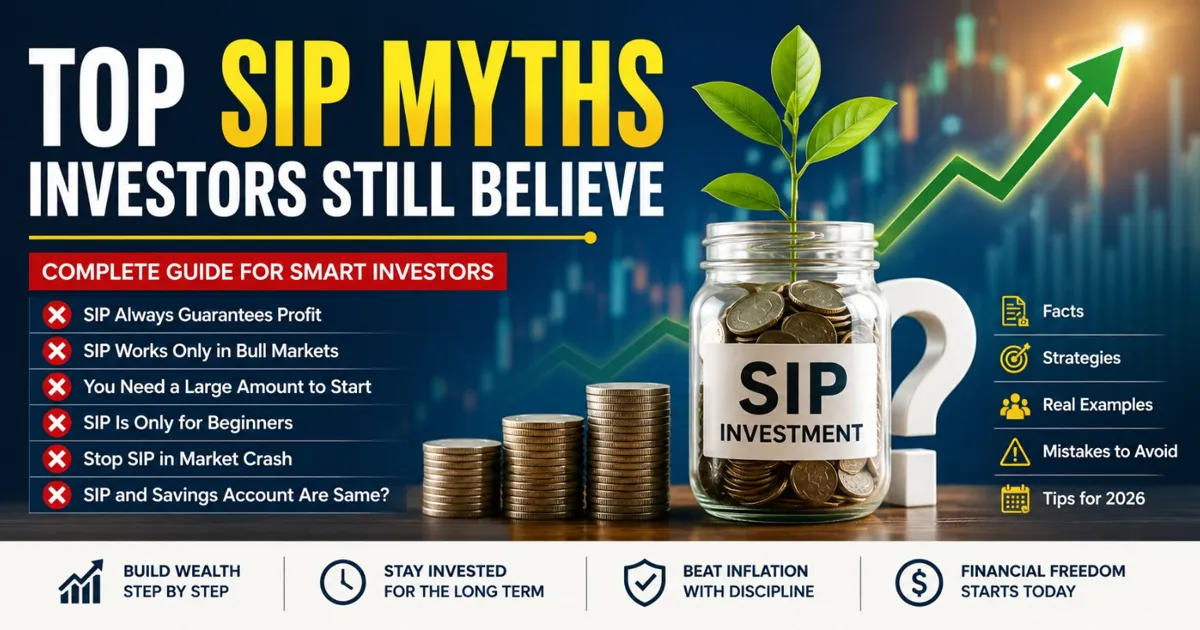
    Top SIP Myths Investors Still Believe: Complete 2026 Guide for Smart Investors

    Top SIP Myths Investors Still Believe: Complete 2026 Guide for Smart Investors

    top sip myths investors still believe


    By Subhash Rukade | Updated June 9, 2026

    Why SIP Myths Can Cost Investors Thousands of Dollars

    One of the biggest challenges facing investors today is not a lack of investment options.

    It is misinformation.

    Many people delay investing, stop investing at the wrong time, or make poor financial decisions because they believe outdated investing myths.

    That is why understanding the Top SIP Myths Investors Still Believe is so important in 2026.

    A Systematic Investment Plan (SIP) is one of the most popular long-term investing strategies used by investors around the world.

    However, despite its popularity, many misconceptions continue to circulate online and through social media.

    Some investors believe SIPs guarantee profits.

    Others think SIP investing works only when markets are rising.

    Many people even assume they need thousands of dollars to begin investing.

    These myths often prevent investors from taking advantage of one of the most powerful wealth-building tools available.

    The truth is that SIP investing is based on consistency, discipline, diversification, and long-term thinking.

    Understanding how SIPs actually work can help investors avoid emotional decisions and focus on strategies that support financial growth.

    If you’re new to monthly investing, start with our complete pillar guide:


    SIP Investing Guide 2026: How Monthly Investing Builds Long-Term Wealth

    Strong investing results also depend on healthy financial habits outside your portfolio.

    Investors looking to improve their overall financial strategy should review:


    Best Credit Cards 2026: Rewards, Cashback & Smart Usage Guide

    In this guide, we’ll break down the most common SIP myths, explain why they are misleading, and reveal the facts that successful long-term investors understand.

    By the end of this article, you’ll be able to separate investing facts from investing fiction and make more informed financial decisions in 2026 and beyond.

    Myth #1 to Myth #3: The SIP Misconceptions That Refuse to Die

    When discussing the Top SIP Myths Investors Still Believe, a few misconceptions appear repeatedly.

    These myths often discourage people from investing or cause them to make poor financial decisions.

    The good news is that understanding the facts can help investors build stronger long-term strategies.

    Myth #1: SIP Always Guarantees Profit

    This is perhaps the most common myth in investing.

    Many people assume that starting a SIP automatically guarantees positive returns.

    Unfortunately, no investment strategy can guarantee profits.

    SIPs invest in market-linked assets such as mutual funds, ETFs, or index funds.

    Because markets fluctuate, portfolio values can rise and fall over time.

    What SIP investing does provide is a disciplined framework for investing consistently regardless of market conditions.

    Over long periods, this approach can help investors benefit from compounding and dollar-cost averaging.

    However, short-term volatility remains a normal part of investing.

    Myth #2: SIP Works Only in Bull Markets

    Many investors believe SIP investing is effective only when markets are rising.

    This myth causes some investors to stop contributions during corrections and bear markets.

    In reality, market declines can actually benefit long-term SIP investors.

    When prices fall, monthly contributions purchase more units or shares.

    This process is known as dollar-cost averaging.

    Over time, consistently buying during both good and bad markets can improve long-term portfolio accumulation.

    Some of the strongest wealth-building periods often begin after market downturns.

    Myth #3: You Need a Large Amount of Money to Start

    Another common belief is that investing is only for wealthy individuals.

    Many people postpone investing because they think their monthly contribution is too small to matter.

    The reality is that successful investing is usually built on consistency rather than large starting amounts.

    Even modest monthly contributions can grow significantly over time when combined with compound growth and a long investment horizon.

    History shows that investors who start early often have a major advantage over those who wait for the “perfect” financial situation.

    The biggest lesson from these first three myths is simple:
    the Top SIP Myths Investors Still Believe are often based on emotions rather than facts.

    Successful investors understand that SIP investing is a long-term process built on discipline, patience, and realistic expectations rather than guarantees or shortcuts.

    Myth #4 to Myth #6: SIP Investing Facts Every Investor Should Know

    As we continue exploring the Top SIP Myths Investors Still Believe, it becomes clear that many misconceptions are based on outdated assumptions rather than real investing principles.

    These myths often prevent investors from maximizing the benefits of long-term investing.

    Understanding the truth can help investors make better financial decisions and avoid costly mistakes.

    Myth #4: SIP Is Only for Beginners

    Many people believe SIP investing is designed only for new investors.

    This misconception causes some experienced investors to overlook one of the most effective wealth-building strategies available.

    The reality is that SIP investing is used by investors at every experience level.

    Even high-net-worth individuals and professional investors often use systematic investing approaches because they help remove emotions from investment decisions.

    A disciplined investing process remains valuable regardless of portfolio size.

    Consistency never goes out of style.

    Myth #5: Stopping SIP During a Market Crash Is Smart

    Fear is one of the biggest challenges investors face.

    When markets decline, many investors feel tempted to stop contributions and wait for stability to return.

    However, this approach can be counterproductive.

    Market corrections often allow investors to purchase more shares at lower prices.

    Historically, many successful investors continued investing during difficult market periods because they understood that downturns are a normal part of long-term investing.

    Stopping investments during volatility may reduce the long-term benefits of dollar-cost averaging.

    Myth #6: SIP and Savings Accounts Are Basically the Same

    Some investors mistakenly compare SIP investing with keeping money in a traditional savings account.

    While both involve saving money, the objectives are very different.

    Savings accounts prioritize liquidity and capital preservation.

    SIP investing focuses on long-term growth through market participation.

    Although investments carry risk, they also offer the potential for greater long-term wealth creation compared with traditional cash savings.

    Investors interested in building long-term passive income should also explore:


    How to Build a Dividend Portfolio

    Recommended Reading for Investors

    One of the most valuable books for understanding investor behavior is:


    The Psychology of Money by Morgan Housel

    The book highlights how patience, discipline, and behavior often have a greater impact on financial success than market predictions.

    The biggest lesson from these myths is simple:
    the Top SIP Myths Investors Still Believe often encourage emotional investing decisions. Successful investors focus on long-term goals, consistency, and rational decision-making rather than reacting to fear, headlines, or common misconceptions.

    Real-World Investor Lessons: Why SIP Myths Can Be Expensive

    One reason the Top SIP Myths Investors Still Believe continue to spread is because investing is emotional.

    When markets rise rapidly, investors often become overconfident.

    When markets fall, fear takes over.

    These emotions can cause investors to abandon long-term plans and make decisions based on short-term events.

    Understanding how real investors behave can help explain why many SIP myths continue to survive.

    Investor Example #1: The Fearful Investor

    Imagine an investor who begins a SIP and contributes regularly for two years.

    Then a market correction occurs.

    News headlines become negative, social media predicts more declines, and fear starts influencing decisions.

    The investor stops monthly contributions and moves money into cash.

    Unfortunately, when markets recover, the investor misses the opportunity to purchase investments at lower prices.

    This is one of the most common examples of emotional investing.

    Investor Example #2: The Disciplined Investor

    Now consider another investor following the same SIP strategy.

    When markets decline, this investor continues contributing every month.

    Instead of reacting emotionally, the investor focuses on long-term goals and portfolio growth.

    As markets eventually recover, the additional shares purchased during the downturn contribute to future wealth creation.

    This disciplined approach often produces better long-term results.


    top sip myths investors still believe investing mistakes

    Why Consistency Usually Wins

    Successful investing is rarely about predicting the next market move.

    Instead, it is often about maintaining good habits through different market environments.

    This is where SIP investing provides a valuable advantage.

    It encourages investors to focus on consistency rather than short-term market noise.

    Myth Believer vs Disciplined Investor

    BehaviorMyth BelieverDisciplined Investor
    Market DeclineStops InvestingContinues Investing
    Investment DecisionsEmotionalGoal-Based
    News HeadlinesFollows HeadlinesFollows Plan
    Long-Term FocusWeakStrong
    Wealth Building PotentialLowerHigher

    Investors interested in building stronger passive-income portfolios should also review:


    Top Dividend Stocks USA 2026

    The biggest lesson from these real-world examples is simple:
    the Top SIP Myths Investors Still Believe often lead to emotional investing decisions. Investors who remain disciplined, continue investing during volatility, and focus on long-term goals generally place themselves in a stronger position for future financial success.

    Common SIP Mistakes Investors Make After Believing These Myths

    After understanding the Top SIP Myths Investors Still Believe, it is equally important to examine the mistakes these myths often create.

    Many investors do not lose money because SIP investing fails.

    Instead, they make avoidable decisions based on unrealistic expectations, emotions, and misinformation.

    Fortunately, most of these mistakes can be avoided through education and a long-term mindset.

    Mistake #1: Chasing High Returns

    One of the most common investing mistakes is constantly chasing the highest-performing investment.

    Many investors move money from one fund to another simply because they see higher recent returns elsewhere.

    Unfortunately, past performance does not guarantee future results.

    By the time investors switch investments, the strongest gains may already have occurred.

    Successful investors often focus more on consistency and diversification than trying to find the next hot investment.

    Mistake #2: Ignoring Diversification

    Another mistake occurs when investors concentrate too much money in a single sector, theme, or asset class.

    Diversification remains one of the most effective risk-management tools available.

    A diversified portfolio can help reduce volatility while maintaining long-term growth potential.

    This is why many financial professionals recommend spreading investments across multiple asset categories.

    Mistake #3: Expecting Quick Results

    Some investors begin SIP investing expecting dramatic results within a few months.

    When those expectations are not met, they become discouraged and stop investing.

    The reality is that SIP investing is designed for long-term wealth creation.

    Compound growth becomes more powerful over years and decades, not weeks and months.

    Mistake #4: Failing to Review Financial Goals

    Although SIP investing encourages consistency, investors should still review their financial goals periodically.

    Income levels, retirement objectives, family needs, and risk tolerance may change over time.

    Regular reviews help ensure that investment strategies remain aligned with long-term goals.

    Investors preparing for uncertain economic conditions should also review:


    Recession-Proof Investing 2026

    For a complete roadmap to systematic investing and long-term wealth creation, continue with:


    SIP Investing Guide 2026: How Monthly Investing Builds Long-Term Wealth

    The biggest lesson from this section is simple:
    the Top SIP Myths Investors Still Believe often lead to poor investing habits. Investors who avoid chasing returns, maintain diversification, manage expectations, and regularly review goals are more likely to achieve long-term financial success.

    Practical SIP Strategies for 2026 That Actually Work

    After uncovering the Top SIP Myths Investors Still Believe, the next step is understanding what successful investors are doing differently.

    The most effective SIP strategies in 2026 are surprisingly simple.

    They focus on consistency, diversification, long-term thinking, and disciplined financial planning.

    Rather than chasing market predictions, successful investors build systems that help them stay invested through different market conditions.

    Use Goal-Based Investing

    One of the best ways to improve investing success is connecting SIP contributions to specific financial goals.

    Examples include:

    • Retirement planning
    • Financial independence
    • College education funding
    • Home purchases
    • Long-term wealth creation

    When investors have clear goals, they are more likely to remain committed during periods of market volatility.

    Automate Your Investments

    Automation removes emotions from investing.

    Many brokerage firms allow automatic monthly investments directly into mutual funds, ETFs, and diversified portfolios.

    Automated investing helps investors maintain consistency regardless of market conditions.

    This simple habit can significantly improve long-term results.

    Maintain Diversification

    Diversification remains one of the strongest defenses against unnecessary risk.

    A diversified portfolio may include index funds, ETFs, dividend investments, bonds, and alternative assets.

    Investors looking for additional diversification strategies should review:


    Gold Investment Strategies USA

    Gold and other defensive assets can help improve portfolio balance during uncertain economic periods.

    2026 SIP Success Checklist

    StrategyRecommended Action
    Monthly InvestingInvest Consistently
    Portfolio DiversificationSpread Risk Across Assets
    Goal PlanningUse Specific Financial Targets
    Market VolatilityStay Invested
    Portfolio ReviewsReview Annually

    Learn From Trusted Financial Sources

    Investors should rely on trusted financial resources when making important decisions.

    Many investors also use:


    Fidelity Investments

    for retirement calculators, portfolio analysis tools, educational content, and long-term planning resources.

    The biggest lesson from this section is simple:
    the Top SIP Myths Investors Still Believe can be overcome through education, automation, diversification, and disciplined investing. Investors who follow proven long-term strategies are often better positioned to build wealth and achieve financial goals in 2026 and beyond.

    Frequently Asked Questions About SIP Investing

    1. Are SIPs Risk-Free Investments?

    No. SIPs are a method of investing, not an investment product themselves.

    The risk level depends on the investments chosen, such as mutual funds, ETFs, or index funds.

    While SIPs help manage market volatility through regular investing, they do not eliminate investment risk.

    2. Should I Stop My SIP During a Market Crash?

    Many experienced investors continue investing during market downturns.

    Lower prices often allow investors to accumulate more shares through dollar-cost averaging.

    Historically, long-term investors have often benefited from remaining invested during difficult market periods.

    3. Can Small SIP Investments Really Build Wealth?

    Yes. One of the biggest misconceptions discussed in the Top SIP Myths Investors Still Believe is that investors need large amounts of money to start.

    Consistency and time are often more important than starting with a large contribution.

    4. Is SIP Investing Only for Beginners?

    No. Investors of all experience levels use SIP strategies.

    Many successful long-term investors appreciate SIP investing because it promotes discipline and removes emotional decision-making.

    5. What Is the Biggest Advantage of SIP Investing?

    The biggest advantage is consistency.

    SIP investing encourages regular investing regardless of market conditions, helping investors benefit from long-term compounding and disciplined wealth creation.

    Final Thoughts: Top SIP Myths Investors Still Believe

    After exploring the most common SIP myths, real-world investor examples, investing mistakes, and proven strategies, one conclusion becomes clear:

    The Top SIP Myths Investors Still Believe continue to prevent many people from reaching their financial potential.

    Fortunately, most of these myths can be overcome through education and a long-term mindset.

    Successful investing is rarely about predicting market movements.

    Instead, it is about developing good habits and maintaining them consistently over time.

    The investors who often achieve the best results focus on principles such as:

    • Regular monthly investing.
    • Portfolio diversification.
    • Long-term planning.
    • Goal-based investing.
    • Emotional discipline.
    • Continuous learning.

    These habits may seem simple, but they form the foundation of long-term wealth creation.

    Whether markets are rising or falling, disciplined investors typically stay focused on their financial goals rather than reacting to headlines and short-term volatility.

    For a complete roadmap to successful monthly investing, continue with:


    SIP Investing Guide 2026: How Monthly Investing Builds Long-Term Wealth

    Remember that wealth building is a journey, not a single event.

    The sooner investors replace myths with facts, the stronger their financial decisions can become.

    The best time to start investing was years ago.

    The second-best time is today.

    📈 Join the Finance Investment Newsletter

    Receive investing insights, SIP strategies, wealth-building ideas, retirement planning tips, and market updates directly in your inbox.

    Join thousands of investors learning how to make smarter financial decisions and build stronger portfolios.


    Subscribe Free →

    👨‍💼 About the Author

    Subhash Rukade

    Founder of Finance Investment and a dedicated financial educator focused on helping investors understand SIP investing, ETF investing, retirement planning, portfolio diversification, and long-term wealth building.

    • 📈 SIP Investing Strategies
    • 💰 Long-Term Wealth Building
    • 🏦 Retirement Planning
    • 📊 ETF & Index Fund Investing
    • 🪙 Portfolio Diversification
    • 📚 Personal Finance Education
    “Successful Investing Begins When Facts Replace Myths.”

    Through Finance Investment, Subhash shares practical financial education designed to help readers avoid common mistakes and build lasting wealth through disciplined investing.

    ✅ Beginner-Friendly Investing Guides
    ✅ USA-Focused Financial Content
    ✅ SIP & ETF Investing Strategies
    ✅ Practical Wealth-Building Education

    🌐 Finance Investment
    Helping Investors Build Wealth One Smart Decision at a Time.

  • Best Low-Cost Funds for SIP Investors: Complete 2026 Guide for Americans

    Best Low-Cost Funds for SIP Investors: Complete 2026 Guide for Americans

    Best Low-Cost Funds for SIP Investors: Complete 2026 Guide for Americans

    best low-cost funds for sip investors


    By Subhash Rukade | Updated June 7, 2026

    Why Low-Cost Funds Matter More Than Ever in 2026

    The search for the best low-cost funds for SIP investors has grown rapidly in 2026 as more Americans focus on long-term wealth creation.

    Many investors spend countless hours trying to find the next winning stock.

    However, one factor often has a bigger impact on long-term returns than stock selection itself:
    investment costs.

    Every dollar paid in fund fees is a dollar that cannot remain invested and compound over time.

    That is why low-cost funds have become a favorite choice among experienced investors, retirement planners, and financial advisors.

    A low-cost fund is an investment fund with a relatively small expense ratio.

    The expense ratio represents the annual fee charged by a fund company to manage investments.

    Although these fees may appear small, they can significantly affect portfolio growth over decades.

    For investors using a Systematic Investment Plan (SIP), keeping expenses low can be especially beneficial.

    Monthly investing already helps investors benefit from dollar-cost averaging and long-term compounding.

    Combining those advantages with low-cost funds creates a powerful wealth-building strategy.

    Many of the best low-cost funds for SIP investors are index funds that track broad market benchmarks such as the S&P 500 or the total U.S. stock market.

    These funds offer diversification, simplicity, and low operating costs.

    Investors can gain exposure to hundreds or even thousands of companies through a single investment.

    If you’re new to monthly investing, begin with our complete pillar guide:


    SIP Investing Guide 2026: How Monthly Investing Builds Long-Term Wealth

    Strong financial habits can also support investing success. Investors should review:


    Best Credit Cards 2026: Rewards, Cashback & Smart Usage Guide

    In this guide, you’ll learn how low-cost funds work, why expense ratios matter, how to choose the best index funds for SIP investing in 2026, common mistakes to avoid, and practical strategies that can help American investors build wealth efficiently.

    Understanding Expense Ratios and Investment Costs

    When searching for the best low-cost funds for SIP investors, one of the most important concepts to understand is the expense ratio.

    Many investors focus entirely on investment returns while overlooking the impact of fees.

    However, even small differences in fund costs can significantly affect long-term wealth creation.

    That is why successful investors often pay close attention to investment expenses before selecting a fund.

    What Is an Expense Ratio?

    An expense ratio is the annual fee charged by a fund company to operate and manage a fund.

    The fee is expressed as a percentage of assets under management.

    For example, if a fund has a 0.05% expense ratio, investors pay approximately $5 annually for every $10,000 invested.

    While that amount may seem small, the impact becomes much larger as investment balances grow.

    Because SIP investing is designed for long-term wealth building, minimizing expenses can help investors keep more money invested and compounding.

    Why Costs Matter Over Time

    One of the biggest advantages of choosing the best low-cost funds for SIP investors is preserving more of your investment returns.

    A fund with a lower expense ratio leaves more money working for you each year.

    Over 10, 20, or 30 years, the difference between low-cost and high-cost funds can become substantial.

    This is especially important for retirement investors who depend on compounding to grow their portfolios.

    Lower fees do not guarantee higher returns, but they do reduce a predictable cost that investors can control.

    Watch for Hidden Costs

    Expense ratios are not the only costs investors should consider.

    Other potential costs may include:

    • Trading commissions
    • Account maintenance fees
    • Advisory fees
    • Fund turnover costs
    • Tax implications

    Reviewing a fund’s fee structure before investing can help investors avoid unnecessary expenses.

    Low-Cost Funds vs High-Cost Funds

    FeatureLow-Cost FundsHigh-Cost Funds
    Expense RatioTypically LowerTypically Higher
    Long-Term Cost ImpactLowerHigher
    Compounding BenefitsMore Capital InvestedMore Money Lost to Fees
    Investor PreferenceOften PreferredLess Attractive
    Retirement PlanningHighly SuitableCan Reduce Growth Potential
    SIP Investing EfficiencyHigherLower

    The biggest lesson from this section is simple:
    the best low-cost funds for SIP investors help maximize the benefits of long-term investing by reducing expenses and allowing more money to remain invested. While investors cannot control market performance, they can control the fees they pay.

    Best Index Funds for SIP Investing in 2026

    Many of the best low-cost funds for SIP investors are index funds.

    These funds have become extremely popular because they combine diversification, low costs, simplicity, and long-term growth potential.

    Rather than trying to outperform the market, index funds aim to track a specific market index.

    This approach often results in lower operating expenses and reduced portfolio turnover.

    For SIP investors, index funds provide a practical way to participate in market growth while keeping costs under control.

    Broad Market Index Funds

    Broad market index funds invest in a large number of companies across multiple sectors.

    These funds provide exposure to technology, healthcare, financial services, industrial companies, consumer goods, and many other parts of the economy.

    Because of this diversification, broad market funds are often considered core portfolio holdings.

    Many investors use them as the foundation of their monthly investing strategy.

    S&P 500 Index Funds

    S&P 500 index funds remain among the most widely used investment products in the United States.

    These funds track 500 of America’s largest publicly traded companies.

    Because the S&P 500 includes many industry leaders, investors gain exposure to businesses that play important roles in the U.S. economy.

    The combination of diversification and low costs makes S&P 500 funds a strong candidate for SIP investing.

    Total Market Index Funds

    Total market funds expand diversification even further.

    Instead of focusing only on large companies, these funds may include large-cap, mid-cap, and small-cap stocks.

    This broader exposure allows investors to participate in different segments of the stock market through a single investment.

    Many long-term investors appreciate the simplicity of this approach.

    Why Index Investing Works

    Index investing focuses on capturing overall market growth rather than attempting to predict which individual companies will outperform.

    This strategy reduces complexity and helps investors avoid many common stock-picking mistakes.

    For SIP investors, consistency and diversification often become more important than finding the next market winner.

    Investors interested in generating passive income alongside index investing should also review:


    How to Build a Dividend Portfolio

    Popular Index Fund Categories Compared

    Fund TypeMain ObjectiveDiversification Level
    Broad Market FundMarket ExposureHigh
    S&P 500 FundLarge-Cap GrowthHigh
    Total Market FundComplete Market ExposureVery High
    Dividend Index FundIncome + GrowthModerate to High
    International Index FundGlobal DiversificationHigh

    A Recommended Investing Book

    One of the most valuable books for long-term investors is:


    The Psychology of Money by Morgan Housel

    The book explains why investing success often depends more on behavior, patience, and consistency than on predicting short-term market movements.

    The biggest lesson from this section is simple:
    the best low-cost funds for SIP investors are often diversified index funds that combine low fees, broad market exposure, and long-term growth potential. These characteristics make index funds one of the strongest foundations for wealth building in 2026 and beyond.

    How to Choose the Right Low-Cost Fund for Your Investment Goals

    Finding the best low-cost funds for SIP investors is not only about choosing the fund with the lowest expense ratio.

    Investors should also consider their financial goals, risk tolerance, investment timeline, and overall portfolio strategy.

    The right fund for one investor may not be the best choice for another.

    That is why understanding your objectives before investing is extremely important.

    A well-chosen low-cost fund can help support wealth creation, retirement planning, and long-term financial independence.

    Start With Your Investment Goals

    Before selecting a fund, ask yourself what you want your investments to achieve.

    • Retirement planning
    • Long-term wealth building
    • Passive income generation
    • Education savings
    • Financial independence

    Different goals may require different fund selections.

    For example, a retirement investor may prioritize broad diversification and stability, while a younger investor may focus more heavily on long-term growth opportunities.


    best low-cost funds for sip investors portfolio

    Understand Your Risk Tolerance

    Risk tolerance refers to your ability to handle market fluctuations.

    Some investors are comfortable with higher volatility in exchange for potentially higher returns.

    Others prefer a more conservative approach.

    Understanding your risk profile can help you choose between broad market funds, dividend-focused funds, bond funds, or a combination of these investments.

    Consider Dividend and Income Strategies

    Many investors combine low-cost index funds with dividend-focused investments.

    This approach may provide both growth potential and passive income opportunities.

    Investors interested in dividend investing should also review:


    Top Dividend Stocks USA 2026

    Low-Cost Fund Categories Compared

    Fund CategoryPrimary GoalSuitable For
    Broad Market Index FundLong-Term GrowthMost Investors
    S&P 500 FundLarge-Cap ExposureGrowth Investors
    Total Market FundMaximum DiversificationLong-Term Investors
    Dividend FundIncome + GrowthIncome Seekers
    Bond FundStabilityConservative Investors

    A Recommended Wealth-Building Book

    One of the most popular books among index fund investors is:


    The Simple Path to Wealth by JL Collins

    The book explains how low-cost index funds, diversification, and long-term investing discipline can help investors achieve financial independence.

    The biggest lesson from this section is simple:
    the best low-cost funds for SIP investors are those that align with personal goals, risk tolerance, and investment timelines. Choosing the right fund is not about chasing trends. It is about building a strategy that you can confidently follow for years.

    Real Investor Example and Common Mistakes SIP Investors Should Avoid

    Understanding the best low-cost funds for SIP investors is important, but investor behavior often has an even bigger impact on long-term success.

    Many investors start their journey with enthusiasm.

    However, emotional decisions, unrealistic expectations, and poor investing habits can reduce long-term returns.

    Learning from real-world examples can help investors avoid these common mistakes and stay focused on building wealth.

    A Real SIP Investing Example

    Imagine a 32-year-old investor who decides to invest $500 every month into a diversified low-cost index fund portfolio.

    The portfolio consists of a broad market index fund, an S&P 500 fund, and a dividend-focused fund.

    Instead of trying to predict market movements, the investor continues investing every month regardless of market conditions.

    During market declines, the investor purchases more shares through dollar-cost averaging.

    During bull markets, the portfolio benefits from long-term growth and compounding.

    After many years of consistent investing, the combination of low fees, diversification, and disciplined contributions helps create substantial portfolio growth.

    This example highlights why consistency often matters more than market predictions.

    Common Mistake #1: Chasing Recent Performance

    Many investors buy funds solely because they recently delivered strong returns.

    Unfortunately, past performance does not guarantee future results.

    Markets move through cycles, and today’s top-performing fund may not remain the leader tomorrow.

    Successful investors focus on long-term strategies rather than short-term trends.

    Common Mistake #2: Ignoring Expense Ratios

    Some investors pay attention only to returns while ignoring costs.

    Over decades, higher fees can significantly reduce portfolio growth.

    That is why many experienced investors prioritize the best low-cost funds for SIP investors when building long-term portfolios.

    Common Mistake #3: Emotional Investing

    Fear and greed frequently influence investment decisions.

    Some investors panic during market declines and stop investing.

    Others become overly aggressive during strong bull markets.

    Both behaviors can hurt long-term results.

    A disciplined investment process often helps investors remain focused during periods of uncertainty.

    Disciplined Investor vs Emotional Investor

    Investment BehaviorDisciplined InvestorEmotional Investor
    Monthly ContributionsConsistentIrregular
    Market VolatilityRemains CalmReacts Emotionally
    Fund SelectionLong-Term FocusChases Performance
    Expense AwarenessPrioritizes Low CostsOften Ignores Fees
    Investment HorizonLong-TermShort-Term
    Wealth Building PotentialHigherOften Lower

    Investors preparing for economic uncertainty should also review:


    Recession-Proof Investing 2026

    For a complete monthly investing roadmap, continue with:


    SIP Investing Guide 2026: How Monthly Investing Builds Long-Term Wealth

    The biggest lesson from this section is simple:
    the best low-cost funds for SIP investors can only reach their full potential when investors remain disciplined, control emotions, and stay committed to long-term goals. Consistency, patience, and low costs often create a powerful formula for wealth building.

    Practical Tips and Future Trends for SIP Investors in 2026

    Choosing the best low-cost funds for SIP investors is only the first step toward long-term financial success.

    Investors who combine low-cost funds with smart investing habits often achieve better results over time.

    The investment world is evolving rapidly in 2026, and new technologies are making investing easier, more efficient, and more accessible than ever before.

    Understanding these trends can help investors stay ahead while continuing to build wealth through disciplined monthly investing.

    Automate Your SIP Investments

    One of the easiest ways to improve investing consistency is automation.

    Most brokerage firms now allow investors to schedule automatic monthly investments into index funds and ETFs.

    Automation helps eliminate emotional decision-making and ensures contributions continue regardless of market conditions.

    This simple habit can make a significant difference over long investment periods.

    For many investors, automation becomes one of the most valuable wealth-building tools available.

    Diversification Remains Essential

    Even when investing in low-cost funds, diversification remains important.

    A diversified portfolio may include:

    • Broad Market Index Funds
    • S&P 500 Funds
    • Dividend Funds
    • International Funds
    • Bond Funds
    • Gold Investments

    This combination can help reduce portfolio volatility while maintaining long-term growth opportunities.

    Investors interested in portfolio diversification strategies should also review:


    Gold Investment Strategies USA

    Manual Investing vs Automated SIP Investing

    FeatureManual InvestingAutomated SIP Investing
    Investment ProcessInvestor InitiatedAutomatic
    ConsistencyVariableHigh
    Emotional InfluenceHigherLower
    Time RequiredMoreLess
    Long-Term DisciplineDepends on InvestorStrongly Supported

    AI-Powered Investing Tools Continue Expanding

    Artificial intelligence is becoming increasingly common in personal finance.

    Many investing platforms now offer:

    • Portfolio analysis tools
    • Retirement planning calculators
    • Risk assessment reports
    • Automated portfolio rebalancing
    • Personalized investing insights

    These technologies help investors make informed decisions while reducing behavioral mistakes.

    Learn From Trusted Financial Authorities

    Successful investors rely on credible information sources.

    These organizations provide educational resources, investor protection information, and retirement planning guidance.

    A Trusted Resource for Long-Term Investors

    Many investors use:


    Fidelity Investments

    Fidelity offers investment research, retirement planning tools, educational content, and portfolio management resources for investors of all experience levels.

    The biggest lesson from this section is simple:
    the best low-cost funds for SIP investors become even more powerful when combined with automation, diversification, financial education, and a long-term investing mindset. Investors who remain disciplined and continue learning often place themselves in a stronger position to achieve lasting financial success.

    Frequently Asked Questions About the Best Low-Cost Funds for SIP Investors

    1. What Are Low-Cost Funds?

    Low-cost funds are investment funds with relatively low expense ratios. These funds help investors keep more of their returns by reducing annual management fees.

    2. Why Are Low-Cost Funds Important for SIP Investors?

    SIP investing is designed for long-term wealth building. Lower fees allow more money to remain invested and compound over time, which can significantly improve long-term portfolio growth.

    3. Are Index Funds Considered Low-Cost Funds?

    Yes. Many index funds are among the best low-cost funds for SIP investors because they typically have lower operating costs compared to actively managed funds.

    4. Can Low-Cost Funds Help With Retirement Planning?

    Many retirement investors use low-cost index funds because they provide diversification, simplicity, and cost efficiency over long investment periods.

    5. How Often Should SIP Investors Review Their Portfolio?

    Most investors benefit from reviewing their portfolio at least once or twice a year to ensure investments remain aligned with financial goals and risk tolerance.

    Final Thoughts on the Best Low-Cost Funds for SIP Investors

    After exploring expense ratios, index funds, diversification, investor behavior, automation, and future investing trends, one conclusion becomes clear:

    The best low-cost funds for SIP investors can play a major role in long-term wealth creation.

    Successful investing does not require predicting market movements every week.

    It does not require constantly changing investments.

    And it does not require finding the next hot stock.

    Instead, many successful investors focus on principles that have stood the test of time:

    • Invest consistently every month.
    • Keep investment costs low.
    • Stay diversified.
    • Avoid emotional decisions.
    • Remain focused on long-term goals.
    • Allow compounding to work over decades.

    These habits have helped investors navigate bull markets, bear markets, recessions, inflation periods, and economic uncertainty throughout history.

    While market conditions will continue changing, the importance of low costs and disciplined investing remains remarkably consistent.

    For many Americans, low-cost index funds provide one of the simplest ways to participate in economic growth while keeping investment expenses under control.

    The combination of diversification, affordability, and long-term investing discipline makes these funds a powerful foundation for building wealth.

    For a complete roadmap to monthly investing and long-term wealth creation, continue with:


    SIP Investing Guide 2026: How Monthly Investing Builds Long-Term Wealth

    Whether your goal is retirement planning, financial independence, passive income, or generational wealth, choosing the best low-cost funds for SIP investors can help create a strong foundation for future success.

    The greatest investing advantage is often not finding a perfect investment.

    It is staying consistent with a proven strategy over time.

    📈 Join the Finance Investment Newsletter

    Get investing insights, low-cost fund strategies, retirement planning tips, market updates, and wealth-building ideas delivered directly to your inbox.

    Join thousands of investors building stronger financial futures through disciplined investing and smarter financial decisions.


    Subscribe Free →

    👨‍💼 About the Author

    Subhash Rukade

    Founder of Finance Investment and a dedicated financial educator focused on helping investors understand index funds, SIP investing, retirement planning, portfolio diversification, and long-term wealth building.

    • 📈 Index Fund & ETF Investing
    • 💰 Long-Term Wealth Building
    • 🏦 Retirement Planning Strategies
    • 📊 SIP Investing Guidance
    • 🪙 Portfolio Diversification
    • 📚 Personal Finance Education
    “Small Costs Saved Today Can Become Big Wealth Tomorrow.”

    Through Finance Investment, Subhash helps readers make informed investing decisions, avoid common financial mistakes, and build practical strategies designed for long-term success.

    ✅ Beginner-Friendly Investing Guides
    ✅ USA-Focused Financial Content
    ✅ SIP & Index Fund Strategies
    ✅ Practical Wealth-Building Education

    🌐 Finance Investment
    Helping Investors Build Wealth One Smart Decision at a Time.

  • S&P 500 Monthly Investing Strategy: Complete 2026 Guide for American Investors

    S&P 500 Monthly Investing Strategy: Complete 2026 Guide for American Investors

    S&P 500 Monthly Investing Strategy: Complete 2026 Guide for American Investors

    s&p 500 monthly investing strategy


    By Subhash Rukade | Updated June 7, 2026

    Why the S&P 500 Monthly Investing Strategy Remains Popular in 2026

    The S&P 500 monthly investing strategy continues to be one of the most trusted wealth-building approaches for American investors in 2026.

    Whether someone is just starting their investing journey or planning for retirement, the S&P 500 remains a popular choice because it provides exposure to many of America’s largest and most successful companies.

    Instead of trying to pick individual stocks, investors can gain access to a diversified collection of businesses through a single investment.

    The S&P 500 tracks 500 large U.S. companies across sectors such as technology, healthcare, finance, consumer goods, energy, and communication services.

    Companies included in the index are often industry leaders with strong financial histories and global operations.

    This diversification helps reduce risk while providing exposure to long-term economic growth.

    One reason the S&P 500 monthly investing strategy has become so popular is its simplicity.

    Investors contribute a fixed amount each month regardless of market conditions.

    This disciplined approach helps eliminate emotional investing decisions and supports long-term wealth creation.

    Rather than worrying about daily market movements, investors focus on consistency.

    Over time, regular contributions can benefit from dollar-cost averaging and compounding.

    These two powerful concepts have helped investors build wealth across multiple market cycles.

    If you’re new to monthly investing, begin with our complete pillar guide:


    SIP Investing Guide 2026: How Monthly Investing Builds Long-Term Wealth

    Building strong financial habits can also improve investing success. Investors should review:


    Best Credit Cards 2026: Rewards, Cashback & Smart Usage Guide

    In this guide, you’ll learn how the S&P 500 monthly investing strategy works, why it has created wealth for generations of investors, common mistakes to avoid, and practical strategies that can help Americans achieve their financial goals in 2026 and beyond.

    How the S&P 500 Monthly Investing Strategy Works

    The S&P 500 monthly investing strategy is built on a simple idea: invest a fixed amount of money into an S&P 500 fund every month and stay consistent over time.

    This approach removes much of the stress associated with trying to predict market movements.

    Instead of worrying about whether the market will rise or fall next week, investors focus on steadily building their portfolios month after month.

    Many successful investors follow this strategy because consistency often matters more than perfect timing.

    Monthly Investing Creates Discipline

    One of the biggest advantages of monthly investing is discipline.

    Investors commit to contributing a specific amount on a regular schedule.

    This creates a habit of investing regardless of market conditions.

    Over time, these regular contributions can accumulate into a significant portfolio.

    The S&P 500 monthly investing strategy works especially well for people who receive regular paychecks and want to automate wealth building.

    Dollar-Cost Averaging Helps Reduce Timing Risk

    Dollar-cost averaging is one of the most important benefits of monthly investing.

    When prices decline, monthly contributions purchase more shares.

    When prices rise, contributions purchase fewer shares.

    Over time, this process helps smooth out market volatility and reduces the risk of investing a large amount at the wrong time.

    For beginners, this can make investing feel less stressful and easier to maintain.

    Consistency Often Beats Market Timing

    Many investors attempt to predict market highs and lows.

    Unfortunately, consistently timing the market is extremely difficult.

    Even experienced investors rarely get it right all the time.

    A disciplined S&P 500 monthly investing strategy helps investors stay focused on long-term goals instead of reacting to short-term headlines.

    This mindset often leads to better investing behavior and stronger long-term results.

    Monthly Investing vs Lump Sum Investing

    FeatureMonthly InvestingLump Sum Investing
    Investment TimingRegular ContributionsOne-Time Investment
    Dollar-Cost AveragingYesNo
    Emotional PressureLowerHigher
    Market Timing RiskReducedHigher
    Suitable for BeginnersExcellentModerate
    Investment DisciplineStrongDepends on Investor

    The greatest strength of the S&P 500 monthly investing strategy is that it encourages investors to remain consistent through market ups and downs. By focusing on regular investing rather than short-term predictions, investors can position themselves for long-term wealth creation while reducing emotional decision-making.

    Why the S&P 500 Has Built Wealth for Investors for Decades

    One reason the S&P 500 monthly investing strategy remains popular is its long history of helping investors build wealth over time.

    While no investment guarantees future results, the S&P 500 has consistently represented many of the strongest and most influential companies in the United States.

    As these businesses grow, innovate, and generate profits, investors benefit from the overall growth of the American economy.

    This long-term connection between business growth and investor returns is one of the biggest reasons many financial experts recommend S&P 500 investing for retirement and wealth-building goals.

    Diversification Reduces Individual Company Risk

    Investing in a single stock can be risky.

    A company may face competition, economic challenges, leadership changes, or industry disruptions.

    The S&P 500 helps reduce this risk by spreading investments across 500 large companies from multiple industries.

    Technology, healthcare, finance, consumer goods, industrial companies, and energy businesses are all represented.

    This diversification makes the S&P 500 monthly investing strategy attractive for investors seeking broad market exposure without selecting individual stocks.

    Compounding Can Transform Small Investments

    Compounding is one of the most powerful wealth-building forces available to investors.

    When investments generate returns, those returns can begin generating additional returns over time.

    The longer an investor remains invested, the greater the potential impact of compounding.

    For example, someone investing monthly for twenty or thirty years may find that a significant portion of portfolio growth comes from compounded gains rather than contributions alone.

    This is why starting early often provides a major advantage.

    Staying Invested Through Market Volatility Matters

    Every market experiences periods of uncertainty.

    There have been recessions, bear markets, inflation concerns, and economic slowdowns throughout history.

    Despite these challenges, markets have repeatedly recovered and continued growing over longer periods.

    Investors who remain disciplined during difficult periods often benefit from eventual recoveries.

    The S&P 500 monthly investing strategy encourages this discipline by focusing on regular contributions rather than short-term market predictions.

    Investors interested in creating passive income alongside long-term growth should also read:


    How to Build a Dividend Portfolio

    Long-Term Investing vs Short-Term Trading

    ApproachMain FocusPotential Benefit
    S&P 500 Monthly InvestingConsistencyLong-Term Wealth Building
    Dollar-Cost AveragingRegular ContributionsReduced Timing Risk
    Long-Term HoldingCompounding GrowthHigher Wealth Potential
    Short-Term TradingFrequent Buying & SellingHigher Risk
    Emotional InvestingMarket ReactionsInconsistent Results

    A Recommended Investing Book

    One of the most respected books for long-term investors is:


    The Psychology of Money by Morgan Housel

    The book highlights why patience, consistency, and good financial habits often matter more than trying to predict short-term market movements.

    The biggest lesson from this section is simple:
    the S&P 500 monthly investing strategy has helped investors build wealth for decades because it combines diversification, compounding, and long-term discipline. Investors who stay invested and continue contributing regularly often place themselves in a stronger position to achieve their financial goals.

    Best Ways to Start a S&P 500 Investing Plan in 2026

    A successful S&P 500 monthly investing strategy starts with choosing the right investment account and creating a plan you can follow consistently.

    Many beginners delay investing because they believe the process is complicated.

    In reality, starting a monthly S&P 500 investing plan is easier than ever thanks to modern brokerage platforms and retirement accounts.

    The key is selecting an approach that matches your financial goals and risk tolerance.

    Use a Brokerage Account for Flexibility

    A standard brokerage account gives investors flexibility to buy and sell investments whenever they choose.

    These accounts have no contribution limits and can be useful for investors building wealth outside retirement plans.

    Many brokerage platforms now allow automatic monthly investments into S&P 500 funds, making it easy to maintain consistency.


    s&p 500 monthly investing strategy portfolio

    Consider Retirement Accounts

    Many investors use retirement accounts such as Traditional IRAs and Roth IRAs to invest in S&P 500 funds.

    These accounts may provide tax advantages that support long-term wealth building.

    Because retirement investing often spans decades, the benefits of compounding can become especially powerful over time.

    Investors should review current IRS contribution limits and eligibility requirements before selecting an account type.

    S&P 500 ETFs vs S&P 500 Index Funds

    Most investors choose either an S&P 500 ETF or an S&P 500 index fund.

    Both options provide exposure to the same underlying index, but they operate slightly differently.

    ETFs trade throughout the day like stocks, while traditional index funds are typically priced once per day after the market closes.

    For long-term investors following a monthly investing strategy, either option can be effective.

    The most important factor is maintaining consistent contributions.

    Investors looking to combine growth with dividend income should also review:


    Top Dividend Stocks USA 2026

    Investment Account Options Compared

    OptionMain BenefitBest For
    Brokerage AccountMaximum FlexibilityGeneral Investing
    Traditional IRAPotential Tax BenefitsRetirement Planning
    Roth IRATax-Free Qualified WithdrawalsLong-Term Retirement Goals
    S&P 500 ETFIntraday TradingFlexible Investors
    S&P 500 Index FundSimple Automatic InvestingMonthly SIP Investors

    A Recommended Wealth-Building Book

    One of the most popular books among long-term investors is:


    The Simple Path to Wealth by JL Collins

    The book explains how low-cost investing, index funds, and disciplined investing habits can help investors achieve financial independence.

    The biggest lesson from this section is simple:
    the S&P 500 monthly investing strategy becomes much easier when investors choose the right account, automate contributions, and stay committed to long-term goals. Consistency remains one of the most important drivers of investment success.

    Real Investor Example and Common S&P 500 Investing Mistakes

    Understanding the S&P 500 monthly investing strategy is important, but successful investing depends just as much on investor behavior as it does on investment selection.

    Many people start investing with excitement.

    However, market volatility, emotional reactions, and unrealistic expectations often lead investors to make costly mistakes.

    Learning from real-world examples can help investors stay focused and avoid common pitfalls.

    A Real-World S&P 500 Investing Example

    Imagine a 28-year-old investor who decides to invest $500 every month into an S&P 500 index fund.

    The investor sets up automatic contributions and continues investing regardless of market conditions.

    Some years the market performs exceptionally well.

    Other years include corrections, recessions, and periods of uncertainty.

    Instead of stopping investments during downturns, the investor continues contributing every month.

    As markets recover, the additional shares purchased during lower-price periods can contribute significantly to long-term portfolio growth.

    This simple approach demonstrates why consistency often becomes a powerful advantage.

    Common Mistake #1: Trying to Time the Market

    One of the biggest mistakes investors make is waiting for the “perfect” time to invest.

    Unfortunately, predicting market highs and lows consistently is extremely difficult.

    Many investors miss strong market recovery periods because they remain on the sidelines waiting for better opportunities.

    The S&P 500 monthly investing strategy helps reduce this risk by encouraging regular investments regardless of market conditions.

    Common Mistake #2: Stopping Investments During Market Declines

    Market downturns often create fear.

    Some investors stop contributing when prices fall.

    However, lower prices can allow investors to purchase more shares through dollar-cost averaging.

    Historically, many long-term investors have benefited from continuing to invest during challenging market environments.

    Common Mistake #3: Emotional Investing

    Fear and greed are two powerful emotions that influence investor behavior.

    When markets rise rapidly, some investors become overly aggressive.

    When markets decline, some investors panic and sell.

    Both behaviors can damage long-term returns.

    A disciplined investing process often helps investors avoid emotional decision-making.

    Disciplined Investor vs Emotional Investor

    Investment HabitDisciplined InvestorEmotional Investor
    Monthly ContributionsConsistentIrregular
    Market CorrectionsContinues InvestingStops Investing
    Investment DecisionsStrategy-BasedEmotion-Based
    Market TimingAvoids TimingAttempts Predictions
    Long-Term FocusStrongWeak
    Wealth Building PotentialHigherOften Lower

    Investors preparing for uncertain economic conditions should also review:


    Recession-Proof Investing 2026

    For a complete monthly investing roadmap, continue with:


    SIP Investing Guide 2026: How Monthly Investing Builds Long-Term Wealth

    The biggest lesson from this section is simple:
    the S&P 500 monthly investing strategy works best when investors remain disciplined, continue investing through market volatility, and focus on long-term goals instead of short-term market movements.

    Practical Tips and Future Trends for S&P 500 Investors in 2026

    A successful S&P 500 monthly investing strategy is not just about choosing the right fund. It is also about developing habits that help investors stay consistent for years or even decades.

    The investing landscape continues evolving rapidly in 2026. Technology, automation, and artificial intelligence are changing how people manage their money.

    Investors who combine disciplined investing with modern tools often put themselves in a stronger position to achieve long-term financial goals.

    Automate Your Monthly Investments

    One of the simplest ways to improve investing consistency is automation.

    Most brokerage firms now allow investors to schedule automatic monthly contributions into S&P 500 funds.

    Automation removes the need to manually invest every month and reduces emotional decision-making.

    This strategy helps investors stay committed during both strong markets and market downturns.

    For many investors, automation becomes one of the most effective wealth-building habits.

    Maintain a Diversified Portfolio

    Although the S&P 500 already provides significant diversification, some investors choose to diversify further by including other asset classes.

    A balanced portfolio may include:

    • S&P 500 Funds
    • Dividend Investments
    • International Funds
    • Bond Funds
    • Gold Investments

    This approach may help reduce portfolio volatility while maintaining long-term growth opportunities.

    Investors interested in defensive assets should also review:


    Gold Investment Strategies USA

    Manual Investing vs Automated Investing

    FeatureManual InvestingAutomated Investing
    Contribution ProcessInvestor InitiatedAutomatic
    Emotional InfluenceHigherLower
    ConsistencyVariesVery High
    Time RequiredMoreLess
    Long-Term DisciplineDepends on InvestorStrongly Supported

    AI-Powered Investing Tools Are Growing

    Artificial intelligence is becoming increasingly important in personal finance.

    Many platforms now offer:

    • Portfolio analysis tools
    • Retirement planning calculators
    • Investment risk assessments
    • Automatic portfolio rebalancing
    • Personalized investing insights

    These tools can help investors make informed decisions while avoiding common behavioral mistakes.

    Learn From Trusted Financial Authorities

    Reliable financial information is essential for long-term success.

    These organizations provide educational resources, investor protection information, and retirement planning guidance.

    A Trusted Resource for Long-Term Investors

    Many investors use:


    Fidelity Investments

    Fidelity offers investment research, retirement planning tools, educational resources, and portfolio management support for investors of all experience levels.

    The biggest lesson from this section is simple:
    the S&P 500 monthly investing strategy becomes even more powerful when combined with automation, diversification, financial education, and a long-term mindset. Investors who remain consistent and continue learning often place themselves in a stronger position to build lasting wealth.

    Frequently Asked Questions About the S&P 500 Monthly Investing Strategy

    1. What Is a S&P 500 Monthly Investing Strategy?

    A S&P 500 monthly investing strategy involves investing a fixed amount of money into an S&P 500 fund every month. This approach helps investors benefit from dollar-cost averaging, consistency, and long-term market growth.

    2. Is the S&P 500 Suitable for Beginner Investors?

    Many beginners choose S&P 500 funds because they provide exposure to 500 large U.S. companies through a single investment. This diversification helps reduce risk compared to investing in a small number of individual stocks.

    3. How Much Should I Invest Each Month?

    The amount depends on your financial goals, income, and investment timeline. Many investors start with an amount they can comfortably contribute every month and increase contributions as income grows.

    4. Can the S&P 500 Help Build Retirement Wealth?

    Many retirement investors use S&P 500 funds because they offer long-term exposure to the U.S. economy and can benefit from compounding over several decades.

    5. Should I Stop Investing During Market Corrections?

    Many long-term investors continue investing during market downturns because lower prices allow them to purchase more shares. Consistency is often one of the most important factors in long-term investing success.

    Final Thoughts on the S&P 500 Monthly Investing Strategy

    After exploring diversification, compounding, dollar-cost averaging, automation, and investor behavior, one conclusion becomes clear:

    The S&P 500 monthly investing strategy remains one of the simplest and most effective long-term wealth-building approaches available to American investors in 2026.

    The strategy does not require predicting stock market movements.

    It does not require selecting individual stocks.

    And it does not require constant portfolio changes.

    Instead, it focuses on a few powerful principles that have helped investors build wealth for generations:

    • Invest consistently every month.
    • Stay diversified.
    • Keep costs low.
    • Avoid emotional decisions.
    • Remain invested through market cycles.
    • Allow compounding to work over time.

    These principles have helped investors navigate recessions, market crashes, inflation periods, and economic uncertainty throughout history.

    Rather than worrying about short-term market headlines, focus on creating an investment process that you can follow for years.

    Long-term investing is often less about finding the perfect investment and more about maintaining consistent habits.

    For a complete roadmap to monthly investing and long-term wealth creation, continue with:


    SIP Investing Guide 2026: How Monthly Investing Builds Long-Term Wealth

    Whether your goal is retirement planning, financial independence, passive income, or building generational wealth, the S&P 500 monthly investing strategy can provide a strong foundation for long-term success.

    The greatest advantage of this strategy is not complexity.

    It is consistency.

    And consistency remains one of the most powerful wealth-building habits available to investors today.

    📈 Join the Finance Investment Newsletter

    Get investing insights, S&P 500 strategies, retirement planning tips, market updates, and wealth-building ideas delivered directly to your inbox.

    Join thousands of investors who are building stronger financial futures through smart and disciplined investing.


    Subscribe Free →

    👨‍💼 About the Author

    Subhash Rukade

    Founder of Finance Investment and a passionate financial educator dedicated to helping investors understand long-term investing, SIP strategies, retirement planning, index funds, and wealth creation.

    • 📈 S&P 500 & Index Fund Investing
    • 💰 Long-Term Wealth Building
    • 🏦 Retirement Planning Strategies
    • 📊 Monthly Investing & SIP Guidance
    • 🪙 Portfolio Diversification
    • 📚 Personal Finance Education
    “Wealth Is Often Built Through Consistency, Not Complexity.”

    Through Finance Investment, Subhash shares practical financial education designed to help readers avoid costly investing mistakes and achieve long-term financial success.

    ✅ Beginner-Friendly Investing Guides
    ✅ USA-Focused Financial Content
    ✅ S&P 500 & SIP Investing Strategies
    ✅ Practical Wealth-Building Education

    🌐 Finance Investment
    Helping Investors Build Wealth One Smart Decision at a Time.
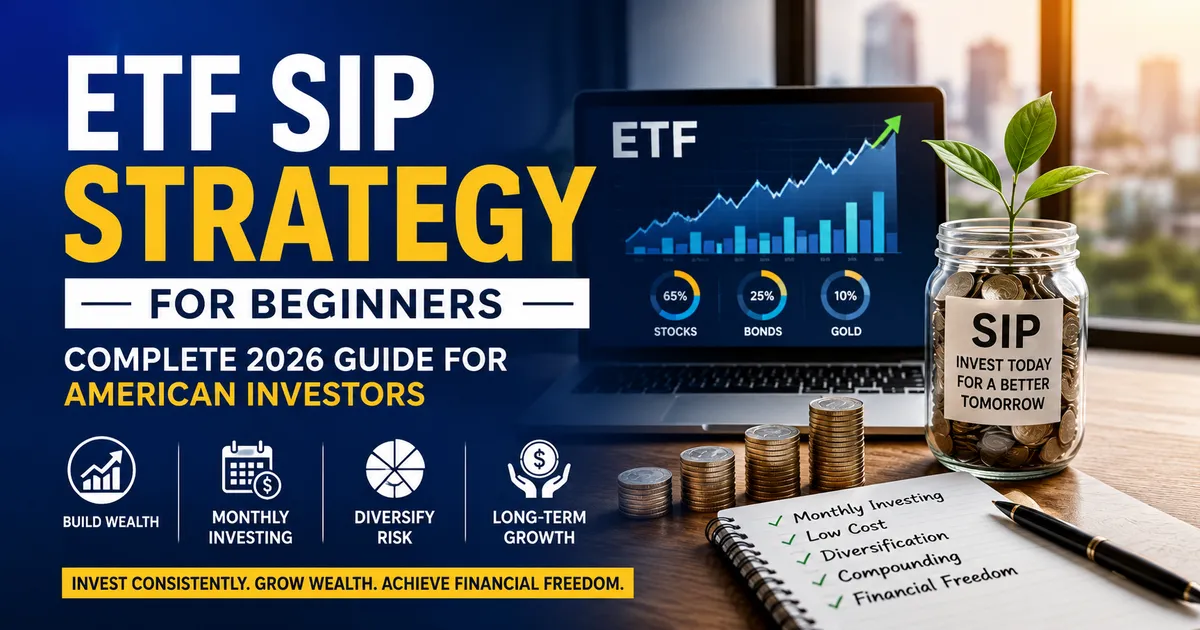
  • ETF SIP Strategy for Beginners: Complete 2026 Guide for American Investors

    ETF SIP Strategy for Beginners: Complete 2026 Guide for American Investors

    ETF SIP Strategy for Beginners: Complete 2026 Guide for American Investors

    etf sip strategy for beginners


    By Subhash Rukade | Updated June 7, 2026

    What Is an ETF SIP Strategy and Why Is It So Popular in 2026?

    ETF SIP strategy for beginners has become one of the most searched investing topics among American investors in 2026.

    More people are looking for simple, low-cost, and effective ways to grow their money without spending hours researching individual stocks.

    That is where ETFs and SIP investing work extremely well together.

    An Exchange-Traded Fund (ETF) is an investment fund that holds a collection of assets such as stocks, bonds, or other securities.

    Instead of buying shares of one company, investors can gain exposure to dozens, hundreds, or even thousands of investments through a single ETF.

    This diversification helps reduce risk and makes investing easier for beginners.

    A SIP, or Systematic Investment Plan, involves investing a fixed amount of money at regular intervals.

    Rather than trying to predict the perfect time to invest, SIP investors contribute consistently every month.

    This strategy helps investors stay disciplined and benefit from dollar-cost averaging over time.

    When ETFs and SIP investing are combined, investors gain a simple strategy that can support long-term wealth creation while reducing emotional decision-making.

    Many beginners prefer ETF investing because it removes much of the complexity associated with stock picking.

    Instead of constantly monitoring individual companies, investors can focus on building a diversified portfolio and staying committed to their financial goals.

    If you’re new to monthly investing, start with our complete pillar guide:


    SIP Investing Guide 2026: How Monthly Investing Builds Long-Term Wealth

    Strong financial habits also support successful investing. Investors should also review:


    Best Credit Cards 2026: Rewards, Cashback & Smart Usage Guide

    In this guide, you’ll learn how ETF SIP investing works, the best ETF categories for beginners, common mistakes to avoid, practical portfolio strategies, and future investing trends that can help American investors build wealth in 2026 and beyond.

    Why ETF SIP Investing Is Growing Rapidly in 2026

    The popularity of the ETF SIP strategy for beginners continues to grow across the United States in 2026.

    More investors are moving away from complicated investing approaches and choosing simple, diversified, and low-cost investment solutions.

    ETFs have become a major part of that trend.

    Combined with a systematic investment plan, ETFs offer a practical way for beginners to start building wealth without needing extensive investing experience.

    Diversification Makes Investing Easier

    One of the biggest reasons investors choose ETFs is diversification.

    Instead of putting all their money into a single stock, investors gain exposure to a large group of companies through one investment.

    For example, a broad-market ETF may hold hundreds of stocks from different industries.

    This helps reduce company-specific risk and creates a more balanced investment portfolio.

    Diversification is one of the strongest advantages of an ETF SIP strategy for beginners because it reduces the impact of any single investment performing poorly.

    Low Costs Help Investors Keep More Money

    Another reason ETFs continue gaining popularity is their low cost.

    Many ETFs have significantly lower fees compared to actively managed investment funds.

    Lower costs mean investors keep more of their returns.

    Over decades, even small fee differences can have a meaningful impact on long-term portfolio growth.

    This is particularly important for investors following a long-term SIP strategy.

    ETFs Simplify the Investing Process

    Many beginners feel overwhelmed by the idea of selecting individual stocks.

    ETFs simplify the process by providing instant diversification through a single investment.

    Instead of researching dozens of companies, investors can focus on selecting ETFs that match their goals and risk tolerance.

    This simplicity makes ETF investing attractive for busy professionals, new investors, and retirement savers.

    ETF Investing vs Individual Stock Investing

    FeatureETF InvestingIndividual Stocks
    DiversificationHighLow to Moderate
    Research RequiredLowerHigher
    Risk LevelGenerally LowerHigher
    Cost EfficiencyOften Low CostDepends on Strategy
    Beginner FriendlyExcellentModerate
    Portfolio ManagementSimplerMore Complex

    Popular ETF Categories in 2026

    Investors have access to a wide variety of ETFs today.

    • Broad Market ETFs
    • S&P 500 ETFs
    • Dividend ETFs
    • Growth ETFs
    • Technology ETFs
    • Bond ETFs
    • International ETFs

    These options allow investors to build diversified portfolios that align with their financial goals and risk preferences.

    The biggest lesson from this section is simple:
    ETF SIP strategy for beginners continues growing because it combines diversification, affordability, simplicity, and long-term investing discipline. These advantages make ETFs one of the most accessible investment tools available to American investors in 2026.

    How ETF SIP Investing Builds Long-Term Wealth

    One of the biggest reasons the ETF SIP strategy for beginners has become so popular is its ability to support long-term wealth creation through consistency and discipline.

    Many new investors believe they must constantly buy and sell investments to generate strong returns.

    However, history shows that investors who stay invested and contribute regularly often achieve better results than those who try to predict short-term market movements.

    This is where ETF SIP investing becomes a powerful strategy.

    Dollar-Cost Averaging Reduces Timing Risk

    Dollar-cost averaging is one of the biggest advantages of an ETF SIP strategy.

    Instead of investing a large amount at one time, investors contribute fixed amounts on a regular schedule.

    When ETF prices are lower, the same investment buys more shares.

    When prices rise, the same contribution buys fewer shares.

    Over time, this process helps smooth market fluctuations and reduces the pressure of finding the perfect entry point.

    For beginners, this approach can make investing less stressful and easier to maintain.

    The Power of Compounding

    Compounding is one of the most important concepts in investing.

    It occurs when investment gains begin generating additional gains.

    Over many years, even small monthly contributions can grow significantly because returns continue building upon previous returns.

    The earlier investors begin, the more time compounding has to work.

    This is why many financial experts encourage consistent investing rather than waiting for the “perfect” market conditions.

    Consistency Often Beats Market Timing

    Many investors attempt to predict market highs and lows.

    Unfortunately, successful market timing is extremely difficult.

    Even professional investors struggle to consistently predict short-term market movements.

    A disciplined ETF SIP strategy helps remove emotional decisions from the investing process.

    Instead of reacting to daily headlines, investors continue contributing according to their plan.

    This consistency often becomes a major advantage over long investment periods.

    Investors interested in creating additional passive income streams should also read:


    How to Build a Dividend Portfolio

    Consistent ETF Investing vs Market Timing

    StrategyMain FocusPotential Outcome
    ETF SIP InvestingConsistencySteady Wealth Building
    Dollar-Cost AveragingRegular ContributionsReduced Timing Risk
    Long-Term HoldingCompounding GrowthHigher Wealth Potential
    Market TimingPredicting Price MovesHigher Mistake Risk
    Emotional InvestingShort-Term ReactionsInconsistent Results

    A Recommended Investing Book

    One of the most respected books for long-term investors is:


    The Psychology of Money by Morgan Housel

    The book explains why patience, consistency, and strong financial habits often have a greater impact on wealth creation than trying to predict short-term market movements.

    The biggest lesson from this section is simple:
    ETF SIP strategy for beginners works because it combines dollar-cost averaging, compounding, diversification, and long-term discipline. Investors who remain consistent through different market cycles often place themselves in a stronger position to build lasting wealth.

    Best ETF Categories for Beginners in 2026

    One of the biggest advantages of an ETF SIP strategy for beginners is the wide range of investment options available.

    ETFs allow investors to build diversified portfolios based on their financial goals, risk tolerance, and investment timeline.

    Rather than selecting individual stocks, investors can choose ETF categories that match their long-term objectives.

    This approach simplifies investing and helps beginners stay focused on wealth creation.

    Broad Market ETFs

    Broad market ETFs are among the most popular choices for beginners.

    These ETFs provide exposure to a large number of companies across multiple industries.

    Because they spread investments across the market, they help reduce company-specific risk while providing long-term growth potential.

    Many investors use broad market ETFs as the foundation of their portfolio.


    etf sip strategy for beginners portfolio

    S&P 500 ETFs

    S&P 500 ETFs track some of the largest companies in the United States.

    These ETFs offer exposure to industry leaders across technology, healthcare, finance, consumer goods, and other sectors.

    Because of their diversification and historical performance, S&P 500 ETFs remain a popular choice among long-term investors.

    Dividend ETFs

    Dividend ETFs focus on companies that regularly distribute dividends to shareholders.

    These ETFs can provide both income and long-term growth potential.

    Investors interested in dividend investing should also review:


    Top Dividend Stocks USA 2026

    Growth ETFs

    Growth ETFs typically invest in companies expected to expand revenues and earnings at faster rates than the broader market.

    These funds often include technology, innovation, and artificial intelligence-related businesses.

    While growth ETFs may experience higher volatility, many investors include them to pursue long-term capital appreciation.

    Bond ETFs

    Bond ETFs invest in government bonds, corporate bonds, or a combination of fixed-income securities.

    These ETFs are commonly used to add stability and diversification to investment portfolios.

    Many retirement-focused investors allocate a portion of their portfolios to bond ETFs as they approach retirement age.

    ETF Categories Compared

    ETF CategoryMain ObjectiveSuitable For
    Broad Market ETFsMarket DiversificationMost Investors
    S&P 500 ETFsLarge-Cap ExposureLong-Term Growth
    Dividend ETFsIncome + GrowthPassive Income Investors
    Growth ETFsHigher Growth PotentialAggressive Investors
    Bond ETFsPortfolio StabilityConservative Investors

    A Recommended Wealth-Building Book

    One of the most respected books for ETF and index fund investors is:


    The Simple Path to Wealth by JL Collins

    The book explains how low-cost investing, diversification, and long-term discipline can help investors achieve financial independence.

    The biggest lesson from this section is simple:
    ETF SIP strategy for beginners becomes more effective when investors choose ETF categories that align with their goals. A diversified mix of broad market, dividend, growth, and bond ETFs can help create a balanced portfolio capable of supporting long-term wealth creation.

    Real Investor Example and Common ETF Investing Mistakes

    Understanding an ETF SIP strategy for beginners is important, but applying that strategy consistently is what creates long-term results.

    Many investors start investing with good intentions.

    However, emotional decisions, unrealistic expectations, and poor habits often prevent them from achieving their financial goals.

    Learning from real-world examples can help investors avoid costly mistakes and stay focused on long-term success.

    A Beginner ETF SIP Example

    Imagine a 30-year-old investor who contributes $500 every month into a diversified ETF portfolio.

    The portfolio includes a broad market ETF, a dividend ETF, and a small allocation to a bond ETF.

    Instead of trying to predict market movements, the investor continues investing every month regardless of market conditions.

    Some years deliver strong returns.

    Other years bring volatility and uncertainty.

    Despite market fluctuations, the investor remains disciplined and continues contributing.

    Over time, dollar-cost averaging and compounding work together to help build wealth.

    This simple approach reflects how many successful long-term investors manage their portfolios.

    Common Mistake #1: Chasing Recent Performance

    One of the most common mistakes investors make is buying investments solely because they recently performed well.

    Markets move in cycles.

    An ETF that performed strongly last year may not necessarily be the best performer next year.

    Successful investors focus on long-term strategy rather than short-term trends.

    Common Mistake #2: Over-Diversification

    Diversification is important, but too much diversification can create unnecessary complexity.

    Some investors own numerous ETFs with overlapping holdings.

    This can make portfolio management more difficult without providing meaningful additional diversification.

    Many beginners achieve excellent diversification with only a few carefully selected ETFs.

    Common Mistake #3: Emotional Investing

    Market declines often create fear.

    Market rallies often create excitement.

    Investors who make decisions based on emotions frequently buy high and sell low.

    A disciplined ETF SIP strategy helps reduce emotional decision-making because investments continue automatically according to a predetermined plan.

    Disciplined Investor vs Emotional Investor

    Investment HabitDisciplined InvestorEmotional Investor
    Monthly InvestingConsistent ContributionsIrregular Investing
    Market VolatilityRemains CalmReactively Changes Strategy
    ETF SelectionLong-Term FocusChases Trends
    Portfolio ManagementSimple and ConsistentFrequently Changes Holdings
    Investment HorizonYears or DecadesShort-Term Focus
    Wealth Building PotentialHigherOften Lower

    Investors preparing for uncertain markets should also review:


    Recession-Proof Investing 2026

    For a complete roadmap to monthly investing and long-term wealth creation, continue with:


    SIP Investing Guide 2026: How Monthly Investing Builds Long-Term Wealth

    The biggest lesson from this section is simple:
    ETF SIP strategy for beginners works best when investors remain consistent, avoid emotional decisions, and focus on long-term goals. A disciplined investing process often delivers better results than constantly reacting to short-term market movements.

    Practical Tips and Future Trends for ETF SIP Investors in 2026

    Building wealth through an ETF SIP strategy for beginners is not only about choosing the right ETFs. It is also about creating habits and systems that help investors stay consistent for years.

    The investing world continues evolving rapidly. New technology, automation tools, and portfolio management platforms are making investing easier than ever before.

    Investors who combine quality ETFs with smart investing habits often put themselves in a stronger position to achieve long-term financial goals.

    Focus on Diversification

    Diversification remains one of the most effective ways to manage investment risk.

    Even though ETFs are already diversified, investors can improve portfolio balance by combining different ETF categories.

    A diversified ETF portfolio may include:

    • Broad Market ETFs
    • S&P 500 ETFs
    • Dividend ETFs
    • Bond ETFs
    • International ETFs
    • Gold Investments

    This approach can help reduce volatility while maintaining long-term growth potential.

    Investors interested in portfolio diversification should also review:


    Gold Investment Strategies USA

    Automated ETF SIP Investing Is Becoming More Popular

    One major trend in 2026 is the growth of automated investing.

    Many brokerage platforms now allow investors to automatically invest into ETFs on a monthly schedule.

    Automation removes emotional decision-making and helps investors stay consistent regardless of market conditions.

    For beginners, this can be one of the simplest ways to maintain long-term investing discipline.

    Traditional Investing vs Automated ETF SIP Investing

    FeatureTraditional InvestingAutomated ETF SIP
    Investment TimingManual DecisionsAutomatic Contributions
    Emotional ImpactHigherLower
    ConsistencyDepends on InvestorHighly Consistent
    Ease of UseModerateVery Simple
    Long-Term DisciplineVariesStrong Support

    AI-Powered Investing Tools Are Expanding

    Artificial intelligence is playing a growing role in personal finance.

    Many investment platforms now offer:

    • Portfolio analysis tools
    • Retirement planning projections
    • Risk assessment reports
    • Automatic portfolio rebalancing
    • Personalized investing insights

    These technologies help investors make more informed decisions while reducing behavioral mistakes.

    Learn From Trusted Financial Sources

    Investors should always verify information using reputable financial organizations.

    These organizations provide educational resources, investor alerts, and retirement planning guidance that can help investors make better financial decisions.

    A Trusted Resource for ETF Investors

    Many long-term investors use:


    Fidelity Investments

    Fidelity offers investment research, retirement calculators, educational resources, and portfolio planning tools that support long-term investing success.

    The biggest lesson from this section is simple:
    ETF SIP strategy for beginners becomes even more effective when combined with diversification, automation, financial education, and a long-term mindset. These habits can help investors stay focused and continue building wealth regardless of short-term market fluctuations.

    Frequently Asked Questions About ETF SIP Strategy for Beginners

    1. What Is an ETF SIP Strategy?

    An ETF SIP strategy involves investing a fixed amount of money into Exchange-Traded Funds on a regular schedule, usually monthly. This approach helps investors benefit from dollar-cost averaging and long-term market growth.

    2. Are ETFs Good for Beginner Investors?

    Yes. ETFs are often considered one of the best investment options for beginners because they provide diversification, low costs, and easy access to different market sectors through a single investment.

    3. How Much Money Do I Need to Start an ETF SIP?

    Many brokerage platforms allow investors to start with relatively small monthly contributions. The ideal amount depends on individual financial goals, income, and investment horizon.

    4. Can ETF SIP Investing Help With Retirement Planning?

    Many retirement investors use ETFs because they offer long-term market exposure, diversification, and the potential to benefit from compounding over several decades.

    5. Should Beginners Invest Monthly or Wait for Market Corrections?

    Most long-term investors prefer regular monthly investing because it reduces timing risk and helps maintain discipline regardless of market conditions.

    Final Thoughts on ETF SIP Strategy for Beginners

    After exploring diversification, compounding, ETF categories, investor behavior, automation, and long-term wealth-building strategies, one conclusion becomes clear:

    ETF SIP strategy for beginners is one of the simplest and most effective ways to build long-term wealth in 2026.

    Successful investing does not require predicting stock market movements every day.

    It does not require finding the next winning stock.

    Instead, successful investing often comes from following a disciplined plan, investing consistently, and staying focused on long-term goals.

    ETFs make diversification simple.

    SIP investing creates consistency.

    Together, they form a powerful combination that can help investors navigate market volatility while continuing to build wealth over time.

    • Invest consistently every month.
    • Focus on diversification.
    • Keep investment costs low.
    • Avoid emotional investing decisions.
    • Stay committed during market fluctuations.
    • Allow compounding to work over time.

    These principles have helped investors build wealth through bull markets, bear markets, recessions, and economic uncertainty.

    Rather than trying to predict every market move, focus on creating a process you can follow for years.

    For a complete roadmap to monthly investing and long-term wealth creation, continue with:


    SIP Investing Guide 2026: How Monthly Investing Builds Long-Term Wealth

    Whether your goal is retirement planning, financial independence, passive income, or building generational wealth, an ETF SIP strategy can provide a practical foundation for long-term success.

    The greatest advantage of ETF investing is not complexity.

    It is consistency.

    And consistency remains one of the most powerful financial habits any investor can develop.

    📈 Join the Finance Investment Newsletter

    Get ETF investing insights, retirement planning strategies, market updates, wealth-building tips, and personal finance guidance delivered directly to your inbox.

    Join thousands of investors building stronger financial futures through smarter investing decisions.


    Subscribe Free →

    👨‍💼 About the Author

    Subhash Rukade

    Founder of Finance Investment and a dedicated financial educator focused on helping investors build wealth through ETF investing, SIP strategies, retirement planning, dividend investing, and long-term financial independence.

    • 📈 ETF & Index Fund Investing
    • 💰 Long-Term Wealth Building
    • 🏦 Retirement Planning
    • 📊 SIP Investing Strategies
    • 🪙 Portfolio Diversification
    • 📚 Personal Finance Education
    “Consistent Investing Beats Occasional Perfection.”

    Through Finance Investment, Subhash helps readers understand investing concepts, avoid common financial mistakes, and build practical strategies designed for long-term success.

    ✅ Beginner-Friendly Investing Guides
    ✅ USA-Focused Financial Content
    ✅ ETF & SIP Strategies
    ✅ Practical Wealth-Building Education

    🌐 Finance Investment
    Helping Investors Build Wealth One Smart Decision at a Time.

  • Best Index Funds for SIP Investing in 2026: Complete Guide for American Investors

    Best Index Funds for SIP Investing in 2026: Complete Guide for American Investors

    Best Index Funds for SIP Investing in 2026: Complete Guide for Americans

    best index funds for sip investing in 2026


    By Subhash Rukade | Updated June 7, 2026

    Why Index Funds Are So Popular Among Investors in 2026

    Best index funds for SIP investing in 2026 is one of the most searched investing topics among Americans who want a simple and reliable way to build long-term wealth.

    Over the last decade, index funds have become increasingly popular because they offer diversification, low fees, and a straightforward investment approach.

    Unlike actively managed funds that attempt to outperform the market, index funds are designed to track major market indexes such as the S&P 500, Nasdaq-100, or the total U.S. stock market.

    This strategy allows investors to participate in overall market growth without constantly buying and selling individual stocks.

    For SIP investors, index funds are especially attractive.

    A Systematic Investment Plan allows investors to invest a fixed amount regularly. This disciplined approach helps investors benefit from dollar-cost averaging while reducing the temptation to time the market.

    When combined with quality index funds, SIP investing can become a powerful long-term wealth-building strategy.

    One reason investors prefer index funds is cost efficiency.

    Many leading index funds have very low expense ratios, allowing investors to keep more of their returns over time.

    Even small fee differences can significantly impact portfolio growth over decades.

    If you’re new to monthly investing, start with our complete pillar guide:


    SIP Investing Guide 2026: How Monthly Investing Builds Long-Term Wealth

    Strong personal finance habits also play an important role in successful investing. Investors should also review:


    Best Credit Cards 2026: Rewards, Cashback & Smart Usage Guide

    In this guide, you’ll discover the best index funds for SIP investing in 2026, how index funds help build wealth, common mistakes investors make, practical portfolio strategies, and future trends shaping long-term investing in America.

    Best Index Funds for SIP Investing in 2026: What Smart Investors Look For

    Finding the best index funds for SIP investing in 2026 is not about chasing the fund with the highest recent return.

    Successful investors usually focus on factors that can support long-term wealth creation, such as diversification, low costs, strong index tracking, and consistency.

    Index funds have become one of the most popular investment choices in America because they offer exposure to hundreds or even thousands of companies through a single investment.

    For SIP investors, this simplicity can be a major advantage.

    Instead of trying to predict which stock will perform best next year, investors can participate in the growth of the broader market through regular monthly investments.

    Large-Cap Index Funds

    Large-cap index funds track some of the biggest companies in the United States.

    These funds often include established businesses with strong financial histories and global operations.

    Many investors use large-cap index funds as the foundation of their SIP portfolio because they provide broad exposure to the American economy.

    Total Market Index Funds

    Total market index funds expand diversification even further.

    Instead of focusing only on large companies, these funds typically include large-cap, mid-cap, and small-cap businesses.

    For investors seeking broad market exposure, total market funds are often considered among the best index funds for SIP investing in 2026.

    Growth-Oriented Index Funds

    Growth-focused index funds generally provide exposure to innovative sectors such as technology, artificial intelligence, cloud computing, and digital services.

    These funds may experience higher volatility, but many investors use them to pursue long-term growth opportunities.

    Dividend Index Funds

    Dividend-focused index funds invest in companies with a history of distributing cash dividends to shareholders.

    They can offer a combination of income potential and long-term appreciation.

    Many retirement-focused investors include dividend index funds as part of a diversified SIP strategy.

    Index Fund Categories Compared

    Index Fund TypeMain ObjectiveInvestor Profile
    Large-Cap Index FundsStable Long-Term GrowthConservative & Long-Term Investors
    Total Market Index FundsMaximum DiversificationBuy-and-Hold Investors
    Growth Index FundsHigher Growth PotentialAggressive Investors
    Dividend Index FundsIncome + GrowthRetirement-Focused Investors
    International Index FundsGlobal ExposureDiversification Seekers

    What Makes an Index Fund Suitable for SIP Investing?

    When evaluating index funds, investors should pay attention to several important factors:

    • Low expense ratios
    • Strong diversification
    • Long operating history
    • Reliable index tracking
    • High fund liquidity
    • Consistent long-term performance

    The biggest lesson from this section is simple:
    the best index funds for SIP investing in 2026 are usually those that combine diversification, low costs, and long-term consistency. Investors who focus on these qualities rather than short-term performance often place themselves in a stronger position to build wealth over time.

    How Index Funds Build Long-Term Wealth

    One reason the best index funds for SIP investing in 2026 continue attracting investors is their ability to support long-term wealth creation through consistency, diversification, and compounding.

    Many investors believe building wealth requires finding the next big stock winner.

    In reality, long-term success often comes from investing regularly in diversified funds and allowing time to do the heavy lifting.

    This is where index funds and SIP investing work exceptionally well together.

    The Power of Compounding

    Compounding occurs when investment returns begin generating additional returns over time.

    Instead of earning growth only on the money you invest, you also earn growth on previous gains.

    This process can become increasingly powerful over long periods.

    For example, an investor who contributes monthly to a diversified index fund portfolio may benefit not only from market growth but also from years of accumulated gains working together.

    The longer the investment horizon, the greater the potential impact of compounding.

    Dollar-Cost Averaging Helps Reduce Timing Risk

    Many investors worry about investing at the wrong time.

    SIP investing helps solve this problem through dollar-cost averaging.

    When markets rise, monthly contributions buy fewer fund units.

    When markets fall, the same contribution purchases more units.

    Over time, this process helps smooth out market fluctuations and reduces the pressure of trying to predict market highs and lows.

    This is one reason why the best index funds for SIP investing in 2026 are often paired with a disciplined monthly investing strategy.

    Consistency Often Beats Market Timing

    Many investors attempt to wait for the perfect opportunity before investing.

    Unfortunately, predicting market movements consistently is extremely difficult.

    Some of the strongest market recovery days occur when investor sentiment remains negative.

    Investors who stay invested often participate in these recovery periods, while investors waiting on the sidelines may miss them.

    Consistency frequently proves more valuable than trying to time every market movement.

    Investors interested in building passive income alongside index fund investing should also read:


    How to Build a Dividend Portfolio

    Consistent Investing vs Market Timing

    StrategyPrimary FocusPotential Outcome
    Monthly SIP InvestingConsistencySteady Wealth Building
    Dollar-Cost AveragingRegular ContributionsReduced Timing Risk
    Long-Term HoldingCompounding GrowthHigher Wealth Potential
    Market TimingPredicting Highs & LowsHigher Risk of Mistakes
    Emotional InvestingShort-Term ReactionsInconsistent Results

    A Recommended Investing Book

    One of the most respected books for long-term investors is:


    The Psychology of Money by Morgan Housel

    The book explains why patience, consistency, and good financial habits often matter more than attempting to predict short-term market movements.

    The biggest lesson from this section is simple:
    the best index funds for SIP investing in 2026 become even more powerful when combined with compounding, dollar-cost averaging, and long-term discipline. Investors who remain consistent through market ups and downs often place themselves in a stronger position to build wealth over time.

    Choosing the Right Index Fund for SIP Investing

    Selecting the best index funds for SIP investing in 2026 involves more than simply looking at past returns.

    Many investors make the mistake of choosing funds solely because they performed well recently.

    However, successful long-term investors typically focus on factors that can influence performance over many years rather than a few months.

    Understanding these factors can help investors build stronger portfolios and avoid unnecessary risks.

    Pay Attention to Expense Ratios

    One of the biggest advantages of index funds is their low cost.

    The expense ratio represents the annual fee charged by a fund.

    Although the difference between a low-cost fund and a higher-cost fund may seem small, fees can have a significant impact over decades.

    Lower fees allow investors to keep more of their returns and maximize the benefits of compounding.

    This is one reason why many of the best index funds for SIP investing in 2026 have extremely low expense ratios.


    best index funds for sip investing in 2026 strategy

    Fund Size and Liquidity Matter

    Large funds often provide better liquidity and operational stability.

    A fund with substantial assets under management may be better positioned to track its index efficiently and maintain lower costs.

    While fund size should not be the only factor considered, it can provide additional confidence for long-term investors.

    Understand Tracking Performance

    The purpose of an index fund is to follow a specific index as closely as possible.

    Small differences between the fund’s performance and the index are known as tracking differences.

    Investors should generally look for funds that closely mirror the performance of their target index.

    Consistent tracking is often a sign of efficient fund management.

    Diversification Remains Essential

    Diversification is one of the biggest reasons index funds have become so popular.

    Instead of relying on a few individual stocks, investors gain exposure to hundreds or even thousands of companies.

    This reduces the impact of poor performance from any single company.

    For investors seeking additional income opportunities, consider reviewing:


    Top Dividend Stocks USA 2026

    Key Factors When Comparing Index Funds

    FactorWhy It MattersInvestor Benefit
    Expense RatioLower CostsHigher Net Returns
    Fund SizeLiquidity & StabilityEasier Investing
    Tracking AccuracyMatches BenchmarkReliable Performance
    DiversificationSpreads RiskLower Single-Stock Exposure
    Long-Term HistoryPerformance ConsistencyGreater Investor Confidence

    A Recommended Wealth-Building Book

    One of the most respected books for index fund investors is:


    The Simple Path to Wealth by JL Collins

    The book explains how low-cost index funds, disciplined investing, and patience can help investors achieve long-term financial independence.

    The biggest lesson from this section is simple:
    the best index funds for SIP investing in 2026 are usually those that combine low costs, strong diversification, reliable index tracking, and long-term consistency. Investors who focus on these factors often build stronger portfolios and improve their chances of long-term success.

    Real Investor Example and Common Index Fund Investing Mistakes

    Understanding the best index funds for SIP investing in 2026 is important, but understanding investor behavior is equally important.

    Even the best investment strategy can fail if investors make emotional decisions.

    History shows that successful investors are not always those who earn the highest returns in a single year.

    Instead, successful investors are often those who remain consistent, avoid common mistakes, and stick with their plan during both good and bad market conditions.

    A Real-World SIP Investing Example

    Imagine an investor contributes $500 every month into a diversified index fund through a SIP.

    Some months the market rises.

    Other months the market falls.

    Instead of trying to predict market movements, the investor continues investing consistently.

    Over time, dollar-cost averaging helps reduce timing risk while compounding helps grow the portfolio.

    After many years, the combination of regular investing and market growth can create substantial wealth.

    This is why many financial experts recommend a disciplined approach rather than constantly changing investment strategies.

    Common Mistake #1: Ignoring Fees

    Many investors focus only on returns and forget about costs.

    Even small differences in expense ratios can have a significant impact over decades.

    The best index funds for SIP investing in 2026 often attract investors because of their low-cost structure.

    Lower fees mean more money stays invested and continues compounding.

    Common Mistake #2: Chasing Past Performance

    Investors often move money into funds that recently performed well.

    Unfortunately, past performance does not guarantee future results.

    Funds that performed exceptionally well in one period may underperform later.

    Successful investors usually focus on diversification, consistency, and long-term goals rather than recent headlines.

    Common Mistake #3: Trying to Time the Market

    One of the most common investing mistakes is attempting to predict market highs and lows.

    Very few investors consistently succeed at market timing.

    Missing just a few strong recovery days can significantly reduce long-term returns.

    This is why many investors prefer SIP investing, which removes much of the pressure associated with market timing.

    Successful Investor vs Emotional Investor

    Investment HabitSuccessful InvestorEmotional Investor
    Monthly InvestingConsistent SIP ContributionsInvests Irregularly
    Market VolatilityRemains CalmPanics Easily
    Fund SelectionFocuses on QualityChases Trends
    Investment HorizonLong-Term FocusShort-Term Thinking
    Market TimingAvoids TimingAttempts Prediction
    Wealth Building PotentialHigherOften Lower

    Investors preparing for uncertain markets should also review:


    Recession-Proof Investing 2026

    For a complete roadmap to monthly investing and long-term wealth creation, continue with:


    SIP Investing Guide 2026: How Monthly Investing Builds Long-Term Wealth

    The biggest lesson from this section is simple:
    the best index funds for SIP investing in 2026 can help build wealth, but investor behavior matters just as much. Investors who avoid emotional decisions, remain consistent, and focus on long-term goals often place themselves in a stronger position for financial success.

    Practical Tips and Future Trends for Index Fund Investors in 2026

    Choosing the best index funds for SIP investing in 2026 is only the first step toward long-term financial success.

    The next step is building a strategy that can adapt to changing market conditions while keeping your long-term goals on track.

    Fortunately, modern investors have access to more tools, research, and technology than ever before.

    By combining quality index funds with smart investing habits, investors can improve their chances of achieving financial independence and retirement success.

    Diversification Should Remain a Priority

    Even though index funds are already diversified, many investors choose to diversify further by combining different asset classes.

    A balanced portfolio may include:

    • Large-Cap Index Funds
    • Total Market Index Funds
    • Dividend Index Funds
    • Bond Funds
    • International Index Funds
    • Gold Investments

    This approach can help reduce portfolio volatility while maintaining long-term growth potential.

    Investors looking to add defensive assets should also review:


    Gold Investment Strategies USA

    ETF vs Index Fund Trends in 2026

    Both ETFs and traditional index funds continue attracting investors in 2026.

    ETFs offer flexibility because they trade throughout the day like stocks.

    Traditional index funds, however, remain popular among SIP investors because of their simplicity and automatic investment options.

    For long-term investors, both approaches can be effective when used within a disciplined investing plan.

    ETF vs Traditional Index Fund

    FeatureETFIndex Fund
    Trading StyleTrades Throughout DayEnd-of-Day Pricing
    SIP CompatibilityDepends on PlatformWidely Available
    Ease of UseModerateVery Simple
    Long-Term InvestingExcellentExcellent
    Automation OptionsLimited on Some PlatformsCommonly Available

    AI-Powered Investing Is Growing Fast

    Artificial intelligence is becoming an important part of personal finance.

    Many investment platforms now offer:

    • AI-powered portfolio analysis
    • Automated rebalancing
    • Risk assessment tools
    • Retirement planning projections
    • Personalized investing insights

    These tools help investors make more informed decisions while reducing emotional investing behavior.

    Learn From Trusted Financial Authorities

    Investors should always verify information using trusted sources.

    These organizations provide educational resources, investor alerts, and guidance that can help investors make better financial decisions.

    A Trusted Platform for Long-Term Investors

    Many investors use:


    Fidelity Investments

    Fidelity offers retirement calculators, investment research, educational resources, and portfolio planning tools that support long-term investing goals.

    The biggest lesson from this section is simple:
    the best index funds for SIP investing in 2026 become even more effective when combined with diversification, automation, financial education, and a long-term mindset. Investors who focus on these principles often build stronger portfolios and improve their chances of achieving financial freedom.

    Frequently Asked Questions About the Best Index Funds for SIP Investing in 2026

    1. What Are the Best Index Funds for SIP Investing in 2026?

    The best index funds for SIP investing in 2026 are generally funds that offer broad diversification, low expense ratios, strong liquidity, and reliable long-term performance. Many investors focus on large-cap, total market, and dividend-focused index funds.

    2. Are Index Funds Good for Beginners?

    Yes. Index funds are often considered one of the best investment options for beginners because they provide diversification, simplicity, and low costs. Investors can gain exposure to many companies through a single investment.

    3. How Much Should I Invest Monthly in an Index Fund SIP?

    The amount depends on your financial goals, income, and investment horizon. Many investors start with a manageable monthly contribution and increase it over time as their income grows.

    4. Can Index Funds Help Build Retirement Wealth?

    Many retirement investors use index funds because they offer long-term market exposure and can benefit from compounding over several decades.

    5. Is It Better to Invest Regularly or Wait for Market Corrections?

    Most long-term investors find that regular investing through a SIP strategy is more effective than attempting to predict market corrections. Consistency often reduces timing risk and helps investors stay disciplined.

    Final Thoughts on the Best Index Funds for SIP Investing in 2026

    After examining diversification, compounding, dollar-cost averaging, investor behavior, and portfolio strategy, one conclusion becomes clear:

    The best index funds for SIP investing in 2026 can provide a simple, low-cost, and highly effective path toward long-term wealth creation.

    Successful investing does not always require complex strategies.

    In many cases, investors who consistently invest in diversified index funds and remain focused on long-term goals outperform those who constantly chase trends and react to short-term market noise.

    Index funds continue to attract investors because they offer broad market exposure, lower costs, and reduced reliance on stock selection.

    When combined with a disciplined SIP strategy, they become an excellent tool for building wealth over time.

    • Invest consistently every month.
    • Focus on diversification.
    • Keep investment costs low.
    • Avoid emotional decisions.
    • Stay invested through market cycles.
    • Allow compounding to work over time.

    These principles have helped investors navigate recessions, market crashes, inflation periods, and economic uncertainty throughout history.

    Rather than worrying about short-term market movements, focus on creating a disciplined investment process that you can follow for years.

    For a complete roadmap to monthly investing and long-term wealth creation, continue with:


    SIP Investing Guide 2026: How Monthly Investing Builds Long-Term Wealth

    Whether your goal is retirement planning, financial independence, passive income, or building generational wealth, choosing the best index funds for SIP investing in 2026 can help create a strong foundation for future success.

    The greatest advantage of index fund investing is not complexity.

    It is consistency.

    And consistency remains one of the most powerful wealth-building habits available to investors today.

    📈 Join the Finance Investment Newsletter

    Get index fund investing insights, retirement planning tips, market updates, dividend strategies, and wealth-building guidance delivered directly to your inbox.

    Join thousands of investors building stronger financial futures through smarter investing decisions.


    Subscribe Free →

    👨‍💼 About the Author

    Subhash Rukade

    Founder of Finance Investment and a passionate financial educator dedicated to helping investors build wealth through SIP investing, index funds, retirement planning, dividend strategies, and long-term financial independence.

    • 📈 Index Fund Investing Strategies
    • 💰 Long-Term Wealth Building
    • 🏦 Retirement Planning Education
    • 📊 SIP Investing Guidance
    • 🪙 Diversification & Portfolio Management
    • 📚 Personal Finance Education
    “Small Monthly Investments Can Create Extraordinary Wealth Over Time.”

    Through Finance Investment, Subhash shares practical investing strategies designed to help readers avoid costly mistakes, stay focused during market volatility, and achieve long-term financial goals.

    ✅ Beginner-Friendly Investing Guides
    ✅ USA-Focused Financial Content
    ✅ Index Fund & SIP Strategies
    ✅ Practical Wealth-Building Education

    🌐 Finance Investment
    Helping Investors Build Wealth One Smart Decision at a Time.

  • Common SIP Mistakes Beginners Make: Avoid These Costly Investing Errors in 2026

    Common SIP Mistakes Beginners Make: Avoid These Costly Investing Errors in 2026

    Common SIP Mistakes Beginners Make: A Complete 2026 Guide for Smart Investors

    <!-- FOCUS KEYWORD -->common sip mistakes beginners make


    By Subhash Rukade | Updated June 3, 2026

    Why Understanding Common SIP Mistakes Beginners Make Matters

    SIP investing has become one of the most effective ways for Americans to build wealth gradually through monthly investing. However, many new investors unknowingly make mistakes that reduce returns, delay retirement goals, and weaken long-term wealth creation.

    Understanding the common SIP mistakes beginners make can help investors avoid costly decisions and stay focused on long-term success.

    Most investing mistakes do not happen because people lack intelligence. Instead, they occur because investors allow emotions, fear, impatience, or misinformation to influence their decisions.

    Many beginners start investing with excitement but quickly become discouraged when markets fluctuate. Others wait years before starting because they believe they need large amounts of money to begin.

    If you’re serious about mastering monthly investing and avoiding beginner mistakes, start with our complete pillar guide:


    SIP Investing Guide 2026: How Monthly Investing Builds Long-Term Wealth

    Some of the most common SIP mistakes beginners make include:

    • Waiting too long before investing.
    • Stopping SIPs during market declines.
    • Investing without clear goals.
    • Ignoring diversification.
    • Expecting unrealistic returns.

    Over time, these mistakes can significantly reduce portfolio growth and make it harder to achieve financial freedom.

    Good investing begins with strong financial habits. Investors who want to improve budgeting and spending efficiency should also explore:


    Best Credit Cards 2026: Rewards, Cashback & Smart Usage Guide

    In this guide, you’ll learn the common SIP mistakes beginners make, understand how these mistakes affect long-term wealth, and discover practical strategies that successful investors use to stay on track in 2026 and beyond.

    Top SIP Mistakes Beginners Make That Can Hurt Long-Term Wealth

    One of the biggest reasons investors fail to achieve their financial goals is that they repeat the same investing mistakes year after year.

    Understanding the common SIP mistakes beginners make can help investors avoid costly errors and improve their chances of building long-term wealth.

    The good news is that most of these mistakes are completely avoidable.

    Mistake #1: Waiting Too Long to Start Investing

    Many people believe they need a large amount of money before they can begin investing.

    As a result, they postpone investing for years.

    Unfortunately, every year spent waiting is a year lost to compounding.

    Even small monthly investments started early can often outperform larger investments started much later.

    Mistake #2: Investing Without Clear Financial Goals

    Another common SIP mistake beginners make is investing without knowing why they are investing.

    Successful investors usually invest for specific goals such as:

    • Retirement planning
    • Financial freedom
    • Buying a home
    • Building passive income
    • Long-term wealth creation

    Without clear goals, investors are more likely to lose motivation during periods of market volatility.

    Mistake #3: Chasing Quick Profits

    Many beginners enter the market expecting fast returns.

    They often chase trending stocks, social media recommendations, or speculative investments.

    However, SIP investing is designed to build wealth gradually over years and decades.

    Trying to get rich quickly often increases risk and leads to poor investment decisions.

    Common MistakeBetter Investing Habit
    Waiting to startStart investing immediately
    No clear goalsCreate financial objectives
    Chasing quick profitsFocus on long-term growth
    Market timingInvest consistently
    Emotional decisionsFollow a disciplined plan

    Mistake #4: Lack of Consistency

    Consistency is one of the biggest advantages of SIP investing.

    Unfortunately, many investors start enthusiastically and then stop contributing after a few months.

    This disrupts compounding and reduces long-term wealth potential.

    Among all the common SIP mistakes beginners make, inconsistency may be one of the most damaging because it prevents investors from benefiting fully from market growth and dollar-cost averaging.

    The biggest lesson from this section is simple:
    successful investing is not about being perfect. It is about starting early, staying consistent, and focusing on long-term goals instead of short-term market noise.

    How SIP Mistakes Can Hurt Long-Term Wealth Creation

    Many investors underestimate how expensive investing mistakes can become over time.

    The reality is that the common SIP mistakes beginners make often cost far more than temporary market declines.

    A market correction may last months, but a poor investing habit can affect portfolio growth for decades.

    This is why understanding the long-term impact of investing mistakes is essential for anyone serious about building wealth.

    The Cost of Waiting to Start Investing

    One of the most common SIP mistakes beginners make is delaying their investment journey.

    Many people spend years waiting for the perfect time to invest.

    Others believe they need more income before they can begin.

    Unfortunately, every year spent waiting reduces the amount of time available for compounding.

    Time is one of the most valuable assets an investor possesses.

    Once it is lost, it cannot be recovered.

    Missed Compounding Opportunities

    Compounding allows investment earnings to generate additional earnings.

    Over long periods, this process can significantly increase portfolio growth.

    However, investors who stop their SIP contributions, withdraw investments early, or frequently change strategies often interrupt compounding.

    As a result, their wealth-building potential may be reduced.

    This is one reason the common SIP mistakes beginners make can have a larger impact than many investors realize.

    MistakeLong-Term Impact
    Starting LateLess Compounding Time
    Stopping SIPsReduced Portfolio Growth
    Emotional InvestingPoor Investment Decisions
    No Clear GoalsWeak Long-Term Planning
    Lack of DiversificationHigher Investment Risk

    Retirement Goals Can Be Delayed

    Retirement planning depends heavily on consistency and long-term investing.

    Investors who repeatedly make the common SIP mistakes beginners make often find themselves contributing more money later just to catch up.

    This creates additional financial pressure and may delay retirement goals.

    Starting early and remaining disciplined can make retirement planning significantly easier.

    Dividend Investing Can Strengthen Wealth Creation

    Many successful investors eventually add dividend-producing investments to their portfolios.

    Dividend stocks and dividend ETFs can provide additional income while supporting long-term growth.

    Investors interested in building a dividend-focused portfolio should explore:


    How to Build a Dividend Portfolio

    Reinvesting dividends can increase compounding and further strengthen long-term wealth creation.

    A Highly Recommended Investing Book

    One of the most respected personal finance books available today is:


    The Psychology of Money by Morgan Housel

    The book explains why behavior and consistency often matter more than trying to predict stock market movements.

    The biggest lesson from this section is simple:
    avoiding the common SIP mistakes beginners make can be just as important as choosing the right investments. Investors who stay disciplined and allow compounding to work over decades often place themselves in a much stronger financial position.

    Choosing Better Investments and Avoiding Portfolio Mistakes

    Another reason many investors struggle is that they focus only on monthly contributions while ignoring investment quality.

    Among the common SIP mistakes beginners make, choosing unsuitable investments is one of the most damaging because it can reduce returns and increase risk over time.

    The good news is that investors do not need complicated strategies to build wealth. In many cases, simple and diversified investments perform extremely well over long periods.

    Why Diversification Matters

    Diversification means spreading investments across multiple assets rather than relying on a single stock or sector.

    A diversified portfolio can help reduce risk and create a smoother investing experience.

    Many beginners make the mistake of putting too much money into one company or one investment theme.

    If that investment performs poorly, the entire portfolio suffers.

    This is one of the most common SIP mistakes beginners make and can often be avoided through proper diversification.

    Index Funds and ETFs Remain Popular Choices

    Many successful long-term investors use index funds and ETFs as the foundation of their portfolios.

    These investments offer:

    • Broad diversification
    • Lower investment costs
    • Professional management
    • Long-term growth potential
    • Reduced stock-specific risk

    For beginners, index funds often provide a simple and effective way to participate in market growth.


    common sip mistakes beginners make investing strategy

    Dividend Investing Can Add Another Layer of Growth

    Dividend-paying investments can help investors generate passive income while continuing to build wealth.

    Investors looking for dividend opportunities should also review:


    Top Dividend Stocks USA 2026

    Reinvesting dividends can further strengthen the compounding process and improve long-term portfolio growth.

    Investment TypeMain AdvantageSuitable For
    Index FundsDiversificationMost Investors
    S&P 500 ETFsLong-Term GrowthGrowth Investors
    Dividend ETFsIncome + GrowthIncome Investors
    Dividend StocksPassive IncomeExperienced Investors
    Balanced FundsRisk ManagementConservative Investors

    A Valuable Resource for Investors

    Another highly recommended investing book is:


    The Simple Path to Wealth by JL Collins

    The book explains why simple investing strategies often outperform complicated approaches over the long run.

    The biggest lesson from this section is simple:
    avoiding the common SIP mistakes beginners make starts with choosing diversified, high-quality investments and staying committed to a long-term investing plan.

    Real Investor Example and Emotional Investing Mistakes Beginners Should Avoid

    Many investing mistakes are not caused by a lack of knowledge. Instead, they are caused by emotions.

    In fact, some of the common SIP mistakes beginners make happen when investors allow fear, greed, or panic to influence their decisions.

    Understanding these emotional traps can help investors stay disciplined and focused on long-term wealth creation.

    A Real-World Investor Example

    Consider two investors, Sarah and Michael.

    Both started SIP investing in diversified index funds at the same time.

    Sarah continued investing every month regardless of market conditions.

    Michael, however, became nervous whenever stock markets declined.

    During a major market correction, Michael stopped his SIP contributions and moved his money to cash.

    Sarah stayed invested.

    Several years later, Sarah’s portfolio benefited from market recovery and continued compounding.

    Michael missed a significant portion of that growth because he allowed short-term fear to dictate long-term decisions.

    This example perfectly demonstrates one of the most common SIP mistakes beginners make:
    trying to avoid temporary losses at the cost of future gains.

    Mistake #1: Panic Selling During Market Declines

    Market corrections are a normal part of investing.

    However, many beginners assume falling markets mean something is wrong.

    As a result, they stop investing or sell their holdings at lower prices.

    Historically, investors who remain disciplined during downturns often benefit when markets eventually recover.

    Mistake #2: Overconfidence During Bull Markets

    Just as fear can hurt investors, overconfidence can be equally dangerous.

    When markets rise rapidly, some investors believe every investment decision will succeed.

    They may take unnecessary risks or abandon diversification.

    This behavior is another example of the common SIP mistakes beginners make.

    EmotionCommon MistakeBetter Approach
    FearStop SIP InvestingStay Consistent
    PanicSell InvestmentsFollow Long-Term Plan
    GreedChase Hot StocksDiversify Portfolio
    OverconfidenceTake Excessive RiskMaintain Discipline

    Prepare for Market Uncertainty

    Successful investors understand that volatility is normal.

    Investors who want to build stronger portfolios during uncertain economic periods should also review:


    Recession-Proof Investing 2026

    For a complete roadmap to long-term SIP investing and wealth creation, continue reading:


    SIP Investing Guide 2026: How Monthly Investing Builds Long-Term Wealth

    The biggest lesson from this section is simple:
    many of the common SIP mistakes beginners make are emotional, not technical. Investors who stay calm, remain consistent, and follow a long-term plan often give themselves the best chance of achieving financial freedom.

    Practical SIP Investing Tips, Risk Management, and Future Trends for 2026

    Avoiding the common SIP mistakes beginners make is only the first step toward becoming a successful investor.

    The next step is creating a strategy that can survive market volatility, economic uncertainty, and changing financial conditions.

    Investors who focus on risk management and long-term planning often place themselves in a stronger position to build wealth over time.

    Diversification Should Be a Priority

    One of the smartest ways to reduce investment risk is diversification.

    Instead of relying on a single stock, sector, or investment theme, diversified investors spread money across multiple assets.

    A diversified portfolio may include:

    • Index Funds
    • S&P 500 ETFs
    • Dividend Stocks
    • Bond Funds
    • International Investments
    • Alternative Assets

    Diversification helps investors avoid one of the common SIP mistakes beginners make—placing too much money into a single investment.

    Should Gold Be Part of Your Portfolio?

    Many investors allocate a small portion of their portfolios to gold as a hedge against inflation and economic uncertainty.

    Investors interested in this strategy should also review:


    Gold Investment Strategies USA

    While gold should not replace stock market investments, it can complement a diversified portfolio.

    StrategyMain Benefit
    DiversificationRisk Reduction
    Monthly SIP InvestingConsistency
    Dividend ReinvestmentCompounding Growth
    Long-Term InvestingWealth Creation
    Asset AllocationPortfolio Stability

    Technology Is Changing the Way People Invest

    The investing landscape continues evolving rapidly in 2026.

    Today’s investors have access to:

    • AI-powered investing tools
    • Portfolio tracking apps
    • Automated investing platforms
    • Robo-advisors
    • Fractional investing opportunities

    These tools make investing more accessible than ever before.

    However, technology cannot replace discipline, patience, and long-term thinking.

    Use Trusted Financial Resources

    Investors should always rely on credible financial information.

    These organizations provide educational resources that can help investors avoid the common SIP mistakes beginners make and make more informed financial decisions.

    A Useful Investing Platform

    Many long-term investors use:


    Fidelity Investments

    Fidelity offers retirement accounts, brokerage services, investment research, and educational tools for both beginners and experienced investors.

    The biggest lesson from this section is simple:
    successful investing is not about predicting markets. It is about building a diversified portfolio, managing risk, staying consistent, and avoiding the common SIP mistakes beginners make throughout your investing journey.

    Frequently Asked Questions About Common SIP Mistakes Beginners Make

    1. What Is the Biggest SIP Mistake Beginners Make?

    One of the biggest mistakes is waiting too long to start investing. Delaying investments reduces the time available for compounding and long-term wealth creation.

    2. Should I Stop My SIP During a Market Crash?

    No. Market corrections are a normal part of investing. Continuing SIP investments during downturns can help investors purchase assets at lower prices and potentially benefit when markets recover.

    3. Is Diversification Important for SIP Investors?

    Yes. Diversification helps reduce risk by spreading investments across multiple assets, sectors, and investment types.

    4. Can Emotional Investing Hurt Returns?

    Absolutely. Fear, panic, and greed often lead to poor decisions such as selling during market declines or chasing speculative investments.

    5. How Can Beginners Avoid SIP Investing Mistakes?

    By setting clear goals, investing consistently, staying diversified, and focusing on long-term growth instead of short-term market fluctuations.

    Final Thoughts on Common SIP Mistakes Beginners Make

    Understanding the common SIP mistakes beginners make is one of the most valuable lessons an investor can learn.

    While investing itself is relatively simple, many people struggle because they allow emotions, impatience, and misinformation to influence their decisions.

    Throughout this guide, we explored several mistakes that frequently hurt long-term wealth creation:

    • Waiting too long to start investing
    • Investing without clear financial goals
    • Stopping SIPs during market declines
    • Ignoring diversification
    • Chasing quick profits
    • Making emotional investment decisions

    Fortunately, every one of these mistakes can be avoided.

    Successful investors are not necessarily those who predict markets correctly. More often, they are the investors who remain disciplined, invest consistently, and allow compounding to work over many years.

    If you want a complete roadmap for building wealth through monthly investing, continue reading our pillar guide:


    SIP Investing Guide 2026: How Monthly Investing Builds Long-Term Wealth

    Remember: avoiding mistakes is often just as important as choosing the right investments. Small improvements in investing behavior today can create a significant difference in financial results tomorrow.

    📈 Join the Finance Investment Community

    Get investing insights, retirement strategies, stock market updates, dividend ideas, and wealth-building tips delivered directly to your inbox.


    Subscribe Free →

    👨‍💼 About the Author

    Subhash Rukade

    Founder of Finance Investment and a passionate financial educator dedicated to helping investors build long-term wealth through smart investing, retirement planning, dividend strategies, and personal finance education.

    • 📈 Long-Term Investing
    • 💰 Dividend Investing
    • 🏦 Retirement Planning
    • 📊 Wealth Building Strategies
    • 🪙 Gold & Alternative Investments
    • 💳 Personal Finance Management
    “Successful Investing Is Not About Perfection. It’s About Consistency.”

    Through research-based financial content, Subhash helps readers make informed investing decisions and avoid costly financial mistakes.

  • Benefits of Starting a SIP Early: Build Long-Term Wealth Faster in 2026

    Benefits of Starting a SIP Early: Build Long-Term Wealth Faster in 2026

    Benefits of Starting a SIP Early: Build Long-Term Wealth Faster in 2026

    <!-- FOCUS KEYWORD -->benefits of starting a sip early


    By Subhash Rukade | Updated June 2, 2026

    Why the Benefits of Starting a SIP Early Matter More Than Ever

    One of the most powerful financial decisions you can make is starting your investment journey early. The benefits of starting a SIP early go far beyond simply saving money. Early investing gives your money more time to grow, compound, and work toward long-term financial goals.

    Many Americans believe they need thousands of dollars before they can begin investing. However, successful investors often start with small monthly contributions and allow time to do the heavy lifting.

    In fact, starting early can be more important than investing large amounts later in life.

    This is why SIP investing has become increasingly popular among young professionals, families, and retirement-focused investors across the United States.

    If you’re serious about mastering monthly investing and wealth creation, start with our complete pillar guide:


    SIP Investing Guide 2026: How Monthly Investing Builds Long-Term Wealth

    The benefits of starting a SIP early become even more valuable during periods of market uncertainty. Investors who begin early typically have more time to recover from market downturns and benefit from future growth opportunities.

    Some of the biggest advantages include:

    • More time for compounding
    • Greater long-term wealth potential
    • Reduced pressure to invest large amounts later
    • Better financial discipline
    • Improved retirement readiness

    Many people delay investing because they focus on short-term expenses or believe they can start later. Unfortunately, every year spent waiting is a year lost to compounding.

    Strong personal finance habits can help create more room for investing. Investors looking to improve budgeting and cash flow should also review:


    Best Credit Cards 2026: Rewards, Cashback & Smart Usage Guide

    Throughout this guide, you’ll learn how early SIP investing works, why time is one of the most valuable investing assets, and how small monthly investments can potentially grow into significant wealth over decades.

    The Power of Compounding: The Biggest Benefit of Starting a SIP Early

    When discussing the benefits of starting a SIP early, one concept stands above everything else:
    compounding.

    Compounding is often called the most powerful force in investing because it allows your money to generate earnings, and then those earnings begin generating additional earnings.

    In simple words, your money starts working for you.

    The earlier you start investing, the longer compounding has to grow your portfolio.

    This is exactly why two investors contributing the same amount can end up with dramatically different results depending on when they start.

    How Compounding Works

    Let’s imagine you invest $300 every month into a diversified investment portfolio.

    Your investments generate returns over time.

    Instead of withdrawing those returns, you leave them invested.

    Now your original contributions and your previous gains are both working together to create future growth.

    Year after year, this process repeats.

    The result is a snowball effect that becomes more powerful over time.

    • Month 1 → Investment begins.
    • Year 1 → Investment grows.
    • Year 5 → Earnings generate earnings.
    • Year 10 → Growth accelerates.
    • Year 20+ → Compounding becomes extremely powerful.

    This is one of the primary benefits of starting a SIP early and remaining consistent.

    Starting at 25 vs Starting at 35

    Consider two investors:

    • Investor A starts at age 25.
    • Investor B starts at age 35.

    Both invest $500 every month and earn similar long-term returns.

    Investor A has an additional 10 years of compounding.

    That extra decade can potentially create hundreds of thousands of dollars in additional wealth by retirement.

    This example shows why the benefits of starting a SIP early often outweigh the benefits of investing larger amounts later.

    FactorStart at 25Start at 35
    Investment Horizon40 Years30 Years
    Compounding TimeMaximumReduced
    Potential Wealth CreationHigherLower
    Retirement FlexibilityGreaterModerate
    Monthly Contribution PressureLowerHigher

    Time Is More Valuable Than Timing

    Many new investors spend years trying to predict stock market movements.

    However, successful investors often focus on staying invested rather than attempting to perfectly time the market.

    The stock market will experience:

    • Corrections
    • Bear markets
    • Recessions
    • Volatility
    • Economic uncertainty

    Yet historically, patient long-term investors have often benefited from remaining invested through these periods.

    This is another reason the benefits of starting a SIP early continue to attract investors seeking financial freedom and retirement security.

    Small Contributions Can Become Significant Wealth

    One of the biggest misconceptions about investing is that you need a large amount of money to begin.

    In reality, many successful investors start small and allow time and consistency to create results.

    The combination of:

    • Monthly investing
    • Compounding
    • Patience
    • Long-term thinking

    can become a powerful wealth-building system.

    The biggest lesson from this section is simple: among all the benefits of starting a SIP early, the ability to give compounding more time may be the most valuable advantage of all.

    How Early SIP Investing Creates Long-Term Wealth and Financial Freedom

    One of the most important benefits of starting a SIP early is the ability to build wealth gradually without placing excessive pressure on your finances.

    Many people assume wealth is created through large investments or extraordinary income. In reality, long-term wealth is often the result of consistent investing habits maintained over many years.

    Starting early gives investors something that cannot be purchased later:
    time.

    Time allows monthly contributions, compounding, and market growth to work together toward long-term financial goals.

    Building Wealth One Month at a Time

    SIP investing is designed around consistency.

    Rather than waiting for the perfect opportunity, investors contribute money regularly and allow their portfolios to grow over time.

    This approach can help investors:

    • Build retirement savings
    • Create financial security
    • Generate future passive income
    • Reduce financial stress
    • Work toward financial freedom

    The benefits of starting a SIP early become increasingly visible after years of consistent investing.

    Many investors are surprised to discover how small monthly contributions can eventually become substantial portfolio balances.

    Retirement Planning Becomes Easier

    Retirement planning is one of the strongest reasons to begin investing early.

    Investors who start in their twenties or thirties often have greater flexibility compared to those who begin much later.

    Because they have more time available, they may be able to invest smaller amounts while still pursuing meaningful retirement goals.

    Investors who delay investing often need significantly larger monthly contributions to achieve similar results.

    BenefitStarting EarlyStarting Late
    Compounding TimeMaximumLimited
    Monthly Investment PressureLowerHigher
    Retirement FlexibilityGreaterReduced
    Potential Wealth GrowthHigherLower
    Financial StressOften LowerOften Higher

    Dividend Investing Can Accelerate Wealth Creation

    Many investors eventually expand their portfolios by including dividend-producing investments.

    Dividend stocks and dividend ETFs can provide regular income while also supporting long-term growth.

    Investors interested in building an income-focused portfolio should explore:


    How to Build a Dividend Portfolio

    Reinvesting dividends can create an additional layer of compounding and further increase the benefits of starting a SIP early.

    A Highly Recommended Investing Book

    One of the most popular books among long-term investors is:


    The Psychology of Money by Morgan Housel

    The book explains why patience, behavior, and consistency often play a larger role in wealth creation than trying to predict short-term market movements.

    Financial Freedom Starts Earlier Than Most People Think

    Many investors associate financial freedom with large salaries or business success.

    However, one of the hidden benefits of starting a SIP early is that it allows ordinary investors to build wealth gradually through disciplined investing.

    The biggest takeaway from this section is simple:
    the earlier you begin investing, the more opportunities you create for compounding, wealth accumulation, retirement security, and long-term financial freedom.

    Best Investments for Early SIP Investors in 2026

    Understanding the benefits of starting a SIP early is only part of the wealth-building equation. Choosing the right investments is equally important.

    Even the best investing strategy can produce disappointing results if the underlying investments are poor. On the other hand, quality investments combined with a long investment horizon can create a powerful path toward financial freedom.

    For most investors, simplicity, diversification, and consistency remain the foundation of long-term success.

    Index Funds: The Favorite Choice of Long-Term Investors

    Index funds continue to be one of the most recommended investment options for beginners and experienced investors alike.

    Instead of trying to pick individual winning stocks, index funds allow investors to own hundreds of companies through a single investment.

    Advantages include:

    • Broad diversification
    • Low management fees
    • Reduced company-specific risk
    • Easy portfolio management
    • Strong long-term growth potential

    Many investors who enjoy the benefits of starting a SIP early build their portfolios around diversified index funds.

    S&P 500 ETFs for Long-Term Growth

    The S&P 500 remains one of the most popular investment benchmarks in the world.

    It provides exposure to many of America’s largest and most successful companies.

    For investors with long time horizons, S&P 500 ETFs can provide:

    • Growth potential
    • Diversification
    • Low costs
    • Long-term wealth-building opportunities

    Many retirement-focused investors make S&P 500 funds a core part of their SIP portfolios.


    benefits of starting a sip early investing strategy

    Dividend Investing Can Add Passive Income

    Dividend-paying investments offer another advantage for long-term investors.

    In addition to potential capital appreciation, dividend stocks and dividend ETFs may generate regular income distributions.

    Many investors reinvest those dividends to increase the power of compounding.

    Investors looking for income-focused opportunities should also review:


    Top Dividend Stocks USA 2026

    Investment TypeMain AdvantageSuitable For
    Index FundsBroad diversificationMost investors
    S&P 500 ETFsLong-term growthGrowth investors
    Dividend ETFsIncome + growthIncome investors
    Dividend StocksPassive incomeExperienced investors
    Balanced FundsRisk managementConservative investors

    A Second Recommended Investing Book

    Another excellent investing resource is:


    The Simple Path to Wealth by JL Collins

    The book explains why low-cost investing, patience, and diversification continue helping investors build wealth over decades.

    Focus on Time and Quality Investments

    Many people focus exclusively on finding the next hot stock.

    However, one of the greatest benefits of starting a SIP early is that investors often don’t need extraordinary investments to build meaningful wealth.

    A diversified portfolio combined with decades of consistent investing can often outperform more complicated investing approaches.

    The biggest lesson from this section is simple:
    starting early and choosing quality investments gives investors a powerful advantage that can continue working for decades.

    Real Investor Example and Common Mistakes That Delay Wealth Creation

    One of the easiest ways to understand the benefits of starting a SIP early is by comparing two investors with different starting ages.

    The amount invested matters. However, the timing of when investing begins can often have an even bigger impact on long-term results.

    Let’s look at a realistic example.

    Investor A Starts Early

    Emily begins investing at age 25.

    She contributes $400 every month into a diversified portfolio of index funds and ETFs.

    She remains disciplined, reinvests earnings, and continues investing regardless of market conditions.

    Her strategy is simple:

    • Invest monthly
    • Stay diversified
    • Ignore market noise
    • Think long term
    • Trust compounding

    Because Emily starts early, her investments have decades to grow.

    Investor B Waits Ten Years

    Jason waits until age 35 before beginning the same investing plan.

    He also invests $400 per month and follows a similar strategy.

    However, Jason loses an entire decade of compounding.

    Even though both investors contribute consistently, Emily often ends up with a significantly larger portfolio simply because she started earlier.

    This example demonstrates one of the most important benefits of starting a SIP early: time becomes your most valuable investing asset.

    FactorEmily (Starts at 25)Jason (Starts at 35)
    Investment Horizon40 Years30 Years
    Compounding TimeHigherLower
    Retirement FlexibilityGreaterReduced
    Monthly Contribution PressureLowerHigher
    Potential Wealth CreationSignificantly HigherLower

    Common Mistake #1: Waiting for the Perfect Time

    Many investors postpone investing because they believe markets are too expensive or too uncertain.

    The reality is that nobody consistently predicts market movements.

    Waiting for perfect conditions often results in lost years of compounding.

    One of the greatest benefits of starting a SIP early is that it allows investors to begin immediately while gradually building exposure over time.

    Common Mistake #2: Fear During Market Declines

    Market volatility is normal.

    Unfortunately, many investors become nervous during downturns and stop investing precisely when opportunities may be improving.

    Historically, investors who remain disciplined during market corrections often benefit when markets eventually recover.

    Investors interested in preparing for uncertain market environments should also review:


    Recession-Proof Investing 2026

    Common Mistake #3: Focusing Only on Short-Term Results

    Many new investors evaluate success after only a few months.

    However, SIP investing is designed for years and decades—not weeks.

    The benefits of starting a SIP early become more visible over long periods as compounding gains momentum.

    A Complete Wealth-Building Roadmap

    If you want a complete system for turning monthly investing into long-term wealth, retirement security, and financial freedom, continue reading:


    SIP Investing Guide 2026: How Monthly Investing Builds Long-Term Wealth

    The biggest lesson from this section is simple:
    successful investors are not always the ones who invest the most money. Often, they are the ones who start early, remain consistent, and allow compounding enough time to work.

    Practical SIP Investing Tips, Diversification, and Future Trends for 2026

    Understanding the benefits of starting a SIP early is important, but maximizing those benefits requires a smart investment strategy.

    The investors who build substantial wealth over time are often those who combine early investing with diversification, disciplined decision-making, and long-term planning.

    Fortunately, modern investing tools have made it easier than ever to create and manage a successful investment portfolio.

    Diversification Remains One of the Best Risk-Management Tools

    Diversification simply means spreading investments across different assets rather than relying on a single stock or sector.

    A diversified portfolio can help reduce risk and improve long-term stability.

    Many successful SIP investors include:

    • Index Funds
    • S&P 500 ETFs
    • Dividend Stocks
    • International Investments
    • Bond Funds
    • Alternative Assets

    Diversification becomes even more valuable during periods of economic uncertainty.

    This is one reason the benefits of starting a SIP early often extend beyond wealth creation and into portfolio resilience.

    Gold Can Support Portfolio Diversification

    Some investors choose to allocate a small portion of their portfolio to precious metals.

    Gold has historically been viewed as a store of value and a potential hedge during periods of inflation or market uncertainty.

    Investors interested in learning more should review:


    Gold Investment Strategies USA

    Gold should not replace a diversified investment strategy, but it may complement one.

    StrategyMain Benefit
    DiversificationRisk reduction
    Monthly InvestingConsistency
    Dividend ReinvestmentAdditional compounding
    Long-Term InvestingGreater growth potential
    Asset AllocationPortfolio balance

    Technology Is Making Investing Easier

    The investing landscape continues evolving rapidly in 2026.

    Today’s investors have access to:

    • AI-powered investing tools
    • Portfolio tracking apps
    • Automated investing platforms
    • Robo-advisors
    • Fractional investing opportunities

    These tools make it easier for investors to maintain consistency and monitor long-term progress.

    However, technology does not replace the core principles behind the benefits of starting a SIP early.

    Patience, discipline, and consistency remain essential.

    Use Trusted Financial Resources

    Investors should always rely on high-quality educational resources when making financial decisions.

    These organizations provide valuable educational resources, investor alerts, and financial guidance.

    A Useful Resource for Long-Term Investors

    Many long-term investors choose established investment platforms such as:


    Fidelity Investments

    The platform offers retirement accounts, brokerage services, educational content, and portfolio management tools.

    The Future of SIP Investing Looks Strong

    As investing becomes more accessible and technology continues improving, the benefits of starting a SIP early may become even more significant for future generations.

    Investors who begin early, remain diversified, and maintain disciplined investing habits often place themselves in a strong position to pursue retirement security and long-term financial independence.

    The biggest takeaway from this section is simple:
    starting early creates opportunity, but staying consistent is what transforms opportunity into long-term wealth.

    Frequently Asked Questions About the Benefits of Starting a SIP Early

    1. What Is the Biggest Benefit of Starting a SIP Early?

    The biggest benefit of starting a SIP early is giving your investments more time to compound. Even small monthly investments can grow significantly when they remain invested for decades.

    2. Can I Start SIP Investing with a Small Amount?

    Yes. Many investors begin with as little as $100 or $200 per month. Consistency matters far more than the starting amount.

    3. Is SIP Investing Suitable for Retirement Planning?

    Absolutely. SIP investing is one of the most effective ways to gradually build retirement wealth because it encourages long-term investing and disciplined saving habits.

    4. What Investments Work Best for SIP Investors?

    Many investors choose diversified investments such as index funds, ETFs, S&P 500 funds, and dividend-focused investments.

    5. Is It Ever Too Late to Start Investing?

    While starting early provides the greatest advantage, the second-best time to start investing is today. Taking action now is usually better than waiting for the perfect moment.

    Final Thoughts on the Benefits of Starting a SIP Early

    After exploring the many benefits of starting a SIP early, one conclusion becomes clear:

    Time is one of the most valuable assets an investor can possess.

    While investment returns matter, the amount of time your money remains invested often has an even greater impact on long-term results.

    Starting early provides:

    • More time for compounding
    • Greater long-term wealth potential
    • Improved retirement readiness
    • Lower investing pressure later in life
    • Better financial flexibility

    The benefits of starting a SIP early are not limited to experienced investors.

    Students, young professionals, families, and retirement-focused investors can all benefit from developing disciplined investing habits as early as possible.

    The good news is that building wealth does not require perfect timing, advanced market knowledge, or extraordinary income.

    Instead, it often requires:

    • Consistency
    • Patience
    • Diversification
    • Long-term thinking
    • A commitment to regular investing

    For investors who want a complete roadmap to monthly investing, financial freedom, and retirement planning, continue with our pillar guide:


    SIP Investing Guide 2026: How Monthly Investing Builds Long-Term Wealth

    The earlier you begin, the more opportunities your money has to grow. Years from now, the decision to start investing today may become one of the most valuable financial decisions you ever make.

    🚀 Join the Finance Investment Community

    Get investing insights, retirement planning ideas, stock market updates, dividend strategies, and wealth-building tips delivered directly to your inbox.

    Thousands of investors are already learning how to make smarter financial decisions.


    Subscribe Free →

    👨‍💼 About the Author

    Subhash Rukade

    Founder of Finance Investment and a passionate financial educator dedicated to helping everyday investors build wealth through practical, long-term investing strategies.

    Subhash specializes in:

    • 📈 Long-Term Investing
    • 💰 Dividend Income Strategies
    • 🏦 Retirement Planning
    • 📊 Wealth Building
    • 🪙 Gold & Alternative Investments
    • 💳 Personal Finance Management
    “Start Early. Stay Consistent. Let Time and Compounding Do the Heavy Lifting.”

    Through detailed investing guides and research-based financial education, Subhash helps readers simplify complex money topics and make informed financial decisions.

    ✅ Beginner-Friendly Investing Guides
    ✅ USA-Focused Financial Content
    ✅ Long-Term Wealth Building Strategies
    ✅ Research-Driven Financial Education

    🌐 Finance Investment
    Helping Investors Build Wealth One Smart Decision at a Time.

  • SIP vs Lump Sum Investing: Which Is Better? Complete 2026 Guide

    SIP vs Lump Sum Investing: Which Is Better? Complete 2026 Guide

    SIP vs Lump Sum Investing: Which Is Better? Complete 2026 Guide

    <!-- FOCUS KEYWORD --> sip vs lump sum investing which is better


    By Subhash Rukade | Updated June 2, 2026

    SIP vs Lump Sum Investing: Which Is Better for Building Wealth?

    One of the most common questions investors ask is:
    SIP vs Lump Sum Investing: Which Is Better?

    The answer depends on several factors, including your financial situation, investing experience, risk tolerance, and market conditions.

    Both SIP investing and lump sum investing are proven wealth-building strategies. However, they work differently and may produce different outcomes depending on when and how investments are made.

    SIP investing involves investing a fixed amount regularly, usually every month. Lump sum investing involves investing a large amount of money all at once.

    For example:

    • SIP Investor → Invests $500 every month.
    • Lump Sum Investor → Invests $50,000 in a single transaction.

    While both strategies can build wealth, each has advantages and disadvantages.

    Investors who want a complete understanding of recurring investing should also read:


    SIP Investing Guide 2026: How Monthly Investing Builds Long-Term Wealth

    In recent years, SIP investing has become increasingly popular because it removes much of the emotional stress associated with market timing.

    Instead of worrying about whether markets are high or low, SIP investors continue investing consistently.

    On the other hand, lump sum investors place money into the market immediately, allowing the entire investment to begin working from day one.

    Choosing between these strategies is one of the most important investing decisions beginners face.

    • Which strategy produces better long-term returns?
    • Which strategy reduces risk?
    • Which strategy is better during market volatility?
    • Which strategy works best for retirement planning?

    Strong personal finance habits also support investing success. Investors looking to improve cash flow and financial management should review:


    Best Credit Cards 2026: Rewards, Cashback & Smart Usage Guide

    In this guide, we’ll compare SIP investing and lump sum investing side by side, examine real-world examples, review common mistakes, and help determine which strategy may be the better fit for your financial goals in 2026.

    How SIP Investing and Lump Sum Investing Work

    To properly answer the question SIP vs Lump Sum Investing: Which Is Better?, it’s important to understand how both strategies work.

    Although both approaches aim to build long-term wealth, the way money enters the market is very different.

    This difference can significantly affect investor behavior, risk exposure, and portfolio performance.

    What Is SIP Investing?

    SIP investing, often called monthly investing or recurring investing, involves investing a fixed amount of money at regular intervals.

    For example:

    • $100 per month
    • $250 per month
    • $500 per month
    • $1,000 per month

    Instead of investing a large amount all at once, SIP investors gradually build positions over time.

    This strategy is popular among working professionals because it aligns naturally with monthly income and budgeting.

    One of the biggest benefits of SIP investing is that it helps remove emotional decision-making from the investing process.

    What Is Lump Sum Investing?

    Lump sum investing works differently.

    Instead of investing gradually, investors place a large amount of money into the market immediately.

    Common examples include:

    • Investing a bonus
    • Investing an inheritance
    • Investing proceeds from a property sale
    • Investing a large savings balance

    Because the entire amount enters the market immediately, lump sum investors gain full market exposure from day one.

    This can be beneficial when markets perform well after the investment is made.

    However, it also increases exposure to short-term market declines.

    Understanding Dollar-Cost Averaging

    One reason many investors researching SIP vs Lump Sum Investing: Which Is Better? prefer SIP investing is because of dollar-cost averaging.

    Dollar-cost averaging means investing the same amount of money on a regular schedule regardless of market conditions.

    When prices are higher, fewer shares are purchased.

    When prices decline, more shares are purchased.

    Over time, this can help smooth out market volatility and reduce the impact of poor timing decisions.

    FeatureSIP InvestingLump Sum Investing
    Investment FrequencyMonthly or recurringOne-time investment
    Market Timing RiskLowerHigher
    Dollar-Cost AveragingYesNo
    Emotional PressureLowerHigher
    Immediate Market ExposureNoYes
    Suitable for BeginnersVery HighModerate

    Which Strategy Feels Easier for Most Investors?

    For many beginners, SIP investing feels more comfortable because it allows investors to start small and gradually increase contributions over time.

    Lump sum investing can be emotionally challenging because investors often worry about investing at the wrong time.

    This fear of market timing causes many investors to delay investing altogether.

    The biggest takeaway from this section is that both strategies can build wealth, but they operate differently. Understanding these differences is essential before deciding which approach best fits your financial goals and risk tolerance.

    For a deeper understanding of recurring investing strategies, continue exploring:


    SIP Investing Guide 2026: How Monthly Investing Builds Long-Term Wealth

    Which Strategy Builds More Wealth Over Time?

    One of the biggest questions investors ask when researching SIP vs Lump Sum Investing: Which Is Better? is which strategy has the potential to generate higher long-term returns.

    The answer is not always straightforward.

    Both strategies can build substantial wealth. However, market conditions, investment timing, and investor behavior often influence the final outcome.

    Historically, markets tend to rise over long periods. Because of this, lump sum investing has often produced slightly higher returns when investors enter the market before periods of sustained growth.

    However, that advantage comes with additional timing risk.

    Why Time in the Market Matters

    A common investing phrase says:

    “Time in the market is usually more important than timing the market.”

    This principle applies to both SIP investing and lump sum investing.

    The longer investments remain invested, the greater the opportunity for compounding and market growth.

    Investors who continuously delay investing while waiting for the “perfect moment” often miss valuable years of growth.

    The Power of Compounding

    Compounding plays a major role in answering the question SIP vs Lump Sum Investing: Which Is Better?

    When investment earnings remain invested, future returns begin generating returns of their own.

    Over time, this creates a snowball effect that can significantly accelerate wealth creation.

    • Investment gains generate additional gains.
    • Dividend reinvestment increases growth potential.
    • Longer holding periods strengthen compounding.
    • Consistent investing supports portfolio expansion.

    Whether an investor chooses SIP investing or lump sum investing, compounding remains one of the most powerful drivers of long-term wealth.

    FactorSIP InvestingLump Sum Investing
    Compounding PotentialStrongStrong
    Market Timing RiskLowerHigher
    Potential Early GrowthGradualImmediate
    Investor ComfortHigherModerate
    Long-Term Wealth BuildingExcellentExcellent

    Dividend Investing Can Strengthen Both Strategies

    Many successful investors enhance both SIP and lump sum strategies by incorporating dividend-paying investments.

    Dividend stocks and dividend ETFs can provide additional cash flow while supporting long-term growth.

    Investors interested in building a reliable dividend income strategy should explore:


    How to Build a Dividend Portfolio

    Combining dividend reinvestment with long-term investing can further increase the impact of compounding.

    A Recommended Investing Resource

    One of the most respected books on investing psychology and wealth building is:


    The Psychology of Money by Morgan Housel

    The book highlights why investor behavior, patience, and consistency often matter more than finding the perfect investment strategy.

    So Which Strategy Wins?

    From a purely mathematical perspective, lump sum investing has historically produced slightly higher returns when markets trend upward immediately after investment.

    However, many investors prefer SIP investing because it reduces timing risk and makes investing psychologically easier.

    The biggest lesson from this section is that answering SIP vs Lump Sum Investing: Which Is Better? depends on both financial circumstances and investor behavior. The best strategy is often the one an investor can follow consistently over many years.

    Best Investments for SIP and Lump Sum Investors in 2026

    Once investors understand the differences between the two strategies, the next logical question becomes:
    SIP vs Lump Sum Investing: Which Is Better when investing in ETFs, index funds, and dividend stocks?

    The truth is that both strategies can work exceptionally well when paired with quality investments.

    In fact, investment selection often has a greater impact on long-term results than the choice between SIP investing and lump sum investing.

    For most investors, diversified investments remain the preferred option because they help reduce risk while supporting long-term growth.

    Index Funds: A Simple Wealth-Building Solution

    Index funds continue to be among the most popular choices for both SIP and lump sum investors.

    Rather than trying to identify individual winning stocks, index funds allow investors to own hundreds of companies through a single investment.

    Benefits include:

    • Broad diversification
    • Lower investment costs
    • Reduced stock-specific risk
    • Simple portfolio management
    • Strong historical performance

    For beginners researching SIP vs Lump Sum Investing: Which Is Better?, index funds often provide an excellent starting point.

    S&P 500 Funds and ETFs

    The S&P 500 remains one of the most widely followed stock market indexes in the world.

    Investors using either SIP investing or lump sum investing frequently choose S&P 500 ETFs because they provide exposure to many of America’s largest companies.

    These funds offer:

    • Long-term growth potential
    • Broad diversification
    • Low management fees
    • Easy accessibility


    sip vs lump sum investing strategy comparison

    Dividend Stocks and Dividend ETFs

    Many investors seek investments that generate both growth and income.

    Dividend-paying investments can provide cash distributions while still allowing portfolios to appreciate over time.

    Investors interested in income-focused opportunities should also review:


    Top Dividend Stocks USA 2026

    Dividend reinvestment can further enhance long-term portfolio growth by creating additional compounding opportunities.

    Investment TypeMain BenefitSuitable For
    Index FundsDiversificationMost investors
    S&P 500 ETFsLong-term growthGrowth investors
    Dividend ETFsIncome + growthIncome-focused investors
    Dividend StocksPassive cash flowExperienced investors
    Balanced FundsRisk managementConservative investors

    A Valuable Investing Resource

    Another highly respected investing book for long-term investors is:


    The Simple Path to Wealth by JL Collins

    The book explains why low-cost investing, diversification, and patience remain powerful tools for building wealth.

    Focus on Quality Investments First

    When evaluating SIP vs Lump Sum Investing: Which Is Better?, investors often spend too much time focusing on the strategy and not enough time evaluating the quality of their investments.

    Whether you invest monthly or all at once, choosing diversified, low-cost, long-term investments can significantly improve your chances of success.

    The biggest lesson from this section is simple: great investments combined with a disciplined investing strategy often outperform complex investing approaches over the long run.

    Real-World Examples and Common Mistakes Investors Make

    The debate around SIP vs Lump Sum Investing: Which Is Better? becomes much easier to understand when we look at real-world investing scenarios.

    Both strategies can create wealth. However, investor behavior often determines success more than the strategy itself.

    Let’s compare two hypothetical investors who each have the same long-term goal: building wealth for retirement.

    Investor A: The SIP Investor

    Sarah is a 30-year-old professional who invests $500 every month into a diversified portfolio of ETFs and index funds.

    She doesn’t worry about market predictions.

    Instead, she focuses on consistency and allows automatic investments to continue regardless of market conditions.

    During market downturns, Sarah continues investing and accumulates additional shares at lower prices.

    Over time, dollar-cost averaging helps smooth out market volatility.

    Investor B: The Lump Sum Investor

    Michael receives a $50,000 inheritance and decides to invest the entire amount into the stock market immediately.

    If markets perform well after his investment, Michael may benefit from immediate market exposure and potentially stronger short-term growth.

    However, if markets decline shortly after investing, his portfolio could experience significant short-term losses.

    This example highlights one of the biggest differences in the discussion around SIP vs Lump Sum Investing: Which Is Better?.

    FactorSIP InvestorLump Sum Investor
    Market Timing RiskLowerHigher
    Emotional PressureLowerHigher
    Immediate Market ExposureNoYes
    Dollar-Cost AveragingYesNo
    Long-Term Wealth PotentialExcellentExcellent

    Common Mistake #1: Waiting for the Perfect Time

    Many investors spend months—or even years—waiting for the perfect market opportunity.

    Unfortunately, nobody consistently knows when markets will rise or fall.

    Investors who remain on the sidelines often miss valuable compounding opportunities.

    Common Mistake #2: Emotional Investing

    Fear and greed continue to be two of the biggest threats to long-term investing success.

    When markets rise rapidly, investors may become overly aggressive.

    When markets decline, many panic and sell at the worst possible time.

    Successful investors focus on following a disciplined plan rather than reacting to headlines.

    Common Mistake #3: Ignoring Economic Cycles

    Every investor will eventually experience market corrections, recessions, and periods of uncertainty.

    Investors who prepare for these environments often remain calmer during periods of volatility.

    To better understand how to build resilient portfolios, review:


    Recession-Proof Investing 2026

    The Best Strategy May Be a Combination

    Many experienced investors combine both approaches.

    For example, they may invest a portion of available cash immediately while gradually investing the remainder over time.

    This approach balances market participation with risk management.

    Investors looking for a complete roadmap to recurring investing should also continue reading:


    SIP Investing Guide 2026: How Monthly Investing Builds Long-Term Wealth

    The biggest lesson from this section is that answering SIP vs Lump Sum Investing: Which Is Better? often depends on investor psychology. The strategy that helps you remain invested consistently through different market environments is often the strategy that produces the best long-term results.

    Practical Investing Tips, Risk Management, and Future Trends for 2026

    After comparing both strategies, many investors still ask:
    SIP vs Lump Sum Investing: Which Is Better?

    While there is no universal answer, successful investors often focus on risk management, diversification, and long-term discipline rather than trying to predict short-term market movements.

    Regardless of which strategy you choose, following a structured investment plan can significantly improve your chances of achieving long-term financial goals.

    Diversification Remains Essential

    One of the most important investing principles is diversification.

    Rather than placing all capital into a single stock, sector, or asset class, diversified investors spread money across multiple investments.

    A diversified portfolio may include:

    • Index Funds
    • S&P 500 ETFs
    • Dividend Stocks
    • International Investments
    • Alternative Assets
    • Gold Investments

    Diversification helps reduce portfolio risk and can improve long-term stability during volatile market periods.

    Investors interested in alternative assets should also explore:


    Gold Investment Strategies USA

    Risk Management Strategies

    Whether you choose SIP investing or lump sum investing, managing risk is critical.

    Successful investors typically:

    • Invest according to their risk tolerance
    • Maintain emergency savings
    • Avoid excessive debt
    • Diversify investments
    • Stay focused on long-term goals

    These habits often matter more than trying to predict market movements.

    StrategyPrimary Benefit
    DiversificationReduces concentration risk
    Dollar-Cost AveragingReduces timing risk
    Long-Term InvestingSupports compounding
    Asset AllocationImproves portfolio balance
    Emergency FundProvides financial flexibility

    The Rise of AI Investing Tools

    Artificial intelligence continues transforming the investing landscape in 2026.

    Many brokerage platforms now offer AI-powered tools that help investors:

    • Track portfolios
    • Analyze diversification
    • Monitor risk exposure
    • Identify investment opportunities
    • Automate recurring investments

    Although AI can provide useful insights, successful investing still depends on discipline, patience, and consistency.

    Robo-Advisors and Fractional Investing

    Robo-advisors have become increasingly popular because they automate portfolio management and rebalancing.

    At the same time, fractional investing allows investors to purchase portions of expensive stocks and ETFs.

    These innovations make investing more accessible than ever before.

    Trusted Financial Resources

    Investors should rely on trustworthy financial education sources when making investment decisions.

    These organizations provide educational resources, investor alerts, and guidance designed to help investors make informed decisions.

    A Useful Resource for Long-Term Investors

    Many investors use trusted brokerage platforms such as:


    Fidelity Investments

    The platform offers retirement accounts, brokerage accounts, educational resources, and investment tools for both SIP and lump sum investors.

    The Future of Investing Beyond 2026

    The future of investing will likely become more automated, more data-driven, and more accessible. However, the principles behind successful investing are unlikely to change.

    Whether discussing SIP vs Lump Sum Investing: Which Is Better? or evaluating new investment technologies, long-term success will continue to depend on diversification, discipline, patience, and consistent investing habits.

    The investors who remain focused on these fundamentals are often the ones most likely to achieve their long-term financial goals.

    Frequently Asked Questions About SIP and Lump Sum Investing

    1. Is SIP Investing Better Than Lump Sum Investing?

    Not necessarily. SIP investing reduces market timing risk and is often easier for beginners. Lump sum investing can potentially generate higher returns if markets rise soon after investing. The best choice depends on your financial situation, risk tolerance, and investing goals.

    2. Which Strategy Is Better During Market Volatility?

    Many investors prefer SIP investing during volatile markets because dollar-cost averaging helps spread purchases over time. This can reduce the emotional pressure associated with investing a large amount all at once.

    3. Can I Use Both SIP and Lump Sum Investing Together?

    Yes. Many experienced investors combine both strategies by investing part of their available cash immediately and investing the remainder through recurring monthly contributions.

    4. Which Strategy Is Better for Retirement Planning?

    Both strategies can support retirement goals. SIP investing is often preferred by working professionals because it aligns naturally with monthly income and long-term wealth-building habits.

    5. What Investments Work Best for SIP and Lump Sum Investors?

    Diversified investments such as index funds, ETFs, S&P 500 funds, and dividend-focused investments are commonly used by both SIP and lump sum investors.

    Final Verdict: SIP vs Lump Sum Investing — Which Is Better?

    After comparing both approaches, it becomes clear that there is no single answer to the question:
    SIP vs Lump Sum Investing: Which Is Better?

    Both strategies have strengths.

    SIP investing offers:

    • Lower market timing risk
    • Greater investing discipline
    • Dollar-cost averaging benefits
    • Reduced emotional pressure
    • Easy integration with monthly income

    Lump sum investing offers:

    • Immediate market exposure
    • Potentially higher returns during rising markets
    • Full compounding from day one
    • Simplicity for large cash amounts

    For many Americans, SIP investing feels more comfortable because it creates a structured, repeatable investing process.

    However, investors with large cash reserves and strong risk tolerance may prefer lump sum investing.

    Ultimately, the best strategy is the one that helps you remain invested consistently over the long term.

    If you’re serious about building wealth through recurring investing, retirement planning, dividend investing, and financial freedom strategies, continue with our complete pillar guide:


    SIP Investing Guide 2026: How Monthly Investing Builds Long-Term Wealth

    The most successful investors are rarely the ones who perfectly predict markets. They are usually the ones who remain disciplined, patient, and committed to their long-term financial goals.

    📈 Join the Finance Investment Newsletter

    Receive investing insights, retirement strategies, stock market updates, dividend income ideas, and wealth-building tips directly in your inbox.

    Thousands of investors trust Finance Investment to help them make smarter financial decisions.


    Subscribe Free →

    👨‍💼 About the Author

    Subhash Rukade

    Founder of Finance Investment and dedicated financial content creator focused on helping everyday investors build long-term wealth through smart investing decisions.

    Subhash writes extensively about:

    • 📈 Stock Market Investing
    • 💰 Dividend Income Strategies
    • 🏦 Retirement Planning
    • 📊 Wealth Building Techniques
    • 🪙 Gold & Alternative Investments
    • 💳 Personal Finance Management
    “Successful investing isn’t about being perfect. It’s about being consistent.”

    Through in-depth investing guides and practical financial education, Subhash helps readers understand complex topics in a simple and actionable way.

    ✅ Beginner-Friendly Investing Guides
    ✅ USA-Focused Financial Content
    ✅ Long-Term Wealth Building Strategies
    ✅ Research-Based Investment Education

    🌐 Finance Investment
    Helping Investors Build Wealth One Smart Decision at a Time.

  • What Is SIP Investing and How Does It Work? Complete Beginner’s Guide for 2026

    What Is SIP Investing and How Does It Work? Complete Beginner’s Guide for 2026

    What Is SIP Investing and How Does It Work? Complete Beginner’s Guide for 2026

    what is sip investing and how does it work


    By Subhash Rukade | Updated June 2, 2026

    What Is SIP Investing and Why Are More Americans Using It?

    What Is SIP Investing and How Does It Work? This is one of the most common questions new investors ask when starting their wealth-building journey. SIP investing, often called monthly investing or recurring investing, is a strategy where investors contribute a fixed amount of money into investments at regular intervals.

    Instead of waiting until you have thousands of dollars available, SIP investing allows you to start with smaller monthly contributions. This approach makes investing more accessible and helps investors build long-term wealth gradually.

    In the United States, more investors are embracing monthly investing because it removes much of the stress associated with market timing. Rather than trying to predict whether stocks will rise or fall next week, investors focus on consistency and long-term growth.

    If you’re serious about mastering long-term wealth creation, you should also read our complete pillar guide:


    SIP Investing Guide 2026: How Monthly Investing Builds Long-Term Wealth

    One reason SIP investing continues gaining popularity is that it creates discipline. Investors contribute automatically each month, reducing emotional decision-making and helping maintain focus on long-term financial goals.

    • Easy for beginners
    • Supports long-term wealth building
    • Reduces emotional investing
    • Encourages financial discipline
    • Works with ETFs and index funds

    Successful investing also starts with strong personal finance habits. Investors looking to improve cash flow and financial efficiency should review:


    Best Credit Cards 2026: Rewards, Cashback & Smart Usage Guide

    Throughout this guide, you’ll learn exactly what SIP investing is, how it works, why it helps reduce investing mistakes, and how everyday Americans are using this strategy to pursue financial freedom in 2026 and beyond.

    How SIP Investing Works Step-by-Step

    Now that we’ve answered What Is SIP Investing and How Does It Work?, let’s look at how the process actually works in real life.

    SIP investing follows a simple principle. Instead of investing a large amount of money at one time, you invest a fixed amount on a regular schedule. Most investors choose monthly contributions because they align with salary payments and household budgeting.

    This approach removes much of the guesswork from investing. Rather than trying to determine the perfect time to enter the market, investors continue buying assets consistently regardless of market conditions.

    Step 1: Open an Investment Account

    The first step is opening a brokerage or retirement investment account. Many Americans use platforms that allow automatic recurring investments into ETFs, index funds, and diversified portfolios.

    Once the account is active, investors can select their preferred investments and determine how much money they want to contribute each month.

    Step 2: Choose a Monthly Contribution

    One of the biggest advantages of SIP investing is flexibility.

    Some investors start with:

    • $100 per month
    • $250 per month
    • $500 per month
    • $1,000 per month

    The amount matters less than consistency. Investors who continue contributing regularly often benefit more than those who constantly change strategies.

    Step 3: Invest Automatically Every Month

    After setting up automatic contributions, investments occur on a predetermined schedule.

    This automation helps eliminate emotional investing decisions and keeps investors focused on long-term goals.

    Many successful investors appreciate SIP investing because it allows them to build wealth without constantly monitoring market movements.

    Understanding Dollar-Cost Averaging

    A major benefit of SIP investing is dollar-cost averaging.

    When markets are high, your monthly contribution purchases fewer shares. When markets decline, the same amount buys more shares.

    Over time, this process helps smooth out the effects of market volatility.

    This is one reason many investors researching What Is SIP Investing and How Does It Work? quickly discover that consistency often matters more than perfect timing.

    SIP InvestingManual Investing
    Automatic contributionsRequires manual action
    Disciplined investingOften influenced by emotions
    Uses dollar-cost averagingMay depend on market timing
    Simple for beginnersRequires more decision-making
    Consistent wealth-building processLess structured approach

    A Simple Example

    Imagine Sarah invests $500 every month into a diversified S&P 500 ETF. Some months the market rises. Other months it falls.

    Instead of worrying about short-term movements, she continues investing. Over time, her portfolio grows through regular contributions and compounding.

    This simple example demonstrates why SIP investing remains one of the easiest ways for beginners to enter the stock market while building long-term wealth.

    If you want a complete roadmap for turning monthly investing into a long-term wealth-building system, continue reading:


    SIP Investing Guide 2026: How Monthly Investing Builds Long-Term Wealth

    How SIP Investing Builds Long-Term Wealth Through Compounding

    One of the biggest reasons investors search for What Is SIP Investing and How Does It Work? is because they want to understand how small monthly contributions can eventually become significant wealth.

    The answer lies in a powerful financial concept known as compounding.

    Compounding occurs when your investment earnings begin generating additional earnings. Over time, this creates a snowball effect that can dramatically increase portfolio growth.

    Instead of relying on a single investment decision, SIP investing allows investors to continuously add new money while existing investments continue working in the background.

    Why Compounding Is Called the Eighth Wonder of the World

    Many successful investors consider compounding the most important force in wealth building.

    When investment returns remain invested rather than being withdrawn, future growth occurs on both the original investment and previous gains.

    This means that as time passes, portfolio growth often accelerates.

    The longer investments remain invested, the greater the potential impact of compounding.

    • Early investments have more time to grow
    • Reinvested gains create additional gains
    • Consistent investing increases portfolio value
    • Patience often produces stronger results
    • Long-term investors benefit the most

    A Real-World Wealth-Building Example

    Imagine two investors.

    The first investor begins investing $300 per month at age 25. The second investor waits until age 40 before starting the same monthly contribution.

    Even though both investors contribute regularly, the investor who starts earlier may accumulate substantially more wealth because compounding has additional years to work.

    This example highlights why starting early often matters more than trying to find the perfect investment opportunity.

    Compounding BenefitLong-Term Impact
    Early investingMore growth potential
    Reinvested earningsAccelerated wealth creation
    Monthly contributionsPortfolio expansion
    Long investment horizonGreater compounding effect
    ConsistencyImproved long-term outcomes

    Dividend Investing Can Accelerate Growth

    Many SIP investors eventually add dividend-producing investments to their portfolios.

    Dividend stocks and dividend ETFs can generate cash distributions that may be reinvested into additional shares.

    This creates another layer of compounding and can further strengthen long-term portfolio growth.

    Investors interested in dividend-focused strategies should also explore:


    How to Build a Dividend Portfolio

    A Recommended Investing Resource

    One of the most popular personal finance books among long-term investors is:


    The Psychology of Money by Morgan Housel

    The book explains why behavior, patience, and consistency often matter more than trying to predict markets.

    The biggest lesson from this section is that understanding What Is SIP Investing and How Does It Work? goes beyond simply making monthly investments. The true power of SIP investing comes from combining consistency, patience, and compounding over many years. Investors who stay committed to the process often give themselves the best opportunity to build substantial long-term wealth.

    Best Investments for SIP Investors in 2026

    After understanding What Is SIP Investing and How Does It Work?, the next important question becomes: where should you invest your monthly contributions?

    The good news is that SIP investing works with a wide variety of investment options. However, most successful long-term investors focus on diversified assets that can provide growth while helping manage risk.

    For beginners, simplicity often works better than complexity.

    Why Index Funds Are Popular Among SIP Investors

    Index funds remain one of the most recommended investments for long-term wealth building.

    Rather than trying to identify individual winning stocks, index funds provide exposure to hundreds of companies through a single investment.

    Benefits include:

    • Broad diversification
    • Low management fees
    • Reduced company-specific risk
    • Simple portfolio management
    • Strong long-term growth potential

    For many investors, index funds become the foundation of a successful SIP portfolio.

    S&P 500 Funds and ETFs

    Many investors who research What Is SIP Investing and How Does It Work? eventually choose S&P 500 funds because they provide exposure to some of America’s largest and most successful companies.

    The S&P 500 has historically rewarded patient investors who remain invested through different market cycles.

    Exchange-Traded Funds (ETFs) are another popular option because they combine diversification, flexibility, and relatively low costs.


    sip investing strategy for beginners

    Dividend Investing for Passive Income

    Some investors prefer investments that provide regular income in addition to growth.

    Dividend-paying stocks and dividend ETFs can generate cash distributions while still offering long-term appreciation potential.

    Investors interested in income-producing investments should also review:


    Top Dividend Stocks USA 2026

    Many retirement-focused investors combine dividend investments with traditional index funds to create balanced portfolios.

    Investment TypeMain AdvantageSuitable For
    Index FundsBroad diversificationMost investors
    S&P 500 FundsLarge-company exposureGrowth investors
    ETFsFlexibility and low costLong-term investors
    Dividend ETFsIncome and growthIncome-focused investors
    Dividend StocksPassive income potentialExperienced investors

    A Valuable Investing Resource

    Another highly regarded investing book is:


    The Simple Path to Wealth by JL Collins

    This book explains why low-cost index investing remains one of the most effective strategies for building wealth over time.

    The biggest takeaway from this section is that understanding What Is SIP Investing and How Does It Work? is only part of the equation. Choosing quality investments such as index funds, ETFs, S&P 500 funds, and dividend-focused assets can help investors maximize the long-term benefits of monthly investing.

    Real-World Example of SIP Investing Success and Common Mistakes to Avoid

    By now, you’ve learned What Is SIP Investing and How Does It Work?, how monthly investing functions, and why compounding plays such an important role in wealth creation.

    However, understanding the theory is only part of the process. The real value comes from applying these principles consistently over time.

    Let’s look at a practical example that demonstrates how SIP investing can work in the real world.

    A Realistic SIP Investing Example

    Imagine a 28-year-old investor named David.

    Instead of waiting until he had a large amount of money available, David decided to start investing $500 every month into a diversified portfolio consisting primarily of S&P 500 ETFs and broad-market index funds.

    His strategy was simple:

    • Invest every month
    • Ignore short-term market noise
    • Reinvest earnings
    • Stay diversified
    • Think long term

    During some years, markets performed exceptionally well. During other years, markets experienced corrections and volatility.

    Despite these fluctuations, David continued investing consistently.

    After many years, his portfolio growth came not only from his contributions but also from compounding and market appreciation.

    This example highlights why so many investors continue researching What Is SIP Investing and How Does It Work? when building long-term wealth plans.

    Investor BehaviorPotential Result
    Invests consistentlyBenefits from compounding
    Remains diversifiedReduces concentration risk
    Stays invested during downturnsParticipates in recoveries
    Reinvests earningsAccelerates growth
    Maintains disciplineSupports long-term success

    Common SIP Investing Mistakes Beginners Make

    Even though SIP investing is relatively simple, many investors make mistakes that can reduce long-term results.

    One of the biggest mistakes is trying to predict short-term market movements.

    Investors often stop investing during periods of uncertainty because they fear additional market declines.

    Ironically, these periods can sometimes provide attractive buying opportunities for long-term investors.

    Other common mistakes include:

    • Starting too late
    • Changing strategies frequently
    • Investing without clear goals
    • Ignoring diversification
    • Allowing emotions to control decisions

    Why Emotional Investing Can Be Expensive

    Fear and greed remain two of the most powerful forces in investing.

    When markets rise rapidly, investors may become overly optimistic. When markets fall, many become fearful and abandon their plans.

    Successful SIP investors understand that market volatility is normal.

    Instead of reacting emotionally, they continue following their investment strategy.

    Investors who want to prepare portfolios for uncertain economic conditions should also review:


    Recession-Proof Investing 2026

    The biggest lesson from this section is that understanding What Is SIP Investing and How Does It Work? is only the beginning. Long-term investing success often depends on avoiding emotional mistakes, remaining disciplined during market volatility, and continuing to invest consistently regardless of short-term headlines.

    Practical SIP Investing Strategies, Useful Tools, and Future Trends for 2026

    After learning What Is SIP Investing and How Does It Work?, many investors begin looking for practical ways to improve results and manage portfolios more efficiently.

    The good news is that modern technology has made investing easier than ever before. Today’s investors have access to tools, educational resources, portfolio tracking platforms, and automated investing systems that were unavailable just a decade ago.

    While technology cannot guarantee investment success, it can help investors stay organized, diversified, and focused on long-term goals.

    How Robo-Advisors Simplify Investing

    One of the biggest trends in modern investing is the rise of robo-advisors.

    These platforms automatically create and manage diversified portfolios based on an investor’s goals, risk tolerance, and investment timeline.

    Many robo-advisors can:

    • Automatically invest contributions
    • Rebalance portfolios
    • Maintain diversification
    • Reduce emotional investing decisions
    • Track long-term performance

    For beginners, robo-advisors can provide a simple entry point into long-term investing.

    Artificial Intelligence and Investing

    Artificial intelligence continues transforming financial services in 2026.

    Many investment platforms now use AI-powered tools to analyze portfolios, identify diversification issues, and provide educational insights.

    However, successful investors understand that technology supports good investing habits—it does not replace them.

    The core principles behind What Is SIP Investing and How Does It Work? remain unchanged:

    • Invest consistently
    • Stay diversified
    • Think long term
    • Control emotions
    • Allow compounding to work

    Tool or StrategyMain Benefit
    Robo-AdvisorsAutomated portfolio management
    Recurring InvestmentsImproved consistency
    Portfolio TrackersPerformance monitoring
    AI Investing ToolsPortfolio insights
    Fractional InvestingLower investment barriers

    The Importance of Diversification

    Diversification remains one of the most important investing principles.

    Successful investors often spread investments across:

    • Index Funds
    • ETFs
    • Dividend Stocks
    • International Investments
    • Alternative Assets

    Some investors also add precious metals as part of a diversified strategy.

    To learn more, review:


    Gold Investment Strategies USA

    Trusted Financial Resources Every Investor Should Know

    When researching investments, always use reliable sources.

    These organizations provide educational materials and investor-protection resources that can help investors make informed decisions.

    A Useful Resource for Long-Term Investors

    Investors looking for a trusted investment platform may consider:


    Fidelity Investments

    Many long-term investors use diversified investment accounts and recurring contributions to simplify wealth building.

    The Future of SIP Investing

    The future of investing will likely become more automated, more accessible, and more technology-driven. Fractional investing, AI-powered tools, and digital investment platforms continue lowering barriers for new investors.

    Despite these innovations, the foundation of successful investing remains unchanged.

    The biggest takeaway from this section is that understanding What Is SIP Investing and How Does It Work? is not only about making monthly contributions. It is about creating a repeatable system that can adapt to changing markets while supporting long-term financial goals for decades to come.

    Frequently Asked Questions About SIP Investing

    1. Is SIP Investing Good for Complete Beginners?

    Yes. SIP investing is one of the easiest ways for beginners to start investing because it encourages regular contributions and reduces the need to predict market movements.

    2. How Much Money Do I Need to Start SIP Investing?

    Many investors begin with as little as $100 per month. The key is consistency rather than the starting amount.

    3. Can SIP Investing Help Build Retirement Wealth?

    Absolutely. Many Americans use recurring investing strategies for retirement accounts, brokerage portfolios, and long-term financial freedom goals.

    4. What Investments Work Best for SIP Investing?

    Index funds, ETFs, S&P 500 funds, and dividend-focused investments are among the most popular choices for long-term SIP investors.

    5. Should I Continue SIP Investing During Market Declines?

    Historically, many investors benefited from continuing investments during downturns because lower prices allowed them to accumulate additional shares.

    Continue Your SIP Investing Journey

    If you want a complete roadmap for turning monthly investing into a long-term wealth-building system, don’t miss our flagship investing guide:


    SIP Investing Guide 2026: How Monthly Investing Builds Long-Term Wealth

    This pillar guide covers advanced investing strategies, retirement planning, market crashes, dividend investing, portfolio construction, and financial freedom planning.

    Final Thoughts: What Is SIP Investing and How Does It Work?

    Throughout this guide, we’ve answered one of the most important questions new investors ask:
    What Is SIP Investing and How Does It Work?

    The answer is surprisingly simple.

    SIP investing is a disciplined strategy where investors contribute money on a regular schedule rather than attempting to predict short-term market movements.

    While the concept is simple, the long-term impact can be powerful.

    By combining:

    • Monthly investing
    • Dollar-cost averaging
    • Diversification
    • Patience
    • Compounding

    Investors can gradually build portfolios that support retirement goals, financial freedom, passive income generation, and long-term wealth creation.

    The most successful investors rarely rely on luck. Instead, they follow repeatable systems and remain committed to long-term goals.

    That is exactly why understanding What Is SIP Investing and How Does It Work? can become the first step toward a stronger financial future.

    For a deeper understanding of long-term investing strategies, retirement planning, and wealth building, continue with:


    SIP Investing Guide 2026: How Monthly Investing Builds Long-Term Wealth

    🚀 Join the Finance Investment Community

    Get exclusive investing insights, retirement strategies, market updates, dividend income ideas, and wealth-building tips delivered directly to your inbox.

    Thousands of investors are already building smarter financial futures.


    Subscribe Free →

    👨‍💼 Meet the Author

    Subhash Rukade

    Founder of Finance Investment and passionate financial educator dedicated to helping everyday Americans make smarter money decisions.

    Subhash specializes in:

    • 📈 Long-Term Investing Strategies
    • 💰 Dividend Income Investing
    • 🏦 Retirement Planning
    • 📊 Stock Market Education
    • 🪙 Gold & Alternative Investments
    • 💳 Personal Finance & Credit Strategies

    His mission is simple:

    “Helping investors build wealth with simple, practical, and proven financial strategies.”

    Through detailed investing guides, financial research, and educational content, Subhash helps readers navigate complex financial topics with confidence and clarity.

    ✅ Trusted Investing Education
    ✅ Beginner-Friendly Financial Guides
    ✅ Long-Term Wealth Building Strategies
    ✅ USA-Focused Investment Insights