Home Insurance vs Home Warranty: What’s the Difference & Which One Do You Need in 2026?
Author: Subhash Rukade
Published Date: July 11, 2026
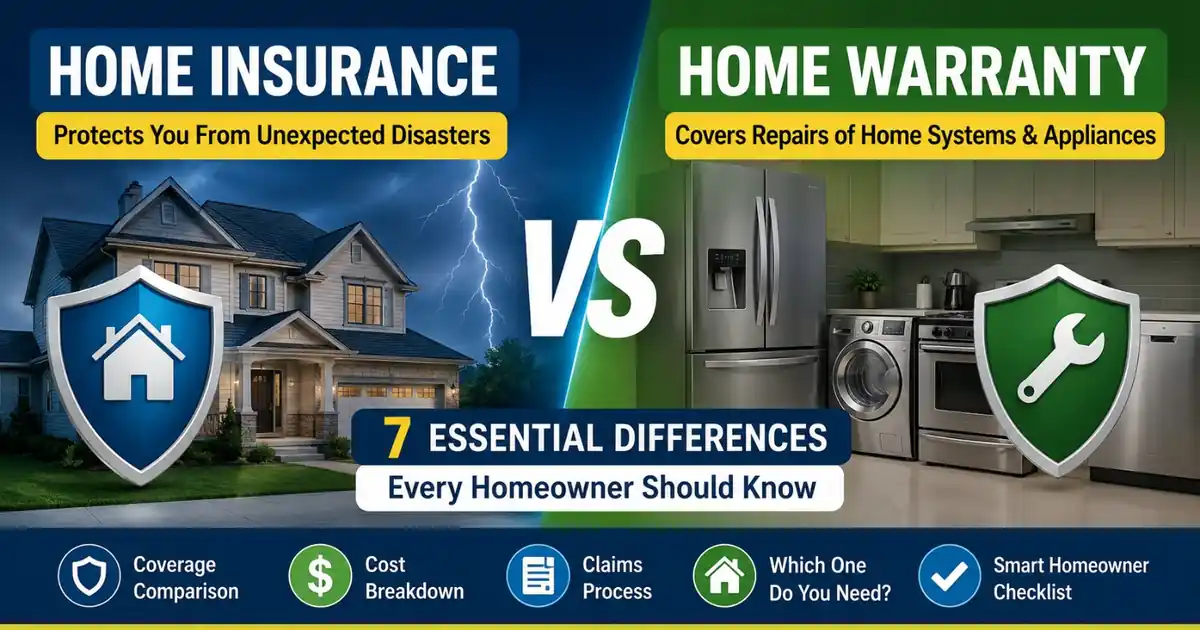 Home Insurance vs Home Warranty is one of the most confusing topics for American homeowners. Many people mistakenly believe these two products provide the same protection, only to discover after an expensive repair or disaster that they purchased the wrong type of coverage. That misunderstanding can lead to unexpected bills worth thousands of dollars.
While both products help protect homeowners financially, they serve completely different purposes. Homeowners insurance typically protects your home against unexpected events like fire, storms, theft, vandalism, and liability claims. A home warranty, on the other hand, helps cover the repair or replacement of major household systems and appliances that fail because of normal wear and tear.
Choosing the right option—or deciding whether you need both—depends on your home’s age, budget, financial goals, and risk tolerance. Understanding these differences before buying can save you money, reduce stress, and help you avoid costly coverage gaps.
In this complete 2026 USA guide, you’ll learn how home insurance and home warranties work, compare their costs and benefits, discover what each one covers, identify common mistakes homeowners make, and find out which option is best for your situation.
If you’re just getting started, read our Insurance for Beginners USA Guide. It explains insurance basics, deductibles, coverage limits, and important terms that will help you better understand the comparisons in this article.
By the end of this guide, you’ll know exactly when to choose home insurance, when a home warranty makes sense, and why many homeowners benefit from having both forms of protection.
Quick Answer: Home Insurance vs Home Warranty
Home Insurance vs Home Warranty comes down to what you want to protect. Homeowners insurance covers unexpected events such as fire, windstorms, hail, theft, vandalism, and personal liability. A home warranty, however, helps pay to repair or replace major home systems and appliances that fail because of normal wear and tear. Most homeowners benefit from homeowners insurance, while a home warranty can provide extra peace of mind—especially for older homes with aging appliances and systems.
🏡 Quick Facts
| Category | Details |
|---|---|
| Best For | Homeowners looking to protect both their property and expensive home systems. |
| Average Cost | Home Insurance: $1,900–$3,300/year Home Warranty: $400–$900/year + service fees. |
| Coverage | Home Insurance covers disasters, theft, and liability. Home Warranty covers appliances and home systems that fail due to normal wear. |
| Pros | Provides financial protection, reduces unexpected repair costs, and offers peace of mind. |
| Cons | Home insurance doesn’t cover normal wear and tear, while home warranties don’t cover natural disasters or structural damage. |
The biggest mistake homeowners make is assuming one product replaces the other. In reality, they work together. Homeowners insurance protects your biggest financial asset from sudden disasters, while a home warranty helps manage the cost of repairing or replacing aging appliances and home systems.
In the next section, we’ll explain the key differences between home insurance and home warranties, why they matter, and which option is right for different types of homeowners.
Table of Contents
What Is Home Insurance vs Home Warranty?
Home Insurance vs Home Warranty compares two different types of financial protection that help homeowners manage unexpected expenses. Although both help reduce out-of-pocket costs, they cover completely different risks and should never be considered interchangeable.
Homeowners insurance is designed to protect your property from sudden and accidental events such as fire, lightning, windstorms, hail, theft, vandalism, and personal liability claims. If a covered disaster damages your home or belongings, your insurance company helps pay for repairs or replacement after your deductible.
A home warranty, on the other hand, is a service contract—not an insurance policy. It helps cover the repair or replacement of major home systems and appliances that stop working because of normal wear and tear. This may include your HVAC system, water heater, plumbing, electrical system, dishwasher, refrigerator, oven, washing machine, and dryer, depending on your selected plan.
Why Understanding the Difference Matters
Many first-time homeowners mistakenly believe a home warranty will cover storm damage or that homeowners insurance will replace an old air conditioner that simply wears out over time. Unfortunately, neither assumption is correct. Understanding the difference before purchasing protection can prevent expensive surprises when you need help the most.
For example, if a tornado damages your roof, homeowners insurance typically covers the repairs because it’s a sudden covered event. However, if your 12-year-old air conditioner fails due to age and normal use, homeowners insurance generally won’t help—but a qualifying home warranty plan may cover the repair or replacement, subject to its contract terms.
Choosing the right protection depends on your home’s age, the condition of your appliances, your financial situation, and your tolerance for unexpected repair bills. Many homeowners choose both products because they complement each other instead of overlapping.
💡 Beginner Tip
Think of homeowners insurance as protection against unexpected disasters, while a home warranty helps with everyday mechanical breakdowns. Having a clear understanding of both products allows you to build a stronger financial safety net for your home and avoid unnecessary repair expenses.
Next Up: In the following section, you’ll learn exactly how home insurance and home warranties work, who needs each type of protection, and how to decide whether one—or both—is the right choice for your home.
How Home Insurance and Home Warranties Work: Step-by-Step
Understanding Home Insurance vs Home Warranty becomes much easier when you see how each one works in real life. Although both products help reduce unexpected expenses, they follow completely different claim processes and cover different types of risks.
Step 1: Purchase the Right Protection
Homeowners insurance is usually required by mortgage lenders before closing on a home loan. A home warranty, however, is optional and can be purchased at any time by homeowners, buyers, or even sellers who want to make their property more attractive during a sale.
Step 2: A Problem Occurs
The type of problem determines which company you should contact.
- Home Insurance: Fire, hail, windstorm, theft, vandalism, lightning, or liability claim.
- Home Warranty: HVAC failure, water heater breakdown, plumbing issue, electrical system failure, dishwasher, oven, refrigerator, washer, or dryer stops working due to normal wear and tear.
Step 3: File a Claim or Service Request
If your home suffers a covered disaster, you file an insurance claim with your insurance company. An adjuster evaluates the damage and, after your deductible is applied, the insurer pays for covered repairs.
With a home warranty, you submit a service request to the warranty provider. The company sends an approved technician to inspect the problem. After paying a small service fee, the covered appliance or system is repaired or replaced according to your contract.
Who Should Consider Each Option?
- ✔ First-time homebuyers
- ✔ Existing homeowners
- ✔ Families with older appliances
- ✔ Retirees looking for predictable repair costs
- ✔ Buyers purchasing older homes
- ✔ Homeowners wanting complete financial protection
Why Understanding the Difference Is Important
Many homeowners mistakenly assume these products overlap. They don’t. Homeowners insurance protects your property from sudden, unexpected events, while a home warranty helps manage the cost of mechanical failures caused by normal use. Understanding both products helps prevent denied claims, unexpected repair bills, and unnecessary financial stress.
Building financial security isn’t only about protecting your home—it’s also about growing your money wisely. Learn practical long-term investing strategies in our Top Dividend Stocks USA 2026 Guide, where you’ll discover ways to create reliable passive income alongside smart financial protection.
💡 Expert Tip
If your budget allows, consider combining homeowners insurance with a quality home warranty. Insurance protects against major disasters, while a home warranty helps reduce unexpected repair bills for appliances and home systems. Together, they provide more complete protection for your home and finances.
Home Insurance vs Home Warranty Coverage: What’s Covered and What’s Not?
Understanding Home Insurance vs Home Warranty is easier when you compare exactly what each one covers. While both products help protect homeowners financially, they cover different types of risks. Homeowners insurance focuses on sudden and unexpected damage, whereas a home warranty helps pay for repairs or replacements when covered home systems and appliances stop working because of normal wear and tear.
What Homeowners Insurance Covers
- Dwelling Protection: Covers damage to your home’s structure caused by covered events such as fire, lightning, hail, windstorms, and vandalism.
- Personal Property: Protects furniture, electronics, clothing, appliances, and other belongings against covered losses.
- Liability Coverage: Helps pay legal fees and medical expenses if someone is injured on your property.
- Additional Living Expenses (ALE): Pays for temporary housing and living costs if your home becomes uninhabitable after a covered disaster.
- Detached Structures: Covers garages, sheds, fences, and other structures on your property.
What a Home Warranty Covers
- Heating & Air Conditioning (HVAC)
- Water Heater
- Electrical System
- Plumbing System
- Dishwasher
- Refrigerator
- Oven & Cooktop
- Washer & Dryer (depending on the plan)
What’s Usually NOT Covered
| Home Insurance | Home Warranty |
|---|---|
| Normal wear & tear | Fire or storm damage |
| Mechanical breakdowns | Flood damage |
| Appliance failure due to age | Theft or vandalism |
| Routine maintenance | Structural damage |
| Manufacturer defects | Personal liability claims |
Key Features Comparison
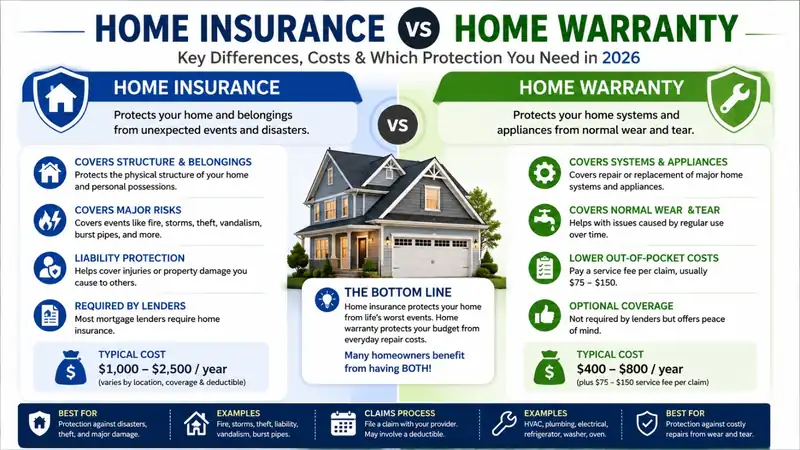
The biggest difference in the Home Insurance vs Home Warranty comparison is the type of protection they provide. Homeowners insurance safeguards your home’s structure and belongings against unexpected disasters, while a home warranty focuses on repairing or replacing household systems and appliances that fail through everyday use.
For many homeowners, these products work together rather than competing with each other. Insurance protects your largest financial asset, while a home warranty helps reduce surprise repair bills for aging equipment.
💡 Expert Insight
If you own a newer home with modern appliances, homeowners insurance alone may be sufficient initially. However, if your HVAC system, water heater, or major appliances are older, adding a quality home warranty can reduce unexpected repair costs and provide greater financial peace of mind.
Home Insurance vs Home Warranty Cost Comparison (2026)
When comparing Home Insurance vs Home Warranty, cost is one of the biggest deciding factors for homeowners. Although both products provide valuable financial protection, they protect against different risks and have different pricing structures. Understanding these costs helps you decide whether you need one—or both.
In 2026, the average American homeowner pays significantly more for homeowners insurance because it protects the home’s structure, personal belongings, and liability. A home warranty is generally more affordable because it only covers eligible home systems and appliances under a service contract.
Average Annual Cost Comparison
| Protection Plan | Average Annual Cost | Typical Service Fee |
|---|---|---|
| Homeowners Insurance | $1,900–$3,300 | Deductible: $500–$2,500 |
| Home Warranty | $400–$900 | $75–$150 per service visit |
What Affects the Price?
- Home Location: Homes in hurricane, wildfire, or high-risk areas generally have higher insurance premiums.
- Home Age: Older homes often benefit more from a home warranty because appliances and systems are more likely to fail.
- Coverage Limits: Higher insurance limits increase premiums, while broader warranty plans cost more.
- Deductible or Service Fee: Higher deductibles usually lower insurance premiums, while lower warranty service fees often increase yearly plan costs.
- Claims History: Frequent insurance claims may increase future premiums.
Home Insurance vs Home Warranty Comparison
| Feature | Home Insurance | Home Warranty |
|---|---|---|
| Main Purpose | Protects against unexpected disasters | Repairs worn-out systems & appliances |
| Required by Mortgage Lender | Usually Yes | No |
| Best For | All homeowners | Homes with older appliances |
| Claim Process | Insurance claim | Service request |
| Long-Term Value | Essential financial protection | Helps manage repair expenses |
Best Options for 2026
- State Farm – Excellent homeowners insurance coverage and local agent support.
- Allstate – Competitive pricing with multiple policy discounts.
- American Home Shield – One of the most established home warranty providers.
- Choice Home Warranty – Popular for comprehensive appliance and system protection.
- Liberty Home Guard – Flexible warranty plans with optional add-on coverage.
If lowering your household expenses creates extra monthly cash flow, consider investing those savings for long-term growth. Our AI Investing Guide 2026 explains how modern investing strategies can help turn everyday savings into future wealth.
You can also simplify home-related spending using trusted financial products such as the Chase Freedom Unlimited®, American Express Blue Cash Preferred®, or Capital One Venture Rewards, depending on your financial goals and eligibility.
💰 Expert Money Tip
If your home is newer, homeowners insurance alone may be enough. However, if your HVAC system, water heater, or kitchen appliances are aging, adding a home warranty can help reduce unexpected repair bills. Many homeowners find that combining both products provides the strongest overall financial protection.
Step-by-Step Buying Guide: Should You Choose Home Insurance, a Home Warranty, or Both?
Choosing between Home Insurance vs Home Warranty doesn’t have to be complicated. The right choice depends on your home’s age, your financial situation, the condition of your appliances, and the level of protection you want. Instead of asking which one is better, ask which one solves your specific problem.
Step 1: Evaluate Your Home
Start by considering the age of your home and its major systems. If your HVAC system, plumbing, electrical wiring, water heater, or appliances are several years old, a home warranty may help reduce unexpected repair expenses. Every homeowner, however, should carry homeowners insurance because it protects against major disasters.
Step 2: Review Existing Coverage
Before buying a home warranty, carefully read your homeowners insurance policy. Understand what it covers, your deductible, policy exclusions, and liability limits. This helps prevent paying twice for similar protection while identifying any important coverage gaps.
Step 3: Compare Multiple Providers
Never purchase the first policy or warranty plan you find. Compare companies based on:
- Coverage limits
- Monthly and annual costs
- Deductibles or service fees
- Customer reviews
- Claim approval process
- Financial strength and reputation
Step 4: Match Protection to Your Budget
If you’re buying your first home, homeowners insurance should always be your priority. If your budget allows and your home contains older systems or appliances, adding a home warranty can provide extra peace of mind.
Step 5: Review Your Protection Every Year
Your insurance and warranty needs change over time. Renovations, appliance replacements, and rising rebuilding costs make annual reviews essential for maintaining the right level of protection.
Money-Saving Tips
- Bundle home and auto insurance for additional discounts.
- Compare homeowners insurance quotes every year.
- Choose a deductible that fits your emergency savings.
- Replace aging systems before costly breakdowns occur.
- Maintain your HVAC, plumbing, and electrical systems regularly.
- Read home warranty contracts carefully before purchasing.
- Understand exclusions, waiting periods, and service fees.
- Keep digital records of repairs and maintenance.
Potential Discounts & Savings
| Opportunity | Potential Benefit |
|---|---|
| Bundle Home & Auto Insurance | Save 10–25% annually |
| Security System Discount | Lower homeowners insurance premium |
| Claim-Free Discount | Reduced renewal premiums |
| Annual Warranty Payment | Lower overall warranty cost than monthly billing |
| Preventive Maintenance | Reduces unexpected repair expenses |
Many homeowners also manage their housing expenses using trusted financial products such as the Chase Freedom Unlimited®, Capital One Venture Rewards, and American Express Blue Cash Preferred®. Comparing rewards and payment benefits may help you earn additional value from everyday home-related spending.
✅ Quick Buying Checklist
- Choose homeowners insurance before closing on your home.
- Compare at least three insurance companies.
- Review coverage limits and exclusions carefully.
- Consider a home warranty if your appliances are older.
- Understand deductibles and service call fees.
- Check customer reviews and claim satisfaction.
- Review your protection every year.
- Buy based on value—not just the lowest price.
Expert Recommendation: In most cases, the smartest approach isn’t choosing Home Insurance vs Home Warranty—it’s understanding how they complement each other. Homeowners insurance protects you from major disasters, while a home warranty helps control repair costs for aging systems and appliances. Together, they create a stronger financial safety net for your home.
9 Common Home Insurance vs Home Warranty Mistakes (With a Real-Life USA Example)
Many homeowners purchase protection without fully understanding the differences between Home Insurance vs Home Warranty. As a result, they often face unexpected repair bills, denied claims, or unnecessary expenses. Fortunately, these costly mistakes are easy to avoid once you understand how each product works.
1. Thinking They’re the Same Product
The biggest mistake is assuming a home warranty replaces homeowners insurance. They serve different purposes and protect against different risks.
2. Buying Only a Home Warranty
A home warranty does not cover fire, storms, theft, vandalism, or liability claims. Every homeowner should have homeowners insurance regardless of whether they purchase a warranty.
3. Skipping the Contract Details
Many homeowners never read their policy or warranty agreement. This often leads to confusion about exclusions, waiting periods, service fees, and coverage limits.
4. Ignoring Coverage Limits
Both homeowners insurance and home warranties have maximum coverage limits. Understanding these limits before filing a claim helps prevent unexpected out-of-pocket expenses.
5. Choosing the Cheapest Plan
Low-cost policies and warranty plans may provide limited protection or exclude expensive systems and appliances. Compare value—not just price.
6. Forgetting Annual Reviews
Your insurance needs change as your home ages, appliances wear out, and property values increase. Review your coverage every year.
7. Not Maintaining Home Systems
Home warranty companies generally expect homeowners to perform routine maintenance. Neglecting maintenance may result in denied service requests.
8. Filing Claims for Non-Covered Problems
Insurance won’t cover normal wear and tear, while warranties won’t cover storm damage or theft. Understanding which provider handles each situation saves time and frustration.
9. Failing to Compare Providers
Coverage, pricing, customer service, and claim approval processes vary widely. Comparing multiple companies before purchasing often leads to better protection and lower long-term costs.
Real-Life USA Example
David, a 42-year-old homeowner from Arizona, purchased only a home warranty after buying an older house because he believed it would protect his entire property. Six months later, a severe windstorm damaged part of his roof and caused water damage inside the home.
His home warranty denied the claim because weather-related damage wasn’t covered. Since David also didn’t have homeowners insurance, he paid nearly $18,000 out of pocket for repairs. The following year, he purchased comprehensive homeowners insurance and kept the home warranty for his aging HVAC system and kitchen appliances. Together, both products provided much stronger financial protection.
Expert Tips
- Always carry homeowners insurance if you own a home.
- Consider a home warranty for older homes with aging systems.
- Read every policy and warranty contract carefully.
- Compare multiple providers before purchasing.
- Review coverage limits every year.
- Maintain HVAC, plumbing, and electrical systems regularly.
- Keep records of repairs and maintenance.
- Understand deductibles, service fees, and exclusions before filing a claim.
- Choose protection based on your home’s needs—not advertisements.
Protecting your home is only one part of building long-term financial security. Learn how to safeguard your investments during uncertain economic conditions in our Recession-Proof Investing 2026 Guide and discover practical strategies for protecting both your home and your wealth.
⚠️ Expert Reminder
The smartest homeowners don’t choose between Home Insurance vs Home Warranty based only on price. They understand what each product covers, compare providers carefully, review protection annually, and use both together when it makes financial sense. A little planning today can prevent thousands of dollars in unexpected expenses tomorrow.
Pros & Cons of Home Insurance vs Home Warranty
Choosing between Home Insurance vs Home Warranty isn’t about deciding which one is better—it’s about understanding what each product is designed to protect. Homeowners insurance safeguards your home against unexpected disasters, while a home warranty helps reduce repair costs for aging home systems and appliances. Knowing the strengths and limitations of both options will help you make a smarter financial decision.
| ✅ Advantages | ❌ Limitations |
|---|---|
| Homeowners insurance protects your home from fire, storms, theft, vandalism, and liability claims. | Homeowners insurance doesn’t cover normal wear and tear or mechanical failures. |
| Home warranties help pay for repairs or replacement of covered appliances and home systems. | Home warranties don’t cover natural disasters, structural damage, or personal belongings. |
| Using both products creates broader financial protection. | Purchasing both increases annual ownership costs. |
| Insurance may help rebuild your home after a covered disaster. | Warranty contracts include coverage limits, exclusions, and service fees. |
| Home warranties reduce unexpected repair bills for HVAC, plumbing, and kitchen appliances. | Not every repair or replacement request is automatically approved. |
| Many insurers offer discounts for bundling policies and installing smart safety devices. | Premiums and warranty prices may increase over time. |
| Both products provide greater peace of mind and help homeowners manage financial risk. | Choosing the wrong coverage can still leave costly protection gaps. |
Expert Opinion
For most homeowners in the United States, homeowners insurance is essential because it protects one of your largest financial investments. A home warranty should be viewed as optional—but highly valuable for homes with older HVAC systems, plumbing, electrical components, or appliances that may fail due to normal wear.
Instead of viewing Home Insurance vs Home Warranty as competing products, think of them as complementary layers of protection. Insurance handles major disasters, while a home warranty helps manage everyday repair costs. Together, they create a stronger financial safety net and reduce the likelihood of unexpected expenses.
⭐ Final Expert Recommendation
If you’re purchasing your first home, prioritize comprehensive homeowners insurance. If your home has aging systems or appliances, consider adding a quality home warranty for additional protection. Review both plans every year to ensure they continue meeting your home’s changing needs and your long-term financial goals.
Frequently Asked Questions (FAQs)
1. What is the biggest difference between home insurance and a home warranty?
The biggest difference in Home Insurance vs Home Warranty is what each product protects. Homeowners insurance covers sudden events like fire, storms, theft, vandalism, and liability claims. A home warranty covers the repair or replacement of eligible home systems and appliances that fail because of normal wear and tear.
2. Do I need both home insurance and a home warranty?
For many homeowners, yes. Homeowners insurance protects your property from major disasters, while a home warranty helps manage repair costs for aging appliances and home systems. Having both provides more complete financial protection.
3. Is homeowners insurance legally required?
No federal law requires homeowners insurance. However, if you have a mortgage, your lender will almost always require you to maintain homeowners insurance until the loan is paid off.
4. Does a home warranty cover roof leaks?
Generally, no. Roof damage caused by storms or other covered events is usually handled by homeowners insurance. Most home warranties do not cover structural roof repairs unless limited roof leak coverage is specifically included in the contract.
5. What appliances are usually covered by a home warranty?
Most home warranty plans cover major appliances such as refrigerators, dishwashers, ovens, cooktops, washing machines, dryers, garbage disposals, and built-in microwaves. Coverage varies by provider and plan.
6. What does homeowners insurance usually not cover?
Standard homeowners insurance generally does not cover normal wear and tear, mechanical breakdowns, flood damage, earthquake damage, pest infestations, or routine maintenance. Additional policies or endorsements may be required for certain risks.
7. How much does a home warranty cost in 2026?
Most home warranty plans cost between $400 and $900 per year, plus a service call fee of approximately $75–$150 each time a technician visits your home. Prices vary depending on coverage levels and optional add-ons.
8. Can I buy a home warranty after purchasing my house?
Yes. Homeowners can purchase a home warranty at almost any time, whether they’ve owned the property for a few weeks or many years. Some providers may have waiting periods before coverage begins.
9. Which is better for an older home?
Older homes often benefit from having both products. Homeowners insurance protects the structure against unexpected disasters, while a home warranty can reduce repair costs for aging HVAC systems, plumbing, electrical systems, and appliances.
10. Is a home warranty worth the money?
It depends on your home’s condition and your budget. If your appliances and major systems are older, a home warranty may provide valuable peace of mind by helping manage expensive repair or replacement costs. For newer homes with manufacturer warranties still in effect, it may offer less value.
💡 Quick Summary
Homeowners insurance and home warranties aren’t competitors—they’re complementary protection plans. Insurance helps you recover from unexpected disasters, while a home warranty helps reduce the cost of repairing worn-out home systems and appliances. Choosing the right combination depends on your home’s age, your financial goals, and the level of protection you want.
Final Verdict: Home Insurance vs Home Warranty — Do You Really Need Both?
When comparing Home Insurance vs Home Warranty, the answer isn’t about choosing one over the other. Instead, it’s about understanding the different role each product plays in protecting your finances.
Homeowners insurance protects your biggest investment against unexpected disasters such as fire, storms, theft, vandalism, and liability claims. A home warranty, however, helps reduce the financial burden of repairing or replacing major household systems and appliances that fail because of everyday use.
If you own a newer home with modern appliances, homeowners insurance may be enough for now. However, if your home has an aging HVAC system, plumbing, electrical components, or older kitchen appliances, adding a home warranty can provide valuable financial protection against expensive repair bills.
The smartest homeowners review both their insurance policy and warranty coverage every year. As your home ages and your financial situation changes, your protection should evolve as well.
Before making your final decision, read our complete Insurance for Beginners USA Guide. It explains deductibles, policy limits, insurance terms, and practical strategies that every American homeowner should understand before purchasing any insurance product.
🏡 Build a Smarter Financial Future
Join thousands of American readers receiving expert insurance guides, investing strategies, retirement planning tips, and personal finance updates delivered straight to their inbox—completely free.
✅ Weekly Insurance Guides |
✅ Investment Tips |
✅ Retirement Planning |
✅ 100% Free
SR
Subhash Rukade
Founder of FinanceInvestment.site, dedicated to helping U.S. readers make smarter decisions about insurance, investing, retirement planning, and personal finance through practical, research-backed, beginner-friendly guides designed for long-term financial success.