Paper Checks or Digital Payments?
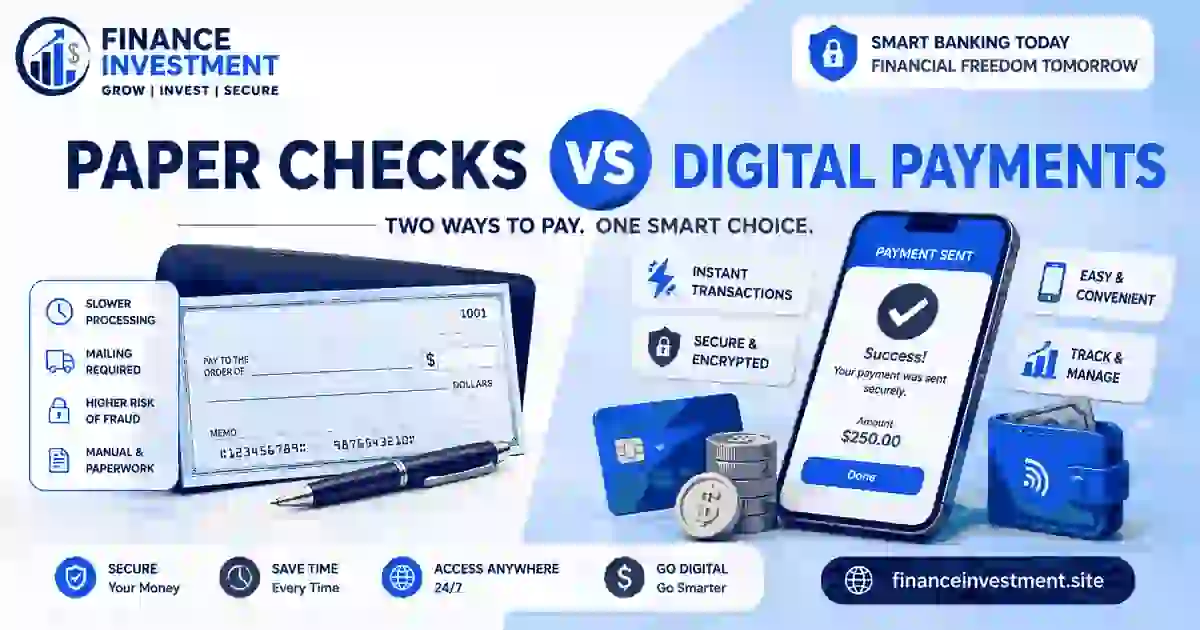 Imagine paying a local contractor after a home repair. You could write a paper check, open your banking app, or send the money electronically. Paper Checks vs Digital Payments is really a question of how you want to move money, keep records, and manage everyday payments.
Paper checks still have a place in American households and small businesses, especially when someone prefers a physical payment record. Digital options, meanwhile, can make routine payments quicker and easier to track. Common choices include debit cards, ACH transfers, direct deposit, and online bill payments.
The right choice can depend on the person receiving the money, the type of payment, timing, fees, and how much control you want over the transaction.“Once you see where each payment starts, the difference is much easier to understand.” Your checking account often sits at the center of these choices.
For a broader look at the account behind many everyday payments, see our Checking Accounts USA 2026 guide.
What You’ll Learn
We’ll compare speed, convenience, costs, security, records, common payment methods, practical drawbacks, and which option may fit different situations.
Quick Answer & Key Takeaways
Paper Checks vs Digital Payments comes down to how money is delivered and recorded. A paper check creates a physical payment document, while digital methods move payment information electronically through systems such as ACH, debit cards, or online banking.
6 Key Takeaways
- Paper checks provide a familiar physical payment record.
- Digital payments are often faster for routine transactions.
- Some payment methods can involve fees or timing differences.
- Electronic records can make transactions easier to review.
- Both options require attention to fraud and security.
- The better choice depends on the payment and the people involved.
Bottom Line: Neither method wins every situation. The details of the payment should guide the choice.
Next, the table of contents gives you a quick way to jump to the comparison or topic you need.
Table of Contents
Continue below for the key facts first.
At a Glance
Paper checks create a physical payment record. Digital payments move money or payment instructions electronically and usually leave a searchable banking record.
Checks can suit specific people or businesses that request them. Digital methods are often practical for recurring bills, purchases, transfers, and regular payments.
Paper Checks vs Digital Payments is easier to judge when you look at speed, records, security, and how the payment actually moves.
| Item | Paper Checks | Digital Payments |
|---|---|---|
| Payment method | Physical check | Electronic |
| Speed | May take longer | Often faster |
| Record | Physical/documented | Digital record |
| Convenience | Useful in specific situations | Convenient for routine payments |
| Security | Check fraud risk | Account/payment fraud risk |
Neither option fits every payment. The details become clearer when you see how each method is actually used.
Complete Beginner Guide
 If you have never handled a check or set up an electronic payment, the process can seem more complicated than it really is. Paper Checks vs Digital Payments starts with one basic question: how will the money move from your checking account to the person or company receiving it?
With a paper check, you write the payee’s name, payment amount, date, and optional memo, then sign it. Before handing it over or mailing it, check every detail. The recipient can deposit the check, and the payment then moves through the banking system for processing.
Digital payments work differently. A debit card can send a purchase request when you pay at a store or online. ACH payments can move money between bank accounts, while online bill pay can send money to a company or another recipient. Direct deposit works in the opposite direction by electronically placing eligible income into your account.
Your banking app may show a digital transaction as pending before it becomes completed. That distinction matters because the available balance and final transaction record may change during processing. If an account number, routing number, card detail, or payment amount is wrong, the payment can be delayed, rejected, or sent to the wrong destination.
A Beginner Example
Olivia needs to pay a landscaping company $180. She could write a check if the company accepts one. If the business offers online payment, she might instead use a debit card or bank transfer. She chooses the method that gives her a clear record and matches the company’s payment instructions.
For a better understanding of the account behind these transactions, read How Does a Checking Account Work?.
The practical choice depends on who is being paid, how quickly the payment needs to arrive, what records you want, and which methods the recipient accepts. Next, we’ll look at what happens behind the scenes once you actually send the payment.
How It Works
Paper Checks vs Digital Payments follow very different paths even when they start with the same checking account. A paper check begins when you write and sign it. The recipient receives it, deposits it, and the banks process the payment before the funds reach the recipient’s account.
Digital payments start electronically. A debit card sends a purchase request for authorization. An ACH payment moves account information through the banking system. Online bill pay follows the instructions entered through your bank, while direct deposit sends eligible income into your account.
The Basic Flow
Processing time can vary because different payment systems use different schedules. A transaction may first appear as pending and later become completed. The final posting time can depend on the bank, payment method, recipient, weekends, holidays, and processing cutoffs. Paper Checks vs Digital Payments In some cases, an authorized amount can also change before final settlement.
A Monthly Example
Marcus pays his $95 utility bill through online banking on the 27th. His bank shows the payment as pending first. The utility company receives the payment later, and the transaction becomes completed after processing. If Marcus had mailed a check instead, the timing would depend on delivery and the company’s deposit schedule.
Understanding this flow makes the practical differences easier to spot. The next step is looking at where each method helps and where it can create friction.
Benefits & Drawbacks
Paper Checks vs Digital Payments is not a simple winner-takes-all decision. A check can be useful when a recipient specifically requests one or when a physical payment record matters. Digital options can fit better when speed, recurring payments, or easy account tracking are priorities.
Pros
- Paper checks create a familiar paper trail.
- Digital payments can be convenient for everyday purchases.
- You can choose different payment methods for different recipients.
- Recurring electronic payments can reduce repeated paperwork.
- Banking apps often make transaction records easy to review.
- Both options give you flexibility when a recipient accepts multiple methods.
Cons
- Paper checks can take longer to process.
- Checks can be exposed to alteration or check fraud.
- Digital accounts still face phishing and other security threats.
- Some electronic services may involve fees.
- Payment timing can vary by method and bank.
- Some mistaken payments may be difficult to reverse.
A Practical Example
James pays his elderly neighbor $60 each month for snow removal. The neighbor prefers receiving a check because he likes keeping the physical record. James uses digital payments for most of his other bills. Neither choice is unusual; the recipient’s preference and the purpose of the payment make the difference.
Think about who is receiving the money, how quickly it needs to arrive, and which method gives you a record you can comfortably verify. That makes the comparison much more useful than choosing one method for every situation.
Comparison Table
Paper Checks vs Digital Payments becomes easier to judge when the actual payment methods are placed side by side. The right choice can change depending on who receives the money and how the payment needs to be handled.
How to Read This Table
Look at the payment’s purpose first. A method that works well for a recurring bill may not be the right fit for a person who specifically asks for a paper check.
| Factor | Paper Check | Debit Card | ACH / Bank Transfer | Online Bill Pay |
|---|---|---|---|---|
| Funding source | Checking account | Linked bank account | Bank account | Bank account |
| Speed | Usually slower | Usually immediate authorization | Varies by transfer type | Depends on delivery method |
| Convenience | More hands-on | Easy for purchases | Useful for account-to-account payments | Useful for scheduled bills |
| Fees | Possible check costs | Depends on account/merchant | May vary | Usually depends on bank terms |
| Security | Check fraud concerns | Card and account security | Banking information protection | Online account security |
| Record keeping | Physical check record | Electronic transaction record | Electronic transfer record | Bank payment history |
| Payment control | Manual | Transaction-by-transaction | Entered transfer details | Scheduled instructions |
| Recurring payments | Less convenient | Not always suitable | Often useful | Well suited |
| Recipient acceptance | Recipient must accept checks | Merchant must accept cards | Recipient must support transfer | Bill provider must support it |
| Best use | Check-required payments | Everyday purchases | Direct account payments | Bills and scheduled payments |
| Main limitation | Processing and delivery time | Not accepted everywhere | Details must be accurate | Timing depends on biller setup |
If you are still deciding how these payment choices fit into your everyday banking, our guide to What Is a Checking Account? provides useful background.
The table shows the practical differences. Before choosing a method, it is also worth looking at the costs, risks, and small details that can affect the final payment experience.
Costs, Risks & Expert Tips
Paper Checks vs Digital Payments can involve costs or risks that are easy to miss when you’re focused only on getting the payment sent. Check orders may cost money, while stop-payment requests and returned checks can also lead to fees. Digital services may have their own charges, depending on the bank and payment method.
ACH payments can take time to process, and incorrect account or routing information can cause delays or failed transactions. Paper checks face risks such as check washing or alteration. Digital payments have different concerns, including phishing, fake payment pages, and unauthorized transactions. Recurring payments can also create problems if an amount, date, or account balance changes.
Expert Tip
Before sending money, check your bank’s fee schedule, payment cutoff times, available balance, and the recipient’s payment instructions. For recurring payments, review the setup occasionally instead of assuming the original details will always remain correct.
Warning
Never send payment information through a suspicious link or unexpected message. If something looks wrong, contact the bank or payment provider through an official website or phone number.
A Real-Life Example
Rachel was paying a contractor for a kitchen repair. The contractor emailed new bank details just before the payment date. Instead of using the new information immediately, Rachel called the contractor using a number she already had. She discovered that the email had been fraudulent and avoided sending the payment to the wrong account.
A few seconds spent checking payment details can prevent a much bigger problem. The next section looks at the everyday mistakes that can quietly turn a routine payment into a headache.
Common Mistakes + Real-Life Example
Most payment problems start with a small detail rather than the payment method itself. With Paper Checks vs Digital Payments, a quick review before sending money can prevent avoidable errors.
Avoid These Mistakes
- Wrong check amount: Read the amount twice before signing.
- Missing signature: Sign the check before giving it to the recipient.
- Incorrect recipient name: Confirm the payee’s exact name first.
- Outdated payment details: Verify new banking information through a trusted contact method.
- Forgotten scheduled payment: Keep a calendar or banking alert for recurring transactions.
- No account review: Check recent transactions after sending money.
- Ignored returned payment: Address a failed payment promptly instead of assuming it will resolve itself.
- Unsecured payment information: Avoid storing sensitive banking details on shared or unprotected devices.
A Real-Life Example
Derek was paying a $240 invoice for a community event. He entered the amount into his bank’s payment screen, but accidentally left an older recipient account selected. Before confirming the payment, he noticed the recipient name did not match the invoice. Derek stopped, checked the details with the organization, and corrected the payment information. A quick pause saved him from sending the money to the wrong destination.
The same habit works whether you’re writing a check or sending money electronically: verify the details, keep a record, and check the account afterward. Paper Checks vs Digital Payments becomes much easier to manage when the payment method matches your routine and you stay involved in the details.
From here, the better choice depends less on habit and more on who you are paying, how you prefer to manage money, and what kind of record you want afterward.
Who Should Choose This?
The right payment method depends on the person receiving the money, the type of payment, and how you prefer to manage your records. Paper Checks vs Digital Payments can mean different things for a renter, a small-business owner, or a family paying monthly bills.
Best Fit
- Paper checks: practical when a landlord, contractor, organization, or business specifically accepts or prefers them.
- Digital payments: useful for recurring bills, families managing regular expenses, and people who prefer quick electronic records.
- Recipient preference: always confirm which payment methods the person or business accepts before sending money.
People who are comfortable with physical records may still find checks useful. Others may prefer fewer paper transactions and easier access to electronic payment history. Retirees and families can also mix methods, using checks for certain obligations while handling routine bills digitally.
A mixed approach can be sensible when no single method works for every payment. Keeping both options available gives you flexibility without forcing every bill or purchase into the same system.
The most useful choice is usually the one that fits the recipient, your banking habits, and the way you want to keep track of payments. The FAQs below answer some of the common questions people have before choosing.
Frequently Asked Questions
What is the difference between paper checks and digital payments?
Paper checks use a physical document to authorize a payment, while digital payments send payment information electronically through a bank or payment system.
Are digital payments safer than paper checks?
Digital payments can reduce some risks associated with lost or altered checks, but they still require strong account security. Phishing, stolen credentials, and unauthorized transactions remain concerns.
Are paper checks still used in the USA?
Yes. Paper checks are still accepted for certain personal, rental, business, and service payments, although many routine transactions can now be handled electronically.
How long does a paper check take to clear?
A paper check can take several business days to process, depending on when it is deposited, the banks involved, and applicable processing schedules. Weekends and holidays can affect timing.
Which digital payment method is fastest?
Debit card purchases are typically authorized quickly at checkout, while ACH transfers and other electronic payments can follow different processing schedules. The recipient and payment type also matter.
Can digital payments have fees?
Yes. Fees depend on the bank, service, account, payment provider, or type of transaction. Check the applicable terms before using a service that charges for electronic payments.
Can I use both paper checks and digital payments?
Yes. Many people use a combination based on the recipient and payment situation. A check may work for one obligation, while a debit card, ACH transfer, or online bill pay may suit another.
What happens if a digital payment goes to the wrong account?
Contact your bank or payment provider promptly through an official channel. Recovery may depend on the payment method, whether the transaction has completed, and the information available about the recipient.
Which payment method is better for recurring bills?
Digital payment options are often practical for recurring bills because they can reduce manual work and provide electronic records. Still, check the payment schedule and account balance regularly.
Keep it simple: the right payment method depends on the recipient, timing, cost, security needs, and how you prefer to manage your records.
Those details make the final choice more personal than simply choosing the newest or most familiar option.
Final Verdict
Paper Checks vs Digital Payments is best viewed as a choice between different tools, not a contest with one universal winner. Paper checks can still make sense when a landlord, contractor, organization, or business specifically accepts them or when a physical record is useful.
Digital payments are often more practical for everyday purchases, recurring bills, and situations where speed and electronic records matter. They can also reduce some of the manual work involved with sending payments. Still, fees, security, payment timing, and the specific service being used deserve attention.
Recipient preference should always be part of the decision. A payment that is convenient for you may not be useful if the recipient does not accept it. For a broader look at the account behind many of these payment choices, see our Checking Accounts USA 2026 guide.
A Practical Takeaway
Keep the method that fits the payment. Use the option that gives you a clear record, reasonable timing, and enough control to verify where your money goes.
There is no need to abandon one method completely. A flexible mix can work well when different payments call for different approaches. The related resources below can help you explore those options in more detail.
Ready to Take Control of Your Checking Setup?
Your everyday payments do not all need to work the same way. Keep the methods that make sense for your bills, purchases, and the people you pay.
If you enjoy practical banking guides, you can join the newsletter for new articles. Have a payment question or a different experience with checks or digital payments? Leave a comment and share the guide with someone who might find it useful.