✓ Editorially Reviewed
Our editorial team researches trusted financial sources and converts complex banking topics into practical, easy-to-follow guidance for American readers. Every article is reviewed for accuracy, readability, and real-world usefulness before publication.
FinanceInvestment, Subhash Rukade.
July 30, 2026
12–14 Min
How to Maximize Savings Interest: Smart Ways to Make Every Dollar Work Harder in 2026
 Saving money is a great habit, but where you keep that money can make a bigger difference than many people realize. If your savings account pays a low interest rate, your balance may grow much more slowly than it could. Learning how to maximize savings interest helps you earn more without taking on the risks that come with investing in the stock market.
A few simple decisions—such as choosing a competitive APY, keeping your money in the right account, and letting compound interest do its job—can add hundreds or even thousands of extra dollars over time. The best part is that these strategies are easy to follow, even if you’re just getting started.
In this guide, you’ll discover practical ways to increase your savings earnings, avoid common mistakes, and choose habits that can help your money grow steadily throughout 2026. If you’re new to high-yield savings accounts, our complete guide to
High-Yield Savings Accounts USA
is the perfect place to begin.
What You’ll Learn
- Why some savings accounts earn much more interest than others.
- Simple strategies that can increase your annual savings earnings.
- How APY and compound interest work together.
- Common habits that reduce your interest income.
- When switching to a better savings account makes financial sense.
- Practical tips that beginners, families, and retirees can use right away.
Quick Answer
The easiest way to maximize savings interest is to keep your money in a high-yield savings account that offers a competitive APY, add money consistently, and avoid unnecessary withdrawals. Even a small difference in APY can lead to noticeably higher earnings over time, especially when interest compounds month after month.
You don’t need a large balance to benefit. Building the habit of saving regularly and reviewing your account once or twice a year can make a meaningful difference without changing your daily routine.
Key Takeaways
- Choose a savings account with a competitive APY instead of settling for a low rate.
- Deposit money regularly so your balance has more time to earn interest.
- Leave your savings untouched whenever possible to benefit from compound growth.
- Compare rates every few months because banks may change their offers.
- Online banks often provide higher savings rates than many traditional banks.
- Keep separate savings goals so you’re less likely to spend your emergency fund.
Bottom Line
Growing your savings isn’t only about putting away more money. It’s also about making sure every dollar earns as much interest as possible. A few smart choices today can help your savings grow faster throughout 2026 without taking on extra investment risk.
At a Glance
If your savings account isn’t earning much interest, a few small changes can make a noticeable difference. Moving your money to a competitive high-yield savings account, saving consistently, and allowing interest to compound can help your balance grow faster without adding extra risk. The goal isn’t simply to save more—it’s to make every dollar earn as much as it can.
Complete Beginner Guide
 Learning how to maximize savings interest isn’t about finding a secret trick. It’s about making smarter choices with the money you’re already saving.How to Maximize Savings Interest A higher interest rate may look like a small change on paper, but over months and years, it can leave you with a much larger balance.
The first step is choosing the right savings account. Many traditional banks still offer very low interest rates, while many online banks pay several times more through high-yield savings accounts. Before opening a new account, compare the Annual Percentage Yield (APY) rather than looking only at the basic interest rate. If you’re unsure about the difference, read our guide on
APY vs. Interest Rate Explained
.
Next, make saving automatic. Scheduling a transfer every payday removes the temptation to spend first and save later. Even small deposits made consistently can build momentum because every new dollar starts earning interest immediately.
Another habit that often goes unnoticed is leaving your savings alone.How to Maximize Savings Interest Withdrawing money frequently reduces the balance that earns interest. If your emergency fund is separate from your everyday spending account, you’ll be less likely to dip into it for purchases that can wait. Organizing your money into different savings goals also helps. Our guide on
Savings Buckets Explained
shows one simple way to do that.
It’s also worth checking your savings account once or twice a year. Banks regularly adjust their APYs, and a bank that offered one of the best rates last year may no longer be as competitive. Switching to a better account is often easier than people expect. If you’re considering a move, this guide on
How to Switch Savings Accounts
walks through the process.
Finally, give your savings time. Interest grows gradually, and compound interest rewards patience. The longer your money stays in the account, the more opportunities it has to earn interest on both your deposits and the interest you’ve already earned. That’s how steady saving turns into meaningful financial progress.
How It Works
Understanding how to maximize savings interest becomes much easier once you know what happens behind the scenes. Every dollar in your savings account has the chance to earn interest. As your balance grows, the amount of interest you receive can grow as well.”How to Maximize Savings Interest” Over time, this creates a cycle where your money begins working for you instead of simply sitting in the bank.
1. Start with a Competitive APY
The interest your bank pays has the biggest impact on your earnings. Two accounts may look similar, but a higher APY can produce noticeably better results over several years. That’s why comparing APYs before opening an account is worth a few extra minutes. If you’re still deciding where to save, our guide on
How to Open a High-Yield Savings Account
can help you get started.
2. Add Money Consistently
Interest is calculated using the money already in your account. Every deposit increases the balance that can earn interest.”How to Maximize Savings Interest” Whether you save $25 or $500 each payday, building the habit matters more than waiting until you can save a large amount.
3. Let Compound Interest Do the Heavy Lifting
When interest is added to your account, future interest is calculated on that larger balance. This is known as compound interest. At first the growth feels slow, but as months and years pass, the effect becomes much more noticeable. If you’d like a deeper explanation, read our guide on
Compound Interest Explained
.
4. Avoid Unnecessary Withdrawals
Every time you take money out, the balance earning interest becomes smaller.How to Maximize Savings Interest It’s perfectly fine to use your savings for real emergencies, but using it for everyday spending can slow your progress. Keeping a separate checking account for monthly expenses makes this much easier.
5. Review Your Account Every Year
Banks regularly change their savings rates to match market conditions. A quick annual review can tell you whether your current account is still competitive. If another bank offers a better APY with similar features and no hidden fees, switching may help your savings grow faster without changing your saving habits.
Expert Insight
Many people focus only on saving more money, but they rarely check whether that money is earning its full potential. A yearly APY review takes only a few minutes and could increase your interest income without requiring larger monthly deposits.
Benefits & Drawbacks
✅ Benefits
- Your savings earn more without taking on stock market risk.
- Higher APYs can add meaningful extra income over time.
- Compound interest rewards patience by helping your balance grow faster.
- Automatic deposits make saving feel effortless and build consistency.
- Money usually stays easy to access for emergencies or planned expenses.
- FDIC-insured banks and NCUA-insured credit unions provide strong protection within coverage limits.
❌ Drawbacks
- Savings rates can rise or fall as market conditions change.
- Interest earnings may not always keep pace with high inflation.
- Some banks require minimum balances to unlock their best APY.
- Moving money too often just to chase small rate changes may not be worth the effort.
- Savings accounts are designed for stability, not for the higher long-term returns that investments may provide.
Finding the Right Balance
For most people, a high-yield savings account works best as a place to keep an emergency fund, short-term goals, or money you’ll need within the next few years.How to Maximize Savings Interest It offers a combination of safety, flexibility, and steady growth. Once your short-term savings are in good shape, you can explore other options for long-term wealth building while allowing your cash savings to continue earning interest in the background.
Comparison Table
Not every saving habit produces the same results. Some approaches help your money grow steadily, while others leave you earning very little interest. The table below compares common saving choices so you can see where the biggest opportunities are.
Costs, Risks & Expert Tips
One of the biggest advantages of learning how to maximize savings interest is that it usually doesn’t cost anything. Most high-yield savings accounts have no monthly maintenance fee, and opening an account often takes only a few minutes.How to Maximize Savings Interest Even so, it’s worth reading the account details before moving your money.
Costs & Risks
- Some banks charge fees if your balance falls below a required minimum.
- Promotional APYs can change after a limited period, so check the ongoing rate.
- Interest rates may decrease when overall market rates decline.
- Keeping all of your long-term money in savings may limit your growth compared with investing for retirement.
Expert Tip
Instead of chasing every tiny APY increase, focus on banks with a strong reputation, no monthly fees, and competitive long-term rates.”How to Maximize Savings Interest A consistent saving habit usually has a much bigger impact than switching accounts every few weeks for a slightly higher return.
Keep in Mind
Review your savings account once or twice a year. If your rate has fallen well below other competitive options, it may be a good time to compare accounts. A quick review can help your savings continue earning more without changing your financial goals.
Common Mistakes + Real-Life Example
Many people work hard to save money but still miss out on extra interest because of a few avoidable habits.”How to Maximize Savings Interest The good news is that these mistakes are easy to fix once you know what to watch for.
Common Mistakes
- Leaving savings in an account that pays a very low APY for years without comparing better options.
- Skipping automatic transfers and saving only when money is left at the end of the month.
- Making frequent withdrawals for non-essential purchases, which reduces the balance earning interest.
- Ignoring APY changes and assuming the bank will always offer a competitive rate.
- Keeping emergency savings and daily spending money in the same account, making it easier to spend savings unintentionally.
Real-Life Example
Emily, a first-time saver from Texas, kept nearly all of her emergency fund in a traditional savings account because it was linked to her checking account. The money was safe, but the interest she earned each month was barely noticeable.
After comparing different banks, she opened a high-yield savings account, set up an automatic transfer every payday, and stopped using her emergency fund for everyday shopping. She also checked her account once a year to make sure the APY remained competitive.
Within the next year, Emily had not only saved more money through regular deposits, but she also earned significantly more interest than before. The biggest change wasn’t how much she earned at work—it was making better use of the money she had already saved.
Who Should Choose This?
The strategies in this guide aren’t just for experienced savers. They can help almost anyone who wants their money to grow a little faster while keeping it safe and easy to access.
- Beginners who are building their first emergency fund and want to earn more interest from the start.
- Families saving for vacations, home repairs, education costs, or other short-term financial goals.
- Retirees looking for a secure place to keep cash while earning a competitive return.
- Young professionals who receive regular paychecks and want automatic savings to become part of their monthly routine.
- Anyone with money sitting in a low-interest savings account who wants better growth without taking on stock market risk.
If your goal is to keep your savings safe while earning as much interest as reasonably possible, these habits are a practical place to start.How to Maximize Savings Interest Small improvements made today can continue benefiting your savings for years to come.
Frequently Asked Questions
1. What is the easiest way to maximize savings interest?
The simplest approach is to move your money into a high-yield savings account, make regular deposits, and leave your savings untouched whenever possible.”How to Maximize Savings Interest” These three habits work together to help your balance grow steadily over time.
2. Does a higher APY really make a difference?
Yes. Even a small increase in APY can add up over several years, especially if you continue adding money to your account. The larger your balance and the longer you save, the more noticeable the difference becomes.
3. How often should I compare savings account rates?
Checking once or twice a year is usually enough for most people. If your bank’s rate falls well behind other competitive accounts, it may be worth considering a switch.
4. Is my money safe in a high-yield savings account?
If your account is held at an FDIC-insured bank or an NCUA-insured credit union and your balance stays within the applicable insurance limits, your deposits are protected even if the financial institution fails.
5. Should I keep all of my money in a savings account?
Not necessarily. A savings account is a great place for emergency funds and short-term goals.How to Maximize Savings Interest Money you won’t need for many years may be better suited to long-term investments, depending on your financial goals and comfort with risk.
6. Can I earn interest if I only save a small amount each month?
Absolutely. Every deposit starts earning interest. Saving consistently is often more important than the size of each individual deposit because the habit builds your balance over time.
7. Do online banks usually pay higher interest?
Many online banks offer more competitive APYs because they generally have lower operating costs than traditional branch-based banks. That’s one reason they’re popular with savers looking to increase interest earnings.
8. Will savings interest rates stay the same throughout the year?
No. Banks can adjust their rates as economic conditions and market interest rates change. Reviewing your account periodically helps ensure you’re still earning a competitive return.
9. Can I withdraw money whenever I need it?
In most cases, yes. High-yield savings accounts are designed to keep your money accessible, although some banks may place limits on certain types of withdrawals. Reading your account terms before opening an account is always a good idea.
Final Verdict
Learning how to maximize savings interest doesn’t require a large income or years of financial experience. In many cases, a few thoughtful changes—choosing a competitive high-yield savings account, saving consistently, and allowing compound interest to work over time—can make a noticeable difference.
There’s no need to chase every small rate change or constantly move your money from one bank to another.”How to Maximize Savings Interest A reliable account with a strong APY and healthy saving habits will usually deliver better long-term results than making frequent switches.
If you’re building an emergency fund or looking for the best place to keep short-term savings, start with a solid foundation. Our complete guide to
High-Yield Savings Accounts USA
explains how to compare accounts, understand APYs, and choose the right option for your financial goals.
The earlier you start, the more time your savings has to grow. Even small steps taken today can lead to a stronger financial future tomorrow.
Keep Building Your Financial Future
Every smart financial habit starts with one simple step. Keep learning, compare your options, and make decisions that help your money grow over time. Small improvements today can create more financial freedom in the years ahead.


 If you’re new to saving money, understanding Compound Interest Explained for Savings Accounts can help you make better financial decisions from day one. The good news is that you don’t need to be a finance expert to benefit from compound interest. Once you know how it works, you can let time do much of the heavy lifting.
 If you’re opening your first savings account, it’s easy to feel confused by financial terms like interest rate, APY, and compound interest. The good news is that you don’t need a finance degree to understand them. Once you know how these numbers work together, comparing savings accounts becomes much easier. That’s why understanding APY vs Interest Rate Explained is an important first step before depositing your money.
 Understanding How Much Interest Can $50,000 Earn in a High-Yield Savings Account starts with knowing how banks calculate interest. Every high-yield savings account advertises an Annual Percentage Yield (APY), which estimates how much your savings could grow over one year, including the effect of compound interest.
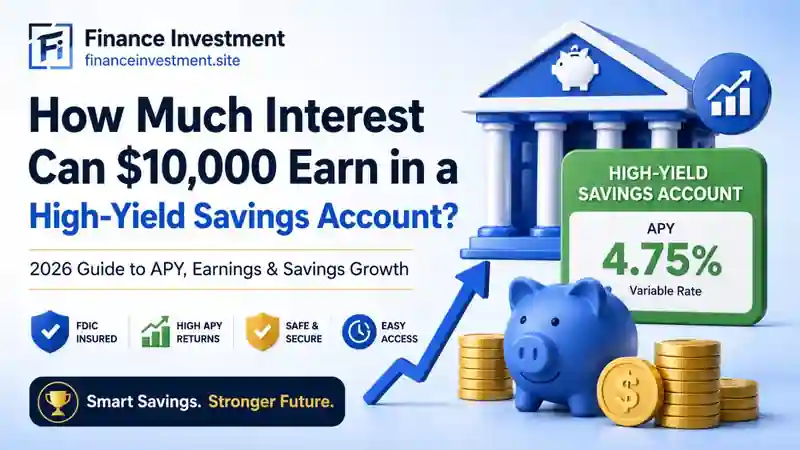 If you’re asking How Much Interest Can $10,000 Earn in a High-Yield Savings Account, you’re already thinking about making your savings work harder. Unlike a standard savings account that may pay very little interest, a high-yield savings account offers a higher Annual Percentage Yield (APY). That means your money earns interest every day while remaining available when you need it.
 If you’re wondering How Much Interest Can $5,000 Earn in a High-Yield Savings Account, the first step is understanding how these accounts work. A high-yield savings account is similar to a traditional savings account, but it typically offers a much higher Annual Percentage Yield (APY). That means your money can grow faster while remaining easy to access whenever you need it.