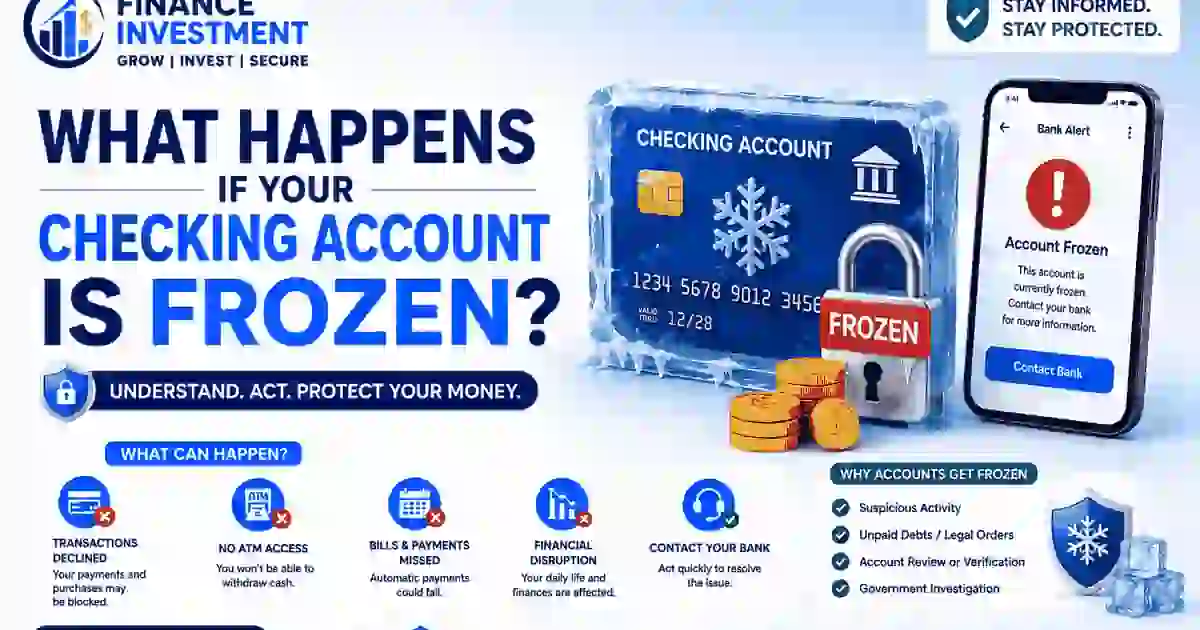
 You are standing at a grocery checkout when your debit card suddenly stops working. A few minutes later, you open your banking app and see a notice saying your account has been restricted. Your paycheck is still there, but you cannot move money the way you normally do.
What Happens If Your Checking Account Is Frozen can feel frightening because everyday payments, withdrawals, transfers, and card purchases may suddenly become difficult or unavailable. However, a freeze does not automatically mean the bank has taken your money or permanently closed the account.
The reason matters. A bank may restrict an account while reviewing unusual activity, verifying information, responding to a legal order, or dealing with another account issue. Your first job is to find out exactly what restriction has been placed on the account and what the bank needs from you.
What You’ll Learn
This guide explains what a freeze can affect, why it happens, what you can do next, and how to handle bills or incoming money while access is limited. For the broader basics, see our
Checking Accounts USA 2026 guide
.
Quick Answer & Key Takeaways
What Happens If Your Checking Account Is Frozen depends on why the bank restricted it. You may temporarily lose access to debit purchases, withdrawals, transfers, or other services while the bank reviews the situation. The money does not automatically disappear.
- Find out why: Ask the bank what caused the restriction and what type of hold applies.
- Expect limited access: Some payments, withdrawals, or transfers may not work normally.
- Do not panic: A temporary freeze is not the same as permanent account closure.
- Contact the bank directly: Use its official app, website, statement, or phone number.
- Keep records: Save notices, reference numbers, and documents you provide.
- Protect essential payments: Check upcoming rent, utilities, payroll, and automatic withdrawals.
Bottom line:
First identify the reason for the freeze. Then ask what the bank needs from you and how you can manage essential payments while access is restricted.
Table of Contents
At a Glance
What Happens If Your Checking Account Is Frozen can vary by the reason for the restriction and the bank’s procedures. Some services may stop while others remain available. The first priority is finding out exactly what has been restricted.
Quick Facts
A freeze can limit account access without permanently closing it.
Best For
Anyone who needs to understand a sudden banking restriction.
Key Number
3 areas to check: access, payments, and incoming money.
| Area | Possible Impact | First Move |
|---|---|---|
| Access | Card or withdrawals may fail | Ask what is restricted |
| Payments | Some transactions may be declined | Review upcoming bills |
| Deposits | Availability can depend on the restriction | Ask the bank directly |
Complete Beginner Guide
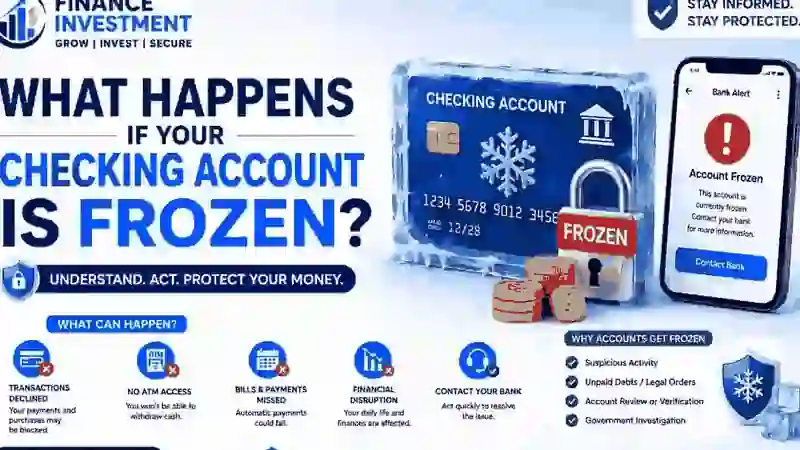 What Happens If Your Checking Account Is Frozen depends heavily on why the bank placed the restriction. A freeze can be connected to suspected fraud, identity verification, unusual activity, a legal order, or another issue that requires review. The exact process also varies by financial institution.
Consider Alex, who receives a $2,400 paycheck every other Friday. One morning, his debit card is declined at a gas station. His banking app still shows a balance, but transfers are unavailable. Instead of repeatedly trying the card, Alex contacts the bank through its official number and asks whether the account is frozen, restricted, or affected by a separate hold.
Why Can a Bank Freeze an Account?
Banks and credit unions may restrict access when they need to investigate suspicious activity, verify information, comply with a legal requirement, or protect an account from possible unauthorized use. A freeze can also occur in situations involving court orders or certain government actions. A customer should not assume the reason without asking the institution.
What Can Stop Working?
Depending on the restriction, debit-card purchases, ATM withdrawals, online transfers, checks, or bill payments may be affected. Incoming deposits can also have different treatment depending on the reason and type of restriction. That is why asking specific questions is more useful than simply asking when the account will be “unfrozen.”
Start here:
Ask what triggered the restriction, which services are affected, what documents or verification are required, and whether scheduled payments or incoming deposits will be processed.
How It Works
What Happens If Your Checking Account Is Frozen usually starts with a restriction being placed on some or all account activity. The bank may then review the situation, request information, or follow instructions from another authority. What you can use during that period depends on the type of restriction.
1. Restriction
Certain account functions may be blocked while the issue is being reviewed.
2. Review
The institution determines what caused the restriction and what information may be needed.
3. Verification
You may be asked to confirm identity, provide documents, or explain specific activity.
4. Resolution
Access may be restored, remain limited, or the institution may take another permitted action.
Picture a traveler arriving at a hotel after a long flight. The room is prepaid, but the debit card connected to the checking account suddenly declines. The traveler should not keep retrying the card or assume the balance has vanished. Instead, they can check the banking app, contact the bank through an official channel, and ask whether the account has a restriction and which payment options remain available.
What Happens If Your Checking Account Is Frozen can therefore look different from one customer to another. The important detail is not only whether the account is “frozen,” but which functions are blocked, why the restriction exists, and what steps the bank requires before normal access returns.
Benefits & Drawbacks
A frozen account can be frustrating, but the restriction may serve a protective purpose. What Happens If Your Checking Account Is Frozen often depends on the reason for the freeze and how much account activity has been limited.
✓ Potential Benefits
- Can limit unauthorized access while an issue is reviewed.
- May prevent additional transactions from going through.
- Gives the institution time to verify unusual activity or information.
- Can add protection when there is a legitimate security concern.
⚠ Drawbacks
- Debit-card purchases or ATM withdrawals may fail.
- Automatic bills could be interrupted.
- Access to funds may become inconvenient or limited.
- You may need to provide identification or other information.
Practical point:
A freeze can protect an account, but it can also disrupt ordinary spending. Check essential payments quickly and ask the bank which services remain available.
Frozen vs. Restricted vs. Closed Checking Accounts
What Happens If Your Checking Account Is Frozen is easier to understand when you separate a temporary freeze from other types of account restrictions. These terms can have different meanings, and the exact treatment depends on the financial institution and circumstances.
| Account Status | Access | What It May Mean | What to Ask |
|---|---|---|---|
| Frozen | Some or most activity may be blocked | A temporary or situation-specific restriction | Why was access restricted? |
| Restricted | Specific services may remain available | Certain transactions or features are limited | Which functions can I still use? |
| Closed | Normal account access ends | The financial institution has ended the account relationship | How will remaining funds be handled? |
Remember:
A frozen account is not automatically a closed account. Before making another banking decision, ask the institution to explain the exact status and next step.
Costs, Risks & Expert Tips
What Happens If Your Checking Account Is Frozen can affect more than your ability to use a debit card. A delayed payment could lead to a returned-payment charge, late fee, or service interruption. The bank itself may also apply fees depending on the account agreement and what happens while access is limited.
💡 Expert Tip
Make a short list of bills due within the next two weeks. Ask the bank whether those payments can still clear and whether you need another payment method. If you rely on direct deposit, also ask how incoming funds will be handled.
⚠ Warning
Do not send money to someone who claims they can “unlock” your account. Contact your financial institution through a trusted channel and ask for the official process.
Common Mistakes + Real-Life Example
What Happens If Your Checking Account Is Frozen can become harder to manage when you react before finding out what the restriction actually covers. Common mistakes include repeatedly trying declined transactions, ignoring scheduled bills, relying on an unverified caller, or assuming the account has already been permanently closed.
A $1,650 Rent Payment Is Due Tomorrow
Maya notices that her checking account is restricted the evening before rent is due. Her balance appears normal, but her debit card and transfer options are unavailable. Instead of sending money to a stranger claiming to be a “bank recovery agent,” she calls the number on her debit card.
The bank explains which transactions are affected and tells her what verification is required. Maya also contacts her landlord before the payment deadline rather than waiting for a failed payment to explain itself.
Better move: Find out the exact restriction, protect essential payments, use official bank contact details, and keep every reference number or document connected to the case.
What Happens If Your Checking Account Is Frozen becomes much easier to handle when you focus on the immediate facts instead of guessing why the restriction happened.
Who Should Choose This?
★ Best Fit
What Happens If Your Checking Account Is Frozen is especially useful for anyone whose paycheck, rent, utilities, debit-card spending, or automatic payments depend heavily on one checking account.
This guide can be particularly helpful for families managing several recurring bills, retirees who rely on regular deposits, freelancers handling business income, and employees who receive direct deposit. It is also useful if you suddenly lose access to your card or online transfers and are unsure whether the account is frozen, restricted, or facing another issue.
If your account is working normally, you do not need to expect a freeze. The bigger value is knowing what questions to ask if access changes unexpectedly.
Frequently Asked Questions
Why would a bank freeze a checking account?
A bank may restrict an account while reviewing suspicious activity, verifying information, responding to a legal requirement, or handling another account issue. The exact reason should come from the financial institution.
What Happens If Your Checking Account Is Frozen temporarily?
Some withdrawals, transfers, card purchases, or payments may stop working. The balance can still appear in your account even when access to certain services is limited.
Can I still receive direct deposit?
It depends on the type of restriction. Ask the bank specifically whether incoming deposits will be accepted and when those funds may become available.
Can I withdraw money from a frozen account?
Possibly not. A full restriction can prevent normal withdrawals, while a narrower restriction may affect only certain services. Ask which transactions remain available.
How long can a checking account stay frozen?
There is no single timeframe for every situation. The duration can depend on the reason for the restriction, required verification, legal instructions, and the institution’s procedures.
How do I unfreeze my checking account?
Contact the bank through an official channel and ask what caused the restriction and what documents or verification are required. Keep records of your communications.
Can a frozen account still pay bills?
Some scheduled payments may be affected. Review upcoming bills quickly and ask the bank which automatic payments, checks, or transfers can still be processed.
Does a frozen checking account affect my credit score?
A freeze itself is not automatically a traditional credit-report event. However, certain account problems, such as an unpaid negative balance that later goes to collections, can create separate credit consequences. 0
What should I do if the bank will not resolve the problem?
Keep your records and ask the institution for its formal complaint or review process. If you still cannot resolve the issue, the CFPB accepts complaints about many bank and credit-union products and services. 1
Keep in mind:
A bank-account freeze is different from a credit-report security freeze. They affect different things and follow different rules. 2
Final Verdict
What Happens If Your Checking Account Is Frozen is not a question with one universal answer. The effect depends on why the restriction was placed, which services have been blocked, and what the financial institution needs to complete its review.
If your card suddenly stops working, do not assume your money is gone. Check the account through an official channel, ask exactly what has been restricted, and find out what you need to do next. At the same time, look at rent, utilities, payroll, and other payments that could be<
Complete Checking Accounts USA 2026 Guide
The best response is calm and practical: verify the restriction, follow the bank’s legitimate process, protect essential payments, and keep a record of every conversation.