FINANCEINVESTMENT • BANKING GUIDE 2026
Common Checking Account Mistakes to Avoid
Small banking oversights can become expensive surprises. This guide shows you where checking account mistakes commonly happen and how to avoid them.
Written by
Subhash Rukade
Updated
August 18, 2026
Reading Time
About 12 minutes
The Banking Mistakes That Add Up
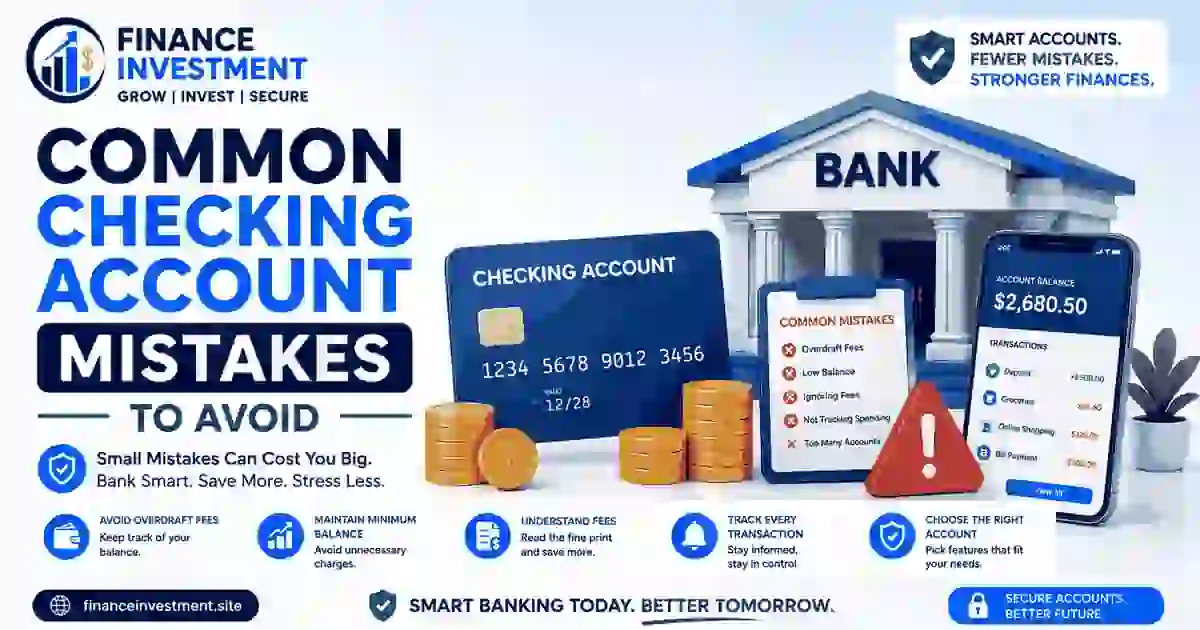 You check your account before paying the rent and notice the balance is lower than expected. A forgotten subscription, an ATM charge, or an automatic payment may be responsible. Common Checking Account Mistakes to Avoid often start with small details that are easy to overlook during a busy week.
The good news is that most everyday banking problems are easier to prevent than to fix. Knowing where fees appear, how automatic payments work, when to check transactions, and what your bank’s account rules actually say can save both money and frustration.
If you want the bigger picture first, explore our
Checking Accounts USA 2026 Guide
.
What You’ll Learn
You’ll learn which checking account mistakes can lead to unnecessary fees, overdrafts, security problems, missed payments, and account trouble. We’ll also cover practical ways to spot problems early and build simple banking habits that protect your cash.
Quick Answer & Key Takeaways
Common Checking Account Mistakes to Avoid usually involve fees, forgotten payments, weak account monitoring, or security oversights. A few simple checks each week can prevent many expensive surprises.
- Review recent transactions instead of relying only on your balance.
- Know exactly when recurring bills leave your account.
- Check ATM and monthly maintenance fees before they accumulate.
- Keep enough cash available for scheduled payments.
- Turn on alerts for purchases, transfers, and low balances.
- Report unfamiliar transactions as soon as you notice them.
Bottom line:
Good checking-account habits are less about watching every penny and more about catching problems before they become costly.
Table of Contents
At a Glance
Common Checking Account Mistakes to Avoid often come from small gaps in everyday account management. The biggest trouble usually starts with fees, payment timing, overdrafts, or missed security alerts.
Quick Fact
Small fees can add up when you don’t notice them.
Best For
Anyone managing bills, deposits, debit purchases, or recurring payments.
Key Numbers
Watch your fees, available balance, pending payments, and scheduled withdrawals.
| Area to Watch | Simple Check |
|---|---|
| Fees | Know what can trigger charges |
| Payments | Track upcoming automatic withdrawals |
| Security | Review transactions and account alerts |
Complete Beginner Guide
 Common Checking Account Mistakes to Avoid often begin when an account becomes part of the background. Imagine Maya gets paid every other Friday and has rent, utilities, streaming services, and a credit-card payment leaving the same account. She checks the balance before payday but rarely reviews the transactions themselves. One forgotten subscription can quietly change what she has available for the next bill.
Know Your Account Rules
Start with the fee schedule. Know when monthly maintenance, ATM, overdraft, or other charges can apply. Also check whether direct deposit or a minimum balance is required to avoid a fee.
Track Money Going Out
Your available balance is useful, but it doesn’t tell the whole story. Pending card purchases and upcoming automatic payments can change what remains available. Review recent transactions regularly instead of relying on memory.
If you’re still learning the basics, our guide on
how checking accounts work
explains the everyday flow of deposits, payments, withdrawals, and balances.
Protect the Account, Too
Turn on transaction alerts and review unfamiliar purchases quickly. If something looks wrong, don’t wait for the monthly statement. Our guide to
spotting checking account fraud
can help you recognize warning signs.
The goal isn’t to watch your account every hour. A short review a few times each week can catch many problems while they’re still easy to fix.
How Banking Mistakes Build Up
Common Checking Account Mistakes to Avoid often happen because several small transactions collide at the wrong time. Picture James getting his paycheck on Friday while his rent, insurance premium, and three subscriptions are scheduled for the following Monday. He sees a healthy balance on Saturday and assumes everything is fine.
Then a weekend debit-card purchase posts, an automatic bill arrives, and another payment is still pending. By Monday morning, the amount James thought was available has changed. The problem wasn’t necessarily one huge expense. It was failing to account for several withdrawals happening close together.
A Simple Three-Step Check
- Look ahead: Check upcoming automatic payments before spending freely.
- Check recent activity: Review pending and posted transactions.
- Leave breathing room: Keep a small cash cushion for timing surprises.
You can also review
how ACH transfers work
so you know why some electronic payments may take time to appear or settle.
Benefits & Drawbacks
Better checking habits don’t require complicated budgeting. They simply make it easier to see where your money is going and catch trouble before a small issue becomes an expensive one. The value is especially clear when several bills hit the same account each month.
✓ Pros
- Regular reviews can catch unauthorized transactions sooner.
- Knowing fee rules can reduce avoidable charges.
- Tracking automatic payments helps prevent cash-flow surprises.
- Account alerts make important changes easier to notice.
− Cons
- Checking transactions takes a few minutes each week.
- Too many alerts can become distracting if poorly configured.
- Keeping a cash cushion may require adjusting spending habits.
- Some problems still require a call or message to the bank.
Comparing Common Checking Account Mistakes
Not every mistake has the same cost. Some create an immediate fee, while others can leave you exposed to fraud or make future payments harder to manage. Here is a quick way to see where each problem usually starts and what can help.
| Mistake | Possible Problem | Better Habit |
|---|---|---|
| Ignoring fees | Small charges accumulate | Review the fee schedule |
| Forgetting automatic payments | Balance may fall unexpectedly | Keep a payment calendar |
| Skipping transaction reviews | Fraud may go unnoticed | Check activity regularly |
| Spending the full balance | Pending payments can cause trouble | Maintain a cash cushion |
Quick takeaway:
The easiest mistakes to prevent are usually the ones you can see coming—fees, scheduled payments, and unusual transactions.
Costs, Risks & Expert Tips
Common Checking Account Mistakes to Avoid can cost more than a single fee. A missed payment, repeated overdraft, or unnoticed fraudulent charge can create a much bigger headache than the original transaction. The exact costs depend on your bank and account terms.
💡 Expert Tip
Set three useful alerts: low balance, debit-card transactions, and large transfers. Keep a small buffer for bills that haven’t posted yet. This gives you an early warning without requiring constant account checking.
⚠ Warning
Never assume an unfamiliar transaction will disappear on its own. Contact your bank promptly and follow its fraud-reporting process. Also review your account’s overdraft and fee policies so you know what can happen when a payment exceeds available funds.
Common Mistakes + Real-Life Example
Common Checking Account Mistakes to Avoid become especially important when a large amount of money suddenly moves through your account. That’s when a forgotten payment, transfer limit, or security issue can create real stress.
Real-Life Example: An Emergency Home Repair
Lisa receives a $12,000 insurance payment after storm damage to her home. She keeps the money in her everyday checking account while waiting for the contractor’s invoice. Meanwhile, several automatic bills continue running from the same account. Lisa doesn’t separate the repair money or monitor pending transactions closely. A large contractor payment then arrives at the same time as other withdrawals, leaving her with far less available cash than expected.
What She Could Have Done
- Keep emergency funds separate from routine spending.
- Review upcoming withdrawals before the contractor payment.
- Use transaction alerts for unusually large transfers.
- Confirm payment timing with the contractor and bank.
Who Should Pay Extra Attention?
Common Checking Account Mistakes to Avoid matter even more when your account handles most of your household’s incoming and outgoing money.
✓ Premium Best Fit
- Busy families: Multiple bills and subscriptions make payment tracking important.
- Retirees: Regular deposits and automatic withdrawals deserve close attention.
- Freelancers: Irregular income makes a cash cushion especially useful.
- People with large balances: A single account may hold money needed for upcoming expenses.
- Frequent debit-card users: Transaction alerts can make unusual activity easier to catch.
Frequently Asked Questions
Common Checking Account Mistakes to Avoid are usually simple to fix once you know what to watch. Here are nine questions people often ask before changing their banking habits.
1. What are the most common checking account mistakes?
Ignoring fees, missing automatic payments, spending the full available balance, and failing to review transactions are common problems.
2. How can I avoid checking account fees?
Read your fee schedule and learn which conditions can waive monthly, ATM, or other charges.
3. Should I keep a cash cushion?
Yes. A reasonable buffer can help cover pending transactions and automatic payments that have not posted yet.
4. How often should I check my checking account?
Reviewing activity several times a week can help you notice unusual transactions, upcoming payments, or unexpected charges.
5. Can checking account mistakes affect my credit?
A checking account itself normally does not build credit, but unpaid debts, collections, or certain account problems can have consequences.
6. What should I do after spotting a fraudulent transaction?
Contact your bank promptly, follow its fraud-reporting instructions, and review recent activity for additional unfamiliar transactions.
7. Is it bad to use overdraft protection?
It can provide a backup, but the costs and terms vary. Understand the account’s overdraft options before relying on them.
8. Should large amounts of cash stay in checking?
Keep enough for near-term spending and bills, but consider whether money needed later belongs in another suitable account.
9. How do I prevent checking account mistakes?
Know your fees, track automatic payments, maintain a buffer, enable useful alerts, and review transactions regularly.
Final Verdict
Common Checking Account Mistakes to Avoid don’t require a complicated system. The biggest improvement often comes from knowing when money is leaving your account, keeping a sensible cash cushion, and noticing unusual activity early.
Imagine receiving a $20,000 bonus and leaving every dollar in your everyday checking account while rent, subscriptions, debit purchases, and automatic bills continue as usual. Separating money meant for future expenses from everyday spending can make the balance much easier to understand.
For the bigger picture on choosing and managing these accounts, visit our
Checking Accounts USA 2026 Guide
.
A few minutes of account review can protect far more than a few dollars in fees.
Related Resources
Want to go deeper? These guides cover account selection, fees, security, and everyday banking decisions.
Make Your Everyday Banking Easier
Get practical money tips, banking guides, and straightforward ideas to help you protect your cash and make better financial decisions.
Questions or suggestions?
subhashr325@gmail.com