Who Should Open a Checking Account? Ultimate Beginner Guide (USA 2026)
Fact Checked
USA 2026 Guide
 Not everyone needs the same type of bank account, yet almost everyone handles money every day. Whether you’re receiving a paycheck, paying monthly bills, shopping online, or sending money to family, the right account can make those tasks much easier. If you’ve been wondering Who Should Open a Checking Account, the answer depends on how you manage your everyday finances—not on how much money you have.
Many first-time bank customers assume a savings account can handle everything. Others open a checking account without knowing whether it actually fits their needs. Understanding the difference before choosing an account can help you avoid unnecessary fees, simplify your banking routine, and build better money habits from the start.
If you’re looking for a complete overview of everyday banking, start with our
Checking Accounts USA 2026: Complete Beginner Guide.
It explains how checking accounts work, the different account types available, and what beginners should know before opening one.
What You’ll Learn
- Who Should Open a Checking Account and when it makes sense.
- Which groups benefit the most, including students, families, retirees, and business owners.
- How to decide whether a checking account fits your daily spending habits.
- Situations where another type of account may be a better choice.
- Simple tips for selecting an account that matches your financial goals.
Quick Answer & Key Takeaways
📌 Quick Answer
If you’re wondering Who Should Open a Checking Account, the short answer is simple: anyone who regularly receives income, pays bills, shops with a debit card, withdraws cash, or manages everyday expenses can benefit from having one. A checking account is designed for frequent transactions, making it a practical choice for students, working professionals, families, retirees, freelancers, and many small business owners. The right account depends on how you use your money each day, not on how much money you have.
⭐ Key Takeaways
- Most adults who manage daily spending should consider opening a checking account.
- Who Should Open a Checking Account depends on lifestyle, income, and banking habits.
- Students can use one for allowances, part-time income, and online purchases.
- Families often use checking accounts for shared household expenses and monthly bills.
- Retirees benefit from direct deposits, debit card access, and simplified bill payments.
- Small business owners may need a dedicated account to separate business and personal finances.
- Choosing the right account can help reduce fees and make everyday banking easier.
🏁 Bottom Line
A checking account isn’t just for one type of person. It’s a useful financial tool for anyone who needs quick access to money and wants a convenient way to handle everyday transactions. Understanding your banking needs first will make choosing the right account much easier.
At a Glance
Who Should Open a Checking Account is a common question for anyone starting to manage money. The answer is straightforward: if you regularly receive income, pay bills, use a debit card, withdraw cash, or make everyday purchases, a checking account can simplify your financial routine. It’s designed for frequent transactions, making daily banking faster and more convenient.
Quick Facts
- ✔ Built for everyday spending and bill payments.
- ✔ Supports direct deposit, debit cards, ATMs, and online banking.
- ✔ Available from traditional banks, online banks, and credit unions.
- ✔ Many accounts have low or no monthly fees when requirements are met.
Best For
Students, employees, freelancers, families, retirees, and anyone who needs quick access to their money throughout the month.
| Feature | Overview |
|---|---|
| Primary Purpose | Daily banking and payments |
| Best Users | Anyone managing everyday finances |
| Key Features | Debit card, ATM access, direct deposit, online banking |
Complete Beginner Guide
 If you’ve ever wondered who should open a checking account, the answer usually comes down to how often you use your money. A checking account is designed for everyday banking. Instead of keeping cash in your wallet or relying on money orders, you can pay bills, receive your paycheck, shop with a debit card, transfer money, and withdraw cash whenever you need it.
Think of it as your financial control center. Your salary can be deposited directly into the account, recurring bills can be paid automatically, and mobile banking lets you keep track of every transaction in seconds. Whether you’re buying groceries, paying rent, or sending money to a family member, a checking account makes those tasks simple.
Why Different People Need One
The reason who should open a checking account is such a common question is that nearly everyone manages money differently. A college student may need an account for tuition refunds and everyday spending. A full-time employee may use it for direct deposits and monthly bills. Parents often use one to manage household expenses, while retirees appreciate easy access to pension or Social Security payments.
Even freelancers and self-employed professionals benefit from separating business income from personal spending, making budgeting much easier throughout the year.
How It Fits Into Daily Money Management
A checking account works best when paired with smart financial habits. Many people keep spending money in checking while moving extra cash into savings to earn interest. This approach gives you easy access to daily funds without leaving all of your money sitting idle.
If you’re still deciding how a checking account compares with other banking options, read our guide on What Is a Checking Account? for a deeper explanation.
Use your checking account for everyday expenses and keep your emergency fund in a separate savings account. This simple habit reduces unnecessary spending while ensuring your money is available whenever you need it.
How Does a Checking Account Work?
Understanding who should open a checking account becomes much easier when you see how it works in everyday life. A checking account is built for frequent transactions. Instead of storing cash at home, you keep your money in the bank and access it whenever you need it through a debit card, checks, ATMs, online banking, or a mobile banking app.
Most people begin by opening an account and depositing money. After that, the account becomes the place where income arrives and daily expenses are paid. Employers can send your paycheck through direct deposit, while government benefits, tax refunds, or other payments can also be deposited automatically.
A Typical Day Using a Checking Account
Imagine Sarah, a first-time employee in Texas. On payday, her salary is deposited directly into her checking account. She uses her debit card to buy groceries, pays her rent online, sends money to a friend using a payment app, and withdraws cash from an ATM for the weekend. Every transaction appears instantly in her banking app, making it easy to monitor her balance.
That simple routine explains why who should open a checking account includes almost anyone who regularly receives income or pays bills.
Key Features You Can Use
- Direct deposit for paychecks and government benefits.
- Debit card purchases at stores and online.
- ATM access for cash withdrawals.
- Bill payments through online banking.
- Mobile check deposit using your smartphone.
- Real-time account alerts to track spending.
Many banks also let you set spending notifications and automatic transfers to savings, helping you stay organized without much effort.
Before choosing an account, it’s helpful to compare different options. Our guide on Types of Checking Accounts Explained can help you find the one that matches your financial needs.
Check your account balance once every few days instead of waiting until the end of the month. Spending just a minute reviewing your transactions can help you avoid overdraft fees and spot unusual activity quickly.
Benefits & Drawbacks of Opening a Checking Account
If you’re wondering who should open a checking account, it helps to understand both the advantages and the trade-offs. For most Americans, a checking account makes everyday money management easier, but choosing the right account still matters.
✅ Benefits
- Easy access to your money 24/7.
- Receive paychecks through direct deposit.
- Pay bills online or with a debit card.
- Withdraw cash from ATMs when needed.
- Track spending instantly with mobile banking.
- Safer than carrying large amounts of cash.
❌ Common Limitations
- Some banks charge monthly maintenance fees.
- Overdrafts can become expensive.
- Out-of-network ATM withdrawals may cost extra.
- Most checking accounts earn little or no interest.
- Minimum balance rules may apply at certain banks.
For example, a college student can use a checking account for everyday purchases and direct deposits, while keeping emergency savings in a separate savings account. Likewise, a family may use one checking account for monthly bills and another account for long-term financial goals.
If you’re comparing available options, read our guide on What Is a Checking Account? before choosing a bank.
💡 Expert Insight
The best checking account isn’t always the one with the most features. Focus on low fees, a large ATM network, reliable mobile banking, and customer service that fits your daily needs. Those factors usually matter far more than extra perks.
Now that you know the strengths and limitations, let’s compare different account options side by side to make choosing the right one much easier.
Checking Account Comparison: Which Option Is Right for You?
Choosing the right checking account depends on how you manage your money each month. Some people want an account with no monthly fees, while others care more about ATM access, mobile banking, or rewards. The comparison below makes it easier to match your needs with the right account type.
| Feature | Basic Checking | Interest Checking | Online Checking |
|---|---|---|---|
| Monthly Fee | Usually low | May apply | Often $0 |
| Interest Earnings | None | Yes | Sometimes |
| ATM Access | Large network | Large network | Nationwide network |
| Mobile Banking | Yes | Yes | Advanced features |
| Best For | Everyday spending | Keeping larger balances | Digital-first users |
If you receive direct deposits, pay bills online, and rarely visit a branch, an online checking account may offer the best value. If you prefer face-to-face service, a traditional bank with local branches can be a better fit. People who keep higher balances may also benefit from an interest checking account, provided the fees do not outweigh the interest earned.
There is no single account that works for everyone. Compare fees, ATM availability, digital tools, customer support, and account requirements before making your final decision. Picking the account that matches your daily habits usually delivers the best long-term experience.
How to Open a Checking Account: Step-by-Step Guide
Opening a checking account in the United States is usually quick, whether you visit a local branch or complete the process online. Most banks let you finish everything in less than 20 minutes if you have the required information ready. Following a few simple steps can help you avoid delays and choose an account that fits your everyday banking needs.
Step 1: Compare Your Options
Start by comparing monthly fees, ATM access, mobile banking features, overdraft policies, and minimum balance requirements. Pick an account that matches how you spend, save, and receive income.
Step 2: Gather Your Documents
- Government-issued photo ID
- Social Security Number or ITIN
- Proof of address
- Opening deposit (if required)
Step 3: Apply Online or Visit a Branch
Online opening is convenient if you’re comfortable uploading documents and verifying your identity digitally. A branch visit may be better if you want personal guidance or have questions before opening your account.
Step 4: Fund Your Account
Many banks allow you to transfer money from another bank, deposit cash, or write a check for your first deposit. Some accounts don’t require an initial deposit at all.
Step 5: Set Up Everyday Banking
After approval, activate your debit card, enroll in online banking, enable account alerts, and arrange direct deposit if your employer offers it. These small steps make your checking account easier and safer to manage.
💡 Pro Tip
Before applying, read the account’s fee schedule carefully. If you’re still deciding which account fits your needs, check our What Is a Checking Account? guide to understand the basics before choosing a bank.
Common Mistakes to Avoid
- Choosing an account without reviewing monthly fees.
- Ignoring the bank’s ATM network.
- Skipping overdraft settings.
- Not reading the minimum balance requirements.
- Forgetting to activate account alerts for security.
Once your account is active and properly set up, you’ll be ready to use it for direct deposits, bill payments, purchases, and everyday money management. In the next section, we’ll look at the most common mistakes people make after opening an account and how you can avoid them from day one.
Common Mistakes When Opening a Checking Account
Choosing the right checking account is only the beginning. Many people open an account without looking closely at the rules, which can lead to avoidable fees or daily banking headaches. Learning from these common mistakes can save both money and time.
5 Common Mistakes to Avoid
- Choosing the first account you see. Many people skip comparing fees, ATM access, and digital banking features.
- Ignoring monthly maintenance fees. An account may look attractive until monthly charges begin reducing your balance.
- Overlooking overdraft settings. Without understanding your bank’s overdraft policy, a few purchases can create unexpected fees.
- Using out-of-network ATMs regularly. Frequent ATM charges can quietly add up over a year.
- Not turning on security alerts. Instant notifications help you notice suspicious transactions quickly.
Real-Life Example
Sarah, a first-time employee in Texas, opened a checking account simply because it was close to her workplace. She never reviewed the fee schedule. After missing the minimum balance requirement twice and using non-network ATMs during a vacation, she paid more than $80 in fees within a few months. After switching to an account that matched her banking habits, those unnecessary charges disappeared.
Situations like Sarah’s are common because many people focus on opening an account quickly instead of comparing how different accounts work.
✅ Lesson Learned
Take a few extra minutes before opening an account. Compare fees, ATM access, mobile features, and account requirements. A little research today can help you avoid unnecessary costs for years to come.
Now that you know the most common mistakes, the next section will help you decide exactly who should open a checking account and which type fits different lifestyles.
Who Should Open a Checking Account?
A checking account is a practical choice for almost anyone who handles everyday expenses. The best account depends on how you earn, spend, and manage your money rather than your income level.
⭐ Best Choice If…
- Students: You need a debit card, direct deposits, and an easy way to manage everyday spending.
- Working professionals: You receive regular paychecks and pay monthly bills online or through automatic payments.
- Families: You want one account to handle groceries, utilities, school expenses, and household budgeting.
- Retirees: You receive Social Security or pension deposits and need quick access to cash without carrying large amounts of money.
- Freelancers and self-employed workers: You want business income and daily expenses to stay organized while tracking cash flow more easily.
If you rarely use cash, write checks, pay bills, or receive direct deposits, you may not need many checking account features. However, for most Americans, it remains the easiest way to manage everyday finances safely and conveniently while keeping money readily available whenever needed.
Frequently Asked Questions
1. Who should open a checking account?
A checking account is ideal for anyone who receives direct deposits, pays bills, shops with a debit card, or needs quick access to money for everyday expenses. Most adults benefit from having one.
2. Can I have more than one checking account?
Yes. Many people keep separate accounts for bills, daily spending, shared family expenses, or business income. Using multiple accounts can make budgeting easier.
3. Is there an age requirement to open a checking account?
Most banks require applicants to be at least 18 years old. Teens can usually open a joint account with a parent or legal guardian.
4. Can I open a checking account online?
Yes. Many banks and credit unions allow you to complete the application online in just a few minutes by providing identification, your Social Security number, and basic personal information.
5. What documents do I usually need?
You’ll typically need a government-issued photo ID, Social Security number, proof of address, and sometimes an opening deposit, depending on the bank’s requirements.
6. Does a checking account earn interest?
Some banks offer interest-bearing checking accounts, but many standard accounts pay little or no interest. If earning more on your cash is important, a savings account is often the better choice.
7. Can I get a checking account with bad credit?
Yes. Your credit score usually isn’t the deciding factor. Banks may review your banking history instead, and many offer second-chance checking accounts for people rebuilding their banking record.
8. Is my money safe in a checking account?
Yes. When your account is held at an FDIC-insured bank, deposits are generally protected up to the applicable insurance limits if the bank fails.
9. Can I use a checking account without a debit card?
Yes. You can still make transfers, write paper checks, receive direct deposits, and pay bills even if you choose not to use a debit card.
10. How do I choose the right checking account?
Compare monthly fees, ATM access, overdraft options, mobile banking features, minimum balance requirements, and customer support. The best checking account is the one that matches your spending habits and keeps banking simple.
Final Verdict
If you’re wondering who should open a checking account, the answer is simple: almost anyone who manages everyday money. Whether you’re starting your first job, raising a family, enjoying retirement, or running a small business, a checking account makes it easier to receive income, pay bills, and access your money whenever you need it.
Before opening an account, compare monthly fees, ATM access, digital banking features, and customer service. If you want a deeper understanding of account types and banking basics, explore our complete Checking Accounts USA 2026 Pillar Guide.
✔ Final Takeaway
Choose a checking account that matches your daily banking habits instead of simply picking the first account you see. A little comparison today can save money, reduce fees, and make managing your finances much easier for years to come.
Learn more from trusted sources:
FDIC •
CFPB •
Consumer.gov
Ready to Make Smarter Banking Decisions?
Join our newsletter for practical money tips, beginner-friendly banking guides, and helpful updates. If this guide answered your questions, leave a comment below and share it with friends or family who are choosing their first bank account. Your support helps more people build better financial habits.
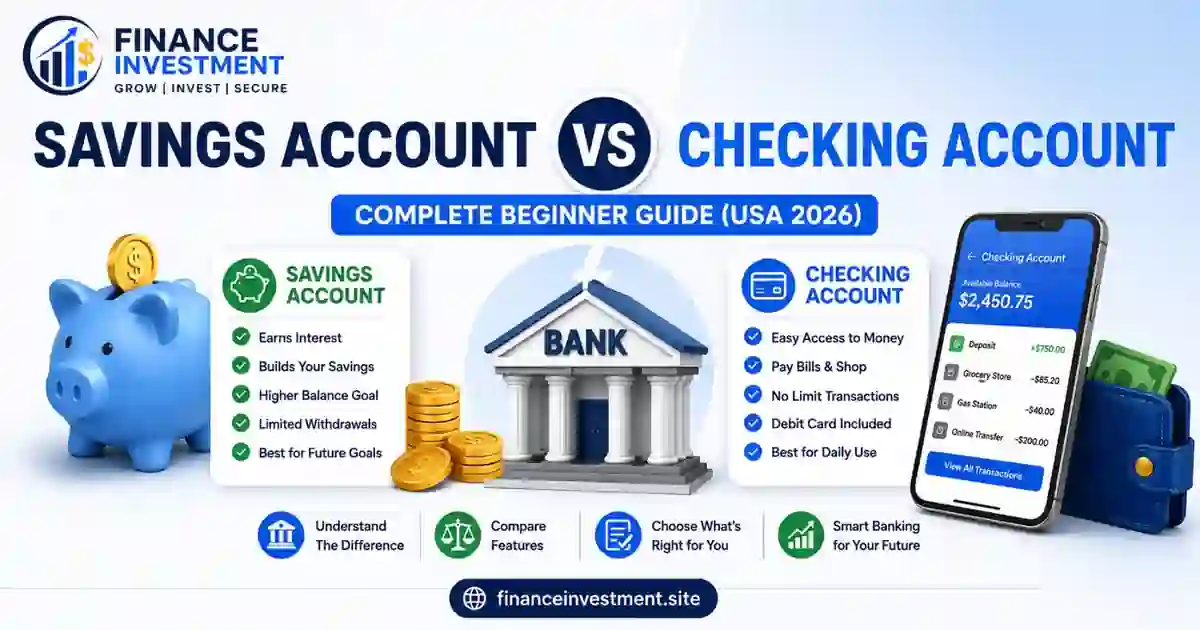
 When comparing Savings Account vs Checking Account, the easiest way to think about them is to imagine two different wallets. One wallet is for money you spend often, while the other is for money you want to keep safe for future goals. Although both accounts are offered by banks and credit unions, they play very different roles in your financial life.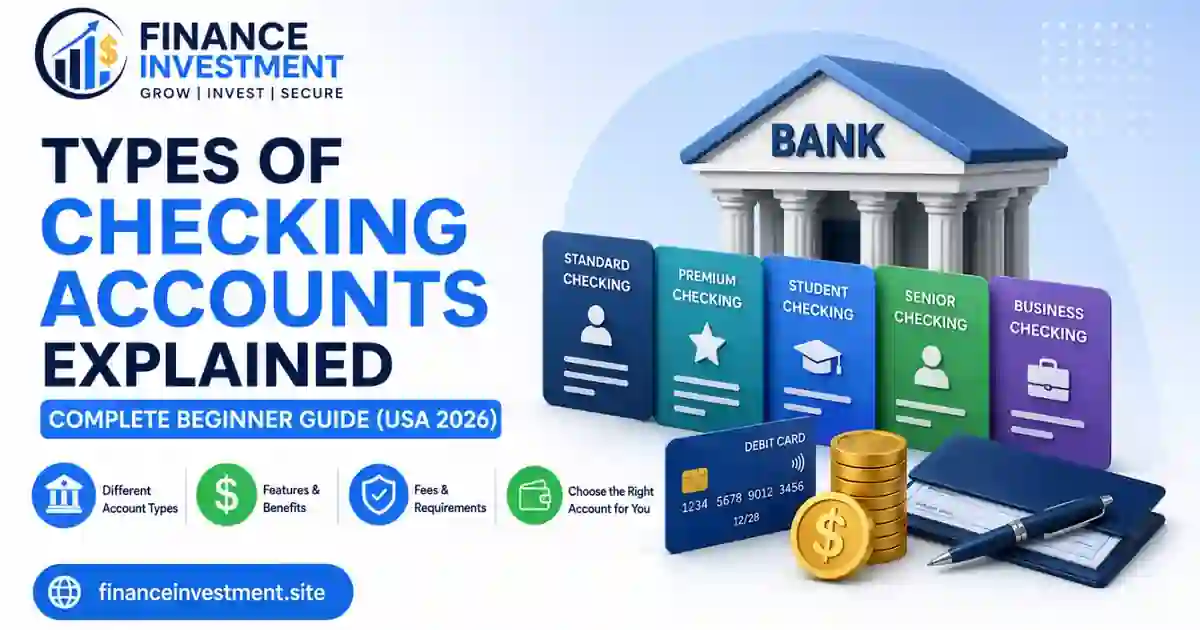
 Not every checking account is built for the same customer. Banks understand that a college student, a retiree, a family, and a small business owner all have different banking needs. That’s why they offer several account options with unique features, fees, and benefits. Learning the Types of Checking Accounts Explained helps you choose an account that supports your lifestyle instead of forcing you to adapt to unnecessary rules or costs.
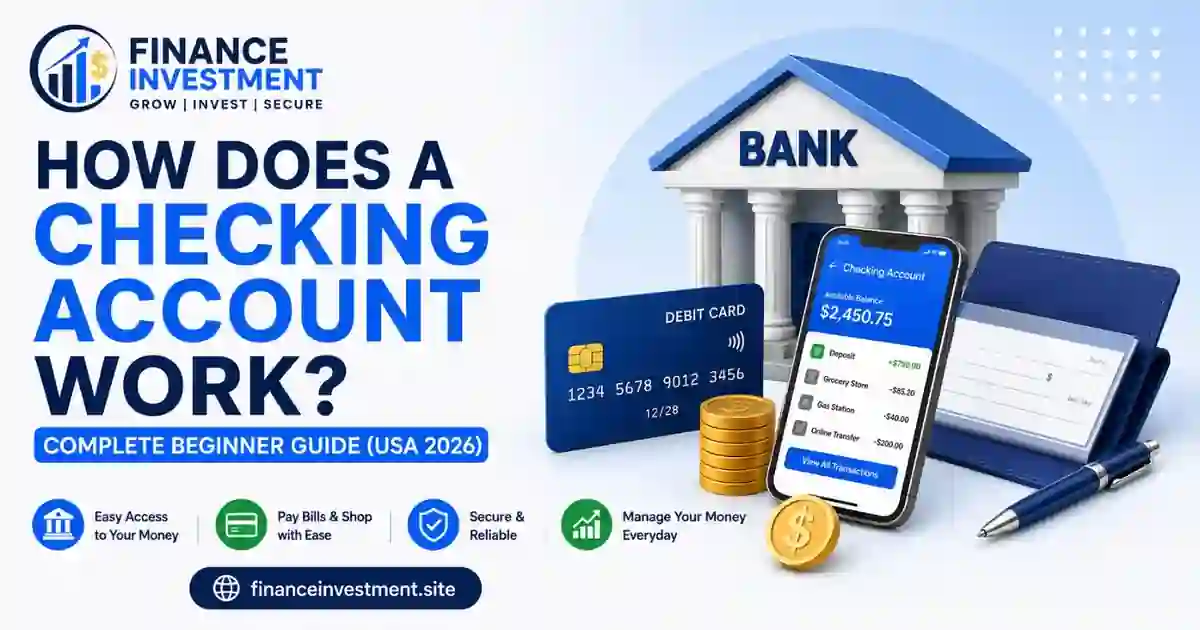 The first time money lands in your bank account, something happens behind the scenes almost instantly. Your balance updates, your banking app reflects the deposit, and that money becomes available for everyday spending. If you’ve ever wondered How Does a Checking Account Work, you’re asking one of the most practical questions in personal finance.Many people use a checking account every day without fully understanding what happens when they swipe a debit card, receive direct deposit, transfer money, or withdraw cash from an ATM. Learning how these transactions move through the banking system can help you avoid unnecessary fees, spot mistakes quickly, and manage your money with greater confidence.
 Every time money enters or leaves your bank account, several systems work together in just a few seconds. Understanding How Does a Checking Account Work isn’t only about knowing where your money is stored—it’s about seeing how banks record, verify, and update every transaction to keep your account accurate.