How to Avoid Automatic CD Renewal in 2026
An automatic CD renewal can happen before you realize the old term has ended. Knowing the renewal rules, deadlines, and choices ahead of time can help you stay in control of your money.
Automatic CD Renewal Is Often a Timing Problem
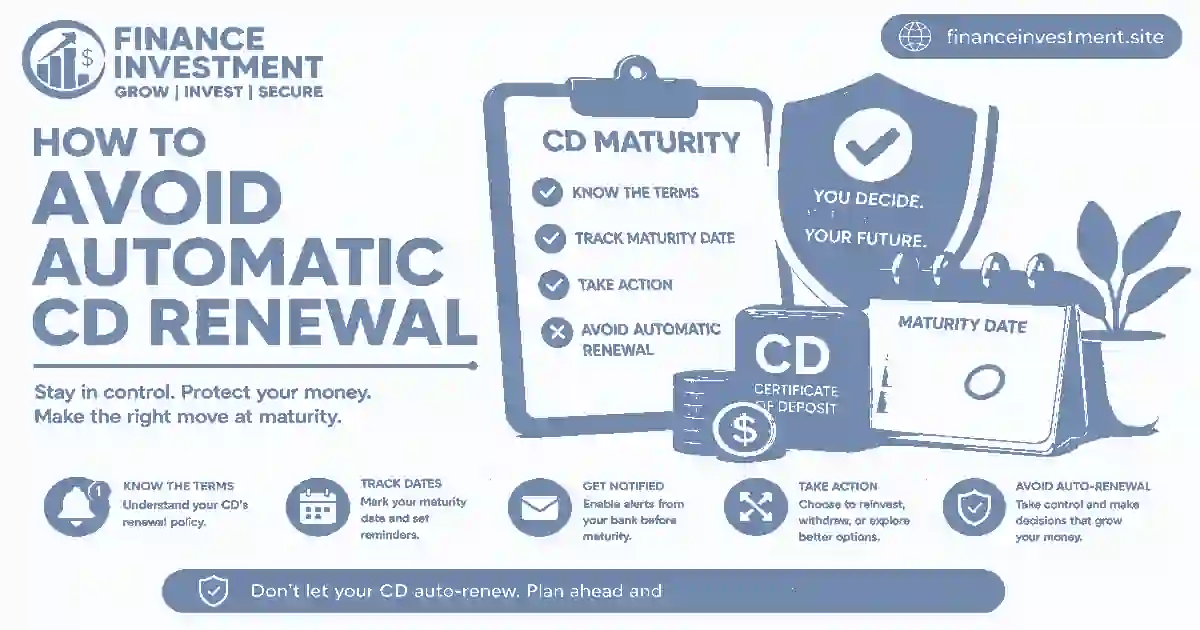 Learning how to avoid automatic CD renewal is less about escaping the CD itself and more about paying attention to the short window around maturity. A certificate can reach the end of its term while you are busy with everything else, and the account may then follow the renewal instructions already attached to it.
Start by finding your CD’s maturity date and reading the renewal notice from your bank or credit union. Look for the date when the certificate ends, the length of any grace period, and the deadline for changing your instructions. These details can determine whether you can move the money, renew it under different terms, or leave the funds in another account.
Rate changes matter, too. The rate available for a new CD may not be the same one you received when you opened the original certificate. That makes the maturity window a useful time to compare alternatives rather than accepting a new term automatically.
If you want a broader foundation first, our
CD Guide 2026
covers CD terms, rates, safety, and strategies. Here, we will focus specifically on staying ahead of renewal and keeping control of the proceeds.
What You’ll Learn
- How automatic CD renewal works
- Where to find your renewal deadline
- How grace periods can affect your choices
- Ways to stop an unwanted renewal
- What to consider before moving or reinvesting the money
Quick Answer: How to Avoid Automatic CD Renewal
To avoid an unwanted renewal, act before your institution’s deadline. Find the maturity date, read the renewal notice, confirm the grace period, tell the bank or credit union what you want, and verify the final transaction after maturity.
6 Practical Steps
- Find the maturity date: Check your CD statement, online account, or original agreement for the exact end date.
- Read the renewal notice: Look for the proposed new term, renewal rate, instructions, and deadline.
- Confirm the grace period: Check how long you have after maturity to make permitted changes.
- Contact the institution if needed: Ask about withdrawal procedures, transfer timing, or renewal instructions if anything is unclear.
- Submit your new instructions: Follow the bank or credit union’s required process before the applicable deadline.
- Verify the outcome: After maturity, confirm that the funds went where you intended and that an unwanted new CD was not opened.
Bottom line: The safest way to avoid accidental renewal is to treat the renewal notice like a deadline, not ordinary account mail.
Automatic CD Renewal at a Glance
The easiest way to prevent an unwanted CD renewal is to keep the key dates and instructions in one place. This quick reference shows what each detail means and why it deserves attention before the certificate rolls into another term.
| CD Detail | What It Tells You | Why It Matters |
|---|---|---|
| Maturity date | When the current term ends | Sets the timing for your next decision |
| Renewal notice | What the institution plans to do | Reveals the proposed term and instructions |
| Grace period | Time available for permitted changes | May be your last opportunity to adjust the funds |
| Renewal rate | Rate offered for another CD term | May differ from your original rate |
| Maturity instructions | Where the proceeds should go | Helps prevent an unintended renewal |
| Final verification | What actually happened after maturity | Confirms your instructions were completed |
Simple rule: Keep the notice, deadline, intended destination, and confirmation together until the transaction is complete.
Complete Beginner Guide to Avoiding Automatic CD Renewal
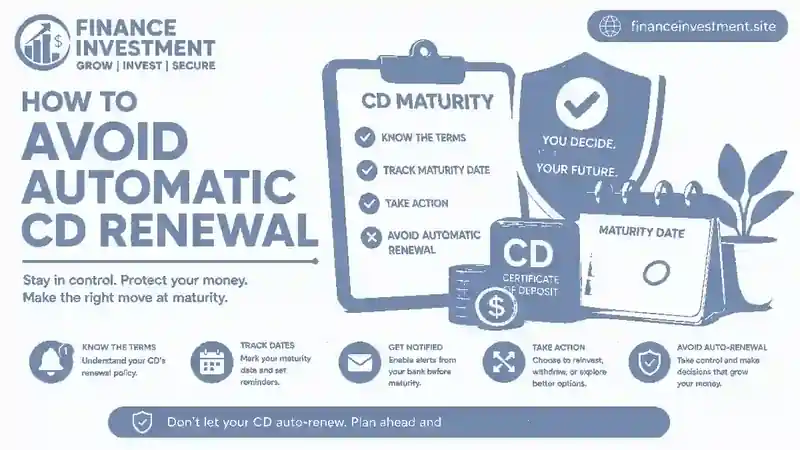 If you have never changed a CD’s maturity instructions before, the process can seem more complicated than it really is. The key is to handle the account before the renewal takes effect and keep a record of what you requested.
1. Locate Your CD’s Renewal Information
Sign in to your bank or credit union account and open the CD details. You may also find the information in a recent statement or maturity notice. Look for the maturity date, renewal instructions, and any stated deadline for changing the account’s instructions.
2. Check the Current Maturity Setting
Some institutions let you select what happens when the certificate matures through online banking. Others may require a phone call, secure message, branch visit, or written instruction. Find out which method applies to your CD before waiting until the final day.
3. Decide Where the Money Should Go
Do not focus only on stopping the renewal. Decide what you want to happen afterward. You might transfer the proceeds to a savings account, use the money for a planned expense, or consider another CD with a different term. If you are still comparing certificates, our guide on
how to choose the right CD
can help.
4. Submit the Change Before the Deadline
Follow the institution’s stated procedure exactly. If a representative changes the instruction for you, ask when the request becomes effective and whether you will receive confirmation. Keep any reference number, secure message, or confirmation email.
5. Check the Grace-Period Rules
If you missed the original instruction window, do not assume the money is permanently locked into another term. Ask whether the CD is still within an applicable grace period and what transactions are permitted during it.
6. Verify the Result
After maturity, check the account again. Confirm that the CD closed or renewed according to your instructions and that the proceeds reached the intended destination. If something looks wrong, contact the institution promptly and keep your earlier confirmation available.
Beginner Tip
Set a personal reminder several days before the institution’s deadline. That gives you time to compare options instead of making a rushed decision.
How Automatic CD Renewal Works
Automatic renewal is a preset instruction attached to some CDs. If the certificate reaches maturity and the institution does not receive a different instruction within the applicable window, the account may move into another CD term under the renewal rules. The exact process varies by bank or credit union, so the account agreement and maturity notice are the final word.
What Happens at Maturity?
When the original term ends, the institution calculates the amount due under the CD’s terms. Depending on how the account handles interest, the proceeds may include the original principal plus interest that remained in the certificate. If automatic renewal applies, the institution can then place the eligible amount into a new certificate.
The New CD Is a New Commitment
A renewal does not necessarily preserve the old rate. The new certificate may carry a different rate, term, and maturity date. That means an automatic renewal can change your future earnings and the length of time your money remains committed.
Where the Grace Period Fits
Some institutions provide a grace period around maturity during which certain changes or withdrawals may be allowed without treating them as an early withdrawal from the renewed CD. The length and permitted transactions vary, so check your specific agreement.
Illustrative Example: A $15,000 CD Renews
Imagine Maya has a $15,000 CD that reaches maturity. She does not change the account instructions in time, and the certificate automatically renews for another term under the institution’s applicable renewal terms. Maya later realizes she wanted the money available for a planned purchase. This example is illustrative only; actual renewal and grace-period rules depend on the institution and account agreement.
The important distinction is simple: automatic renewal keeps the money in a CD, but it also starts another rate-and-term commitment. Understanding that sequence makes it easier to decide whether the default setting still fits your plans.
Benefits and Drawbacks of Automatic CD Renewal
Automatic renewal is not automatically bad. For some savers, it removes paperwork and keeps money earning interest without requiring another deposit decision. The problem starts when the default setting no longer matches the owner’s plans.
Pros
- Convenience: The money can continue into another CD without requiring a new application each time.
- Continued interest: Funds can remain invested instead of sitting unused after maturity.
- Helpful for long-term savers: People who already know they want another fixed term may appreciate the hands-off approach.
- Less administrative work: Automatic handling can simplify recurring CD renewals for an established savings plan.
Cons
- Missed rate opportunities: You may overlook a more competitive CD elsewhere.
- Less flexibility: A new fixed term can make the funds harder to access when plans change.
- Accidental commitment: The money may enter another term before you realize the renewal occurred.
- Changing rates: The renewal rate may differ from the rate you previously earned.
Automatic renewal works best when it is intentional. If your cash needs, preferred term, or rate expectations have changed, reviewing the default instruction before maturity can be worth the effort.
CD Renewal Options Compared
Stopping automatic renewal does not mean you have to leave CDs behind. It simply gives you a chance to choose the next destination for the money. The right option depends on how much access you need, whether you want another fixed rate, and how much effort you want to put into comparing offers.
| Option | Main Advantage | Main Trade-Off | May Suit |
|---|---|---|---|
| Automatic renewal | Convenience | May lock in an unsuitable rate or term | Savers who already want another CD |
| Manual renewal | More control over the new terms | Requires active comparison | Savers comfortable choosing a new CD |
| Withdraw funds | Immediate control after applicable maturity rules | Funds may earn less elsewhere | People with planned cash needs |
| Move to savings | Greater access to cash | Savings rates can change | Savers who value flexibility |
| Move to another CD | Opportunity to compare institutions and terms | Requires another fixed commitment | Savers seeking a different term or rate |
If you decide to replace the old certificate, compare the available term instead of assuming the renewal offer is competitive. Our guides to
6-month CDs
and
3-year CDs
provide useful starting points for different time horizons.
For multiple maturity dates, consider our guide to
building a CD ladder
rather than allowing one certificate to renew indefinitely.
Costs, Risks and Expert Tips for Avoiding CD Renewal
The biggest cost of an unwanted renewal may not appear as a fee. It can be the loss of a better opportunity. A renewed CD can keep your money committed under terms that no longer fit, especially if rates, spending plans, or your cash needs have changed.
Watch the Deadline Closely
Missing the institution’s instruction window can leave the CD in a new term before you have reviewed the alternatives. Put the maturity date and the instruction deadline on your calendar separately. The maturity date tells you when the old term ends; it does not necessarily tell you how long you have to change the renewal outcome.
Compare the Renewal Rate
A renewal may carry a lower rate than your previous CD or a different term than you expected. Compare the offer with current alternatives before accepting it. Even a small rate difference can matter when a substantial balance is involved.
Consider Taxes and Insurance
Interest from a CD held in a taxable account can create taxable income. Also review applicable deposit-insurance limits if a large balance is being renewed or moved. Our guides on
CD taxes
and
FDIC insurance for CDs
provide additional background.
Warning: Check Before You Change the Instruction
Confirm the destination account, transfer timing, renewal rate, new term, and any applicable fees or restrictions before submitting a maturity instruction. A small mistake in the destination details can create unnecessary delays.
Expert Tip
Make your maturity decision from the rate and cash needs that exist today—not from the assumptions you made when the original CD was opened.
Common Mistakes When Trying to Stop CD Renewal
Most renewal problems are not caused by complicated banking rules. They happen because a small detail gets overlooked at the wrong time. Treat the maturity process like a scheduled financial task rather than something the bank will manage for you.
Mistakes Worth Avoiding
- Assuming the bank will remind you: A maturity notice may be provided, but you should still track the important dates yourself.
- Confusing maturity with the deadline: The date the CD ends may not be the final date for changing your instructions.
- Ignoring renewal terms: Check the new rate, term, and other conditions instead of assuming they will match the original CD.
- Waiting too long: Leaving the decision until the last minute can make it harder to correct an unclear or incomplete request.
- Using the wrong destination: Verify the account information before requesting a transfer of the matured proceeds.
- Skipping the final check: After maturity, confirm that the funds moved as requested and that an unwanted renewal did not occur.
Illustrative Example: Sarah Misses Her Renewal Deadline
Sarah has a $25,000 CD approaching maturity. She knows the maturity date but assumes that date is also her last chance to make changes. She waits until the final day, only to discover that her institution’s instructions had to be submitted earlier. The CD renews under the applicable terms. Sarah then checks whether a grace period is available and contacts the institution to understand her remaining options.
Illustrative lesson: Knowing the maturity date is useful, but knowing the action deadline is what protects your choices.
Who Should Avoid Automatic CD Renewal?
Automatic renewal can be convenient, but it deserves a second look whenever your circumstances have changed. The default setting may no longer match what you need from the money.
Consider Changing the Default If You Need Cash Soon
Families planning a major purchase, retirees managing regular expenses, or anyone expecting a large bill may prefer easier access rather than another fixed term.
Consider Changing It If You Want to Compare Rates
Savers who want to shop across banks and credit unions should not assume the renewal offer is the strongest available choice. Maturity creates a natural point to compare current terms.
Consider Changing It for Larger Balances
With a substantial balance, the choice of institution, term, rate, and applicable deposit-insurance coverage can have greater consequences. Splitting money between different purposes may also provide a better balance of access and fixed returns.
When Automatic Renewal Can Make Sense
It can be reasonable for someone who deliberately wants another CD, does not expect to need the money soon, and is comfortable with the institution’s renewal terms. The important distinction is intent: automatic renewal should be a chosen convenience, not an unnoticed default.
Frequently Asked Questions About Automatic CD Renewal
What is automatic CD renewal?
Automatic CD renewal means a certificate may move into another CD term when it matures if you have not provided different instructions under the account’s rules.
How can I stop automatic CD renewal?
Check your maturity instructions and follow your bank or credit union’s required process before the applicable deadline. This may involve changing an online setting, contacting the institution, or submitting another permitted instruction.
Is the CD maturity date the same as the renewal deadline?
Not necessarily. The maturity date marks the end of the existing term, while the deadline for changing instructions may occur before or around maturity depending on the institution’s procedures.
How long is a CD grace period?
There is no universal grace period for every CD. The length and permitted transactions depend on the institution and the account agreement.
What happens if I do nothing when my CD matures?
If automatic renewal applies, the institution may place the eligible proceeds into another CD according to its renewal terms. Check your account agreement instead of assuming the funds will automatically be transferred elsewhere.
Can I change my CD renewal instructions?
Often, yes, if you act within the applicable instruction window. The available methods and deadlines vary, so follow the specific instructions provided by your institution.
Will my renewed CD keep the same interest rate?
Not necessarily. A renewed certificate can have a different rate and term from the original CD. Review the new offer before allowing another term to begin.
Can I move the money from a matured CD to savings?
If the institution permits the transfer, you can generally direct matured proceeds to an eligible savings or other account instead of renewing the CD.
Is interest from a renewed CD taxable?
Moving the principal is generally different from earning interest. Interest from a CD held in a taxable account is generally subject to applicable federal income-tax rules.
Illustrative: What happens if a $10,000 CD renews by mistake?
Illustrative example only: Suppose a $10,000 CD renews before the saver realizes the deadline has passed. The saver should review the account’s renewal and grace-period rules and contact the institution promptly to learn what options remain. Actual procedures vary by institution.
Final Verdict: How to Avoid Automatic CD Renewal
The simplest way to avoid automatic CD renewal is to act before your institution’s stated instruction deadline. Knowing the maturity date is helpful, but it is not enough. You also need to know when the bank or credit union requires your withdrawal, transfer, or renewal instructions.
If you need the money soon, directing the proceeds to an accessible account may be more practical. If you still want a fixed return, compare the available CD rates and terms before choosing another certificate. You can also reinvest only part of the balance when your goals call for both access and continued growth.
Most importantly, do not let automatic renewal become a decision you made by accident. Read the renewal notice, understand the applicable grace-period rules, and verify the final destination of your funds after maturity.
For a broader look at CD terms, rates, safety, and strategies, visit our
CD Guide 2026
.
It can help you evaluate what to do with your money after you take control of the renewal decision.
Bottom line: Put the renewal deadline on your calendar, make the decision deliberately, and confirm that the money ended up exactly where you intended.
Stay Ahead of Your Next CD Renewal
A CD renewal deadline is easier to manage when you know what to watch for. Get practical FinanceInvestment updates on CDs, rates, saving strategies, and everyday money decisions delivered to your inbox.
📧 subhashr325@gmail.com