Tag: CD Grace Period

  • How to Avoid Automatic CD Renewal in 2026: Smart Steps to Stay in Control

    How to Avoid Automatic CD Renewal in 2026: Smart Steps to Stay in Control

    FINANCEINVESTMENT • CD RENEWAL GUIDE • 2026

    How to Avoid Automatic CD Renewal in 2026

    SR
    Written by Subhash Rukade
    FinanceInvestment
    Updated August 26, 2026
    About 10–12 min read

    An automatic CD renewal can happen before you realize the old term has ended. Knowing the renewal rules, deadlines, and choices ahead of time can help you stay in control of your money.

    How to Avoid Automatic CD Renewal in 2026
    Learn how to avoid automatic CD renewal, find your renewal deadline, understand the grace period, change instructions, and choose what happens to your money.
    how-to-avoid-automatic-cd-renewal
    how to avoid automatic CD renewal
    automatic CD renewal,
    stop automatic CD renewal,
    how to stop CD renewal,
    CD renewal notice,
    CD renewal deadline,
    CD grace period,
    CD renewal options,
    automatic renewal on CDs,
    CD maturity renewal,
    CD renewal instructions
    https://financeinvestment.site/how-to-avoid-automatic-cd-renewal/
    Subhash Rukade
    August 25, 2026
    About 10–12 minutes

    Automatic CD Renewal Is Often a Timing Problem
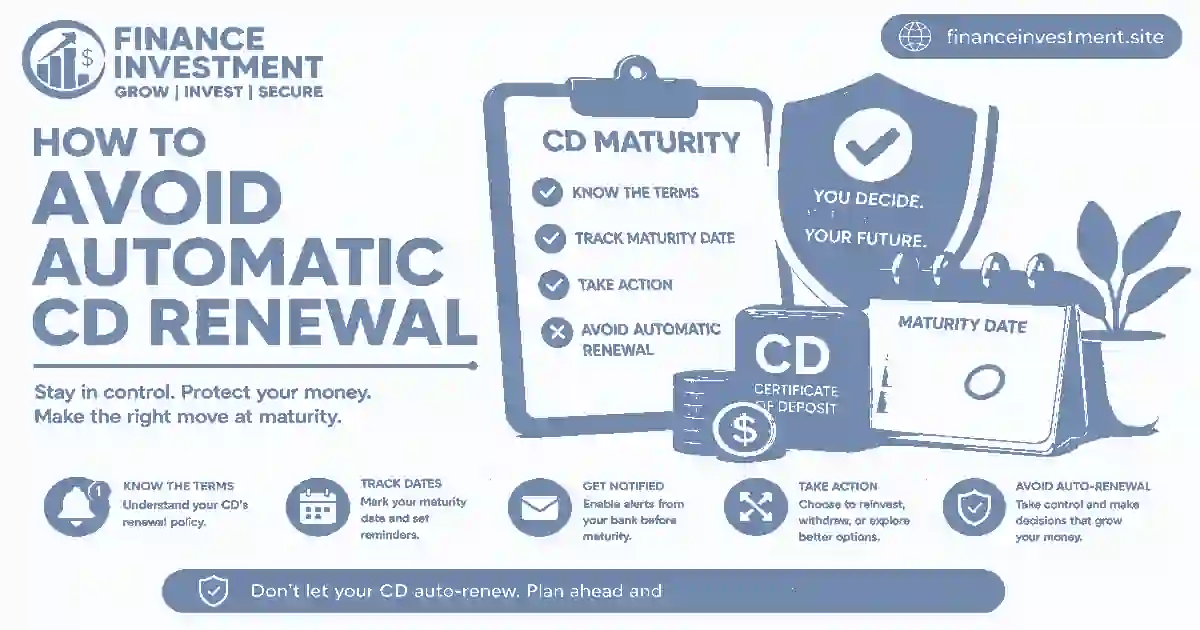
    how to avoid automatic CD renewalLearning how to avoid automatic CD renewal is less about escaping the CD itself and more about paying attention to the short window around maturity. A certificate can reach the end of its term while you are busy with everything else, and the account may then follow the renewal instructions already attached to it.

    Start by finding your CD’s maturity date and reading the renewal notice from your bank or credit union. Look for the date when the certificate ends, the length of any grace period, and the deadline for changing your instructions. These details can determine whether you can move the money, renew it under different terms, or leave the funds in another account.

    Rate changes matter, too. The rate available for a new CD may not be the same one you received when you opened the original certificate. That makes the maturity window a useful time to compare alternatives rather than accepting a new term automatically.

    If you want a broader foundation first, our

    CD Guide 2026

    covers CD terms, rates, safety, and strategies. Here, we will focus specifically on staying ahead of renewal and keeping control of the proceeds.

    What You’ll Learn

    • How automatic CD renewal works
    • Where to find your renewal deadline
    • How grace periods can affect your choices
    • Ways to stop an unwanted renewal
    • What to consider before moving or reinvesting the money

    Quick Answer: How to Avoid Automatic CD Renewal

    To avoid an unwanted renewal, act before your institution’s deadline. Find the maturity date, read the renewal notice, confirm the grace period, tell the bank or credit union what you want, and verify the final transaction after maturity.

    6 Practical Steps

    1. Find the maturity date: Check your CD statement, online account, or original agreement for the exact end date.
    2. Read the renewal notice: Look for the proposed new term, renewal rate, instructions, and deadline.
    3. Confirm the grace period: Check how long you have after maturity to make permitted changes.
    4. Contact the institution if needed: Ask about withdrawal procedures, transfer timing, or renewal instructions if anything is unclear.
    5. Submit your new instructions: Follow the bank or credit union’s required process before the applicable deadline.
    6. Verify the outcome: After maturity, confirm that the funds went where you intended and that an unwanted new CD was not opened.

    Bottom line: The safest way to avoid accidental renewal is to treat the renewal notice like a deadline, not ordinary account mail.

    Automatic CD Renewal at a Glance

    The easiest way to prevent an unwanted CD renewal is to keep the key dates and instructions in one place. This quick reference shows what each detail means and why it deserves attention before the certificate rolls into another term.

    CD DetailWhat It Tells YouWhy It Matters
    Maturity dateWhen the current term endsSets the timing for your next decision
    Renewal noticeWhat the institution plans to doReveals the proposed term and instructions
    Grace periodTime available for permitted changesMay be your last opportunity to adjust the funds
    Renewal rateRate offered for another CD termMay differ from your original rate
    Maturity instructionsWhere the proceeds should goHelps prevent an unintended renewal
    Final verificationWhat actually happened after maturityConfirms your instructions were completed

    Simple rule: Keep the notice, deadline, intended destination, and confirmation together until the transaction is complete.

    Complete Beginner Guide to Avoiding Automatic CD Renewal
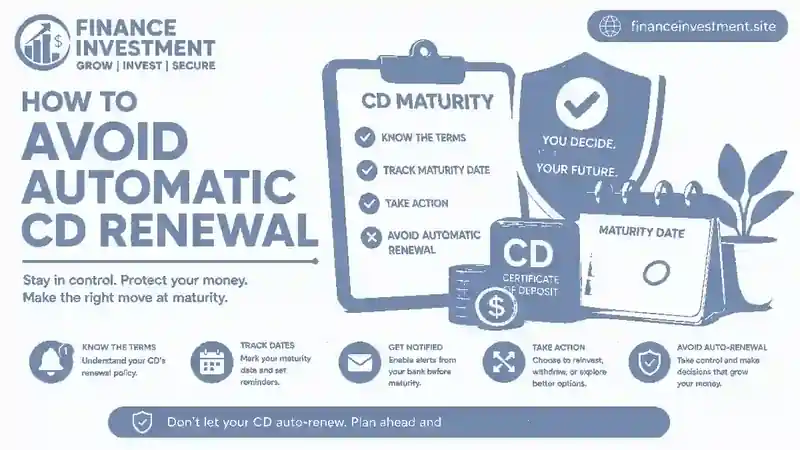
    how to avoid automatic CD renewalIf you have never changed a CD’s maturity instructions before, the process can seem more complicated than it really is. The key is to handle the account before the renewal takes effect and keep a record of what you requested.

    1. Locate Your CD’s Renewal Information

    Sign in to your bank or credit union account and open the CD details. You may also find the information in a recent statement or maturity notice. Look for the maturity date, renewal instructions, and any stated deadline for changing the account’s instructions.

    2. Check the Current Maturity Setting

    Some institutions let you select what happens when the certificate matures through online banking. Others may require a phone call, secure message, branch visit, or written instruction. Find out which method applies to your CD before waiting until the final day.

    3. Decide Where the Money Should Go

    Do not focus only on stopping the renewal. Decide what you want to happen afterward. You might transfer the proceeds to a savings account, use the money for a planned expense, or consider another CD with a different term. If you are still comparing certificates, our guide on
    how to choose the right CD
    can help.

    4. Submit the Change Before the Deadline

    Follow the institution’s stated procedure exactly. If a representative changes the instruction for you, ask when the request becomes effective and whether you will receive confirmation. Keep any reference number, secure message, or confirmation email.

    5. Check the Grace-Period Rules

    If you missed the original instruction window, do not assume the money is permanently locked into another term. Ask whether the CD is still within an applicable grace period and what transactions are permitted during it.

    6. Verify the Result

    After maturity, check the account again. Confirm that the CD closed or renewed according to your instructions and that the proceeds reached the intended destination. If something looks wrong, contact the institution promptly and keep your earlier confirmation available.

    Beginner Tip

    Set a personal reminder several days before the institution’s deadline. That gives you time to compare options instead of making a rushed decision.

    How Automatic CD Renewal Works

    Automatic renewal is a preset instruction attached to some CDs. If the certificate reaches maturity and the institution does not receive a different instruction within the applicable window, the account may move into another CD term under the renewal rules. The exact process varies by bank or credit union, so the account agreement and maturity notice are the final word.

    What Happens at Maturity?

    When the original term ends, the institution calculates the amount due under the CD’s terms. Depending on how the account handles interest, the proceeds may include the original principal plus interest that remained in the certificate. If automatic renewal applies, the institution can then place the eligible amount into a new certificate.

    The New CD Is a New Commitment

    A renewal does not necessarily preserve the old rate. The new certificate may carry a different rate, term, and maturity date. That means an automatic renewal can change your future earnings and the length of time your money remains committed.

    Where the Grace Period Fits

    Some institutions provide a grace period around maturity during which certain changes or withdrawals may be allowed without treating them as an early withdrawal from the renewed CD. The length and permitted transactions vary, so check your specific agreement.

    Illustrative Example: A $15,000 CD Renews

    Imagine Maya has a $15,000 CD that reaches maturity. She does not change the account instructions in time, and the certificate automatically renews for another term under the institution’s applicable renewal terms. Maya later realizes she wanted the money available for a planned purchase. This example is illustrative only; actual renewal and grace-period rules depend on the institution and account agreement.

    The important distinction is simple: automatic renewal keeps the money in a CD, but it also starts another rate-and-term commitment. Understanding that sequence makes it easier to decide whether the default setting still fits your plans.

    Benefits and Drawbacks of Automatic CD Renewal

    Automatic renewal is not automatically bad. For some savers, it removes paperwork and keeps money earning interest without requiring another deposit decision. The problem starts when the default setting no longer matches the owner’s plans.

    Pros

    • Convenience: The money can continue into another CD without requiring a new application each time.
    • Continued interest: Funds can remain invested instead of sitting unused after maturity.
    • Helpful for long-term savers: People who already know they want another fixed term may appreciate the hands-off approach.
    • Less administrative work: Automatic handling can simplify recurring CD renewals for an established savings plan.

    Cons

    • Missed rate opportunities: You may overlook a more competitive CD elsewhere.
    • Less flexibility: A new fixed term can make the funds harder to access when plans change.
    • Accidental commitment: The money may enter another term before you realize the renewal occurred.
    • Changing rates: The renewal rate may differ from the rate you previously earned.

    Automatic renewal works best when it is intentional. If your cash needs, preferred term, or rate expectations have changed, reviewing the default instruction before maturity can be worth the effort.

    CD Renewal Options Compared

    Stopping automatic renewal does not mean you have to leave CDs behind. It simply gives you a chance to choose the next destination for the money. The right option depends on how much access you need, whether you want another fixed rate, and how much effort you want to put into comparing offers.

    OptionMain AdvantageMain Trade-OffMay Suit
    Automatic renewalConvenienceMay lock in an unsuitable rate or termSavers who already want another CD
    Manual renewalMore control over the new termsRequires active comparisonSavers comfortable choosing a new CD
    Withdraw fundsImmediate control after applicable maturity rulesFunds may earn less elsewherePeople with planned cash needs
    Move to savingsGreater access to cashSavings rates can changeSavers who value flexibility
    Move to another CDOpportunity to compare institutions and termsRequires another fixed commitmentSavers seeking a different term or rate

    If you decide to replace the old certificate, compare the available term instead of assuming the renewal offer is competitive. Our guides to
    6-month CDs
    and
    3-year CDs
    provide useful starting points for different time horizons.

    For multiple maturity dates, consider our guide to
    building a CD ladder
    rather than allowing one certificate to renew indefinitely.

    Costs, Risks and Expert Tips for Avoiding CD Renewal

    The biggest cost of an unwanted renewal may not appear as a fee. It can be the loss of a better opportunity. A renewed CD can keep your money committed under terms that no longer fit, especially if rates, spending plans, or your cash needs have changed.

    Watch the Deadline Closely

    Missing the institution’s instruction window can leave the CD in a new term before you have reviewed the alternatives. Put the maturity date and the instruction deadline on your calendar separately. The maturity date tells you when the old term ends; it does not necessarily tell you how long you have to change the renewal outcome.

    Compare the Renewal Rate

    A renewal may carry a lower rate than your previous CD or a different term than you expected. Compare the offer with current alternatives before accepting it. Even a small rate difference can matter when a substantial balance is involved.

    Consider Taxes and Insurance

    Interest from a CD held in a taxable account can create taxable income. Also review applicable deposit-insurance limits if a large balance is being renewed or moved. Our guides on
    CD taxes
    and
    FDIC insurance for CDs
    provide additional background.

    Warning: Check Before You Change the Instruction

    Confirm the destination account, transfer timing, renewal rate, new term, and any applicable fees or restrictions before submitting a maturity instruction. A small mistake in the destination details can create unnecessary delays.

    Expert Tip

    Make your maturity decision from the rate and cash needs that exist today—not from the assumptions you made when the original CD was opened.

    Common Mistakes When Trying to Stop CD Renewal

    Most renewal problems are not caused by complicated banking rules. They happen because a small detail gets overlooked at the wrong time. Treat the maturity process like a scheduled financial task rather than something the bank will manage for you.

    Mistakes Worth Avoiding

    • Assuming the bank will remind you: A maturity notice may be provided, but you should still track the important dates yourself.
    • Confusing maturity with the deadline: The date the CD ends may not be the final date for changing your instructions.
    • Ignoring renewal terms: Check the new rate, term, and other conditions instead of assuming they will match the original CD.
    • Waiting too long: Leaving the decision until the last minute can make it harder to correct an unclear or incomplete request.
    • Using the wrong destination: Verify the account information before requesting a transfer of the matured proceeds.
    • Skipping the final check: After maturity, confirm that the funds moved as requested and that an unwanted renewal did not occur.

    Illustrative Example: Sarah Misses Her Renewal Deadline

    Sarah has a $25,000 CD approaching maturity. She knows the maturity date but assumes that date is also her last chance to make changes. She waits until the final day, only to discover that her institution’s instructions had to be submitted earlier. The CD renews under the applicable terms. Sarah then checks whether a grace period is available and contacts the institution to understand her remaining options.

    Illustrative lesson: Knowing the maturity date is useful, but knowing the action deadline is what protects your choices.

    Who Should Avoid Automatic CD Renewal?

    Automatic renewal can be convenient, but it deserves a second look whenever your circumstances have changed. The default setting may no longer match what you need from the money.

    Consider Changing the Default If You Need Cash Soon

    Families planning a major purchase, retirees managing regular expenses, or anyone expecting a large bill may prefer easier access rather than another fixed term.

    Consider Changing It If You Want to Compare Rates

    Savers who want to shop across banks and credit unions should not assume the renewal offer is the strongest available choice. Maturity creates a natural point to compare current terms.

    Consider Changing It for Larger Balances

    With a substantial balance, the choice of institution, term, rate, and applicable deposit-insurance coverage can have greater consequences. Splitting money between different purposes may also provide a better balance of access and fixed returns.

    When Automatic Renewal Can Make Sense

    It can be reasonable for someone who deliberately wants another CD, does not expect to need the money soon, and is comfortable with the institution’s renewal terms. The important distinction is intent: automatic renewal should be a chosen convenience, not an unnoticed default.

    Frequently Asked Questions About Automatic CD Renewal

    What is automatic CD renewal?

    Automatic CD renewal means a certificate may move into another CD term when it matures if you have not provided different instructions under the account’s rules.

    How can I stop automatic CD renewal?

    Check your maturity instructions and follow your bank or credit union’s required process before the applicable deadline. This may involve changing an online setting, contacting the institution, or submitting another permitted instruction.

    Is the CD maturity date the same as the renewal deadline?

    Not necessarily. The maturity date marks the end of the existing term, while the deadline for changing instructions may occur before or around maturity depending on the institution’s procedures.

    How long is a CD grace period?

    There is no universal grace period for every CD. The length and permitted transactions depend on the institution and the account agreement.

    What happens if I do nothing when my CD matures?

    If automatic renewal applies, the institution may place the eligible proceeds into another CD according to its renewal terms. Check your account agreement instead of assuming the funds will automatically be transferred elsewhere.

    Can I change my CD renewal instructions?

    Often, yes, if you act within the applicable instruction window. The available methods and deadlines vary, so follow the specific instructions provided by your institution.

    Will my renewed CD keep the same interest rate?

    Not necessarily. A renewed certificate can have a different rate and term from the original CD. Review the new offer before allowing another term to begin.

    Can I move the money from a matured CD to savings?

    If the institution permits the transfer, you can generally direct matured proceeds to an eligible savings or other account instead of renewing the CD.

    Is interest from a renewed CD taxable?

    Moving the principal is generally different from earning interest. Interest from a CD held in a taxable account is generally subject to applicable federal income-tax rules.

    Illustrative: What happens if a $10,000 CD renews by mistake?

    Illustrative example only: Suppose a $10,000 CD renews before the saver realizes the deadline has passed. The saver should review the account’s renewal and grace-period rules and contact the institution promptly to learn what options remain. Actual procedures vary by institution.

    Final Verdict: How to Avoid Automatic CD Renewal

    The simplest way to avoid automatic CD renewal is to act before your institution’s stated instruction deadline. Knowing the maturity date is helpful, but it is not enough. You also need to know when the bank or credit union requires your withdrawal, transfer, or renewal instructions.

    If you need the money soon, directing the proceeds to an accessible account may be more practical. If you still want a fixed return, compare the available CD rates and terms before choosing another certificate. You can also reinvest only part of the balance when your goals call for both access and continued growth.

    Most importantly, do not let automatic renewal become a decision you made by accident. Read the renewal notice, understand the applicable grace-period rules, and verify the final destination of your funds after maturity.

    For a broader look at CD terms, rates, safety, and strategies, visit our

    CD Guide 2026
    .
    It can help you evaluate what to do with your money after you take control of the renewal decision.

    Bottom line: Put the renewal deadline on your calendar, make the decision deliberately, and confirm that the money ended up exactly where you intended.

    FINANCEINVESTMENT • SMART CD GUIDANCE

    Stay Ahead of Your Next CD Renewal

    A CD renewal deadline is easier to manage when you know what to watch for. Get practical FinanceInvestment updates on CDs, rates, saving strategies, and everyday money decisions delivered to your inbox.

    📧 subhashr325@gmail.com
  • What to Do When Your CD Matures in 2026

    What to Do When Your CD Matures in 2026

    FINANCEINVESTMENT • CD MATURITY GUIDE • 2026

    What to Do When Your CD Matures in 2026

    SR
    Written by Subhash Rukade
    FinanceInvestment
    Updated August 26, 2026
    About 10–12 min read

    Your CD has reached maturity. Now you have a choice: take the money, renew the certificate, move it elsewhere, or use the opportunity to rethink your next savings move.

    What to Do When Your CD Matures in 2026
    Learn what to do when your CD matures in 2026, including how to withdraw, renew, reinvest, compare rates, avoid automatic renewal, and plan your next move.
    what-to-do-when-your-cd-matures
    what to do when your CD matures
    what happens when a CD matures,
    CD maturity options,
    what to do with a matured CD,
    CD renewal options,
    CD reinvestment,
    CD maturity date,
    automatic CD renewal,
    withdraw matured CD,
    reinvest matured CD,
    CD maturity process
    https://financeinvestment.site/what-to-do-when-your-cd-matures/
    Subhash Rukade
    August 25, 2026
    About 10–12 minutes

    Your CD Maturity Date Is a Decision Window

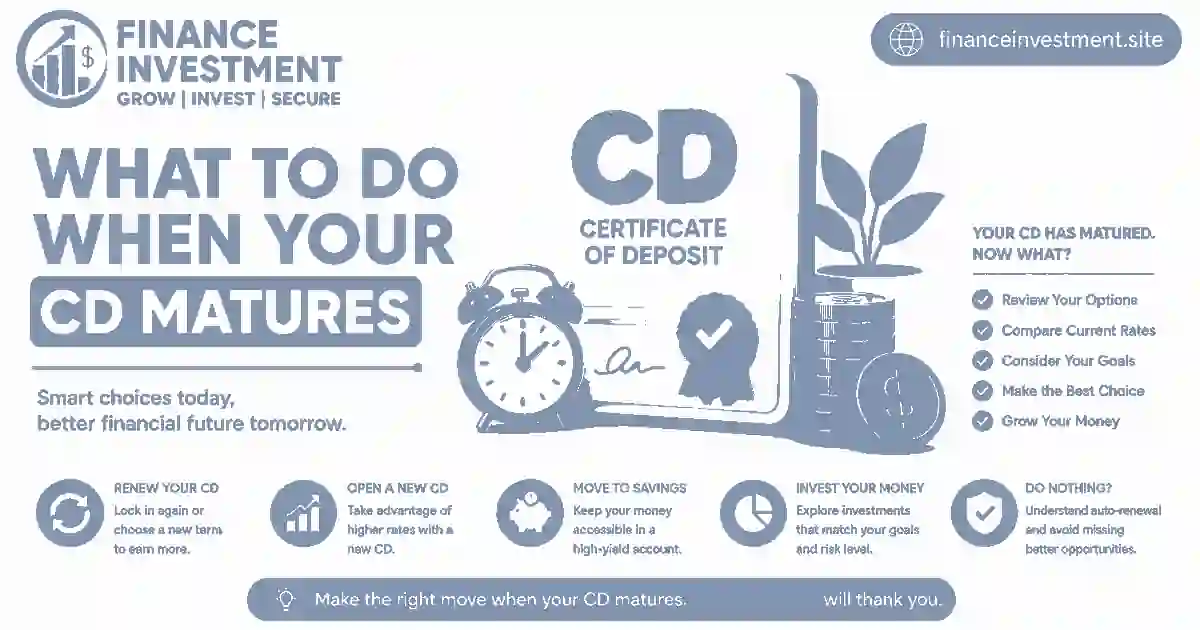
    What to Do When Your CD Matures in 2026Knowing what to do when your CD matures starts with recognizing that the maturity date is not simply the finish line. It is the point when your money becomes available for a new decision. You may need the cash for an upcoming expense, want to renew the certificate, or decide that another savings option now fits better.

    The first step is to check the maturity date and the grace period in your account agreement. That gives you a clear window to review your choices instead of allowing an automatic renewal to happen without a second look. The new CD rate may be different from the rate you originally received, and your own cash needs may have changed too.

    If you are still learning how certificates work, the

    CD Guide 2026

    provides a broader look at CD terms, rates, safety, and common strategies. This guide takes the next step by focusing on the choices that become available when your certificate reaches maturity.

    A little preparation can give you more control over where the principal and earned interest go next.

    What You’ll Learn

    • What normally happens when a CD reaches maturity
    • How to compare withdrawal, renewal, and reinvestment choices
    • How to prepare for the maturity and grace-period window
    • When keeping the money outside another CD may make more sense

    Quick Answer: What to Do When Your CD Matures

    When a CD matures, first confirm exactly when the term ends and how long you have to give new instructions. Then decide whether you need the money, want another CD, or prefer a different place for the funds. Compare the available terms before allowing the account to renew.

    6 Practical Maturity Moves

    1. Confirm the maturity date: Check your account documents so you know when the certificate ends.
    2. Review the grace period: Find out how long you have to withdraw or change the instructions after maturity.
    3. Decide whether you need the cash: Consider upcoming bills, planned purchases, and other near-term needs.
    4. Compare the new rate: Do not assume the renewal rate will match your previous CD rate.
    5. Choose what happens to the money: Decide whether to withdraw the principal, take the interest, reinvest part or all of the proceeds, or move the funds elsewhere.
    6. Prevent an unwanted renewal: Follow the institution’s instructions before the applicable deadline if you do not want another CD.

    Bottom line: Treat CD maturity as an active money decision. A few minutes of review can help you avoid an unsuitable renewal and put the proceeds where they best fit your next goal.

    CD Maturity Options at a Glance

    Once the term ends, the important details are no longer about opening the CD. They are about what becomes available, what deadlines apply, and how much control you have over the proceeds. Use the table below as a quick reference before making your next move.

    Maturity DetailWhat to CheckPossible Next Step
    Maturity dateWhen the CD term endsReview your instructions
    Grace periodDeadline for changing or withdrawing fundsAct before the deadline
    PrincipalAmount becoming availableWithdraw or reinvest
    InterestHow earned interest is handledKeep, transfer, or reinvest
    RenewalNew rate and termRenew only if suitable
    LiquidityHow soon you may need the moneyKeep some funds accessible if needed

    Quick check: Have the maturity date, grace-period deadline, available balance, and next destination for the money written down before the CD reaches its final day.

    Complete Beginner Guide to Handling a Matured CD

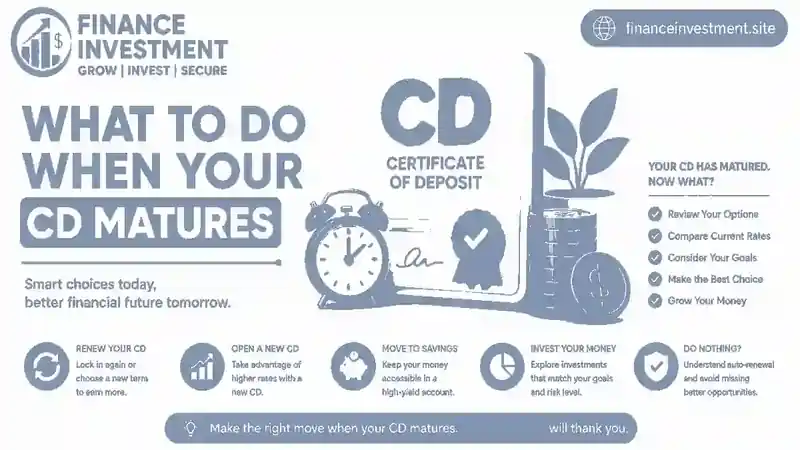
    what to do when your CD maturesWhen your CD reaches maturity, you do not need to make the next decision blindly. A simple review of the account notice, available dates, and your current cash plans can help you move the money deliberately instead of reacting at the last minute.

    1. Read the Maturity Notice

    Start with the message or statement from your bank or credit union. Look for the maturity date, the amount becoming available, the renewal instructions, and any deadline for changing those instructions. If you are unsure about a term, contact the institution before the decision window closes.

    2. Confirm the Grace Period

    Find out whether the account provides a grace period after maturity and exactly when it ends. Do not assume every institution uses the same timeframe. Your account agreement controls the details.

    3. Decide How Much Cash You Need

    Look ahead at planned expenses, large purchases, taxes, or other known needs. You may not need to move the entire balance. If only part of the proceeds is needed, check whether the institution allows the remaining amount to be placed into a new CD under its available terms.

    4. Compare the Renewal Offer

    If another CD still fits, compare the offered rate and term with current alternatives. A renewal is a new commitment, so review it separately from the certificate that just ended. Our guide on
    how to choose the right CD
    can help you evaluate the available features.

    5. Choose Withdrawal or Reinvestment

    You can generally decide whether to take the proceeds, transfer them, or use them for another CD. If you want to keep earning interest, compare the new term before reinvesting rather than assuming the old arrangement should continue.

    6. Record the Next Date

    If you open another CD, save its maturity date and renewal deadline immediately. A calendar reminder can prevent the next maturity from becoming an unexpected decision.

    How CD Maturity and Renewal Work

    A CD maturity is the point when the agreed term ends. What happens next depends on the account agreement and the instructions you have provided. The original principal and any interest handled at maturity can become available for a new decision, but the exact timing and renewal process vary by institution.

    What Happens When the Term Ends?

    On the maturity date, the CD reaches the end of its stated term. If you have chosen not to renew it, the institution may move the proceeds according to your instructions. If automatic renewal applies and you take no action, the principal may be placed into a new CD under the institution’s renewal terms.

    The interest treatment can vary as well. Some CDs keep credited interest in the certificate, while others pay interest to a linked account during the term. Check your account records to see whether the amount available at maturity includes the interest you expected.

    The Grace Period

    Some CDs provide a short period after maturity during which you can make changes without treating the transaction like an early withdrawal. The length and rules are institution-specific, so use your account agreement rather than assuming a standard period.

    Illustrative Example: A $12,000 CD Reaches Maturity

    Imagine a saver has a $12,000 CD that matures after one year. At maturity, the saver reviews the proceeds and sees that a planned $3,000 expense is coming up. Instead of renewing the entire amount, the saver uses the available funds for that expense and considers a new CD for the remaining $9,000. This is an illustrative example, not a prediction of any institution’s maturity procedure.

    Withdrawal or Reinvestment?

    Withdrawal gives you immediate control over the proceeds once the applicable maturity rules allow it. Reinvestment keeps the money working but starts a new rate-and-term decision. If you reinvest, the new CD’s rate is based on the offer available at that time rather than the rate on the original certificate.

    Benefits and Drawbacks of Handling a Matured CD

    Taking a moment to review a matured CD gives you more control over the money. You can line up the next move with your current plans instead of letting the previous account setup decide what happens next.

    Pros

    • More control: You can decide where the principal and earned interest go next.
    • Better comparisons: Maturity gives you a natural point to review current CD rates and terms.
    • Planned cash access: You can use the proceeds for an upcoming expense without breaking a new CD.
    • Flexible reinvestment: You can renew all, part, or none of the proceeds when the available options suit your plans.

    Cons

    • Automatic renewal risk: Failing to act may result in another CD under the institution’s renewal terms.
    • Missed deadlines: Waiting too long can limit the choices available during the maturity window.
    • Changing rates: The new CD rate may be higher or lower than the rate you previously received.
    • Reduced liquidity: Reinvesting the proceeds starts another period in which the money may be less accessible.
    • Opportunity cost: A new CD may not be the best destination if your cash needs or alternatives have changed.

    The main advantage is control, but that control requires attention. If you know when the CD matures and give yourself enough time to review the choices, the decision becomes much easier to manage.

    CD Maturity Options Compared

    Once a CD matures, the best choice depends on what the money needs to do next. Keeping everything in another CD is only one option. You can also take the proceeds, split the balance, or move the money to an account that gives you easier access.

    OptionBest FeatureMain Trade-OffMay Fit When
    Renew the CDKeeps the money in a fixed-term depositStarts another commitmentYou do not need the funds soon
    Withdraw allMaximum control over the proceedsMoney may stop earning the CD rateYou have a near-term use for the funds
    Partially reinvestBalances growth and accessRequires a clear split between goalsSome cash is needed while some can stay invested
    Move to another CDLets you compare a different institution or termMay require another fixed commitmentAnother CD better matches your next timeline
    Use a flexible savings accountEasier access to the moneyThe rate can changeLiquidity matters more than locking a rate

    If you decide to renew or move the proceeds into another certificate, compare the available terms rather than assuming the previous choice is still suitable. Our guides to
    1-year CD rates
    and
    5-year CD rates
    can help you compare different time horizons.

    If you want several maturity dates instead of one, see our guide to
    building a CD ladder.

    Costs, Risks and Expert Tips After CD Maturity

    A matured CD gives you more choices, but each choice can affect your future return and access to the money. Before moving the proceeds, pay attention to the details that are easiest to overlook.

    Watch the Renewal Rate

    The rate on a renewed CD may differ from the rate on your original certificate. Do not treat renewal as an automatic extension of the old deal. Compare the new offer with other available terms before committing the proceeds again.

    Check for Tax Consequences

    Interest from a CD held in a taxable account is generally taxable income. Moving the principal at maturity does not erase tax obligations associated with interest already earned. For more detail, see our guide to
    how CD earnings are taxed.

    Think About Insurance Coverage

    If a large balance is being renewed or moved to another institution, review applicable deposit-insurance limits and the ownership category. Our guide to
    FDIC insurance for CDs
    explains the basics.

    Do Not Ignore Opportunity Cost

    Reinvesting everything into another CD can reduce flexibility if your plans change. On the other hand, moving all the money into a flexible account may mean giving up a potentially higher fixed return. Consider what the money is likely to do next before choosing either extreme.

    Expert Tip

    Before maturity, write down three numbers: the amount you expect to receive, the amount you actually need soon, and the amount you could leave untouched. That simple split can make the reinvestment decision much clearer.

    Common CD Maturity Mistakes

    A CD maturity can feel routine, especially if the account has been sitting untouched for a year or more. That is exactly when small oversights can lead to a decision you did not intend to make. A few simple checks can prevent most of these problems.

    Mistakes to Avoid

    • Allowing an unwanted automatic renewal: Assuming the CD will simply return the money can be risky if the account is set to renew automatically.
    • Missing the grace-period deadline: Waiting until the last moment may leave little time to change the maturity instructions.
    • Withdrawing without a destination: Moving the money out of a CD without knowing where it will go next can leave a large balance sitting idle.
    • Renewing without comparing rates: A renewal offer deserves the same scrutiny as a brand-new CD.
    • Moving the entire balance unnecessarily: You may need only part of the proceeds for an upcoming expense while the rest could remain invested.
    • Forgetting taxes or insurance limits: Consider the tax treatment of earned interest and applicable deposit-insurance coverage when deciding where a larger balance should go.

    Illustrative Example: Daniel Splits His Matured CD

    Daniel has a $30,000 CD reaching maturity. He originally planned to renew the full amount, but a $7,000 home expense is now expected within several months. Instead of renewing everything, he considers keeping the $7,000 accessible and comparing CD options for the remaining $23,000. He also checks the new rate, renewal deadline, and applicable insurance coverage before making the move.

    Illustrative lesson: A maturity decision can be divided around actual cash needs rather than treating the entire balance as one package.

    Who Should Choose Each CD Maturity Option?

    The best choice after maturity depends on what the money needs to do next. There is no requirement to renew the certificate simply because it worked well during the previous term.

    Choose Withdrawal or Greater Liquidity If…

    You have an upcoming purchase, planned bill, tax payment, or other known expense. Families with near-term goals may prefer having the proceeds readily available rather than starting another fixed term.

    Consider Another CD If…

    You do not expect to need the money soon and value a defined rate for another period. Savers with predictable timelines, including some retirees and conservative investors, may prefer another fixed-term certificate.

    Consider Partial Reinvestment If…

    You want some of the money available while the rest can remain committed. This can be useful for larger balances when immediate liquidity and continued interest earnings both matter.

    Choose Flexibility If…

    Your plans are uncertain or you may need access before another CD matures. A flexible savings option can make more sense when easy access matters more than locking in another fixed term.

    Remember: automatic renewal is not a reason to renew. If the new term, rate, or access rules no longer fit your plans, moving the money can be the more sensible choice.

    Frequently Asked Questions About CD Maturity

    What happens when a CD matures?

    The CD reaches the end of its agreed term. Depending on your instructions and the account agreement, the proceeds may be withdrawn, transferred, or renewed into another CD.

    How long is a CD grace period?

    There is no single grace-period length for every CD. The institution and account agreement determine the applicable window and what changes you can make during it.

    Does a CD automatically renew at maturity?

    Some CDs may renew automatically if you do not provide different instructions. Check your maturity notice and account agreement rather than assuming the proceeds will automatically be returned to you.

    What happens to the principal when a CD matures?

    The principal becomes available according to the maturity and account terms. You can generally follow the institution’s available instructions for withdrawal, transfer, or reinvestment.

    What happens to the interest when a CD matures?

    The treatment depends on how the CD handles interest. Interest may already have been paid during the term or remain part of the proceeds at maturity.

    Can I withdraw money when my CD matures?

    Generally, yes, subject to the account’s maturity and transaction procedures. The important point is to follow the institution’s instructions and applicable deadline.

    Should I renew my CD when it matures?

    Not automatically. Compare the new rate and term with your current cash needs and other available options before committing the proceeds again.

    Are CD maturity proceeds taxable?

    Moving your principal does not itself make it taxable income, but interest earned on a CD in a taxable account is generally subject to applicable federal income-tax rules.

    Are matured CD funds still covered by deposit insurance?

    Coverage depends on where the funds are held, the institution, and the applicable ownership category and insurance limits. Review the relevant FDIC or NCUA rules when moving a larger balance.

    Illustrative: What should I do with a $20,000 matured CD?

    Illustrative example only: If a $20,000 CD matures and the saver expects to need $5,000 soon, one possible approach is to keep that amount accessible and evaluate another CD or savings option for the remaining $15,000. The appropriate choice depends on the saver’s actual needs and available terms.

    Final Verdict: What Should You Do When Your CD Matures?

    When a CD matures, do not treat renewal as the default answer. Start by looking at what you need the money to accomplish next. If you have an upcoming expense, taking the proceeds or keeping part of them accessible may be more useful than locking everything away again.

    If you do not need the funds soon, compare the renewal offer with other available CD terms before committing to another certificate. A new term means a new rate, a new maturity date, and another period of reduced access. For larger balances, also consider applicable deposit-insurance limits and whether spreading funds across institutions or ownership categories is appropriate.

    Most importantly, do not assume that doing nothing means the money will simply return to your checking or savings account. Some CDs automatically renew under the institution’s rules. Check the maturity notice and act within the applicable window if you want a different outcome.

    For a broader look at CD terms, rates, safety, and strategies, continue with our

    CD Guide 2026
    .

    Practical takeaway: Let your next financial need—not automatic renewal—decide where the matured CD proceeds go.

    FINANCEINVESTMENT • SMART MONEY GUIDANCE

    Stay Ready for Your Next CD Decision

    CD maturity does not have to catch you by surprise. Join the FinanceInvestment newsletter for practical guides on CDs, saving strategies, rates, and everyday money decisions.

    📧 subhashr325@gmail.com