Tag: Car Insurance 2026

  • Full Coverage vs Liability Insurance (2026): Complete USA Coverage Guide

    Full Coverage vs Liability Insurance (2026): Complete USA Coverage Guide


    Full Coverage vs Liability Insurance (2026): Complete USA Coverage Guide

    Author: Subhash Rukade

    Published Date: July 8, 2026
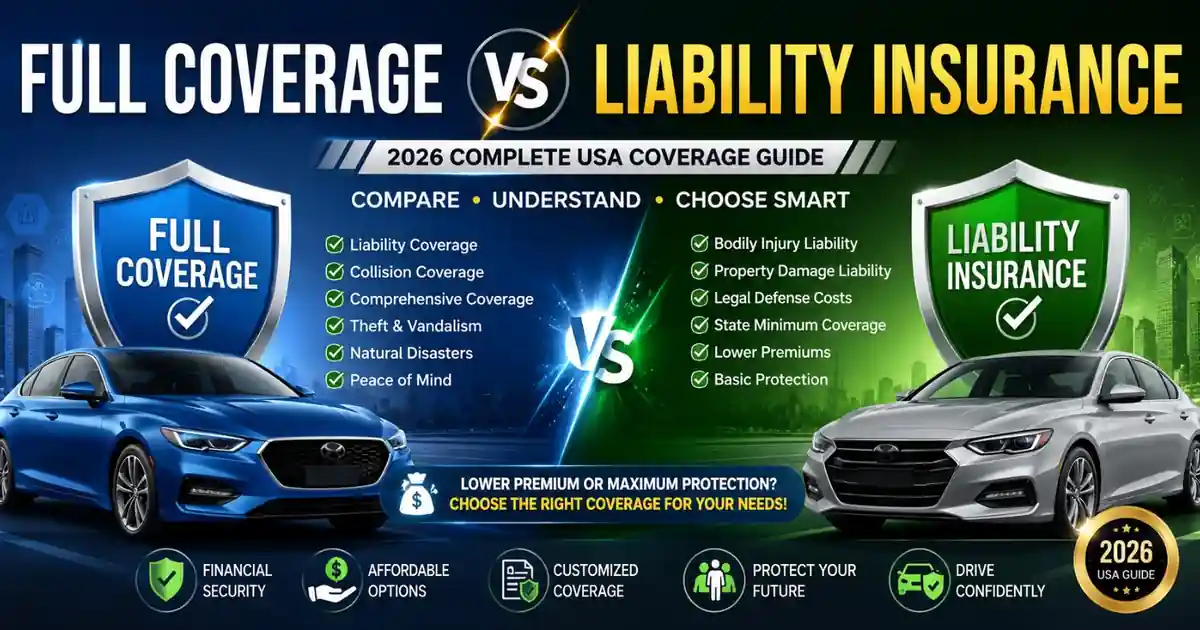
    Full Coverage vs Liability Insurance


    Full Coverage vs Liability Insurance is one of the most important comparisons every American driver should understand before purchasing an auto insurance policy in 2026. While both options provide financial protection, they serve very different purposes. Choosing the wrong coverage could leave you paying thousands of dollars out of pocket after an accident, while choosing the right policy can protect both your vehicle and your long-term financial future.Liability insurance is required by law in most U.S. states and helps pay for injuries or property damage you cause to other people. Full coverage insurance goes further by combining liability protection with collision and comprehensive coverage, helping pay for repairs to your own vehicle after accidents, theft, vandalism, fire, hail, floods, or other covered events. Understanding these differences allows drivers to purchase the protection that best matches their vehicle, budget, and financial goals.If you’re new to insurance, begin with our Insurance for Beginners USA guide. It explains deductibles, liability limits, premiums, policy terms, and other essential insurance concepts before you compare different coverage options.The decision between Full Coverage vs Liability Insurance depends on factors such as your vehicle’s value, outstanding loan balance, driving habits, state requirements, and personal financial situation. While liability insurance typically costs less, full coverage often provides greater peace of mind by protecting both you and your vehicle from expensive unexpected losses.

    In this complete USA 2026 guide, you’ll learn the differences between Full Coverage vs Liability Insurance, compare benefits and costs, estimate your insurance needs, avoid common buying mistakes, and discover practical strategies that help you choose the coverage offering the best value for your circumstances.

    What Is Liability Insurance and How Does It Work?

    Understanding Full Coverage vs Liability Insurance begins with knowing exactly what liability insurance covers. Liability insurance is the minimum level of auto insurance required in most U.S. states. Its primary purpose is to protect you financially if you cause an accident that results in injuries to another person or damage to someone else’s property. However, it does not pay to repair or replace your own vehicle after an at-fault accident.

    Because liability insurance offers more limited protection than full coverage, it generally has lower monthly premiums. This makes it a popular choice for drivers with older vehicles, limited budgets, or cars that have a relatively low market value. Still, choosing liability-only coverage means you’ll be responsible for paying your own repair or replacement costs if your vehicle is damaged in an accident you cause.

    What Liability Insurance Typically Covers

    • Bodily Injury Liability: Pays medical expenses, rehabilitation costs, lost wages, and legal expenses for people injured in an accident you cause.
    • Property Damage Liability: Covers repairs or replacement of another person’s vehicle, home, fence, mailbox, or other damaged property.
    • Legal Defense Costs: Many liability policies also help cover attorney fees and court costs if you’re sued after a covered accident.

    What Liability Insurance Does NOT Cover

    • Repairs to your own vehicle after an at-fault accident.
    • Theft of your vehicle.
    • Fire, flooding, hail, vandalism, or falling objects.
    • Collision damage to your own vehicle.
    • Personal belongings inside your vehicle.

    When comparing Full Coverage vs Liability Insurance, it’s important to consider your vehicle’s value and your financial ability to pay unexpected repair bills. A liability-only policy may save money today, but it could result in significant out-of-pocket expenses after a serious accident.

    Insurance should also fit within your broader financial plan. Our Retirement Planning Guide explains how balancing insurance protection with long-term investing helps American families build wealth while protecting their financial future.

    What Is Full Coverage Insurance? Comparison Table & Cost Calculator

    After understanding liability-only protection, the next step in comparing Full Coverage vs Liability Insurance is learning what full coverage actually includes. Although “full coverage” is not an official insurance policy type, it generally refers to a combination of liability insurance, collision coverage, and comprehensive coverage. Together, these protections offer much broader financial security than liability insurance alone.

    Full coverage is especially valuable for newer vehicles, financed or leased cars, and drivers who would struggle to pay for expensive repairs or replacement costs after an accident. While premiums are usually higher, the additional protection can save thousands of dollars when unexpected events occur.

    What Full Coverage Insurance Includes

    • Liability Coverage: Pays for injuries and property damage you cause to others.
    • Collision Coverage: Pays to repair or replace your vehicle after a collision, regardless of who caused the accident.
    • Comprehensive Coverage: Covers theft, vandalism, hail, fire, floods, falling objects, animal collisions, and other non-collision losses.

    Full Coverage vs Liability Insurance Comparison

    FeatureLiability InsuranceFull Coverage Insurance
    Meets State Minimum Requirements✔ Yes✔ Yes
    Covers Damage to Your Vehicle✘ No✔ Yes
    Covers Theft & Vandalism✘ No✔ Yes
    Monthly PremiumLowerHigher
    Recommended ForOlder VehiclesNewer, Financed, or Leased Vehicles

    Insurance Cost Calculator

    Estimated Annual Premium = Base Premium + Vehicle Risk + Driver Risk − Eligible Discounts

    Example

    • Base Premium = $700
    • Collision & Comprehensive = +$650
    • Vehicle Risk = +$250
    • Safe Driver Discount = −$200
    • Multi-Policy Discount = −$150
    • Estimated Annual Full Coverage Premium = $1,250


    If you’re still learning the basics of auto insurance, our Insurance for Beginners USA guide explains deductibles, liability limits, collision coverage, comprehensive protection, and policy selection in simple language. Understanding these fundamentals makes comparing Full Coverage vs Liability Insurance much easier and helps you choose the right policy for your vehicle and budget.

    Full Coverage vs Liability Insurance: Which Option Is Right for You?

    When comparing Full Coverage vs Liability Insurance, there isn’t a one-size-fits-all answer. The right choice depends on your vehicle’s value, financial situation, driving habits, and personal risk tolerance. While liability insurance offers the lowest monthly premium, full coverage provides much broader financial protection by helping pay for damage to your own vehicle as well as damage you cause to others.

    If you own an older vehicle worth only a few thousand dollars, liability insurance may provide enough protection. However, if you drive a newer vehicle, have an auto loan, or lease your car, lenders typically require full coverage insurance until the loan is paid off. Choosing the appropriate policy helps balance affordable premiums with long-term financial security.

    When Liability Insurance Makes Sense

    • Your vehicle has a low market value.
    • You can comfortably pay for repairs or replacement yourself.
    • Your car is fully paid off.
    • You’re looking for the lowest possible insurance premium.

    When Full Coverage Is the Better Choice

    • Your vehicle is new or relatively expensive.
    • Your car is financed or leased.
    • You rely on your vehicle for work or daily commuting.
    • You want protection against theft, vandalism, hail, floods, and collision damage.
    • You prefer greater financial peace of mind after unexpected accidents.

    Real-Life Case Study

    Michael, a 35-year-old software engineer from Florida, purchased a three-year-old SUV valued at approximately $28,000. Initially, he considered liability-only insurance to reduce his monthly premium. After comparing Full Coverage vs Liability Insurance, he discovered that full coverage would cost approximately $42 more per month.

    Six months later, a severe hailstorm caused more than $7,800 in vehicle damage. Because Michael had comprehensive coverage as part of his full coverage policy, his insurer paid for nearly all repair costs after his deductible. Had he selected liability-only insurance, he would have been responsible for the entire repair bill out of pocket.


    Reducing unnecessary financial risks allows families to invest more confidently over time. Once you’ve chosen the right insurance coverage, explore our Top Dividend Stocks USA 2026 guide to learn how dividend investing can help build passive income while supporting your long-term financial goals.

    How to Choose Between Full Coverage vs Liability Insurance

    Choosing between Full Coverage vs Liability Insurance depends on your financial situation, the value of your vehicle, and how much risk you’re willing to accept. While liability insurance offers the lowest monthly premium, full coverage provides broader financial protection by helping pay for repairs to your own vehicle after covered accidents, theft, vandalism, or natural disasters. Understanding your personal needs makes it much easier to select the right policy.

    Before purchasing any auto insurance policy, compare quotes from multiple companies, review your state’s minimum insurance requirements, and calculate how much you could comfortably afford to pay out of pocket after an accident. Spending slightly more on insurance today may save thousands of dollars in unexpected repair costs later.

    When Full Coverage Is Usually the Better Choice

    • You own a new or high-value vehicle.
    • Your vehicle is financed or leased.
    • You rely on your vehicle for work or daily transportation.
    • You cannot easily afford major repair or replacement expenses.
    • You want protection against theft, vandalism, hail, floods, and collision damage.

    When Liability Insurance May Be Enough

    • Your vehicle has a low market value.
    • Your car is fully paid off.
    • You have sufficient savings to replace or repair your own vehicle.
    • Your primary goal is reducing monthly insurance premiums.

    Common Mistakes Drivers Should Avoid

    • Choosing insurance based only on the cheapest monthly premium.
    • Ignoring deductible amounts before buying a policy.
    • Purchasing liability-only coverage for an expensive vehicle.
    • Failing to compare quotes from multiple insurance companies.
    • Not reviewing policy limits and optional coverage.
    • Keeping the same policy for years without checking for better rates.
    • Missing discounts such as safe-driver, multi-policy, or defensive driving savings.

    Insurance is only one part of a strong financial plan. Once you’ve selected the right coverage, consider growing your wealth with long-term investing. Our AI Investing Guide 2026 explains how artificial intelligence is changing investing, while our SIP Investing Guide 2026 shows how consistent monthly investing can help build wealth over time.

    Ultimately, the decision between Full Coverage vs Liability Insurance should be based on your vehicle’s value, your financial goals, and your ability to manage unexpected expenses. Reviewing your policy every year helps ensure you continue receiving the right protection at the most competitive price.

    Full Coverage vs Liability Insurance: Frequently Asked Questions & Smart Buying Checklist

    Understanding Full Coverage vs Liability Insurance helps drivers make informed financial decisions while avoiding unnecessary insurance costs. Every driver has different needs, so comparing coverage, deductibles, premiums, and long-term financial risks is essential before purchasing a policy. The following frequently asked questions answer many of the concerns American drivers have when choosing between these two popular coverage options.

    Frequently Asked Questions

    1. Is Full Coverage better than Liability Insurance?

    Neither option is automatically better. Full coverage offers broader protection because it includes liability, collision, and comprehensive insurance. Liability insurance is less expensive but only covers injuries and property damage you cause to others. The best choice depends on your vehicle’s value, financial situation, and personal risk tolerance.

    2. Is Full Coverage required by law?

    No. Most states only require minimum liability insurance. However, if your vehicle is financed or leased, your lender will usually require full coverage until the loan has been paid off.

    3. When should I switch from Full Coverage to Liability Insurance?

    Many drivers consider switching when their vehicle’s market value becomes relatively low and the annual cost of full coverage approaches the value of the vehicle itself. Review your insurance annually before making this decision.

    4. Does Full Coverage include every type of damage?

    No. Full coverage still has exclusions, deductibles, and policy limits. Reading your policy carefully helps you understand exactly what is and isn’t covered before filing a claim.

    5. How can I reduce the cost of Full Coverage Insurance?

    You can lower premiums by comparing multiple quotes, increasing your deductible, maintaining a clean driving record, bundling policies, using telematics programs, and qualifying for available discounts such as safe-driver or multi-policy savings.

    Smart Buying Checklist

    • ✔ Compare quotes from at least three reputable insurance companies.
    • ✔ Review both premium costs and coverage limits before choosing a policy.
    • ✔ Select a deductible that fits your emergency savings.
    • ✔ Consider your vehicle’s current market value.
    • ✔ Ask about safe-driver, multi-policy, and vehicle safety discounts.
    • ✔ Review customer satisfaction and claims service ratings.
    • ✔ Reassess your insurance needs every year.
    • ✔ Keep digital and printed copies of your insurance documents.

    Making smart insurance decisions is only one part of building long-term financial security. Our Best Credit Cards 2026 guide shares practical ways to maximize rewards, improve cash flow, and manage everyday expenses more effectively while supporting your broader financial goals.

    Conclusion: Full Coverage vs Liability Insurance

    Full Coverage vs Liability Insurance is not simply about choosing the cheapest policy—it’s about selecting the protection that best fits your financial situation, vehicle value, and long-term goals. Liability insurance is ideal for drivers with older vehicles who want to meet state minimum requirements at a lower cost. Full coverage, on the other hand, provides broader protection by covering your own vehicle against accidents, theft, vandalism, weather damage, and many other unexpected events.

    Before making your decision, compare quotes from several insurance companies, evaluate your deductible, and review your vehicle’s current value. The right policy today can save you thousands of dollars after an unexpected accident while giving you greater peace of mind every time you drive.

    If you’re still learning about insurance, don’t miss our Insurance for Beginners USA guide. You can also strengthen your financial future by reading our Recession-Proof Investing 2026 guide and Best Credit Cards 2026 article for more money-saving strategies.

    📩 Stay Ahead with Smart Insurance & Money Tips

    Join thousands of readers who receive practical advice on insurance, investing, retirement planning, credit cards, and personal finance. Get expert tips, money-saving strategies, and new financial guides delivered straight to your inbox.


    ✅ Subscribe Now

    100% Free • No Spam • Unsubscribe Anytime

    👨‍💼 About the Author

    Subhash Rukade is the founder of FinanceInvestment.site, where he creates easy-to-understand, research-based financial content focused on insurance, investing, retirement planning, passive income, and personal finance. His goal is to help American readers make smarter financial decisions through practical, trustworthy, and beginner-friendly guides.

  • Best Car Insurance for Teen Drivers (2026): Complete USA Parent’s Guide

    Best Car Insurance for Teen Drivers (2026): Complete USA Parent’s Guide


    Best Car Insurance for Teen Drivers (2026): Complete USA Parent’s Guide

    Author: Subhash Rukade

    Published Date: July 8, 2026

    Best Car Insurance for Teen Drivers


    Best Car Insurance for Teen Drivers is one of the most important financial decisions parents and young drivers will make in 2026. Because teenage drivers have limited driving experience, insurance companies typically charge higher premiums than they do for experienced adults. However, comparing multiple insurers, choosing the right coverage, and taking advantage of available discounts can help families secure dependable protection at a much more affordable price.Whether your teenager has just earned a learner’s permit or recently received a driver’s license, selecting the right auto insurance policy protects both your family’s finances and your teen’s future. Premiums depend on several factors, including age, location, driving history, vehicle type, annual mileage, coverage limits, deductibles, and available discounts. Understanding how these factors influence pricing can help you make smarter insurance decisions.If you’re buying insurance for the first time, begin with our Insurance for Beginners USA guide. It explains liability coverage, deductibles, comprehensive insurance, collision protection, policy limits, and other important insurance terms before you compare providers.

    The Best Car Insurance for Teen Drivers is not always the company advertising the lowest monthly premium. The best value comes from combining affordable pricing with strong financial stability, reliable claims service, excellent customer support, useful discounts, and enough coverage to protect your family after an accident.

    In this complete USA 2026 guide, you’ll learn how to compare the Best Car Insurance for Teen Drivers, estimate insurance costs, understand available coverage options, discover practical ways to lower premiums, avoid common buying mistakes, and choose a policy that offers long-term financial protection and peace of mind.

    Why Best Car Insurance for Teen Drivers Matters in 2026

    Choosing the Best Car Insurance for Teen Drivers is about more than meeting your state’s legal requirements. It provides financial protection for families while helping young drivers build responsible driving habits. Because teenagers have less driving experience, insurance companies consider them statistically more likely to be involved in accidents. This increased risk often results in higher premiums during the first few years after obtaining a driver’s license.

    Fortunately, parents can still find affordable coverage by comparing quotes from several insurance companies, selecting appropriate deductibles, maintaining good grades, and taking advantage of available safe-driver programs. Many insurers reward responsible teen drivers with significant discounts, making the Best Car Insurance for Teen Drivers much more affordable than many families expect.

    Understanding the Main Types of Coverage

    • Liability Coverage: Pays for injuries and property damage you cause to others. This is required in most U.S. states.
    • Collision Coverage: Helps repair or replace your teen’s vehicle after an accident, regardless of fault.
    • Comprehensive Coverage: Covers theft, vandalism, hail, fire, floods, falling objects, and other non-collision damage.
    • Uninsured/Underinsured Motorist Coverage: Protects your family if another driver has little or no insurance.
    • Medical Payments or Personal Injury Protection (PIP): Helps cover medical expenses after an accident, depending on your state’s insurance laws.
    • Roadside Assistance: Provides emergency towing, battery jump-starts, flat tire assistance, lockout service, and fuel delivery.

    Parents should also review policy limits instead of focusing only on monthly premiums. Choosing extremely low coverage may save money today but could create significant financial expenses after a serious accident. The Best Car Insurance for Teen Drivers balances affordability with dependable long-term protection.

    Managing insurance costs is part of a smart financial strategy. Our Retirement Planning Guide explains how reducing unnecessary expenses today allows families to invest more consistently while preparing for future financial goals.

    Best Car Insurance for Teen Drivers Comparison & Insurance Cost Calculator

    Finding the Best Car Insurance for Teen Drivers starts with comparing multiple insurance companies instead of accepting the first quote you receive. Every insurer evaluates teen drivers differently, so premiums can vary by hundreds or even thousands of dollars each year. Comparing coverage, discounts, financial strength, customer satisfaction, and claims service helps families choose the right policy while keeping costs under control.

    Many insurers reward teenagers who maintain good grades, complete defensive driving courses, or participate in safe-driving telematics programs. These discounts can significantly reduce the cost of the Best Car Insurance for Teen Drivers while still providing strong financial protection for your family.

    Comparison of Popular Insurance Companies

    Insurance CompanyBest ForKey Advantage
    State FarmTeen DriversExcellent student discounts and Drive Safe & Save™ program
    GEICOAffordable PremiumsCompetitive pricing and multiple discount opportunities
    ProgressiveNew DriversFlexible coverage options and Snapshot® savings program
    NationwideSafe Driving RewardsUsage-based discounts and accident forgiveness options
    AllstateFamiliesStrong claims service and comprehensive coverage choices

    Teen Driver Insurance Cost Calculator

    Estimated Annual Premium = Base Premium + Teen Driver Risk + Vehicle Risk − Discounts

    Example Calculation

    • Base Premium = $1,400
    • Teen Driver Risk = +$900
    • Sports Car Risk = +$300
    • Good Student Discount = −$350
    • Safe Driving App Discount = −$250
    • Estimated Annual Premium = $2,000


    Best Car Insurance for Teen Drivers

    If you’re still learning how insurance works, our Insurance for Beginners USA guide explains deductibles, liability limits, collision coverage, comprehensive insurance, and policy selection in simple language. Understanding these basics makes it easier to compare the Best Car Insurance for Teen Drivers and choose a policy that balances affordability with dependable financial protection.

    Best Car Insurance for Teen Drivers: Real-Life Case Study & Practical Examples

    Choosing the Best Car Insurance for Teen Drivers requires balancing affordable premiums with dependable financial protection. Many parents naturally focus on finding the lowest monthly payment, but the right policy should also provide adequate liability limits, collision coverage, comprehensive protection, and excellent claims service. Comparing several insurers before making a decision often results in substantial long-term savings.

    Real-Life Case Study

    Sarah, a 17-year-old high school student from Texas, received her driver’s license shortly before starting her senior year. Her parents added her to their existing auto insurance policy instead of purchasing a separate policy. Their first insurance quote increased the family’s annual premium by nearly $3,200.

    Rather than accepting the first offer, they compared quotes from multiple insurance companies, enrolled Sarah in a defensive driving course, maintained her good student status, and activated a telematics safe-driving program. They also selected a reliable midsize sedan instead of a sports car.

    After applying every available discount, the family found one of the Best Car Insurance for Teen Drivers policies and reduced their annual premium to approximately $2,050. The savings of more than $1,100 per year allowed them to maintain strong liability coverage, collision insurance, comprehensive protection, roadside assistance, and rental reimbursement without exceeding their budget.

    This example demonstrates that comparing insurers, choosing a safe vehicle, and qualifying for discounts can dramatically lower insurance costs while keeping teen drivers properly protected.

    Who Benefits Most from Teen Driver Insurance Discounts?

    • High School Students: Good student discounts can significantly reduce annual premiums.
    • College Students: Many insurers provide discounts for students living away from home without a personal vehicle.
    • Families with Multiple Vehicles: Multi-car policies often provide additional savings.
    • Safe Teen Drivers: Usage-based insurance programs reward responsible driving habits with lower premiums.
    • Parents Bundling Policies: Combining home and auto insurance may qualify for multi-policy discounts.


    Best Car Insurance for Teen Drivers

    Saving money on insurance creates more opportunities to invest for the future. After reducing your family’s insurance expenses, consider investing those savings consistently. Our Top Dividend Stocks USA 2026 guide explains how dividend-paying investments can help build passive income while supporting your family’s long-term financial goals.

    How to Save Money on the Best Car Insurance for Teen Drivers

    Finding the Best Car Insurance for Teen Drivers doesn’t have to mean paying the highest premium. While teenagers generally face higher insurance costs because of limited driving experience, families can reduce those expenses by making smart coverage decisions and taking advantage of available discounts. A little research today can lead to hundreds of dollars in annual savings while keeping your teen fully protected.

    Insurance companies evaluate several factors before calculating premiums, including the driver’s age, vehicle type, ZIP code, annual mileage, driving history, deductible, and policy limits. Understanding these factors allows parents to compare quotes effectively and choose the Best Car Insurance for Teen Drivers that offers both affordability and reliable financial protection.

    Proven Ways to Lower Teen Driver Insurance Costs

    • Compare quotes from at least three to five insurance companies every year.
    • Keep your teen on a parent’s existing policy instead of purchasing a separate policy.
    • Take advantage of good student discounts by maintaining strong academic performance.
    • Enroll in a defensive driving course approved by your insurer.
    • Select a safe, reliable vehicle with lower repair costs instead of a high-performance sports car.
    • Use telematics or safe-driving mobile apps that reward responsible driving behavior.
    • Increase your deductible if your emergency savings can comfortably cover smaller claims.
    • Bundle auto and homeowners insurance to qualify for multi-policy discounts.

    Common Mistakes Families Should Avoid

    • Choosing the lowest premium without comparing coverage limits.
    • Ignoring available discounts that could reduce annual insurance costs.
    • Purchasing a high-performance vehicle for a first-time driver.
    • Failing to compare quotes when the policy renews.
    • Selecting liability limits that are too low to protect family assets.
    • Not updating the policy after your teen completes driver education or improves their driving record.

    Saving money on insurance is just one part of building long-term financial security. Our AI Investing Guide 2026 explores how technology is helping investors make smarter financial decisions, while our SIP Investing Guide 2026 explains how consistent investing can help families grow wealth alongside responsible financial planning.

    The Best Car Insurance for Teen Drivers becomes more affordable as your teenager gains experience and maintains a clean driving record. Reviewing your policy annually and taking advantage of every available discount ensures your family receives the best possible value without compromising important coverage.

    Best Car Insurance for Teen Drivers: Frequently Asked Questions & Smart Buying Checklist

    Choosing the Best Car Insurance for Teen Drivers can seem complicated because insurance companies evaluate risk differently. Premiums vary based on driving experience, vehicle type, location, available discounts, and coverage limits. Understanding the answers to the most common questions helps parents and teenagers compare policies confidently while finding the best combination of affordability and financial protection.

    Frequently Asked Questions

    1. Which company offers the Best Car Insurance for Teen Drivers?

    Many families receive competitive rates from State Farm, GEICO, Progressive, Nationwide, and Allstate. However, the best company depends on your teenager’s age, location, driving history, vehicle, and available discounts. Comparing multiple quotes is the most effective way to find the right policy.

    2. Why is teen driver insurance more expensive?

    Teenagers have limited driving experience and are statistically more likely to be involved in accidents. Because of this increased risk, insurers generally charge higher premiums until young drivers establish a safe driving record.

    3. How can parents reduce teen driver insurance costs?

    Parents can save money by keeping their teenager on an existing family policy, maintaining good student eligibility, selecting a safe vehicle, completing defensive driving courses, using telematics programs, and comparing quotes every renewal period.

    4. Should teenagers have full coverage?

    If the vehicle is financed, leased, or has significant value, full coverage is usually recommended. Older vehicles with lower market value may only require liability coverage, depending on your financial situation and state requirements.

    5. How often should families compare insurance quotes?

    Insurance experts recommend reviewing policies every 12 months or after major life changes such as purchasing another vehicle, moving, adding a driver, or qualifying for new discounts. Regular comparisons help families continue finding the Best Car Insurance for Teen Drivers at competitive rates.

    Smart Buying Checklist

    • ✔ Compare quotes from at least three reputable insurance companies.
    • ✔ Ask about good student, safe driver, multi-car, and multi-policy discounts.
    • ✔ Select liability limits that adequately protect your family’s financial assets.
    • ✔ Choose a deductible that fits your emergency savings.
    • ✔ Review customer claim satisfaction and financial strength ratings.
    • ✔ Encourage safe driving habits to qualify for future discounts.
    • ✔ Review your policy annually and update coverage after major life events.
    • ✔ Keep both printed and digital copies of insurance documents.

    Protecting your family’s finances goes beyond choosing the Best Car Insurance for Teen Drivers. Smart everyday financial decisions also make a difference. Our Best Credit Cards 2026 guide explains how cashback, travel rewards, and low-interest credit cards can help families reduce expenses while supporting long-term financial goals.

    Conclusion: Best Car Insurance for Teen Drivers

    Best Car Insurance for Teen Drivers provides much more than affordable premiums—it gives families financial security, dependable protection, and confidence every time a young driver gets behind the wheel. While teen driver insurance is generally more expensive because of limited driving experience, comparing multiple insurers, maintaining good grades, practicing safe driving habits, and using available discounts can significantly reduce long-term insurance costs.

    Parents should remember that the cheapest policy isn’t always the best choice. Instead, focus on finding the right balance between affordable premiums, strong liability protection, comprehensive coverage, reliable claims service, and valuable discounts. Reviewing your family’s policy every year ensures your teenager continues receiving the best protection at the most competitive price.

    If you’re still learning about insurance, be sure to read our Insurance for Beginners USA guide. It explains policy types, deductibles, liability limits, premiums, and essential insurance terms in simple language. You can also strengthen your family’s financial future by exploring our Best Credit Cards 2026 guide, which shares practical strategies for earning rewards, improving cash flow, and managing everyday expenses more effectively.

    🚗 Subscribe for Weekly Insurance & Personal Finance Tips

    Join thousands of readers who receive expert advice on auto insurance, life insurance, investing, retirement planning, passive income, and smart money management. Every week you’ll get practical strategies designed to help American families save more, invest wisely, and build long-term financial security.

    Subscribe today and never miss our latest financial guides.

    👨‍💼 About the Author

    Subhash Rukade

    Founder of FinanceInvestment.site, where he publishes research-backed, easy-to-understand financial content focused on insurance, investing, retirement planning, passive income, and personal finance. His mission is to help American families make smarter financial decisions through practical, trustworthy, and beginner-friendly guides.