How ACH Transfers Work in 2026: Complete Beginner Guide
Updated Aug 13, 2026
12 min read
How ACH Transfers Fit Into Everyday Banking
 You might use ACH without ever seeing the three letters. Your paycheck can arrive through it, a utility company can collect a bill through it, and you can move money between bank accounts the same way. How ACH Transfers Work becomes much easier to understand once you see it as an electronic way for money to move between financial institutions.
An ACH credit sends money into an account, such as payroll or a tax refund. An ACH debit pulls money from an account after you authorize a payment, such as a subscription or monthly bill. Bank-to-bank transfers can also use the ACH network.
ACH payments aren’t always instant. Processing can depend on when the payment is submitted, bank processing schedules, weekends, and holidays.
For a broader look at checking-account management, see our Checking Accounts USA 2026 guide.
For example, Jordan schedules a monthly gym payment from a checking account. The gym is authorized to pull the agreed amount electronically instead of receiving a paper check each month.
What You’ll Learn
You’ll see how ACH credits and debits work, where they appear in everyday banking, how processing works, what they can cost, common mistakes, security concerns, and which situations make ACH useful.
That foundation makes the quick answer in the next section much easier to follow.
Quick Answer & Key Takeaways
Quick Answer
How ACH Transfers Work is fairly simple: one bank sends an electronic payment instruction through the ACH network, and another bank processes it for the receiving account. ACH credits add money; ACH debits take money out after authorization.
- ACH credit: Money moves into your account.
- ACH debit: An authorized payment pulls money from your account.
- Direct deposit: Employers commonly use ACH credits for payroll.
- Recurring bills: Utilities and subscriptions may use ACH debits.
- Processing: Timing varies by submission and banking schedules.
- Authorization: You generally approve the company or service before an ACH debit is initiated.
Bottom line: ACH is a practical backbone of everyday electronic banking, even when you never see the process happening.
Table of Contents
Pick a section that matches what you want to know, then continue through the guide as needed.
At a Glance
How ACH Transfers Work depends on whether money is being pushed into an account or pulled from it. Credits generally add funds; debits remove authorized payments.
Payroll, recurring bills, bank-to-bank transfers, subscriptions, and other routine electronic payments.
| Feature | ACH Credit | ACH Debit |
|---|---|---|
| Money movement | Funds are pushed into an account | Funds are pulled after authorization |
| Common use | Payroll or account funding | Bills and subscriptions |
| Timing | Often one or more business days | Depends on submission and processing schedules |
| Fees | Often no consumer fee | Depends on the account or service |
| Security | Use trusted payment instructions | Review authorized withdrawals |
The basic distinction is simple, but the actual path from authorization to completed payment has a few more moving parts. That is where the beginner guide comes in.
Complete Beginner Guide
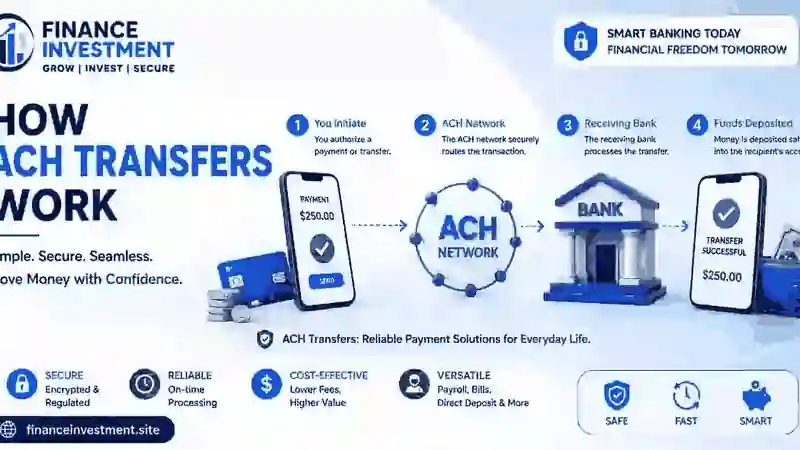 Setting up an ACH transfer usually starts with a checking or savings account and the bank details requested by the sender or biller. Depending on the transaction, you may provide your account number, routing number, account type, and the amount or payment date.
An ACH credit pushes money into an account. Payroll direct deposit is a common example. An ACH debit works in the opposite direction: a company or service pulls an authorized payment from your account. Utility bills, loan payments, and subscriptions may use this method.
For a bank-to-bank transfer, you normally choose the sending and receiving accounts, enter the required details, and confirm the amount. A company collecting a recurring payment may first obtain your authorization and then submit the payment according to its billing schedule.
Before the Money Arrives
The payment information is submitted through the ACH system and routed between the financial institutions involved. Processing may happen the same day or on a later banking day, depending on the payment type, submission time, and applicable schedules. 0
For example, Priya moves $500 from one personal bank account to another. She checks the receiving account details, confirms the transfer, and waits for the transaction to be processed rather than expecting the money to appear instantly.
If you’re still getting comfortable with checking-account activity, our How Does a Checking Account Work? guide covers the basics of balances, deposits, withdrawals, and transactions.
Understanding How ACH Transfers Work also means knowing that an authorized payment isn’t necessarily completed the moment you click submit. Bank cutoff times, weekends, holidays, and processing schedules can affect when funds are posted.
Once those moving parts are clear, the actual ACH transaction flow is much easier to follow.
How It Works
The easiest way to understand How ACH Transfers Work is to follow the payment from the person or company starting it to the account receiving it. The sender, called the originator, gives payment instructions to its bank, known as the originating depository financial institution, or ODFI.
The Basic Path
- Originator: Creates an ACH credit or debit instruction.
- Originating bank: Collects and sends the payment file.
- ACH Operator: Sorts transactions and directs them toward the appropriate receiving institutions.
- Receiving bank: The RDFI receives the transaction and posts it to the recipient’s account.
- Receiver: Gets the credit or has the authorized debit applied.
With an ACH credit, the originator tells its bank to send funds to another account. With an ACH debit, the originator has authorization to collect money from the receiver’s account. The payment instructions are grouped into files, processed through the ACH Network, and settled according to the applicable schedule. 0
Same Day ACH can settle eligible payments on the same banking day, while other transactions may settle on a later banking day. Submission deadlines matter, and weekends and federal holidays can affect the calendar because ACH settlement follows banking days. 1
A Simple Example
Marcus pays his auto loan through an authorized ACH debit. The lender sends the payment instruction through its bank. The ACH Operator routes it to Marcus’s bank, which processes the debit and posts the transaction to his account.
That behind-the-scenes chain explains why an ACH payment can feel simple on the consumer side while involving several institutions before it reaches its final destination.
Benefits & Drawbacks
How ACH Transfers Work can be a practical choice when a payment needs to happen regularly without using paper checks or card networks. The system is widely used for payroll, bills, account transfers, and business payments. 0
Pros
- Convenient for recurring payments.
- Works well for direct deposit.
- Useful for bank-to-bank transfers.
- Can be a lower-cost option for many routine payments.
- Serves both consumers and businesses.
Cons
- Standard ACH isn’t always immediate.
- Cutoff times and banking days can affect timing.
- An authorization mistake can create payment problems.
- Payments can be returned in certain situations.
- Unauthorized debits can create fraud concerns.
When ACH Makes Sense
ACH is a strong fit for predictable payments such as payroll, rent, utilities, loan payments, subscriptions, and routine account transfers. Same Day ACH can also provide faster processing for eligible transactions. 1
For a payment that needs immediate availability, another method may be more suitable. Instant payment systems and other electronic options can serve situations where waiting for ACH processing isn’t practical. 2
The right choice depends on the payment’s urgency, cost, schedule, and level of authorization. The comparison below puts ACH alongside other common ways to move money.
Comparison Table
Different payment methods solve different problems. The best choice depends on how quickly the money needs to arrive, how often you pay, and whether the transaction can wait for normal banking schedules. ACH is commonly used for recurring payments, payroll, and account transfers, while instant payments are designed for near-immediate availability. 0
| Feature | ACH Transfer | Wire Transfer | Debit Card | Paper Check | Instant Payment |
|---|---|---|---|---|---|
| Speed | Usually business-day processing | Often same day | Usually immediate authorization | Can take days to clear | Near real time |
| Cost | Often low or no consumer fee | Often higher | Usually no separate consumer transfer fee | Check-related costs may apply | Depends on provider |
| Recurring payments | Excellent | Less common | Common | Possible | Less common |
| Direct deposit | Yes | No | No | No | Not the standard payroll rail |
| Availability | Banking-day based | Institution dependent | Merchant dependent | Physical delivery needed | 24/7 for participating institutions |
| Reversibility | Rules may allow returns or corrections | Generally difficult once sent | Dispute rights may apply | Can be stopped in some cases | Often designed for final, rapid settlement |
| Best use | Bills, payroll, transfers | Urgent or large transfers | Everyday purchases | Situations accepting checks | Time-sensitive transfers |
| Main limitation | Not always instant | Higher cost and stricter handling | Not a bank-account transfer rail | Slower and paper-based | Both institutions must support it |
How to Read This Table
Choose ACH when the payment can follow a normal banking schedule. A wire can make more sense when speed or transaction size matters. Debit cards fit purchases, while instant payments are designed for participating institutions that support near-real-time transfers. 1
If you’re comparing ACH with everyday checking-account activity, our What Is a Checking Account? guide covers the account that often sits behind these transactions.
The differences are clearer when you put speed and convenience side by side. The next section turns to fees, risks, and practical precautions.
Costs, Risks & Expert Tips
ACH payments can be inexpensive, but your bank or payment provider may charge fees for certain services. Problems can also arise when an account doesn’t have enough money, causing a payment to be returned or creating an account charge. Rules and fees vary by institution. 0
Unauthorized ACH debits deserve quick attention. Scammers may also use phishing messages or fake payment pages to obtain banking information. Nacha’s 2026 fraud-monitoring rules reflect the growing focus on detecting fraudulent ACH activity. 1
Expert Tip
Before approving an ACH transfer, check the recipient, amount, account details, and payment date. For recurring debits, review the authorization occasionally and remove services you no longer use.
Warning
Never approve a payment simply because a message appears to come from a bank or company. Open the official app or website yourself and verify the request before entering credentials or authorizing a debit.
Elena receives an email saying her monthly service payment failed and asks her to “verify” her bank details through a link. Instead of clicking, she opens the provider’s website directly and finds that the payment is already scheduled. The suspicious message is reported and ignored.
A little attention before authorization can prevent an otherwise routine payment from becoming a financial headache. The next section covers the mistakes people make most often.
Common Mistakes + Real-Life Example
Most ACH problems start with a small oversight rather than a complicated banking issue. Knowing How ACH Transfers Work helps you spot those errors before they become expensive or frustrating.
Avoid These Mistakes
- Wrong account information: Verify the bank details before submitting.
- Incorrect amount: Review the payment total before approval.
- Low balance: Leave enough money available for scheduled withdrawals.
- Old authorization: Review recurring payments and cancel services you no longer use.
- Unfamiliar debit: Check your statement and contact your bank promptly if you don’t recognize it. 0
- Unexpected payment message: Verify requests through the company’s official website or app.
- Expecting instant arrival: Allow for the payment’s stated processing window.
- Old payment arrangement: Update bank information when an account changes.
A Real-Life Example
David changed his checking account after moving to a new bank. He remembered to update his paycheck details but forgot about an old streaming subscription. The first payment attempt failed because the previous account was no longer available. David updated the subscription with his new bank information and removed the unused old authorization.
The practical lesson is simple: How ACH Transfers Work matters most when you are setting up, changing, or reviewing recurring electronic payments. A quick account review can catch outdated arrangements before they cause trouble.
With the common pitfalls covered, the next section looks at who tends to benefit most from using ACH payments.
Who Should Choose This?
ACH works well for people who handle regular bank payments and don’t need every transaction to arrive instantly. Employees can receive direct deposits, while families can use ACH for household bills. Freelancers and small-business owners may use it for client payments, vendor bills, or moving money between accounts. ACH is also useful for businesses with predictable payment schedules. 0
Best Fit
- Good fit: payroll, recurring bills, routine transfers, and scheduled business payments.
- Less suitable: situations where funds must move through a payment method designed for immediate availability.
- Think about timing: choose based on the payment’s deadline, not just convenience.
For most routine payments, ACH can be a practical choice. The FAQs below answer the questions that usually come up before someone sends or receives one.
Frequently Asked Questions
What is an ACH transfer?
An ACH transfer is an electronic movement of money between bank or credit union accounts through the Automated Clearing House Network. It is commonly used for payroll, bills, account transfers, and recurring payments. 0
How long does an ACH transfer take?
An ACH transfer can settle the same day or on a later banking day, depending on the payment type, submission time, and processing schedule. Same Day ACH is available for eligible transactions. 1
How does an ACH credit work?
An ACH credit sends money into the recipient’s account. Direct deposit from an employer is a common example of an ACH credit. 2
How does an ACH debit work?
An ACH debit takes money from an account after the account holder has authorized the payment. Monthly bills, loan payments, and subscriptions can use this method. 3
Are ACH transfers free?
ACH transfers are often free for consumers, but some banks or services may charge fees or impose transfer limits. Check your institution’s current fee schedule before making a transfer. 4
Can an ACH transfer be reversed?
An ACH payment can sometimes be returned or corrected under applicable rules, but you should not assume every completed transaction can simply be reversed. Contact the bank or payment provider promptly if something is wrong. 5
Are ACH transfers safe?
ACH transfers are widely used, but unauthorized transactions can still occur. Review account activity and contact your financial institution quickly if you notice an unfamiliar electronic transfer. 6
Can I use ACH for direct deposit?
Yes. Direct deposit is one of the most common ACH credit applications. Employers generally use your bank’s routing number and your account information to send payroll electronically. 7
What is the difference between ACH and a wire transfer?
ACH is designed for high-volume electronic payments such as payroll, bills, and routine transfers, while wire transfers are generally used when direct, time-sensitive movement of funds is more important. Costs, timing, and cancellation rules can differ considerably.
Quick takeaway: ACH is built around routine electronic payments, but the exact timing, fees, and handling depend on the financial institution and transaction.
With the main questions answered, the final verdict can focus on where ACH fits in an everyday banking setup.
Final Verdict
How ACH Transfers Work matters because this payment method quietly handles many routine transactions, from paychecks and household bills to transfers between bank accounts. The CFPB notes that ACH is commonly used for direct deposits and recurring payments. 0
ACH is a sensible fit when the payment can follow a normal processing schedule and you want a convenient electronic option. It may be less suitable when funds need to arrive immediately or when the transaction calls for a different payment method. Timing, fees, authorization, and your bank’s rules all deserve a quick check before you proceed.
For a broader look at choosing and managing checking accounts, visit our Checking Accounts USA 2026 guide.
The useful part isn’t memorizing the payment network. It’s knowing when ACH fits your situation and when another option makes more sense. The resources below cover the banking basics that connect with these transfers.
Ready to Take Control of Your Checking Setup?
Keep learning with practical checking-account guides, or share your own banking experience with other readers.
Want more practical banking tips? Join the newsletter for new guides. If this article helped, leave a comment or share it with someone who could use it.