Health Insurance Mistakes Americans Should Avoid (2026): Complete Guide to Smarter Coverage Decisions
Published: July 4, 2026 |
Author: Subhash Rukade
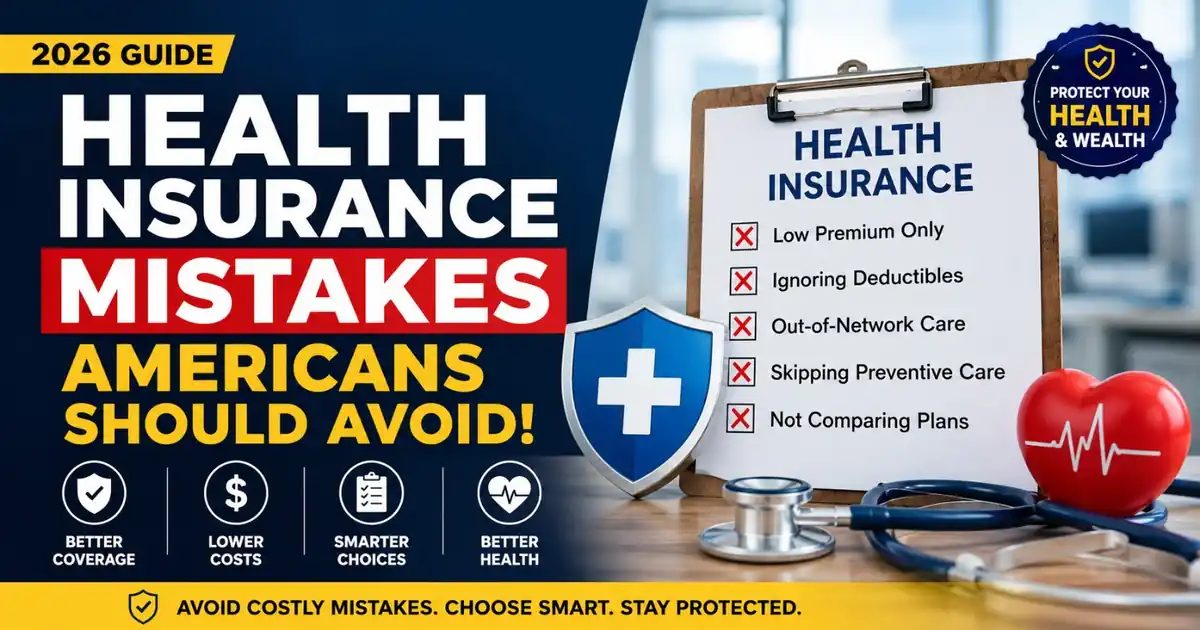 Avoid the biggest health insurance mistakes Americans make in 2026 and choose smarter, more affordable coverage.
Health insurance mistakes can quietly cost Americans hundreds or even thousands of dollars every year. Many people choose a policy simply because it has the lowest monthly premium, while others renew the same plan year after year without checking whether better options are available. These decisions often lead to higher medical bills, limited provider networks, expensive prescription costs, and unnecessary financial stress when unexpected healthcare needs arise.
Health insurance should protect both your physical health and your financial future. Before enrolling in any plan, it’s important to compare deductibles, copayments, coinsurance, annual out-of-pocket maximums, provider networks, prescription drug coverage, and preventive care benefits. Spending a little extra time comparing plans today can help you avoid expensive surprises later.
If you’re new to health insurance, start with our comprehensive
Insurance for Beginners USA 2026: Complete Guide to Choosing the Right Coverage
.
This pillar guide explains insurance terminology, premiums, deductibles, provider networks, claims, and policy comparisons in simple language, making it easier to choose the right health insurance plan with confidence.
In this complete guide, you’ll discover the most common health insurance mistakes, learn practical strategies to avoid them, compare health insurance plans effectively, estimate your real healthcare costs, and understand which coverage options provide the best value for individuals, families, self-employed professionals, and retirees.
We’ll also cover a detailed comparison table, a healthcare cost calculator, a real-life case study, trusted government resources, financial planning recommendations, and expert tips that can help you make smarter insurance decisions throughout 2026.
By the end of this guide, you’ll know exactly how to avoid costly health insurance mistakes, reduce medical expenses, and confidently choose health insurance that protects both your health and your long-term financial goals.
7 Common Health Insurance Mistakes That Cost Americans Thousands
Many health insurance mistakes happen because people focus only on monthly premiums and ignore the total cost of healthcare. A policy that appears inexpensive today may become very costly if you require emergency treatment, prescription medications, or ongoing medical care. Understanding these common mistakes can help you choose better coverage while protecting your long-term financial health.
1. Choosing the Cheapest Health Insurance Plan
One of the biggest health insurance mistakes is selecting the lowest-premium plan without reviewing deductibles, copayments, coinsurance, and annual out-of-pocket costs. Although lower premiums reduce monthly expenses, they often result in much higher healthcare costs when medical treatment is needed.
2. Ignoring the Provider Network
Before enrolling, always verify that your preferred doctors, hospitals, specialists, and pharmacies participate in the insurance company’s provider network. Receiving out-of-network care can significantly increase medical expenses and reduce insurance benefits.
3. Not Understanding Deductibles
Many Americans don’t fully understand how deductibles work. Choosing a policy without reviewing the deductible amount is one of the most expensive health insurance mistakes. If you require regular medical care, a lower deductible may save more money despite having a slightly higher monthly premium.
4. Overlooking Prescription Drug Coverage
Every insurance company has its own prescription drug formulary. If your medications aren’t covered or fall into higher pricing tiers, pharmacy costs can increase dramatically throughout the year.
5. Automatically Renewing Last Year’s Plan
Health insurance plans change every year. Premiums, provider networks, deductibles, prescription coverage, and additional benefits may all be different. Comparing new plans during Open Enrollment helps ensure you’re still receiving the best value.
6. Skipping Preventive Healthcare
Many health insurance plans include annual wellness visits, vaccinations, screenings, and preventive care at little or no additional cost. Failing to use these benefits is another common health insurance mistake that can lead to more serious and expensive health problems later.
7. Not Comparing Multiple Insurance Plans
Never purchase the first plan you find. Comparing several Marketplace and employer-sponsored options allows you to evaluate total healthcare costs, provider networks, prescription benefits, and overall coverage quality before making a decision.
Healthcare planning works best when combined with smart financial planning. Learn how to build long-term wealth with our
Retirement Planning Guide
and discover how technology is transforming personal finance in our
AI Investing Guide 2026
.
For official Marketplace enrollment information and consumer guidance, visit
Healthcare.gov.
Additional insurance education is available from the
National Association of Insurance Commissioners (NAIC).
Recognizing these common health insurance mistakes before enrolling can save thousands of dollars over time while helping you choose coverage that provides stronger financial protection and better access to quality healthcare throughout 2026.
How to Compare Health Insurance Plans and Avoid Costly Mistakes
Avoiding health insurance mistakes starts with comparing health insurance plans carefully rather than choosing the first policy that appears affordable. The best plan isn’t always the one with the lowest monthly premium—it’s the one that provides the right balance of cost, coverage, and financial protection based on your healthcare needs.
1. Compare Total Annual Healthcare Costs
One of the biggest health insurance mistakes is looking only at the monthly premium. Instead, calculate your expected yearly healthcare expenses by including premiums, deductibles, copayments, coinsurance, prescription costs, and your annual out-of-pocket maximum. This gives a more accurate picture of the policy’s real cost.
2. Review Deductibles and Out-of-Pocket Maximums
A low monthly premium often comes with a higher deductible. If you visit doctors frequently, take prescription medications, or expect medical treatment during the year, paying a slightly higher premium with a lower deductible may reduce your overall healthcare expenses.
3. Check the Provider Network Carefully
Before purchasing any policy, confirm that your preferred primary care physician, specialists, hospitals, urgent care centers, and nearby pharmacies are included in the provider network. Receiving treatment outside the network is one of the most expensive health insurance mistakes Americans make.
4. Review Prescription Drug Benefits
Prescription coverage varies between insurance companies. Compare each insurer’s formulary and verify that your medications are covered before making your final decision. This simple step can save hundreds of dollars every year.
5. Compare Extra Benefits
- Annual wellness exams
- Preventive healthcare services
- Telehealth appointments
- Mental health coverage
- Vision and dental benefits
- Wellness rewards and fitness programs
These additional benefits can significantly increase the overall value of your health insurance plan while reducing future healthcare expenses.
Building strong financial habits goes beyond health insurance. Learn how consistent investing builds long-term wealth in our
SIP Investing Guide 2026
.
You can also explore passive income opportunities with our
Top Dividend Stocks USA 2026
.
For official Marketplace plan comparisons and enrollment information, visit
Healthcare.gov
.
Consumer insurance education is also available through the
National Association of Insurance Commissioners (NAIC)
.
Taking time to compare policies carefully helps you avoid common health insurance mistakes, reduce unnecessary medical expenses, and choose a health insurance plan that offers better protection for both your health and your financial future.
Health Insurance Mistakes Comparison: Smart Choices vs Costly Decisions
Many Americans make expensive healthcare decisions simply because they don’t fully understand their insurance coverage. Avoiding health insurance mistakes isn’t just about choosing the cheapest plan—it’s about selecting coverage that fits your healthcare needs, financial goals, and future medical expenses. Comparing plans carefully before enrollment can save thousands of dollars over time.
Health Insurance Comparison Table
| Common Mistake | Possible Result | Better Choice |
|---|---|---|
| Choosing the Lowest Premium Only | Higher deductibles and medical bills | Compare total yearly healthcare costs |
| Ignoring Provider Networks | Higher out-of-network expenses | Verify doctors and hospitals before enrolling |
| Skipping Prescription Coverage Review | Unexpected medication costs | Review the plan’s drug formulary |
| Ignoring Out-of-Pocket Maximum | Unexpected financial burden | Compare annual spending limits |
| Automatically Renewing the Same Plan | Miss better coverage opportunities | Compare new Marketplace plans every year |
Simple Healthcare Cost Calculator
Estimate Your Annual Healthcare Cost
Annual Premiums + Deductible + Estimated Copays + Coinsurance = Estimated Total Healthcare Cost
Example
Annual Premium = $3,600
Deductible = $2,000
Copays = $500
Coinsurance = $900
Estimated Total Annual Cost = $7,000
Looking beyond the monthly premium helps you compare plans more accurately and avoid expensive health insurance mistakes.
Real-Life Case Study
Emily, a 38-year-old self-employed graphic designer from Texas, selected the cheapest Marketplace health plan because it had the lowest monthly premium. Unfortunately, she didn’t compare the deductible or provider network. After needing outpatient surgery, she discovered her preferred hospital was out of network and her deductible was much higher than expected. Her total medical expenses exceeded $8,000 for the year.
The following year, Emily carefully compared deductibles, provider networks, prescription coverage, and out-of-pocket maximums before enrolling. Although her monthly premium increased slightly, her total healthcare costs were significantly lower because she chose coverage that better matched her medical needs.
If you’re still learning health insurance basics, continue reading our
Insurance for Beginners USA 2026: Complete Guide to Choosing the Right Coverage
.
It explains deductibles, copayments, provider networks, claims, and insurance terminology in simple language.
For official health insurance information, visit
Healthcare.gov
and the
Centers for Medicare & Medicaid Services (CMS)
to compare Marketplace plans, consumer protections, and enrollment options.
Avoiding common health insurance mistakes starts with comparing the total cost of coverage—not just the monthly premium. A smarter comparison today can protect both your health and your finances throughout 2026.
Health Insurance Mistakes Different Americans Should Avoid
Not everyone has the same healthcare needs, which means one insurance plan cannot work for everyone. One of the most common health insurance mistakes is choosing coverage based on someone else’s recommendation instead of your own medical needs, budget, and lifestyle. Selecting the right policy requires understanding how your health, income, and future healthcare expenses affect your insurance choice.
Families Should Focus on Complete Coverage
Families often require pediatric care, maternity benefits, preventive services, emergency coverage, and prescription drug benefits. Choosing the cheapest policy without reviewing these benefits is one of the most expensive health insurance mistakes. A plan with slightly higher monthly premiums may provide significantly lower total healthcare costs for families throughout the year.
Young Adults Shouldn’t Ignore Insurance
Many healthy young adults believe they don’t need health insurance. Unfortunately, accidents and unexpected illnesses can happen at any time. Comparing deductibles, provider networks, and annual out-of-pocket maximums before enrolling helps avoid large medical bills and provides valuable financial protection.
Self-Employed Americans Need Careful Planning
Freelancers, consultants, and business owners should compare multiple Marketplace plans before enrolling. Ignoring premium tax credits or Health Savings Account (HSA) opportunities is another common health insurance mistake that can increase yearly healthcare expenses.
Retirees and Pre-Retirees
As healthcare needs increase with age, retirees should prioritize specialist access, prescription drug coverage, preventive care, and lower annual out-of-pocket limits instead of focusing only on monthly premiums.
Recommended Resources
- Healthcare.gov Plan Finder — Compare Marketplace plans and estimate available premium tax credits.
- Fidelity Health Savings Account (HSA) — A tax-advantaged savings account for qualified healthcare expenses.
- The Bogleheads’ Guide to Investing — A trusted personal finance book covering long-term investing and wealth building.
Recommended Insurance Providers
- Blue Cross Blue Shield — Nationwide health insurance plans with extensive provider networks.
- Kaiser Permanente — Integrated healthcare and insurance plans available in participating states.
- Fidelity HSA — Flexible Health Savings Account solution for eligible High-Deductible Health Plans.
Good health insurance works alongside strong financial planning. Continue building long-term wealth with our
Retirement Planning Guide
,
discover smarter investing ideas in our
AI Investing Guide 2026
,
and learn disciplined investing through our
SIP Investing Guide 2026
.
For official consumer information about Marketplace enrollment and health insurance regulations, visit
Healthcare.gov.
Additional consumer education and insurance guidance are available from the
National Association of Insurance Commissioners (NAIC).
Avoiding these health insurance mistakes helps you choose coverage that matches your healthcare needs, protects your finances, and provides greater peace of mind throughout 2026.
Common Health Insurance Mistakes to Avoid and Future Healthcare Trends in 2026
Even after comparing health insurance plans carefully, many Americans still make costly decisions that increase their medical expenses. Understanding these common health insurance mistakes can help you choose better coverage, reduce unexpected healthcare costs, and protect your financial future. Spending a little extra time reviewing your policy each year can save thousands of dollars over the long term.
1. Choosing a Plan Based Only on Monthly Premiums
One of the biggest mistakes is selecting the lowest premium without considering deductibles, copayments, coinsurance, and the annual out-of-pocket maximum. A cheaper premium may result in much higher healthcare expenses when you actually need medical treatment.
2. Ignoring the Provider Network
Many policyholders assume their preferred doctors and hospitals are covered. Always verify that your healthcare providers are part of the plan’s network before enrolling. Receiving out-of-network care can significantly increase your medical bills.
3. Not Reviewing Prescription Drug Coverage
Prescription medications can represent a major portion of healthcare costs. Before choosing a plan, review the insurer’s drug formulary to confirm your medications are covered at affordable copayment levels.
4. Automatically Renewing the Same Plan Every Year
Health insurance plans, premiums, provider networks, and benefits often change annually. Comparing Marketplace plans during each Open Enrollment Period helps ensure you’re still receiving the best value for your healthcare needs.
Future Trends in Health Insurance
The health insurance industry continues to evolve with digital innovation. More insurers now offer virtual healthcare services, AI-powered claims processing, personalized wellness programs, wearable health technology integration, online policy management, and expanded telehealth coverage. These advancements are improving convenience while helping consumers better manage healthcare expenses.
Protecting your health also supports your long-term financial success. Learn how to prepare your investments for uncertain markets in our
Recession-Proof Investing 2026
,
and improve your everyday finances with our
Best Credit Cards 2026
.
Building both financial security and healthcare protection creates a stronger long-term plan.
Trusted Government Resources
Before enrolling in any health insurance plan, compare coverage using
Healthcare.gov,
review consumer information from the
Centers for Medicare & Medicaid Services (CMS),
and explore Health Savings Account rules through the
Internal Revenue Service (IRS).
These trusted government resources help consumers make informed healthcare decisions.
Avoiding common health insurance mistakes, reviewing your coverage every year, and staying informed about new healthcare trends can help you reduce medical expenses while ensuring you and your family receive the protection you need throughout 2026 and beyond.
Frequently Asked Questions (FAQs)
1. What are the biggest health insurance mistakes Americans make?
The biggest health insurance mistakes include choosing a plan based only on the lowest premium, ignoring deductibles, not checking provider networks, overlooking prescription drug coverage, and failing to compare plans during Open Enrollment.
2. How can I avoid paying too much for health insurance?
Compare multiple plans, estimate your total annual healthcare costs, review deductibles and out-of-pocket maximums, stay within your provider network, and take advantage of preventive care services.
3. Should I compare health insurance plans every year?
Yes. Insurance companies frequently change premiums, deductibles, provider networks, prescription drug formularies, and additional benefits. Comparing plans annually helps you find better coverage and lower costs.
4. Does the cheapest health insurance plan save the most money?
Not always. A low monthly premium may come with higher deductibles, higher coinsurance, and greater out-of-pocket expenses. Compare the total yearly cost before making your decision.
5. Where can I compare health insurance plans safely?
You can compare Marketplace plans through
Healthcare.gov,
review Medicare information on
CMS.gov,
and learn about consumer insurance protections through the
National Association of Insurance Commissioners (NAIC).
Conclusion
Avoiding health insurance mistakes is one of the smartest financial decisions Americans can make in 2026. The right health insurance policy does much more than cover medical expenses—it protects your savings, reduces financial stress, and gives you peace of mind during unexpected health emergencies. Instead of choosing a plan based only on the lowest monthly premium, compare deductibles, provider networks, prescription drug coverage, annual out-of-pocket maximums, and preventive care benefits to find the best overall value.
Review your health insurance every Open Enrollment period, estimate your total annual healthcare costs, and always compare multiple plans before making a decision. These simple habits can help you avoid expensive medical bills while ensuring you receive quality healthcare for yourself and your family.
If you’re still learning the basics of health insurance, continue with our complete
Insurance for Beginners USA 2026: Complete Guide to Choosing the Right Coverage
.
You can also strengthen your financial future with our
Retirement Planning Guide
and improve your everyday finances using our
Best Credit Cards 2026
.
Building smart financial habits today will help you enjoy greater financial security for years to come.
📩 Get Weekly Insurance & Personal Finance Tips
Subscribe for free and receive expert health insurance advice, retirement planning guides, investing strategies, and money-saving tips delivered every week.
✔ Free Weekly Updates | ✔ No Spam | ✔ Unsubscribe Anytime
Subhash Rukade
Founder • FinanceInvestment.site
Subhash Rukade publishes research-backed articles on health insurance, investing, retirement planning, passive income, and personal finance. His goal is to simplify complex financial topics into practical, easy-to-follow guides that help Americans make smarter money decisions with confidence.
Insurance
Investing
Retirement
USA Finance
Leave a Reply