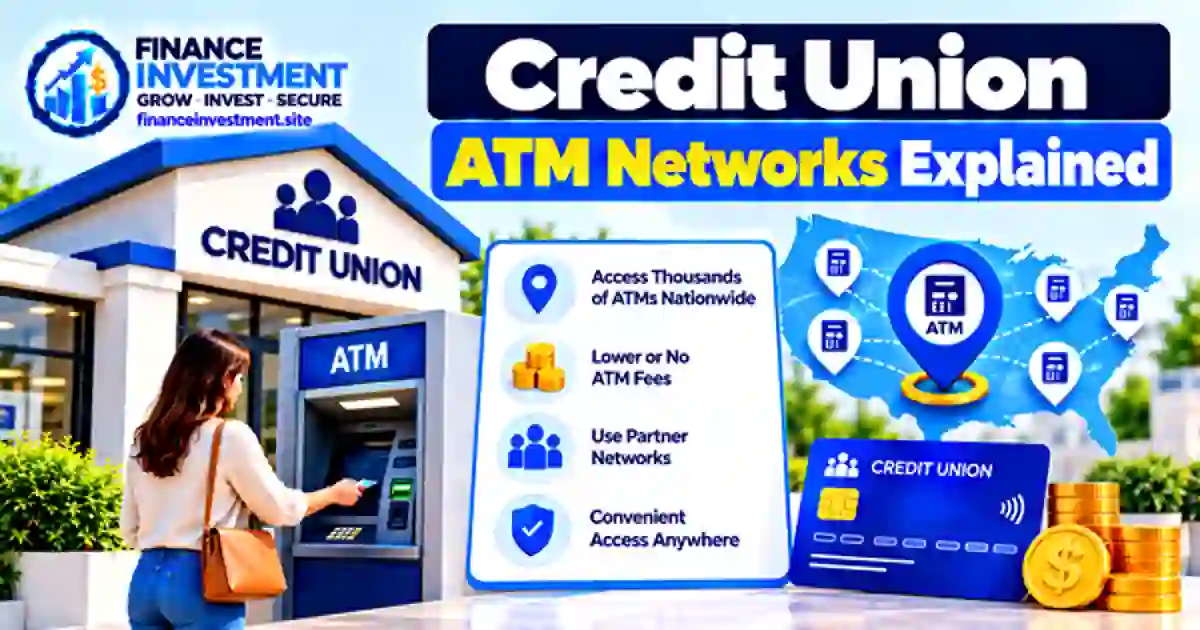
Credit Union ATM Networks Explained: A 2026 Guide
Credit Union ATM Networks: Why Access Matters
Credit Union ATM Networks Explained starts with a practical question: where can you get cash when your credit union’s own ATM is not nearby? Many credit unions expand member access through cooperative or shared ATM networks, giving members more places to make eligible ATM transactions.
That extra reach can matter when you travel, work in another area, attend school away from home, or simply live far from a branch or ATM operated by your credit union. Still, not every ATM offers the same terms. An ATM may be part of your credit union’s network, belong to another participating network, or be outside the network altogether.
If you’re new to credit unions, our complete guide to credit unions explains how these member-owned institutions work. Here, we’ll focus on ATM networks, where they can expand your access, when fees may enter the picture, and what to check before relying on a particular ATM.
What You’ll Learn
- What a credit union ATM network is and why credit unions use them.
- How your credit union’s own ATMs differ from participating network ATMs.
- How to find eligible ATM locations near you or while traveling.
- When an ATM transaction may involve a surcharge or other fee.
- What to check before choosing a credit union based partly on ATM access.
- How ATM network access can affect everyday banking convenience.
Quick Answer: How Do Credit Union ATM Networks Work?
A credit union ATM network gives members access to participating ATMs beyond the machines operated directly by their credit union. When your credit union participates in a network, eligible ATMs can provide another place to make supported transactions. The exact access, fees, and transaction rules depend on your credit union and the network involved.
Key Takeaways
- ATM networks can expand access beyond your credit union’s own machines.
- Participating ATMs can be useful when you’re away from your usual banking area.
- Not every ATM automatically belongs to a network your credit union supports.
- Some network transactions may still involve fees or other restrictions.
- Available services and ATM locations can vary by network and participating institution.
- Checking your credit union’s ATM locator before withdrawing cash can help you choose an eligible location.
Bottom Line
A useful ATM network can make a credit union account more convenient, especially when you travel or live away from a home branch. When comparing credit unions, look at network coverage, nearby locations, and potential fees—not just the number of ATMs carrying the credit union’s name.
Table of Contents
ATM Networks at a Glance: Facts, Best For & Summary
| Key Point | What It Means |
|---|---|
| Network access | Your credit union may give you access to participating ATMs beyond machines operated directly by the credit union. |
| Best for | Members who want more convenient cash access while traveling, working, studying, or living away from a home branch. |
| Fees | Charges can depend on the credit union, network, account terms, and ATM operator. |
| Before using an ATM | Check whether the location participates, which transactions are supported, the withdrawal limit, and any applicable fees. |
Quick Take
A credit union ATM network can widen your cash-access options without requiring every ATM to carry your credit union’s name. The useful question is not simply how many ATMs are available, but whether the participating locations are convenient for you and what rules or fees apply when you use them.
Credit Union ATM Networks: A Complete Beginner Guide 
A credit union ATM network is easier to understand when you separate it from your credit union’s own machines. Your credit union may belong to a cooperative network that gives members access to participating ATMs in other locations. That can be useful when there is no familiar credit union ATM nearby.
For example, you might use a participating ATM while traveling, visiting family, or working in another city. The services available can vary. One machine may support cash withdrawals and balance inquiries, while another may have different transaction options or limits.
How to Use a Network ATM
- Find an eligible location: Use your credit union’s website or mobile app to search for participating ATMs.
- Check the services: Confirm that the ATM supports the transaction you need, such as a cash withdrawal.
- Review the fee screen: Check for any surcharge or other applicable charge before completing the transaction.
- Keep your receipt: Save it when you need a record of the withdrawal or want to verify the amount later.
Beginner tip: If ATM access matters to you, compare the locations you actually use rather than relying only on a network’s advertised size. Convenient coverage near home, work, school, and frequent travel destinations can make a bigger difference.
How Credit Union ATM Networks Work
A credit union ATM network connects participating financial institutions and ATM locations so eligible members can access their accounts outside their credit union’s own ATM footprint. Your credit union still manages your account, while the participating ATM handles the physical transaction.
When you use your debit card at a participating machine, the ATM sends the transaction through the networks that connect the card, ATM, and financial institutions. The system checks your card and account information, applies the relevant rules, and returns an approval or decline. If approved, the ATM completes the transaction and the activity is recorded on your account.
The ATM Transaction Process
Keep in mind: Being connected to an ATM network does not mean every participating machine offers identical services or pricing. Withdrawal limits, supported transactions, and possible fees can vary by credit union, account, network, and ATM operator.
Benefits & Drawbacks of Credit Union ATM Networks
An expanded ATM network can make a credit union account more practical, especially for people who do not stay in one location. But network access is only one part of the banking experience. Coverage, transaction rules, and possible charges can affect how useful the network is in everyday life.
Benefits
- Can give members more convenient places to withdraw cash.
- May be especially useful when traveling or spending time away from home.
- Reduces dependence on finding an ATM operated by your own credit union.
- Can make a credit union account easier to use across different locations.
Drawbacks
- Useful coverage may not be equally available in every community.
- An ATM can look convenient without necessarily being part of your eligible network.
- Fees, withdrawal limits, and transaction rules may vary by account and location.
- Some participating ATMs may support fewer services than your credit union’s own machines.
The better comparison: Do not judge an ATM network only by its advertised size. Look at the locations you are likely to use, the services available there, and the fee rules that apply to your account. That gives you a more realistic picture of the network’s value.
Credit Union ATM Network Comparison
ATM access can look very different depending on where you bank. A credit union’s own machines, participating network ATMs, and out-of-network machines each come with different considerations. The most useful comparison is not simply the number of available ATMs, but how well those locations fit your normal banking routine.
| ATM Option | Why You Might Use It | What to Check |
|---|---|---|
| Your credit union’s ATM | Provides direct access through a machine operated by your credit union. | Location, supported services, withdrawal limits, and account terms. |
| Participating network ATM | Can give you additional locations when your credit union’s own ATM is not nearby. | Whether your card is eligible, available services, limits, and applicable fees. |
| Out-of-network ATM | Can provide access when a participating location is unavailable. | Check the ATM surcharge, any fee charged by your credit union, and transaction limits. |
Comparison tip: If you regularly withdraw cash, check ATM locations around your home, workplace, and frequent travel destinations. Then compare that real-world coverage with the credit union’s network and fee policy. This gives you a better picture of how convenient the account will actually be.
Costs, Risks & Expert Tips for Using Credit Union ATMs
The cost of using an ATM depends on the machine, your credit union, your account terms, and the network involved. A transaction can involve an ATM operator surcharge, a fee from your financial institution, or no additional charge under the applicable terms. Check the fee information before confirming a withdrawal.
Costs to Watch
- ATM operator surcharges
- Fees listed in your credit union’s account terms
- Charges that may apply when using an out-of-network ATM
- Additional costs that may apply to certain transactions or locations
Risks to Consider
- Assuming every convenient ATM is part of your eligible network
- Exceeding an account or ATM withdrawal limit
- Missing a fee disclosure before approving the transaction
- Using an ATM that appears damaged, altered, or suspicious
Expert Tips Before You Withdraw
Check your credit union’s ATM locator when you need a network location, then review the fee screen before completing the transaction. If the machine displays an unexpected charge, you can stop and look for another eligible ATM. When traveling, review your credit union’s ATM and debit-card policies in advance so you know the applicable limits and rules.
Smart habit: Keep your credit union’s ATM locator or mobile app easy to access. Finding an eligible machine before you need cash can make the transaction simpler and help you avoid unnecessary fees.
Common Credit Union ATM Mistakes + Real-Life Example
ATM networks are designed to make access easier, but small oversights can still lead to a declined transaction, an unexpected charge, or an inconvenient search for another machine. Knowing the common trouble spots can make everyday ATM use much smoother.
Mistakes to Avoid
- Assuming every nearby ATM is part of a network your credit union supports.
- Approving a transaction without reviewing the fee information displayed on the ATM.
- Forgetting that your account or the ATM may impose a withdrawal limit.
- Relying on incomplete location information instead of checking your credit union’s current ATM locator.
- Using a machine that appears altered, damaged, or otherwise suspicious.
Real-Life Example
Suppose Sarah is traveling for work and needs $200 in cash. She finds an ATM outside a store and considers using it immediately. Before completing the withdrawal, she notices a surcharge on the screen. She checks her credit union’s ATM locator instead and finds a participating location nearby. The example shows why checking the network and transaction terms before withdrawing can be worthwhile.
The takeaway: A convenient ATM is not necessarily the best ATM for your account. A quick check of network eligibility and transaction terms can help you make a better choice.
Who Should Choose a Credit Union ATM Network?
A credit union with useful ATM network access can be a good fit if you want convenient cash access beyond your credit union’s own locations. It can matter even more if your routine includes commuting, frequent travel, or spending extended periods away from your home branch.
Consider It If You…
- Withdraw cash regularly.
- Travel between different cities or regions.
- Live or work away from your credit union’s main locations.
- Want ATM access to fit several parts of your routine.
Look at Other Priorities If You…
- Almost never use cash or ATMs.
- Find few participating locations where you actually spend time.
- Need ATM services that the available network does not provide.
- Would regularly incur charges under the account’s ATM terms.
Before choosing an account, check the ATM locations that matter most to you—near home, work, school, and frequent travel destinations. That real-world coverage is more useful than judging a credit union solely by the size of its advertised network.
Frequently Asked Questions About Credit Union ATM Networks
Final Verdict: Are Credit Union ATM Networks Worth It?
A credit union ATM network can be valuable when you want convenient access to cash beyond your credit union’s own machines. This added reach can be especially useful if you travel, commute between locations, or live some distance from a branch or dedicated credit union ATM.
However, network size should not be the deciding factor by itself. The better question is whether participating ATMs are available in the places you actually use. You should also review withdrawal limits, supported services, and the fee terms that apply to your account.
Our Take
If ATM access is important to you, choose a credit union whose participating locations fit your routine. Check the actual coverage around home, work, and frequent travel destinations before deciding. A smaller network that serves your needs may be more useful than a larger network you rarely use.
If you’re comparing credit unions more broadly, our complete guide to credit unions can help you look beyond ATM access and evaluate how credit unions work, their membership structure, and other account features.
Leave a Reply