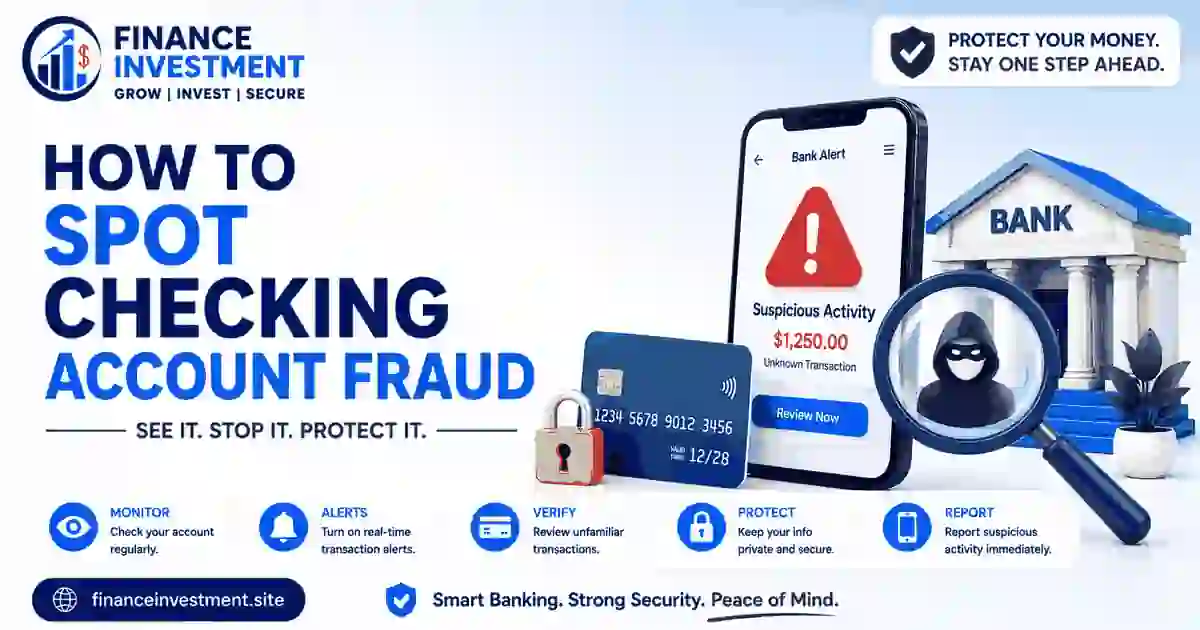
 You open your banking app before breakfast and notice a $487 debit you do not recognize. The merchant name looks unfamiliar, but the transaction is already posted. Before assuming your account has been hacked, there are a few things worth checking.
How to Spot Checking Account Fraud starts with knowing what normal account activity looks like and recognizing when something does not fit. Fraud can involve a stolen debit card, an unauthorized ACH transfer, a fake check, or a convincing message pretending to be your bank.
The good news is that suspicious activity does not mean you are powerless. Quick action can help limit further problems. The key is to verify the transaction, avoid clicking suspicious links, contact your bank through an official channel, and secure the affected account.
What You’ll Learn
This guide explains common warning signs, fraud types, practical prevention steps, and what to do when a transaction genuinely appears unauthorized. You can also review our
Checking Accounts USA 2026 guide
for the bigger picture.
Quick Answer & Key Takeaways
How to Spot Checking Account Fraud starts with paying attention to transactions, messages, and account changes you did not expect. Verify anything suspicious through your bank’s official app, website, or phone number—not through a link or number supplied by a stranger.
- Check unfamiliar transactions: Review the merchant, date, amount, and payment method.
- Watch for urgent messages: Scammers often pressure you to act immediately.
- Never share security codes: A legitimate bank should not ask you to reveal one-time verification codes to a caller.
- Use official contact details: Open your bank app or type its website address yourself.
- Secure your account quickly: Lock a compromised card and contact the bank when appropriate.
- Turn on alerts: Transaction notifications can help you notice unusual activity sooner.
Bottom line: Do not panic or respond to a suspicious message first. Verify the activity independently, then take action through your bank’s official channels.
Table of Contents
At a Glance
How to Spot Checking Account Fraud becomes easier when you know which warning signs deserve attention first. A quick review of your transactions, alerts, and recent account changes can catch problems before they grow.
Quick Facts
Review transactions, alerts and account messages.
Best For
Anyone who uses checking accounts regularly.
Key Numbers
3 areas: transactions, messages, account access.
| Check | Look For | Action |
|---|---|---|
| Transactions | Unknown charges | Verify immediately |
| Messages | Urgent requests | Contact bank directly |
| Account access | Unexpected changes | Secure the account |
Complete Beginner Guide
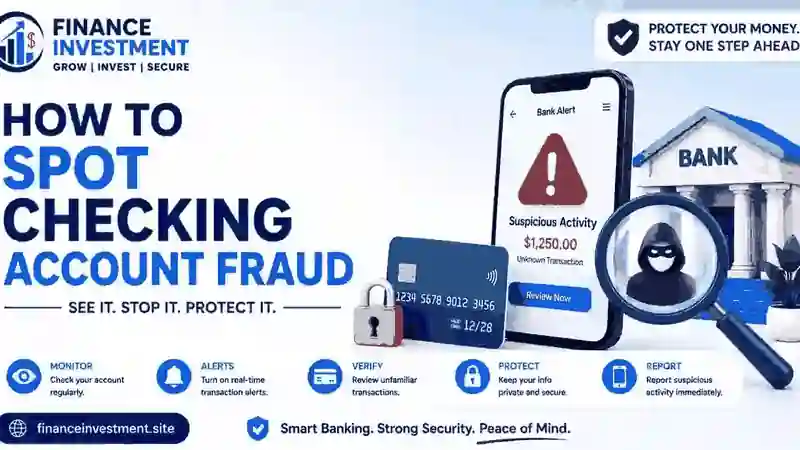 How to Spot Checking Account Fraud starts with understanding what can actually go wrong. A checking account can be targeted through a stolen debit card, unauthorized ACH payment, fake check, compromised login, or a convincing message that appears to come from your bank.
Imagine Maria checks her account after buying groceries and notices a $312 online purchase she never made. Instead of responding to a text claiming to be from her bank, she opens her banking app herself. She confirms the transaction details and calls the number printed on her debit card.
Start With the Transaction
Check the amount, date, merchant name, and payment type. An unfamiliar merchant name is not automatically fraud because some businesses use a different billing name. However, an amount or payment you clearly do not recognize deserves attention.
Know the Common Entry Points
Debit-card details can be stolen during a compromised purchase. Login credentials can be captured through phishing. ACH information may be misused for unauthorized withdrawals. Paper checks can also expose account and routing details.
If something looks wrong, do not wait for another transaction to appear. Contact your bank through an official channel, follow its instructions for reporting the activity, and change compromised credentials when appropriate.
How It Works
How to Spot Checking Account Fraud becomes much easier when you treat an unexpected account change as something to verify, not something to panic about. The process is simple: notice, verify, report, and secure.
1. Notice
An unfamiliar purchase, withdrawal, transfer, password change, or alert catches your attention.
2. Verify
Open your banking app directly and review the transaction details. Do not use a suspicious message’s link.
3. Report
If the activity is unauthorized, contact your bank through its official app, website, or phone number.
4. Secure
Lock a compromised card, change affected passwords, review recent activity, and follow your bank’s instructions.
Consider a simple everyday example. You receive a text saying your debit card will be suspended unless you confirm a link. The message looks convincing, but you ignore the link and open your bank’s app instead. There is no matching security notice. That mismatch is an important warning sign.
How to Spot Checking Account Fraud is ultimately about slowing down when someone wants you to rush. Genuine account problems can be handled through verified banking channels, so there is rarely a good reason to surrender passwords, PINs, or one-time security codes to an unexpected caller or message.
Benefits & Drawbacks
Learning How to Spot Checking Account Fraud can make everyday banking safer, but awareness alone cannot stop every scam. Good habits work best when they are paired with account alerts, secure passwords, and quick action when something looks wrong.
✓ Pros
- Helps you recognize suspicious activity sooner
- Reduces the chance of responding to phishing messages
- Encourages regular transaction reviews
- Makes account alerts more useful
- Can limit damage when problems are reported quickly
⚠ Cons
- Some legitimate transactions can look unfamiliar
- Scammers can imitate real bank messages
- Fraud may happen before an alert appears
- Reporting requirements vary by bank and transaction type
- Resolving a disputed transaction can take time
The practical takeaway:
Check your account regularly, but do not treat every unfamiliar merchant name as fraud. Confirm the details first, then use your bank’s official reporting process when the activity is genuinely unauthorized.
Comparison Table
How to Spot Checking Account Fraud also means knowing where suspicious activity can appear. Different payment methods leave different clues, so the first step is to identify what changed and how the money moved.
| Fraud Type | Common Sign | First Step | What to Review |
|---|---|---|---|
| Debit Card | Purchase you did not make | Check the transaction | Card activity and alerts |
| ACH | Unknown withdrawal | Contact the bank | Transfer details |
| Check | Check you did not authorize | Notify the bank | Check number and amount |
| Phishing | Urgent bank message or call | Do not respond | Sender and requested information |
Remember:
The same warning sign can have different causes. An unfamiliar merchant name may be harmless, while an unauthorized withdrawal deserves immediate attention. Verify before deciding what happened.
Costs, Risks & Expert Tips
Knowing How to Spot Checking Account Fraud can reduce the chance of a small problem turning into a larger financial headache. Still, fraud can lead to temporary account restrictions, disputed transactions, replacement-card costs, or time spent recovering access.
There is also a less obvious risk: reacting to the wrong message. A scammer may claim that a transaction occurred and then ask you to “verify” your account through a link. Following that instruction can expose your login details or security code.
Expert Tip
Turn on transaction alerts and review them as they arrive. Also keep your bank’s official phone number saved separately. If something suspicious happens, you can contact the bank without relying on a message that may be fake.
Warning
Never give an unexpected caller your password, PIN, or one-time verification code. A caller who creates urgency and asks for sensitive information deserves extra caution, even if they know some details about your account.
Common Mistakes + Real-Life Example
How to Spot Checking Account Fraud is easier when you avoid the mistakes that scammers count on. People often react too quickly, trust a familiar-looking message, or wait several days before reviewing an unfamiliar transaction.
Mistakes to Avoid
- Clicking a bank link inside an unexpected text
- Calling a phone number supplied by a suspicious message
- Sharing a one-time security code with a caller
- Ignoring small unfamiliar transactions
- Using the same password across financial accounts
Real-Life Example
James receives a call saying his checking account has been targeted. The caller knows his bank’s name and the last four digits of his debit card, then asks for a six-digit verification code. James hangs up instead of sharing it. He opens his bank’s official app, finds no matching alert, and calls the number on his card. The bank confirms the call was not from them.
How to Spot Checking Account Fraud often comes down to one simple habit: pause when someone unexpectedly asks you to act fast. Verify the situation independently before giving anyone access information.
Who Should Choose This?
How to Spot Checking Account Fraud is useful for anyone who receives money, pays bills, uses a debit card, or keeps savings connected to a checking account. You do not need to be a frequent online shopper or heavy banking-app user to benefit from basic fraud awareness.
Premium Best Fit
- People who regularly use debit cards or online banking
- Families sharing accounts or managing household bills
- Retirees who want to keep a close eye on account activity
- Anyone who receives unexpected bank texts or calls
- People who want stronger everyday account-security habits
It is especially valuable for people who rarely check their statements. A quick weekly review and timely alerts can make unusual activity much easier to spot.
Frequently Asked Questions
What is the first sign of checking account fraud?
An unfamiliar transaction, unexpected withdrawal, changed account detail, or suspicious bank message can be a warning sign. Check the transaction directly in your banking app before responding to any message.
How to Spot Checking Account Fraud quickly?
Review recent transactions, check for unfamiliar transfers, and watch for unexpected login or security alerts. If something appears unauthorized, contact your bank using a trusted number or its official app.
What should I do if I see an unauthorized transaction?
Contact your bank or credit union promptly and explain that you did not authorize the transaction. Keep records of when you reported it and follow the institution’s dispute process. Federal protections can depend on the transaction and how quickly you report it. 0
Can a fake bank text lead to account theft?
Yes. Scammers may impersonate a bank and use a fake fraud alert to persuade you to click a link or provide sensitive information. The FTC specifically warns about bank impersonation messages and verification-code scams. 1
Should I give my verification code to a bank caller?
No. Never give an unexpected caller your one-time verification code. If you are concerned about your account, hang up and contact the bank through its official app, website, statement, or card. 2
Can someone commit fraud using my checking account number?
Account information can be misused in fraudulent transactions, including certain unauthorized electronic transfers. If you suspect misuse, notify your financial institution and ask what protections and monitoring options apply. 3
Should I move my money if someone says my account is compromised?
Be very cautious. The FTC warns that scammers may pretend to be bank employees and tell you to move money to “protect” it. Do not transfer funds at their direction. Verify the situation directly with your bank. 4
How quickly should I report a lost debit card?
Report a lost or stolen debit card as soon as you discover it. For certain electronic transfers, federal rules can limit liability when consumers notify the institution promptly. 5
How can I prevent checking account fraud?
Use strong, unique passwords, enable account alerts, review transactions regularly, keep your contact information current, and avoid links in unexpected bank messages. Most importantly, verify suspicious requests independently rather than using contact information supplied by the caller or text.
What if my bank says a transaction is not unauthorized?
Ask the bank how it reached that decision and what dispute or error-resolution process is available. For covered electronic fund transfers, Regulation E contains specific investigation and notice rules. 6
Important: Fraud protections and reporting deadlines can vary by transaction type and circumstances. Contact your financial institution promptly when you notice suspicious activity.
Final Verdict
Learning How to Spot Checking Account Fraud is less about becoming suspicious of every transaction and more about knowing when to pause. An unfamiliar charge, unexpected withdrawal, or urgent bank message deserves a closer look before you respond.
The strongest everyday habit is simple: check your account regularly, turn on useful alerts, and contact your bank through a trusted channel when something feels wrong. Never let an unexpected caller or text rush you into sharing a password, PIN, or verification code.
The safest response to a suspicious banking message is often the simplest one: stop, verify independently, and then act.
Leave a Reply