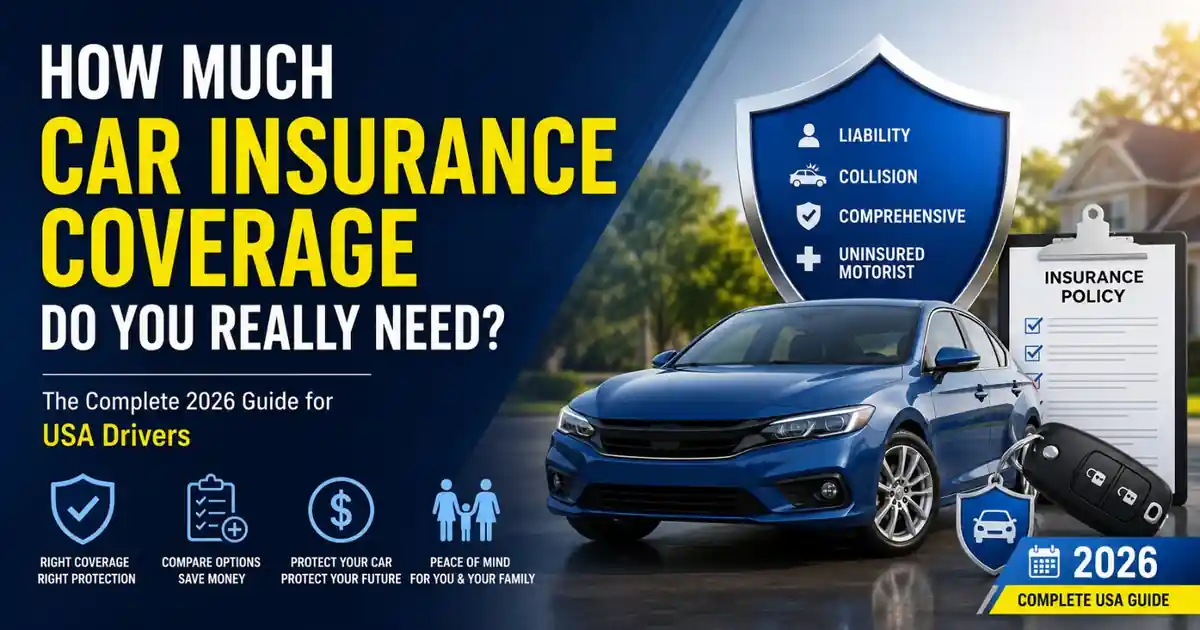
How Much Car Insurance Coverage Do You Really Need? (2026 Complete USA Guide)
Author: Subhash Rukade
Published Date: July 9, 2026
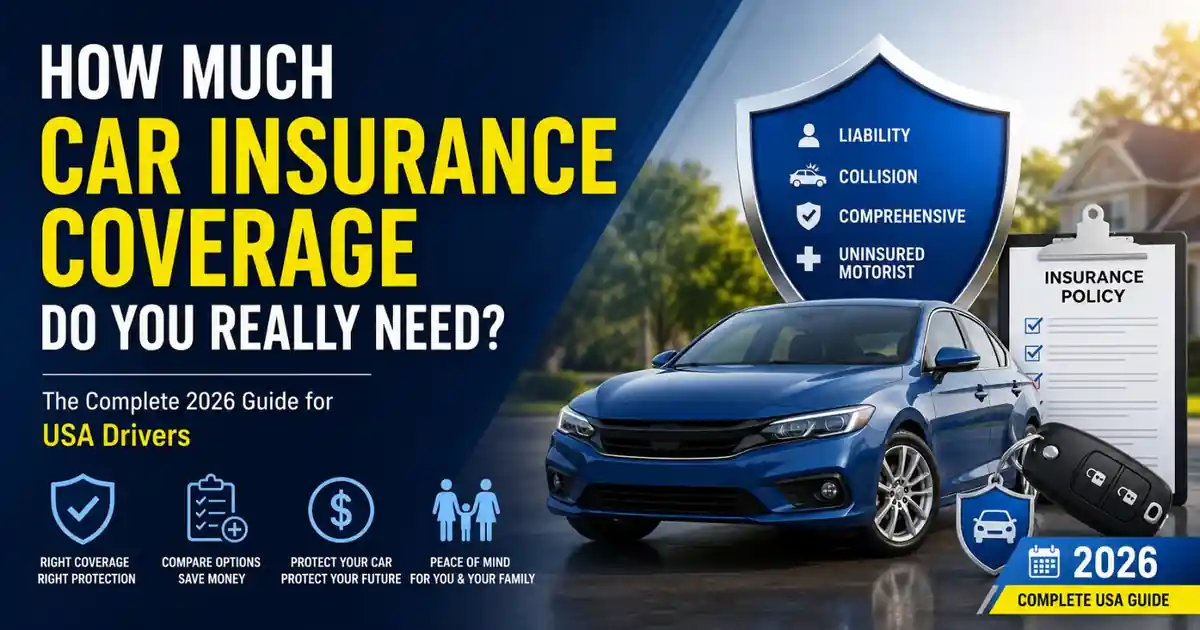
If you’re new to auto insurance or still learning terms like deductibles, liability limits, comprehensive coverage, and collision insurance, start with our Insurance for Beginners USA guide. It explains the fundamentals of insurance in simple language and will help you make smarter coverage decisions throughout this guide.
In this complete USA 2026 guide, you’ll learn exactly how much car insurance coverage different drivers need, compare major coverage options, calculate the ideal protection for your budget, avoid expensive mistakes, review a real-life case study, and discover practical strategies that help protect both your finances and your family without paying for unnecessary coverage.
Types of Car Insurance Coverage: Understanding What Each Policy Protects
Choosing the right policy starts with understanding the different types of protection available. The answer to How Much Car Insurance Coverage Do You Really Need depends on your vehicle’s value, your financial situation, state requirements, and how much risk you’re comfortable taking. Buying the minimum required coverage may reduce your premium today, but it could leave you paying thousands of dollars after a serious accident.
Instead of focusing only on price, evaluate what each coverage type protects and when it’s most valuable. A balanced policy helps safeguard your savings, income, and future financial goals.
Main Types of Car Insurance Coverage
| Coverage Type | What It Covers | Who Should Consider It |
|---|---|---|
| Liability Insurance | Pays for injuries and property damage you cause to others. | Required for every driver in most states. |
| Collision Coverage | Covers damage to your own vehicle after a collision. | Drivers with newer or financed vehicles. |
| Comprehensive Coverage | Protects against theft, fire, vandalism, hail, floods, and falling objects. | Owners of valuable vehicles. |
| Uninsured/Underinsured Motorist | Protects you if another driver has little or no insurance. | Recommended for nearly all drivers. |
| Medical Payments (MedPay) / PIP | Helps pay medical expenses after an accident. | Families and frequent commuters. |
Which Coverage Matters Most?
Liability Insurance is the legal minimum in most states, but minimum limits may not fully protect your assets after a major accident. If medical bills or property damage exceed your policy limits, you may have to pay the remaining costs yourself.
Collision Coverage is especially valuable for newer vehicles because repair costs continue to rise in 2026. Even a moderate accident can result in repair bills exceeding several thousand dollars.
Comprehensive Coverage protects against events beyond your control, including theft, storms, hail, vandalism, and animal collisions. Drivers living in areas prone to severe weather should strongly consider this protection.
Uninsured Motorist Coverage provides valuable financial protection because not every driver carries adequate insurance. This coverage can prevent significant out-of-pocket expenses after an accident caused by an uninsured driver.
Action Tip: Before renewing your policy, review each coverage individually instead of accepting automatic renewals. Matching your coverage to your vehicle’s value, driving habits, and financial situation is the first step toward deciding How Much Car Insurance Coverage Do You Really Need while avoiding both underinsurance and unnecessary premium costs.
How Much Car Insurance Coverage Do You Really Need? Recommendations for Different Drivers
The answer to How Much Car Insurance Coverage Do You Really Need isn’t the same for everyone. Your ideal coverage depends on several factors, including your age, driving experience, vehicle value, income, family responsibilities, and financial goals. A college student driving a used sedan has very different insurance needs than a retiree with substantial savings or a family driving a brand-new SUV.
Instead of purchasing the cheapest available policy, focus on protecting the assets you’ve worked hard to build. Paying a little more today can prevent a major financial setback after a serious accident.
Recommended Coverage by Driver Type
| Driver Type | Recommended Coverage |
|---|---|
| Teen Driver | Higher Liability + Collision + Comprehensive + Uninsured Motorist |
| Young Professional | 100/300/100 Liability + Collision + Comprehensive |
| Family with Children | Higher Liability Limits + Medical Payments + Full Coverage |
| Retiree | Strong Liability + Comprehensive + Low Annual Mileage Discounts |
| Luxury Vehicle Owner | Full Coverage with Higher Liability Limits and Gap Insurance (if financed) |
Why Higher Liability Limits Matter
Many drivers purchase only their state’s minimum liability coverage because it has the lowest premium. However, minimum limits may not be enough after a serious accident involving multiple vehicles, expensive property damage, or significant medical expenses.
For most American households, insurance professionals often recommend liability limits around 100/300/100. This level of protection generally offers a much stronger financial safety net while keeping premiums reasonably affordable.
Should Older Vehicles Have Full Coverage?
If your vehicle is older and worth only a few thousand dollars, paying for collision and comprehensive coverage may not always make financial sense. Compare the annual premium with your car’s current market value before deciding whether to continue full coverage.
On the other hand, if replacing your vehicle would create financial hardship, maintaining full coverage could still be the smarter choice.
Protecting your vehicle is only one part of building long-term financial security. Our AI Investing Guide 2026 explains how artificial intelligence is changing investing, while our Top Dividend Stocks USA 2026 guide shows how dividend income can strengthen your financial future alongside proper insurance planning.
Action Tip: Review your insurance coverage every year or whenever you buy a new vehicle, get married, retire, or experience a major financial change. Adjusting your policy as your life changes is the best way to ensure How Much Car Insurance Coverage Do You Really Need continues to match your current needs without paying for unnecessary protection.
Car Insurance Coverage Calculator: Estimate How Much Coverage You Really Need
After understanding the different policy types, the next step is determining the right amount of protection for your personal situation. The answer to How Much Car Insurance Coverage Do You Really Need depends on more than your state’s minimum insurance requirements. You should also consider your income, savings, assets, vehicle value, daily driving habits, and how much financial risk you’re willing to accept.
Choosing coverage based only on the lowest premium may save money today, but it can become extremely expensive after a major accident. On the other hand, purchasing unnecessary coverage for an older vehicle may increase your insurance costs without providing meaningful value.
Recommended Coverage Calculator
| Your Situation | Recommended Coverage |
|---|---|
| Vehicle financed or leased | Full Coverage + Gap Insurance |
| Vehicle worth over $20,000 | Liability + Collision + Comprehensive |
| High household income | 100/300/100 Liability or Higher |
| Older vehicle under $5,000 | Consider Liability Only (Based on Condition) |
| Frequent highway commuter | Higher Liability + Uninsured Motorist + Collision |
| Family with teenage drivers | Higher Liability + Full Coverage + Medical Payments |
Quick Coverage Formula
Use this simple rule when evaluating your policy:
Recommended Coverage = Vehicle Value + Personal Assets + Financial Risk + State Requirements
Example
- Vehicle Value: $32,000
- Savings & Investments: $120,000
- Mortgage & Family Responsibilities: Yes
- Recommended Policy: 100/300/100 Liability + Collision + Comprehensive + Uninsured Motorist Coverage
Choosing the Right Deductible
Your deductible directly affects both your monthly premium and your out-of-pocket costs after an accident.
- $500 Deductible: Higher monthly premium but lower repair costs after a claim.
- $1,000 Deductible: Lower premium but higher out-of-pocket expenses.
- Choose a deductible you can comfortably afford from your emergency fund.
Protecting your vehicle is only one part of a strong financial plan. Building an emergency fund and long-term investments can help you cover deductibles and unexpected expenses with confidence. Learn more in our Retirement Planning Guide, where we explain practical strategies for building lasting financial security.
Action Tip: Before renewing your policy this year, calculate your vehicle’s current market value, review your household assets, and confirm that your liability limits still provide adequate protection. Reassessing these factors annually is one of the smartest ways to determine How Much Car Insurance Coverage Do You Really Need while avoiding unnecessary insurance costs.
Real-Life Case Study: Choosing the Right Coverage Saved One Family Over $28,000
The easiest way to understand How Much Car Insurance Coverage Do You Really Need is to look at a real-world example. Many drivers assume accidents happen to someone else, but a single collision can create thousands of dollars in repair bills, medical expenses, and legal costs. The right insurance coverage can protect your savings when the unexpected happens.
Every driver’s situation is different, but one thing remains the same: adequate coverage provides financial security when life doesn’t go as planned.
Case Study: Sarah Johnson’s Smart Insurance Decision
Sarah Johnson, a 42-year-old registered nurse from Denver, Colorado, drove a three-year-old SUV worth approximately $34,000. She was married with two children and used her vehicle daily for commuting, school drop-offs, and family travel.
When renewing her policy, Sarah initially considered reducing her coverage to save nearly $350 per year. However, after reviewing her financial situation, she decided to keep 100/300/100 liability coverage, along with collision, comprehensive, and uninsured motorist protection.
Just eight months later, another driver ran a red light and collided with Sarah’s SUV. The accident caused major front-end damage, and Sarah also suffered minor injuries that required medical treatment.
Fortunately, the at-fault driver carried only minimum liability insurance. Because Sarah had added uninsured/underinsured motorist coverage, her own insurance company covered expenses that exceeded the other driver’s policy limits.
Claim Summary
| Expense | Amount |
|---|---|
| Vehicle Repairs | $16,800 |
| Medical Expenses | $8,400 |
| Rental Vehicle | $1,250 |
| Total Covered by Insurance | $27,950 |
| Sarah’s Deductible | $500 |
Instead of paying nearly $28,000 from her personal savings, Sarah’s comprehensive insurance policy limited her out-of-pocket expense to only her deductible. Spending a little more on coverage each month protected years of hard-earned savings.
Strong insurance protection works even better when combined with smart financial planning. Our Top Dividend Stocks USA 2026 guide explains how passive income can strengthen your financial future, while our AI Investing Guide 2026 shows how technology is helping Americans make better investment decisions.
Action Tip: Before reducing your insurance coverage to save money, calculate what a serious accident could actually cost. Compare those potential expenses with the small increase in annual premiums. In many cases, keeping stronger protection is the smartest answer to How Much Car Insurance Coverage Do You Really Need, especially if you have valuable assets, dependents, or a newer vehicle.
Common Car Insurance Coverage Mistakes and How to Avoid Them
Even after understanding policy options, many drivers still make costly decisions when choosing auto insurance. The question How Much Car Insurance Coverage Do You Really Need isn’t only about buying enough protection—it’s also about avoiding common mistakes that can leave you financially exposed or paying more than necessary.
Insurance needs change over time. Buying a new vehicle, getting married, retiring, moving to another state, or increasing your savings should all trigger a review of your policy. Updating your coverage regularly ensures your insurance continues to match your lifestyle and financial goals.
Common Insurance Coverage Mistakes
- Choosing State Minimum Coverage Only: Minimum legal limits often fail to cover serious accidents, leaving you responsible for thousands of dollars.
- Ignoring Comprehensive Coverage: Theft, hail, floods, vandalism, and falling trees can damage your vehicle even when you’re not driving.
- Selecting the Wrong Deductible: A very high deductible lowers your premium but can become difficult to pay after an accident.
- Never Reviewing Your Policy: Your insurance should change as your vehicle, income, and family responsibilities change.
- Not Comparing Quotes: Rates vary widely between insurers, even for identical coverage.
Helpful Resources
- NAIC Consumer Auto Insurance Guide
- Insurance Company Mobile Claim Apps
- The Bogleheads’ Guide to Investing for long-term financial planning
Recommended Insurance Providers
- State Farm Auto Insurance
- GEICO Auto Insurance
- Progressive Auto Insurance
Helpful Products for Every Driver
- HD Dash Camera for accident documentation
- Vehicle Emergency Roadside Safety Kit
- Online Auto Insurance Quote Comparison Tool
For trustworthy information about auto insurance, consumer rights, and policy guidance, visit the National Association of Insurance Commissioners (NAIC). You can also find useful tax information related to casualty losses and financial records at IRS.gov. These are reliable government and industry resources for American consumers.
Reducing unnecessary insurance expenses allows you to invest more for your future. Our SIP Investing Guide 2026 explains how small monthly investments can grow into significant wealth over time, helping you build a stronger financial foundation while maintaining the right insurance protection.
Action Tip: Review your policy once every year, compare quotes from multiple insurers, update your coverage after major life events, and verify that your liability limits still protect your assets. Making these simple reviews annually is one of the smartest ways to answer How Much Car Insurance Coverage Do You Really Need while keeping your premiums under control.
Future Trends in Car Insurance Coverage (2026) & Frequently Asked Questions
The answer to How Much Car Insurance Coverage Do You Really Need is becoming more personalized than ever before. In 2026, insurance companies are using artificial intelligence, connected vehicle technology, and telematics to customize premiums and recommend coverage based on individual driving habits rather than broad risk categories.
Instead of relying only on age or ZIP code, many insurers now evaluate real-world driving behavior such as mileage, braking patterns, acceleration, and time of day you drive. Safe drivers who participate in usage-based insurance programs may qualify for meaningful premium savings while maintaining strong financial protection.
As vehicles become smarter, insurance policies are also evolving. Modern cars equipped with collision avoidance systems, lane-keeping assistance, and automatic emergency braking may help reduce accident frequency, allowing insurers to reward drivers with lower premiums and customized coverage options.
Insurance Trends to Watch in 2026
- AI-Powered Coverage Recommendations: Artificial intelligence will recommend personalized coverage limits based on your driving habits and financial profile.
- Usage-Based Insurance (UBI): Drivers who travel fewer miles and demonstrate safe driving behavior may qualify for larger discounts.
- Connected Vehicle Technology: Smart vehicles can automatically send accident information to insurers, helping speed up claims and repairs.
- Digital Policy Management: Mobile apps make it easier to update coverage, file claims, and compare policy options in real time.
- More Personalized Premiums: Insurance pricing will increasingly reflect individual driving behavior instead of broad demographic categories.
Frequently Asked Questions
1. Is state minimum coverage enough?
For many drivers, no. State minimum limits satisfy legal requirements but often provide insufficient financial protection after a serious accident. Higher liability limits are generally recommended if you own assets or have a higher income.
2. When should I buy full coverage?
Full coverage is usually recommended for newer, financed, or leased vehicles and for drivers who cannot easily afford major repair or replacement costs.
3. Can I reduce coverage on an older vehicle?
Yes. If your vehicle’s market value is low, you may consider removing collision or comprehensive coverage after carefully comparing the vehicle’s value with your annual premium.
4. How often should I review my insurance policy?
Review your coverage at least once every year and after major life events such as buying a vehicle, getting married, moving, or retiring.
5. What liability limits do many financial experts recommend?
Many insurance professionals recommend at least 100/300/100 liability coverage for drivers with steady income, savings, or family responsibilities, although your ideal limits depend on your personal financial situation.
Quick Coverage Checklist
- ✔ Review your vehicle’s current market value.
- ✔ Compare multiple insurance quotes annually.
- ✔ Increase liability limits as your assets grow.
- ✔ Keep uninsured motorist coverage whenever possible.
- ✔ Choose a deductible that fits your emergency savings.
- ✔ Update your policy after major life changes.
- ✔ Review available discounts every renewal period.
- ✔ Read your policy before signing—not after an accident.
Building financial security goes beyond choosing the right insurance policy. Our Recession-Proof Investing 2026 guide explains how to protect your wealth during uncertain economic periods, while our Best Credit Cards 2026 guide highlights cards offering valuable cashback, travel rewards, and financial benefits for everyday spending.
Action Tip: Don’t purchase insurance based solely on price. Evaluate your vehicle’s value, family responsibilities, income, future financial goals, and emergency savings before selecting coverage. Taking a few extra minutes today to review your policy can help ensure How Much Car Insurance Coverage Do You Really Need is answered correctly—protecting both your vehicle and your long-term financial future.
Conclusion: Choose the Right Car Insurance Coverage Before You Need It
How Much Car Insurance Coverage Do You Really Need isn’t a question you should answer only when buying a policy or after an accident. The right coverage is a financial safety net that protects your savings, your family, and your future. While choosing the cheapest policy may seem like a smart way to save money today, inadequate coverage could leave you paying thousands of dollars out of pocket after a serious accident.
Every driver’s situation is unique. Your ideal policy depends on your vehicle’s value, income, assets, family responsibilities, driving habits, and long-term financial goals. Reviewing your policy every year and adjusting your coverage after major life events ensures that your protection keeps pace with your changing needs.
Remember that the best insurance policy isn’t necessarily the most expensive one—it’s the one that provides the right balance between affordable premiums and strong financial protection. Spending a little more today can save you tens of thousands of dollars tomorrow.
If you’re still learning about deductibles, liability limits, comprehensive coverage, or collision insurance, visit our Insurance for Beginners USA guide. You can also continue strengthening your financial future with our Retirement Planning Guide and Recession-Proof Investing 2026 resources.
🚗 Get Smarter Insurance & Money Tips Every Week
Join thousands of readers receiving practical insurance advice, investing strategies, retirement planning tips, and personal finance guides designed for Americans in 2026.
✔ Weekly Finance Tips ✔ Free Resources ✔ No Spam ✔ Unsubscribe Anytime
👨💼 About the Author
Subhash Rukade is the founder of FinanceInvestment.site, where he publishes research-backed guides on insurance, investing, retirement planning, and personal finance. His goal is to simplify complex financial topics into practical, actionable advice that helps American readers make informed decisions, protect their wealth, and achieve long-term financial success.
Leave a Reply