Car Insurance Claims Process Explained (2026): Complete USA Step-by-Step Guide
Author: Subhash Rukade
Published Date: July 9, 2026
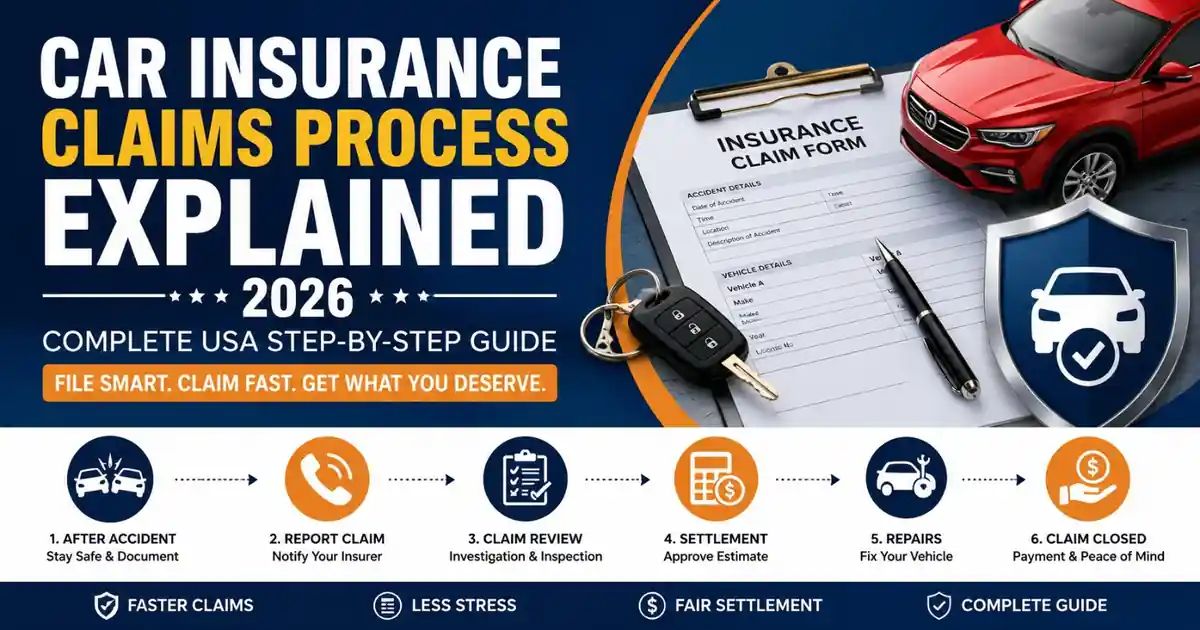
Car Insurance Claims Process Explained: Step-by-Step Process
Understanding the Car Insurance Claims Process Explained starts with knowing what a car insurance claim actually is. Simply put, a claim is a formal request you submit to your insurance company after an accident or covered incident, asking the insurer to pay for vehicle repairs, medical expenses, property damage, or other covered losses according to your policy.
Not every accident requires filing a claim, however. Minor scratches or inexpensive repairs may cost less than your deductible, making it more economical to pay out of pocket. On the other hand, serious accidents involving injuries, major vehicle damage, or another driver’s property should almost always be reported immediately to both the police (when required) and your insurance company.Car Insurance Claims Process Explained is one of the most important topics every American driver should understand before filing an insurance claim.
One of the biggest mistakes drivers make is waiting too long before notifying their insurer. Even if you’re unsure who caused the accident, reporting it quickly allows the insurance company to begin its investigation while evidence is still available. Acting promptly often results in a smoother claims experience and faster settlement.
Situations That Usually Require Filing a Claim
- Vehicle Collision: Your car collides with another vehicle, regardless of who appears to be at fault.
- Property Damage: You damage another person’s vehicle, home, fence, mailbox, or other property.
- Personal Injury: You, your passengers, or another driver suffer injuries requiring medical treatment.
- Theft or Vandalism: Your vehicle is stolen or intentionally damaged.
- Weather Damage: Hail, flooding, fire, falling trees, or severe storms damage your vehicle.
- Animal Collision: Your vehicle strikes a deer or another animal covered under comprehensive insurance.
Information You’ll Need Before Filing
- Your insurance policy number.
- Date, time, and exact location of the accident.
- Photos and videos of all vehicle damage.
- Driver’s license and insurance information for everyone involved.
- Police report number (if available).
- Names and contact details of witnesses.
The more complete your documentation, the easier it becomes for your insurance adjuster to verify the facts and process your claim. Organized records can significantly reduce delays and disputes during the investigation.
Learning how insurance works before an accident makes every step easier. Our Insurance for Beginners USA guide explains deductibles, policy limits, liability coverage, and collision protection so you’ll better understand what your policy covers before you ever need to file a claim.
Action Tip: Store your insurance ID card, policy number, emergency contact information, and your insurer’s claims phone number in both your vehicle and your smartphone. Having everything ready before an accident can save valuable time when every minute matters.
Car Insurance Claims Process Explained After an Accident
The Car Insurance Claims Process Explained becomes much easier when you understand exactly what happens after an accident. Many drivers panic because they don’t know which step comes first. Following a clear process helps protect your rights, speeds up your claim, and improves your chances of receiving a fair settlement.
Although every insurance company has slightly different procedures, the overall claims process is very similar across the United States. Acting quickly, remaining organized, and providing accurate information are the keys to avoiding unnecessary delays.The table below makes the Car Insurance Claims Process Explained easy to understand.
Step-by-Step Insurance Claims Process
| Step | What You Should Do | Why It Matters |
|---|---|---|
| 1 | Check for injuries and call 911 if needed. | Protects everyone’s safety and creates official records. |
| 2 | Move to a safe location if possible. | Prevents additional accidents. |
| 3 | Take photos and videos of all damage. | Provides strong evidence for your claim. |
| 4 | Exchange insurance and contact information. | Allows insurers to verify all parties involved. |
| 5 | Report the accident to your insurance company. | Starts the official claims investigation. |
| 6 | Cooperate with the insurance adjuster. | Helps speed up claim approval. |
| 7 | Approve repair estimates and settlement. | Completes the claim and repairs your vehicle. |
Documents That Speed Up Your Claim
- Insurance policy number
- Driver’s license
- Vehicle registration
- Police report (if available)
- Photos and videos of the accident scene
- Repair estimates
- Medical bills (if injuries occurred)
- Witness names and phone numbers
Understanding your insurance policy before an accident can prevent confusion during the claims process. If you’re unsure how deductibles, collision coverage, comprehensive coverage, or liability insurance affect your claim, read our Insurance for Beginners USA guide for a simple explanation of every important insurance term.
Action Tip: Never admit fault at the accident scene, even if you believe you caused the collision. Share only factual information with the police and your insurance company, preserve all evidence, and let the insurers complete their investigation before fault is officially determined.
How Long Does a Car Insurance Claim Take? Timeline, Settlement & Claim Calculator
The Car Insurance Claims Process Explained doesn’t end after reporting the accident. One of the biggest questions drivers ask is, “How long will my insurance claim take?” The answer depends on several factors, including the severity of the accident, the availability of evidence, repair estimates, medical evaluations, and whether liability is disputed.
Simple claims involving minor vehicle damage can often be settled within a few days, while complex accidents involving injuries or multiple vehicles may take several weeks or even months. The faster you submit complete documentation, the faster your insurance company can review your claim.Use this calculator while following the Car Insurance Claims Process Explained.
Typical Car Insurance Claim Timeline
| Claim Stage | Typical Time |
|---|---|
| Report the Accident | Immediately or within 24 hours |
| Claim Assignment | 1–2 Business Days |
| Vehicle Inspection | 2–5 Business Days |
| Repair Estimate Approval | 3–7 Business Days |
| Settlement Decision | 1–3 Weeks |
| Complex Injury Claims | Several Weeks to Months |
Simple Claim Cost Calculator
You can estimate your out-of-pocket cost using this simple formula:
Your Estimated Cost = Vehicle Repair Cost − Insurance Payment + Deductible
Example:
- Vehicle Repair Cost = $6,200
- Insurance Approved Amount = $5,700
- Deductible = $500
- Your Estimated Cost = $500
This calculation gives you a basic estimate before your final settlement is issued. Additional costs may apply depending on policy limits, depreciation, rental reimbursement, or uncovered damages.
Common Reasons Claims Are Delayed
- Missing accident photos or supporting documents.
- Late claim reporting.
- Disputes about who caused the accident.
- Incomplete repair estimates.
- Waiting for police reports or witness statements.
- Vehicle parts backorders or repair shop delays.
Managing unexpected repair expenses wisely can protect your long-term finances. Our Retirement Planning Guide explains how building an emergency fund today can help you handle unexpected costs like insurance deductibles without disrupting your future financial goals.Technology is making the Car Insurance Claims Process Explained faster and more transparent.
Action Tip: After filing your claim, keep a dedicated folder containing every email, repair estimate, receipt, photograph, police report, and conversation with your insurance company. Organized records often help resolve disputes faster and make the Car Insurance Claims Process Explained much smoother from start to finish.
Real-Life Case Study: How Following the Right Claims Process Saved Thousands
The Car Insurance Claims Process Explained becomes much easier to understand when you see how it works in a real-life situation. While every accident is different, being prepared, staying calm, and following the correct steps can dramatically improve the outcome of your insurance claim.
Many drivers lose valuable compensation simply because they don’t collect enough evidence or delay reporting the accident. On the other hand, drivers who understand the claims process often experience faster settlements, fewer disputes, and less financial stress.This real-life example shows why understanding the Car Insurance Claims Process Explained is important.
Case Study: Michael’s Insurance Claim Success
Michael Anderson, a 38-year-old software engineer from Austin, Texas, was driving home from work when another vehicle ran a red light and struck the front of his SUV. Fortunately, no one suffered serious injuries, but both vehicles sustained significant damage.
Instead of panicking, Michael immediately followed the recommended claims process. He called 911, moved to a safe location, photographed both vehicles from multiple angles, recorded a short video of the accident scene, collected witness contact information, and exchanged insurance details with the other driver.
Within an hour, he reported the accident through his insurer’s mobile app and uploaded every photo, video, and document. The insurance company assigned an adjuster the following morning, inspected the vehicle within two days, and approved repairs after reviewing the repair estimate.
Because Michael had complete documentation and responded quickly to every request, his vehicle repairs were approved in less than a week. His insurer also covered his rental vehicle while repairs were completed, allowing him to continue commuting without interruption.Following the Car Insurance Claims Process Explained helped the family receive a faster settlement.
Final Outcome
- Vehicle Repair Cost: $7,850
- Deductible Paid: $500
- Insurance Payment: $7,350
- Rental Car Covered: Yes
- Total Claim Completion Time: 9 Days
Unexpected expenses like insurance deductibles can affect your long-term financial goals. Instead of letting these costs derail your plans, consider building investments that generate additional income. Our Top Dividend Stocks USA 2026 guide explains how dividend investing can help create passive income, while our AI Investing Guide 2026 shows how modern technology is changing investment strategies for American investors.
Action Tip: Create a personal accident checklist and keep it in your glove compartment or smartphone. Include your insurance company’s claims number, emergency contacts, policy details, and a reminder to take photos, collect witness information, and report the accident immediately. Being prepared before an accident happens can make the Car Insurance Claims Process Explained far less stressful and significantly improve your claim experience.
Working with Insurance Adjusters: Tips for a Faster and Fairer Claim Settlement
The Car Insurance Claims Process Explained doesn’t stop after filing your claim. One of the most important stages is working with the insurance adjuster. An adjuster investigates the accident, reviews your policy, examines vehicle damage, and determines how much the insurance company will pay. Understanding their role can help you communicate effectively and avoid unnecessary delays.
Many drivers assume the adjuster is there to approve every repair automatically. In reality, the adjuster must verify the facts, inspect the damage, review repair estimates, and confirm that the loss is covered under your policy. Providing accurate information and responding promptly makes the entire process smoother for everyone involved.Following the Car Insurance Claims Process Explained helped the family receive a faster settlement.
How to Work Effectively with Your Insurance Adjuster
- Respond Quickly: Return phone calls, emails, and document requests as soon as possible.
- Stay Honest: Provide accurate information about the accident. Never exaggerate damage or injuries.
- Keep Every Record: Save repair estimates, receipts, medical bills, rental car invoices, and all communication with your insurer.
- Ask Questions: If you don’t understand the settlement offer or repair estimate, ask your adjuster for a detailed explanation.
- Review the Settlement Carefully: Before accepting payment, confirm that all covered damages are included.
Should You Use the Insurance Company’s Repair Shop?
Most insurers have a network of approved repair facilities that meet quality standards and often provide faster service. However, in most states, you also have the right to choose your own licensed repair shop. Compare repair estimates, warranty coverage, and customer reviews before making your decision.Technology is making the Car Insurance Claims Process Explained faster and more transparent.
Recommended Insurance Resources
- NAIC Consumer Auto Insurance Guide
- Insurance Company Mobile Claims Apps
- The Bogleheads’ Guide to Investing
Recommended Insurance Providers
- Progressive Auto Insurance
- GEICO Auto Insurance
- State Farm Auto Insurance
For reliable consumer information about auto insurance, claim handling, and your rights as a policyholder, visit NAIC and IRS.gov. These trusted resources provide valuable guidance on insurance-related topics and financial recordkeeping. This is the only section in this guide that includes external authority references.
Saving money on insurance repairs and avoiding unnecessary claim delays can leave you with extra cash to invest. Our SIP Investing Guide 2026 explains how investing small monthly amounts consistently can build long-term wealth, while our AI Investing Guide 2026 explores how artificial intelligence is helping investors make smarter financial decisions.
Action Tip: Before accepting your final settlement, compare the repair estimate with the actual damage, verify that every covered expense has been included, and keep copies of all paperwork for future reference. Taking these simple steps helps ensure the Car Insurance Claims Process Explained ends with a fair and accurate settlement.
Future of Car Insurance Claims in 2026: AI, Digital Claims & Frequently Asked Questions
The Car Insurance Claims Process Explained is changing rapidly as insurance companies adopt artificial intelligence, mobile apps, and digital inspection technology. Instead of waiting days for an adjuster to inspect your vehicle, many insurers now allow customers to upload photos and videos through a smartphone app. AI systems can analyze vehicle damage, estimate repair costs, and begin processing claims within minutes.Here are the most common questions about the Car Insurance Claims Process Explained.
These innovations are helping insurers reduce paperwork, shorten settlement times, and improve customer satisfaction. However, technology doesn’t replace the need for accurate documentation. Drivers who provide complete information, respond quickly, and understand their policy still enjoy the fastest claims experience.
What to Expect in the Future
- AI Damage Assessment: Artificial intelligence will estimate repair costs more accurately using uploaded images.
- Faster Digital Claims: Mobile apps will continue reducing paperwork and claim processing time.
- Real-Time Claim Tracking: Policyholders can monitor every stage of their claim directly from their smartphone.
- Connected Vehicle Data: Smart vehicles may automatically notify insurers after certain accidents, helping speed up investigations.
- Improved Fraud Detection: Advanced analytics will help insurers identify fraudulent claims while processing legitimate claims more efficiently.
Frequently Asked Questions
1. How soon should I report a car accident to my insurance company?
You should report the accident as soon as possible—preferably within 24 hours. Early reporting allows your insurer to begin investigating while evidence is still fresh.
2. Will filing a claim automatically increase my premium?
Not always. Premium increases depend on factors such as who was at fault, your previous claims history, state regulations, and your insurance company’s underwriting guidelines.
3. Can I choose my own repair shop?
Yes. In most states, you have the right to select your preferred licensed repair facility, although your insurer may also recommend approved network shops.
4. What happens if the other driver is uninsured?
If your policy includes uninsured motorist coverage, your insurance company may help pay for covered damages and injuries according to your policy limits.
5. What is the biggest mistake people make during a claim?
The most common mistakes include delaying claim reporting, failing to gather evidence, admitting fault at the accident scene, and not keeping copies of important documents.
Quick Claim Checklist
- ✔ Check everyone for injuries.
- ✔ Call emergency services if required.
- ✔ Take clear photos and videos.
- ✔ Exchange insurance information.
- ✔ Collect witness details.
- ✔ Notify your insurance company immediately.
- ✔ Save every receipt, estimate, and repair invoice.
- ✔ Follow up regularly until your claim is settled.
Reducing unexpected financial setbacks after an accident is an important part of long-term financial planning. Our Recession-Proof Investing 2026 guide explains how building resilient investments can help protect your finances during uncertain times. You can also explore our Best Credit Cards 2026 guide to discover cashback and rewards programs that may help offset everyday expenses.
Action Tip: Don’t wait until after an accident to learn your insurance policy. Review your coverage, understand your deductible, store emergency contact information in your phone, and create a simple accident checklist today. Being prepared before an accident occurs is the easiest way to make the Car Insurance Claims Process Explained faster, smoother, and far less stressful.
Conclusion: Master the Car Insurance Claims Process Before You Need It
The Car Insurance Claims Process Explained isn’t something most people think about until an accident happens. Unfortunately, that’s often when stress, confusion, and costly mistakes occur. By understanding how the claims process works before you’re involved in an accident, you’ll be better prepared to protect your finances, your vehicle, and your peace of mind.Car Insurance Claims Process Explained can save you time, money, and unnecessary stress after an accident.
From reporting the accident quickly and collecting strong evidence to working with your insurance adjuster and reviewing your settlement carefully, every step plays an important role in determining how smoothly your claim is resolved. The more organized and informed you are, the faster your claim can move through the system.
Remember that auto insurance is more than a legal requirement—it’s an important financial safety net. Taking a few minutes today to review your policy, understand your coverage, and prepare an emergency accident checklist can save you days of frustration later.
If you’re still learning about insurance coverage, deductibles, and policy types, don’t miss our Insurance for Beginners USA guide. You can also continue building your financial future with our Retirement Planning Guide and Recession-Proof Investing 2026 resources.
🚘 Stay Ahead with Smart Insurance & Money Tips
Subscribe to receive practical insurance guides, investing ideas, retirement planning strategies, and personal finance tips designed to help Americans make smarter financial decisions in 2026 and beyond.Subscribe for more guides like Car Insurance Claims Process Explained.
✔ Weekly Finance Tips ✔ Free Resources ✔ Unsubscribe Anytime
👨💼 About the Author
Subhash Rukade is the founder of FinanceInvestment.siteSubhash Rukade regularly publishes detailed resources including Car Insurance Claims Process Explained and other insurance guides. and writes in-depth, research-based guides on insurance, investing, retirement planning, and personal finance. His mission is to simplify complex financial topics into practical, easy-to-follow advice that helps American readers save money, make confident financial decisions, and build long-term wealth.
Leave a Reply