Retirement Portfolio Rebalancing Guide: Ultimate 2026 Strategy During Market Volatility
Published: June 28, 2026 |
Author: Subhash Rukade
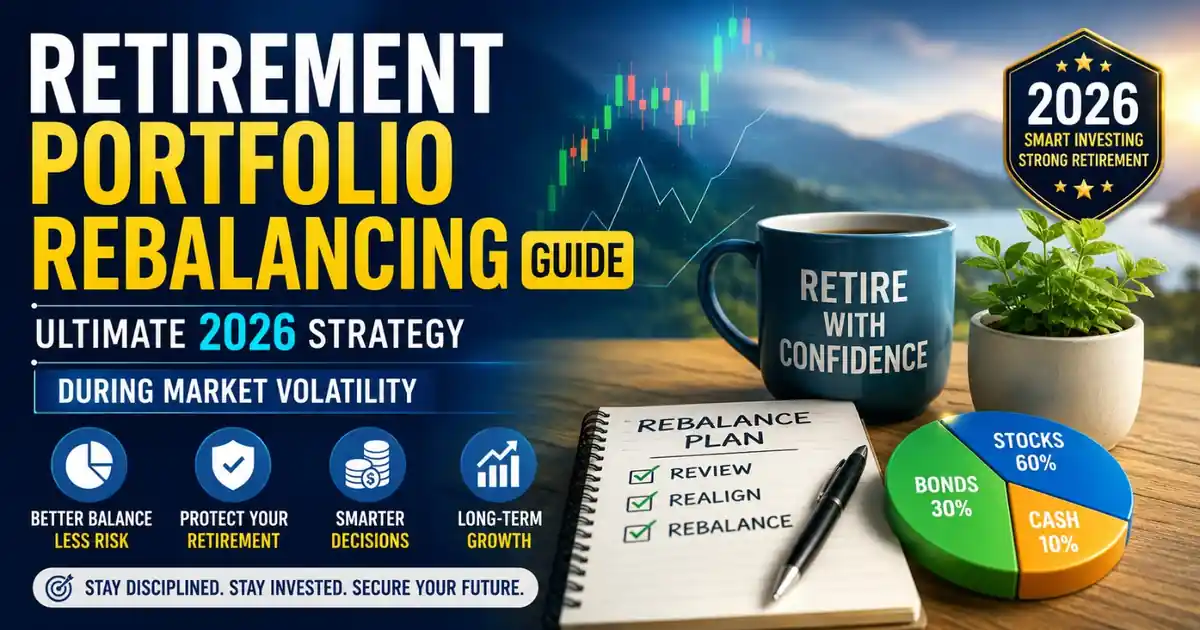
Retirement Portfolio Rebalancing Guide helps retirees protect their investments during market volatility in 2026 by maintaining the right balance between stocks, bonds, and cash. When markets rise or fall sharply, your original asset allocation changes automatically. Rebalancing restores your portfolio to its intended risk level and helps keep your retirement plan on track.
Market volatility is a normal part of investing, but emotional decisions during downturns can permanently reduce retirement wealth. Instead of reacting to daily headlines, successful retirees follow a disciplined rebalancing strategy based on long-term financial goals, risk tolerance, and income needs.
Before making any changes to your portfolio, read our
Complete Retirement Planning Guide
.
It covers retirement investing, withdrawal planning, tax-efficient income strategies, portfolio allocation, and wealth preservation to help American retirees build lasting financial security.
Throughout this guide, you’ll learn when to rebalance your retirement portfolio, how often you should review investments, common mistakes to avoid, and practical strategies for managing market volatility while continuing to grow your retirement savings throughout 2026 and beyond.
What Is Retirement Portfolio Rebalancing and Why Does It Matter?
A Retirement Portfolio Rebalancing Guide helps retirees maintain the right mix of investments as market conditions change. Over time, strong performance in one asset class can shift your portfolio away from its original allocation. Rebalancing brings your investments back to your target percentages, helping you control risk without changing your long-term retirement goals.
For example, suppose your retirement portfolio was originally invested with 60% stocks and 40% bonds. After a strong stock market rally, your portfolio may become 70% stocks and only 30% bonds. While this increases growth potential, it also exposes you to greater market risk. Rebalancing restores the portfolio to your desired allocation.
Why Market Volatility Makes Rebalancing Important
Market volatility is unavoidable. Stock prices can rise or fall quickly because of inflation, interest rate changes, economic uncertainty, or global events. During these periods, many retirees make emotional decisions by selling investments after markets decline. A disciplined rebalancing strategy helps remove emotions from investing and keeps your retirement plan focused on long-term objectives.
Rather than trying to predict market movements, successful retirees periodically review their portfolios and make small adjustments only when asset allocations move significantly away from their target percentages. This disciplined approach reduces unnecessary risk while allowing investments to continue growing over time.
Benefits of Regular Portfolio Rebalancing
- Maintains your preferred investment risk level.
- Prevents one asset class from dominating your portfolio.
- Encourages buying lower-priced assets and trimming assets that have grown significantly.
- Supports more consistent retirement income planning.
- Improves long-term portfolio discipline during volatile markets.
A well-designed Retirement Portfolio Rebalancing Guide does not guarantee higher returns every year. Instead, it helps retirees stay consistent, reduce unnecessary risk, and avoid emotional investment decisions that may negatively affect long-term retirement success. Maintaining your target asset allocation is one of the simplest ways to build a more stable retirement portfolio throughout 2026 and beyond.
When Should You Rebalance Your Retirement Portfolio?
A Retirement Portfolio Rebalancing Guide works best when you follow a disciplined schedule instead of reacting to daily market news. Rebalancing should be based on your investment allocation, retirement goals, and risk tolerance—not emotions. Regular portfolio reviews help retirees stay aligned with their long-term financial plan while reducing unnecessary market risk.
Financial experts generally recommend reviewing your retirement portfolio at least once or twice a year. However, you should also consider rebalancing whenever your asset allocation changes by 5% to 10% from your original target because of market performance.
Recommended Rebalancing Schedule
| Market Situation | Recommended Action |
|---|---|
| Normal Market Conditions | Review every 6–12 months |
| Major Market Rally | Reduce overweight stock allocation if needed |
| Market Correction | Rebalance gradually toward your target allocation |
Dividend Investments Can Support Rebalancing
Dividend-paying investments can provide reliable retirement income while reducing the need to sell growth assets during market declines. Reinvesting or using dividend income strategically may also make portfolio rebalancing more efficient over time.
Learn how to create reliable retirement income in our
How to Build a Dividend Portfolio
.
You can also explore our
Top Dividend Stocks USA 2026
guide to discover high-quality dividend companies that may strengthen both your retirement income and long-term portfolio stability.
A disciplined Retirement Portfolio Rebalancing Guide focuses on maintaining your desired asset allocation instead of chasing short-term market performance. Consistent reviews, thoughtful adjustments, and a diversified portfolio can help retirees manage volatility while keeping their retirement investments aligned with long-term financial goals throughout 2026 and beyond.
Step-by-Step Retirement Portfolio Rebalancing Strategy
A successful Retirement Portfolio Rebalancing Guide follows a structured process instead of emotional decision-making. Market volatility can temporarily change your investment allocation, but disciplined rebalancing helps restore the balance between growth, income, and stability without abandoning your long-term retirement plan.
1. Review Your Current Asset Allocation
Start by comparing your current portfolio with your target allocation. For example, if your original plan was 60% stocks, 30% bonds, and 10% cash, check whether recent market movements have changed those percentages. This simple review shows whether rebalancing is necessary.
2. Sell Only the Overweight Investments
When one asset class grows significantly larger than planned, consider trimming only the excess amount instead of making major portfolio changes. This approach helps maintain diversification while reducing unnecessary investment risk.
3. Reinvest in Underweighted Assets
Move the proceeds into asset classes that have fallen below your target allocation. Buying quality investments after market declines can strengthen long-term returns while restoring your original portfolio balance.
4. Consider Taxes Before Rebalancing
If possible, rebalance within tax-advantaged retirement accounts such as IRAs or 401(k)s to reduce potential capital gains taxes. In taxable accounts, review the tax impact before selling appreciated investments and consider spreading adjustments over time when appropriate.
For a complete retirement investing roadmap, read our
Complete Retirement Planning Guide
.
It explains retirement investing, withdrawal planning, tax strategies, Social Security planning, and long-term wealth preservation for American retirees.
5. Use Technology to Monitor Your Portfolio
Modern investment platforms and artificial intelligence tools can automatically monitor portfolio allocations, identify rebalancing opportunities, and estimate future retirement outcomes. These tools make it easier to stay disciplined during periods of market volatility.
Learn how technology is improving investing in our
AI Investing Guide 2026
.
Following a disciplined Retirement Portfolio Rebalancing Guide helps retirees manage investment risk, improve portfolio diversification, and maintain long-term financial confidence. Small adjustments made consistently are often more effective than large changes driven by short-term market movements throughout 2026 and beyond.
Real-Life Example: Rebalancing a Retirement Portfolio During Market Volatility
A Retirement Portfolio Rebalancing Guide becomes easier to understand when you see how it works in a real retirement scenario. Rebalancing is not about predicting the market. Instead, it helps retirees maintain their preferred investment mix while reducing unnecessary risk during periods of market volatility.
Case Study
Robert, a 68-year-old retiree, entered 2026 with a portfolio allocated to 60% stocks, 30% bonds, and 10% cash. After several months of strong stock market gains, his portfolio shifted to nearly 72% stocks and 20% bonds. Although his account value increased, his investment risk became much higher than originally planned.
Instead of waiting for a market correction, Robert followed a disciplined Retirement Portfolio Rebalancing Guide. He sold only enough stock investments to return to his original allocation and reinvested those proceeds into high-quality bond funds. This reduced portfolio volatility while maintaining long-term growth potential.
Months later, when markets experienced a temporary decline, Robert’s diversified portfolio remained more stable than before. His bond investments helped cushion losses, allowing him to continue following his retirement income plan without making emotional investment decisions.
Simple Portfolio Rebalancing Calculator
Use this formula to determine whether your portfolio needs rebalancing:
Current Allocation (%) = (Current Asset Value ÷ Total Portfolio Value) × 100
If any major asset class differs from your target allocation by approximately 5% to 10%, it may be time to review your portfolio and consider rebalancing.
Strengthen Retirement Income While Rebalancing
Dividend-paying investments can provide dependable retirement income while supporting portfolio stability. Learn how to build an income-focused portfolio by reading our
How to Build a Dividend Portfolio
.
You can also explore our
Top Dividend Stocks USA 2026
guide to discover dividend-paying companies that may strengthen your long-term retirement investment strategy.
This example shows that a disciplined Retirement Portfolio Rebalancing Guide helps retirees reduce unnecessary investment risk, stay focused on long-term financial goals, and navigate market volatility with greater confidence throughout 2026 and beyond.
Common Rebalancing Mistakes and Future Retirement Investing Trends
Following a Retirement Portfolio Rebalancing Guide requires discipline and patience. Many retirees understand the importance of rebalancing but still make mistakes that increase portfolio risk or reduce long-term returns. Avoiding these common errors can help protect your retirement savings while improving overall portfolio performance.
1. Waiting Too Long to Rebalance
Some retirees ignore their portfolio for years and only react after major market declines. By that time, their investment allocation may be far from the original target. Reviewing your portfolio every six to twelve months helps maintain a healthy balance between growth and stability without making emotional decisions.
2. Making Emotional Investment Decisions
Market volatility often creates fear during downturns and overconfidence during bull markets. Selling quality investments after prices fall or buying aggressively after prices rise can weaken long-term retirement performance. A disciplined rebalancing strategy helps remove emotions from investment decisions.
3. Ignoring Taxes and Transaction Costs
Frequent buying and selling may create unnecessary taxes or trading expenses in taxable accounts. Whenever possible, review the tax impact before making large portfolio adjustments and consider rebalancing inside tax-advantaged retirement accounts when appropriate.
Future Trends in Retirement Portfolio Management
Artificial intelligence and advanced portfolio management platforms are making retirement investing more efficient. These tools can monitor asset allocation, identify rebalancing opportunities, estimate retirement income, and analyze investment risk automatically. Technology helps retirees make informed decisions while maintaining long-term investment discipline.
Learn more in our
AI Investing Guide 2026
.
Long-term investing habits remain equally important. Our
SIP Investing Guide 2026
shows how disciplined investing can strengthen retirement wealth over time.
To prepare your portfolio for uncertain economic conditions, explore our
Recession-Proof Investing 2026
.
You can also review our
Best Credit Cards 2026
guide for practical money-management strategies that support long-term financial stability.
Reviewing your Retirement Portfolio Rebalancing Guide regularly, maintaining diversification, and making gradual adjustments instead of emotional decisions can help reduce investment risk and keep your retirement plan aligned with your financial goals throughout 2026 and beyond.
Frequently Asked Questions (FAQ)
1. How often should retirees rebalance their portfolios?
Most financial professionals recommend reviewing your retirement portfolio every 6 to 12 months. You should also consider rebalancing whenever your asset allocation changes by about 5% to 10% from your original target.
2. Should I rebalance during a market crash?
Yes, but avoid emotional decisions. If your portfolio has drifted significantly from your target allocation, disciplined rebalancing may help restore the proper balance while taking advantage of lower asset prices.
3. Does rebalancing improve investment returns?
Rebalancing does not guarantee higher returns. Instead, it helps manage portfolio risk, maintain diversification, and keep your investments aligned with your retirement goals.
4. Can dividend investments reduce portfolio volatility?
Dividend-paying companies often provide consistent income and may reduce the need to sell investments during market downturns. Many retirees combine dividend stocks with high-quality bonds to improve portfolio stability.
5. Should retirees use AI tools for portfolio management?
AI-powered investing platforms can monitor asset allocation, estimate retirement income, and identify rebalancing opportunities. However, these tools should complement—not replace—your long-term investment strategy and personal financial judgment.
Conclusion
A disciplined Retirement Portfolio Rebalancing Guide helps retirees stay focused on long-term financial success instead of reacting to short-term market movements. Regular portfolio reviews, thoughtful adjustments, and proper diversification can reduce investment risk while supporting consistent retirement income.
Rather than trying to predict the next market correction, maintain your target asset allocation and review your investments at scheduled intervals. This simple habit can improve portfolio stability and help preserve retirement wealth for years to come.
For a complete retirement investing roadmap, explore our
Complete Retirement Planning Guide
.
It covers retirement investing, tax-efficient withdrawals, Social Security planning, portfolio allocation, and long-term wealth preservation for American retirees.
For additional trusted retirement guidance, visit
Official IRS Retirement Planning Resources,
SEC Investor Education Center, and
Vanguard Retirement Investing Resources.
These trusted resources provide reliable information to help retirees make informed financial decisions.
By following a consistent Retirement Portfolio Rebalancing Guide, you can better manage market volatility, protect your retirement savings, and maintain confidence throughout 2026 and beyond.
📩 Stay Ahead with Weekly Retirement Insights
Subscribe for free retirement planning tips, portfolio management strategies, tax-saving ideas, dividend investing guides, and practical financial insights created for American retirees.
Weekly Updates • No Spam • Unsubscribe Anytime
About the Author
Subhash Rukade is the founder of FinanceInvestment.site. He writes practical, research-backed articles on retirement planning, investing, dividend income, portfolio management, and personal finance. His mission is to help American investors make confident financial decisions through easy-to-understand, actionable guidance.
Leave a Reply