Retirement Stock vs Bond Strategy: Best 2026 Guide for Smarter Retirement Investing
Published: June 28, 2026 |
Author: Subhash Rukade
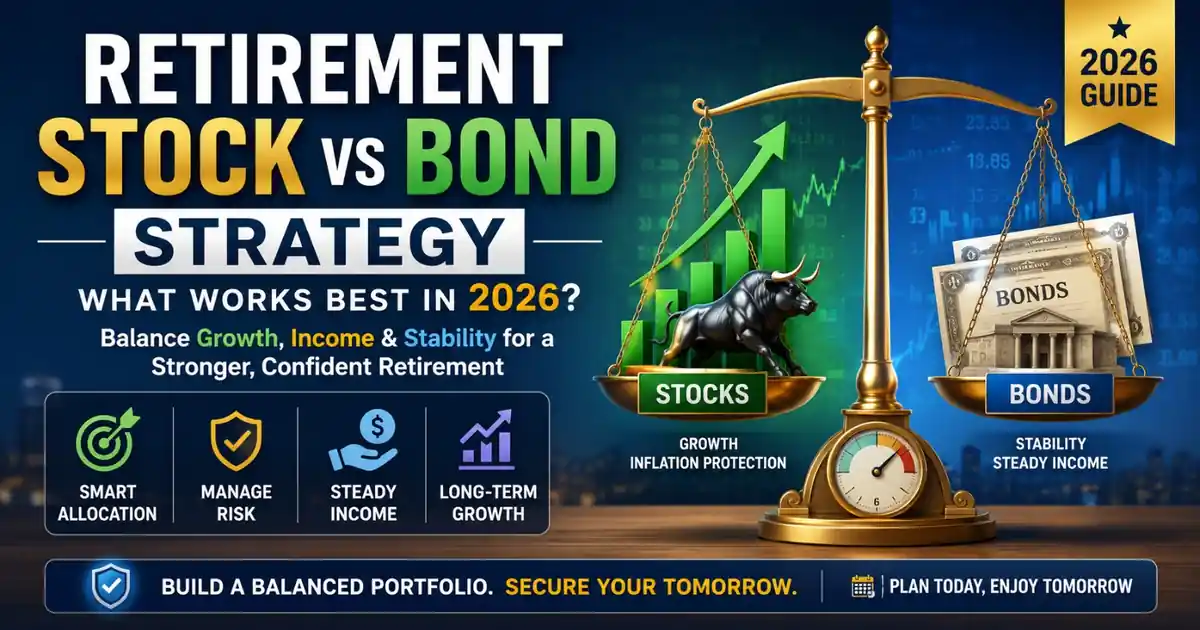
Retirement Stock vs Bond Strategy is one of the most important decisions every retiree will make. Choosing the right balance between stocks and bonds can determine how long your retirement savings last, how much income your portfolio generates, and how well you handle market volatility. While stocks offer long-term growth potential, bonds provide stability and predictable income. Finding the right combination is the key to building lasting financial confidence.
There is no single portfolio that works for everyone. Your ideal investment mix depends on your retirement age, income needs, risk tolerance, healthcare expenses, and long-term financial goals. Some retirees prefer higher stock exposure to keep pace with inflation, while others value the stability that bonds provide during uncertain markets.
Before deciding on your investment allocation, read our
Complete Retirement Planning Guide.
It explains retirement investing, withdrawal strategies, tax planning, Social Security, and long-term wealth preservation to help American retirees make smarter financial decisions.
In this guide, you’ll discover how a Retirement Stock vs Bond Strategy works, compare the advantages of stocks and bonds, learn how portfolio allocation changes with age, and build a retirement investment plan designed to provide growth, income, and financial security throughout 2026 and beyond.
Understanding Stocks and Bonds in Retirement
A successful Retirement Stock vs Bond Strategy starts with understanding the role each investment plays in your retirement portfolio. Stocks and bonds serve different purposes, and combining them wisely can help retirees balance long-term growth with reliable income. The right mix depends on your financial goals, risk tolerance, and the number of years you expect your retirement savings to support you.
Stocks represent ownership in publicly traded companies. Over long periods, they have historically provided higher returns than most other asset classes. However, stock prices can fluctuate significantly during market downturns. Because of this volatility, retirees should carefully decide how much stock exposure fits their retirement plan.
Why Bonds Matter During Retirement
Bonds are generally considered more stable than stocks. When you purchase a bond, you are lending money to a government or corporation in exchange for regular interest payments and the return of your principal at maturity. Bonds help reduce overall portfolio volatility and can provide predictable income for retirees.
Stocks vs Bonds Comparison
| Investment | Main Benefit | Primary Risk |
|---|---|---|
| Stocks | Long-term growth and inflation protection | Higher market volatility |
| Bonds | Stable income and lower portfolio risk | Lower long-term growth potential |
Finding the Right Balance
Most retirees benefit from owning both stocks and bonds instead of choosing only one. Stocks help your portfolio continue growing throughout retirement, while bonds provide stability during market downturns. The ideal allocation depends on your retirement age, expected expenses, and overall financial situation.
Building a thoughtful Retirement Stock vs Bond Strategy allows you to generate income, manage investment risk, and protect your retirement savings. Reviewing your allocation every year ensures your portfolio continues to match your retirement goals throughout 2026 and beyond.
Choosing the Best Retirement Stock vs Bond Strategy for 2026
Building the right Retirement Stock vs Bond Strategy is about balancing growth with financial security. While stocks can increase the value of your retirement portfolio over time, bonds help reduce market volatility and generate more predictable income. Most successful retirement portfolios include both asset classes because they complement each other during different market conditions.
Your ideal investment mix depends on several factors, including your retirement age, expected living expenses, health, other income sources, and personal comfort with market fluctuations. Instead of trying to predict the market, focus on maintaining an allocation that supports your long-term retirement goals.
Suggested Portfolio Allocation
| Retirement Stage | Stocks | Bonds |
|---|---|---|
| Early Retirement (60–69) | 55–65% | 35–45% |
| Mid Retirement (70–79) | 45–55% | 45–55% |
| Later Retirement (80+) | 30–45% | 55–70% |
Use Dividend Stocks for Reliable Income
Dividend-paying companies can provide regular income while still offering long-term growth potential. For many retirees, dividend investments reduce the need to sell shares during market downturns and create a steady cash flow throughout retirement.
Learn how to create a reliable dividend income portfolio by reading our
How to Build a Dividend Portfolio
.
You can also explore our
Top Dividend Stocks USA 2026
guide to discover quality dividend-paying companies that may strengthen your retirement income strategy.
A well-balanced Retirement Stock vs Bond Strategy does not eliminate investment risk, but it can help reduce large portfolio swings while providing opportunities for long-term growth. Reviewing your portfolio annually and adjusting allocations as your retirement needs change will help keep your investment plan on track throughout 2026 and beyond.
Building a Balanced Retirement Portfolio with Stocks and Bonds
A successful Retirement Stock vs Bond Strategy is built around diversification instead of relying entirely on one investment type. Stocks help your portfolio grow and protect purchasing power against inflation, while bonds provide stability and a more predictable source of income. Combining both allows retirees to stay invested during changing market conditions without taking unnecessary risks.
1. Match Your Portfolio to Your Retirement Goals
Your investment allocation should reflect your retirement lifestyle and income needs. Retirees who expect to rely heavily on portfolio withdrawals may prefer a higher bond allocation, while those with pensions or other guaranteed income may comfortably maintain a larger percentage in stocks for long-term growth.
2. Diversify Within Each Asset Class
Owning only a few individual stocks or bonds increases investment risk. Instead, consider broad-market index funds, exchange-traded funds (ETFs), high-quality bonds, and dividend-paying companies. A diversified portfolio can reduce volatility while providing exposure to different sectors of the economy.
3. Rebalance Your Portfolio Regularly
Market movements can gradually change your original investment allocation. If stocks perform exceptionally well, they may become a much larger percentage of your portfolio than intended. Reviewing and rebalancing your investments once each year helps maintain your target risk level and keeps your retirement strategy aligned with your financial goals.
For a complete retirement investing roadmap, read our
Complete Retirement Planning Guide
.
It covers retirement investing, tax planning, withdrawal strategies, Social Security planning, and long-term wealth preservation for American retirees.
4. Use Technology to Improve Investment Decisions
Modern portfolio management tools can analyze diversification, estimate future retirement income, and evaluate different investment scenarios. These insights help retirees make more informed decisions while adjusting their portfolios as market conditions change.
Discover how technology is transforming investing in our
AI Investing Guide 2026
.
A disciplined Retirement Stock vs Bond Strategy combines growth, stability, and flexibility. Reviewing your portfolio every year and making gradual adjustments can help preserve retirement savings, reduce unnecessary risk, and improve long-term financial confidence throughout 2026 and beyond.
Real-Life Example: Finding the Right Retirement Stock vs Bond Strategy
Choosing the right Retirement Stock vs Bond Strategy becomes much easier when you apply it to a real retirement situation. Every retiree has different income needs and risk tolerance, but balancing stocks and bonds can help reduce market stress while supporting long-term financial security.
Case Study
John, a 67-year-old retiree, has a retirement portfolio worth $1 million. Initially, nearly 90% of his investments were in stocks because he wanted maximum growth. During a major market correction, his portfolio value dropped sharply, forcing him to delay several financial goals and increasing concerns about future withdrawals.
After reviewing his retirement plan, John adopted a balanced Retirement Stock vs Bond Strategy. He reallocated his investments to approximately 60% stocks and 40% bonds. The bond allocation generated steady interest income while reducing overall portfolio volatility. His stock investments continued providing long-term growth, and dividend income covered part of his annual living expenses without requiring large asset sales.
Simple Portfolio Allocation Calculator
Use this formula to estimate your current investment allocation:
Stock Allocation (%) = (Total Value of Stocks ÷ Total Portfolio Value) × 100
Bond Allocation (%) = (Total Value of Bonds ÷ Total Portfolio Value) × 100
Review these percentages annually to ensure your portfolio continues matching your retirement goals, income needs, and risk tolerance.
Strengthen Retirement Income
Reliable dividend income can reduce the need to sell investments during market downturns. Learn how to build a dependable income portfolio by reading our
How to Build a Dividend Portfolio
.
You can also explore our
Top Dividend Stocks USA 2026
guide to discover quality dividend-paying companies that may complement your retirement investment strategy.
This example shows that a carefully planned Retirement Stock vs Bond Strategy can reduce investment risk, improve retirement income stability, and help preserve long-term wealth throughout 2026 and beyond.
Common Portfolio Mistakes and Future Retirement Investing Trends
A well-designed Retirement Stock vs Bond Strategy should continue evolving throughout retirement. Many retirees unknowingly reduce their long-term returns or increase investment risk by making avoidable portfolio mistakes. Reviewing your investment strategy regularly and understanding new retirement investing trends can help protect your savings and improve financial confidence.
1. Becoming Too Conservative Too Early
Many retirees move almost all of their money into bonds or cash immediately after retirement. While this reduces market volatility, it may also limit long-term growth and make it harder for your portfolio to keep pace with inflation. Maintaining some stock exposure often helps preserve purchasing power over a retirement that could last 20 to 30 years.
2. Ignoring Portfolio Rebalancing
As markets change, your original stock and bond allocation can drift away from your target. For example, a strong stock market may leave your portfolio carrying much more risk than intended. Reviewing and rebalancing your investments annually helps maintain the right balance between growth and stability.
3. Forgetting About Inflation
Inflation steadily reduces purchasing power over time. A retirement portfolio invested only in fixed-income assets may struggle to support rising healthcare, housing, and daily living expenses. Including growth-oriented investments can help offset this long-term risk.
Future Trends in Retirement Investing
Artificial intelligence and digital portfolio management tools are changing how retirees monitor investments. Modern technology can analyze asset allocation, estimate retirement income, and identify opportunities to improve diversification while managing investment risk.
Learn how technology is reshaping investing in our
AI Investing Guide 2026
.
Long-term investing habits remain equally important. Our
SIP Investing Guide 2026
explains how disciplined investing can build retirement wealth over time.
To prepare your portfolio for uncertain economic conditions, explore our
Recession-Proof Investing 2026
.
You can also review our
Best Credit Cards 2026
guide for practical ways to improve everyday financial management and strengthen your overall retirement plan.
Reviewing your Retirement Stock vs Bond Strategy every year, maintaining proper diversification, and making gradual portfolio adjustments can help reduce investment risk, improve long-term returns, and provide greater financial security throughout retirement in 2026 and beyond.
Frequently Asked Questions (FAQ)
1. Should retirees invest only in bonds?
No. While bonds provide stability and regular income, relying only on bonds may reduce long-term portfolio growth. A balanced Retirement Stock vs Bond Strategy usually includes both stocks and bonds to support growth while managing investment risk.
2. What is a good stock-to-bond ratio after retirement?
The ideal ratio depends on your age, retirement income needs, health, and risk tolerance. Many retirees choose a balanced allocation that provides growth through stocks while using bonds to reduce portfolio volatility and generate stable income.
3. How often should I rebalance my retirement portfolio?
Review your retirement portfolio at least once each year or after major market movements. Regular rebalancing helps maintain your target asset allocation and keeps your investments aligned with your retirement goals.
4. Are dividend stocks better than bonds?
Dividend stocks and bonds serve different purposes. Dividend stocks offer income with growth potential, while bonds provide stability and predictable interest payments. Many retirees benefit from owning both as part of a diversified portfolio.
5. Can AI help improve retirement investing?
AI-powered investment tools can analyze portfolio diversification, monitor risk, and estimate future retirement income. They are useful planning tools but should complement your own financial decisions and professional advice.
Conclusion
Building the right Retirement Stock vs Bond Strategy is about creating a portfolio that balances growth, income, and stability. Instead of choosing stocks or bonds alone, most retirees benefit from combining both investments in a diversified portfolio that reflects their retirement goals, income needs, and personal risk tolerance.
Reviewing your portfolio every year, maintaining proper diversification, and adjusting your investment allocation as your financial situation changes can help preserve retirement savings while improving long-term financial confidence.
For a complete retirement investing roadmap, explore our
Complete Retirement Planning Guide
.
It covers retirement investing, withdrawal planning, tax strategies, Social Security, and wealth preservation to help American retirees build lasting financial security.
You can also learn more from trusted resources such as
Official IRS Retirement Planning Resources,
SEC Investor Education Center, and
Vanguard Retirement Investing Resources.
These resources provide reliable guidance to support informed retirement decisions.
A disciplined Retirement Stock vs Bond Strategy can help you navigate changing markets, generate dependable retirement income, and enjoy greater financial peace of mind throughout 2026 and beyond.
📩 Get Weekly Retirement Investing Tips
Subscribe to receive free retirement planning guides, investing strategies, portfolio allocation tips, tax-saving ideas, and practical personal finance insights for American retirees.
Weekly Updates • No Spam • Unsubscribe Anytime
About the Author
Subhash Rukade is the founder of FinanceInvestment.site. He specializes in retirement planning, dividend investing, portfolio management, tax strategies, and personal finance. His goal is to help American investors make smarter financial decisions through practical, research-based, and easy-to-understand investment guides.
Leave a Reply